Wastewater Treatment Plant Cost in Sumatra Indonesia: 2025 Engineering Breakdown with Local Data & ROI Calculator
Wastewater treatment plant costs in Sumatra, Indonesia, in 2025 range from IDR 15 billion (US$950K) for a 50 m³/h decentralized industrial system to IDR 1.2 trillion (US$82.8M) for a 50,000 m³/day municipal plant like Palembang’s. Capital costs average IDR 300M–500M per m³/day capacity, while operational expenses run IDR 2,500–6,000 per m³ treated, depending on technology and Sumatra’s higher energy/logistics costs. Compliance with Ministry of Environment Regulation No. 68/2016 adds 10–15% to project budgets for monitoring systems and sludge disposal. For a palm oil mill in Riau or a textile facility in Medan, failing to account for Sumatra-specific variables often leads to budget overruns of 20% or more during the commissioning phase.
Why Sumatra’s Wastewater Treatment Costs Differ from Java or Bali
Sumatra’s peatland water chemistry requires a 30–40% increase in chemical dosing costs compared to Java due to organic loads that are 10–20 times higher. Industrial wastewater in Java typically presents a Chemical Oxygen Demand (COD) of 200–500 mg/L, while Sumatra’s peat-influenced water frequently reaches 500–2,000 mg/L. This necessitates robust pre-treatment, such as DAF pre-treatment for Sumatra’s peatland water, to remove humic substances before biological processing. Without this stage, biological reactors face toxicity risks and membrane fouling, significantly shortening equipment lifespan.
Sumatra’s geography also dictates a shift toward decentralized systems. Industrial clusters in Batam’s free trade zone and Medan’s palm oil hubs often lack access to centralized sewage networks. This forces facilities to invest in on-site WWTPs, which carry higher per-unit capital costs compared to centralized municipal systems. Equipment transport to Sumatra incurs a "logistics premium." Shipping a 20-foot container from Jakarta to Pekanbaru costs approximately IDR 12 million, triple the cost of shipping to Surabaya (IDR 4 million), adding an average of 5–8% to the total CAPEX for projects involving imported membranes or high-precision blowers.
| Parameter | Sumatra (Peatland/Industrial) | Java (Urban/Municipal) | Impact on Treatment Cost |
|---|---|---|---|
| Inlet COD (mg/L) | 500 – 2,000 | 200 – 500 | Requires intensive pre-treatment |
| Logistics Cost (Container) | IDR 12M – 15M | IDR 3M – 5M | +5-8% to CAPEX |
| Electricity Tariff (Industrial) | IDR 1,467/kWh | IDR 1,115/kWh | +15-20% to OPEX |
| Regulatory Stringency | High (Lake Toba/Riau) | Standard (National) | Increased monitoring/permitting |
Local governments in North Sumatra and Riau impose stricter limits for sensitive ecosystems. For instance, projects near Lake Toba must meet COD limits below 50 mg/L, necessitating advanced tertiary treatment like MBR systems for Sumatra’s high-organic-load wastewater to ensure compliance and avoid fines that can reach IDR 2 billion per violation under Law No. 32/2009.
Wastewater Treatment Plant Cost Breakdown for Sumatra: CAPEX vs. OPEX
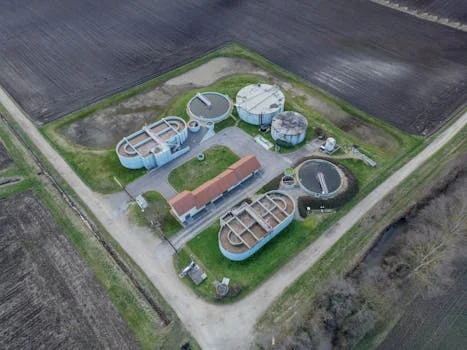
Capital expenditure for a Sumatra WWTP in 2025 is primarily driven by the choice of technology and the specific industry’s effluent profile. Conventional activated sludge remains the cheapest upfront option at IDR 250M–350M per m³/day capacity, but it requires a larger footprint—a significant disadvantage in developed industrial zones like Medan. Membrane Bioreactor systems, while costing IDR 450M–600M per m³/day, offer superior effluent quality and a smaller footprint, which is critical for compact WWTPs for Sumatra’s limited-space industrial sites.
Operational expenditure in Sumatra is heavily weighted toward energy and chemicals. Energy accounts for 30–40% of OPEX, driven by Sumatra’s higher industrial electricity tariffs compared to Java. Chemical costs represent 20–30% of the budget, particularly for palm oil and pulp and paper industries where coagulant demand for color and organic removal is high. Maintenance, including the replacement of membranes every 5–7 years, typically accounts for 5–10% of annual OPEX.
| Cost Category | Conventional Activated Sludge (CAS) | Membrane Bioreactor (MBR) | DAF + Biological |
|---|---|---|---|
| CAPEX (per m³/day) | IDR 250M – 350M | IDR 450M – 600M | IDR 300M – 400M |
| Energy (per m³ treated) | IDR 1,200 – 1,800 | IDR 2,000 – 2,500 | IDR 1,500 – 2,000 |
| Chemicals (per m³ treated) | IDR 800 – 1,200 | IDR 600 – 1,000 | IDR 1,200 – 1,500 |
| Annual Maintenance | 2 – 3% of CAPEX | 5 – 7% of CAPEX | 3 – 4% of CAPEX |
For high-solids applications, such as those found in North Sumatra’s rubber processing plants, choosing between sludge dewatering options for Sumatra’s high-organic-load wastewater is vital. A belt press may offer lower CAPEX but higher chemical costs, whereas a plate and frame filter press provides drier cake, reducing the IDR 500–800 per kg disposal cost common in the region.
Centralized vs. Decentralized WWTPs: Cost and Feasibility for Sumatra’s Industrial Clusters
Centralized municipal systems in Sumatra, such as Palembang’s Rp 1.2 trillion facility, benefit from economies of scale with per-unit CAPEX as low as IDR 200M/m³/day, yet they face massive infrastructure hurdles. The cost of laying sewer networks in Sumatra’s peatland or hilly terrain ranges from IDR 500 million to IDR 1 billion per kilometer. These projects often rely on long-term government funding and have payback periods exceeding 20 years, making them unsuitable for private industrial developers requiring rapid compliance.
Decentralized, on-site systems are the dominant choice for Sumatra’s palm oil mills and independent power producers. While the per-unit CAPEX is higher, the deployment timeline is significantly shorter—6 to 12 months compared to 3 to 5 years for municipal works. Decentralized systems also allow for localized water reuse; for example, a palm oil mill in Jambi can save 20–30% on sludge disposal and fresh water procurement by reusing treated effluent for boiler feed or irrigation. This strategy aligns with Sabah’s decentralized WWTP strategies for industrial clusters, which have proven effective in similar geographic conditions.
| Feature | Centralized (Municipal) | Decentralized (On-site/Package) |
|---|---|---|
| Deployment Time | 3 – 5 Years | 6 – 12 Months |
| Network Cost | High (IDR 500M+/km) | Minimal (On-site only) |
| Compliance Risk | Systemic (Overload risk) | Local (Controlled by facility) |
| Funding Source | APBN / PUPR Grants | Private CAPEX / Green Sukuk |
Case study data from Medan indicates that centralized systems often operate at 120% capacity, leading to frequent discharge violations. In contrast, a 50 m³/h MBR system for a private industrial park in Batam, costing IDR 22 billion, achieved full compliance and a 7-year payback through avoided fines and water recovery, whereas the equivalent centralized connection would have taken 4 years just for the pipework to reach the site boundary.
Funding and ROI: How to Finance a Wastewater Treatment Plant in Sumatra
Financing for Sumatra wastewater projects has shifted toward sustainable instruments, with Indonesia’s US$2.5 billion Green Sukuk program providing a major avenue for water infrastructure. For municipal engineers, the primary funding source remains the Ministry of Public Works and Housing, which provides grants for large-scale projects like the Palembang WWTP. However, regional budgets in provinces like Riau allocate approximately IDR 300 billion annually for water-related infrastructure, which can be leveraged through Public-Private Partnerships.
Private investors and facility managers must focus on the Return on Investment driven by water reuse and risk mitigation. The ROI calculator for a Sumatra-based plant should include:
- Avoided Fines: IDR 500M – 2B per year for non-compliance with Reg 68/2016.
- Water Reuse Savings: IDR 15,000 – 25,000 per m³ (cost of industrial water procurement).
- Sludge Management: Savings from onsite dewatering vs. third-party hauling.
Sumatra’s Compliance Requirements: Avoiding Fines and Securing Permits
Navigating the permitting process in Sumatra requires meeting national standards and adhering to province-specific regulations. Ministry of Environment Regulation No. 68/2016 dictates the baseline for BOD and TSS. However, for projects in North Sumatra, Governor Regulation No. 7/2020 introduces stricter thresholds for the Lake Toba catchment area, where COD must remain below 50 mg/L. This often necessitates the inclusion of specialized equipment, such as specialized treatment for high-risk effluent in healthcare or chemical sectors.
The permitting timeline is a critical budget factor. An Environmental Impact Assessment for projects exceeding 50,000 m³/day can take 6–12 months and cost between IDR 500 million and IDR 1 billion. Smaller industrial projects usually fall under the UKL-UPL category, requiring 3–6 months and IDR 100 million–300 million. A common pitfall for Sumatra investors is underestimating public opposition; municipal projects in Pekanbaru have faced 2-year delays due to concerns over sl