Why Kumasi Needs Local Sewage Treatment Equipment Suppliers
In 2025, Kumasi’s sewage treatment equipment market is dominated by 5 suppliers offering solutions for Ghana EPA’s strict discharge limits (e.g., TSS < 30 mg/L, COD < 250 mg/L for industrial effluent). This guide compares technical specs, costs (₵500K–₵12M for package plants), and compliance data to help buyers select equipment that balances performance, footprint, and ROI for Kumasi’s industrial and municipal projects.
For a factory manager in the Kaase Industrial Area, the reality of wastewater management often hits during an unannounced Ghana EPA inspection. When a beverage processing plant’s effluent exceeds the TSS limit of 30 mg/L, the resulting fines and potential "stop-work" orders can cost more than the installation of a high-efficiency filtration system. According to the Kumasi Metropolitan Assembly (KMA) 2023 report, approximately 40% of industrial facilities in the region face EPA enforcement actions annually due to inadequate treatment infrastructure. This underscores the urgency for robust, locally supported industrial wastewater treatment strategies for Kumasi’s manufacturing sector.
The regulatory landscape in Ghana has tightened significantly with the enforcement of LI 2267. For municipal projects, such as the Kumasi Wastewater Treatment Plant (WWTP), the requirements extend beyond basic filtration to include 99% pathogen reduction in biosolids processing to ensure safe agricultural reuse or disposal. Local suppliers in Kumasi are increasingly vital because they reduce equipment lead times from the typical 12-16 weeks for international imports down to 6-8 weeks. local engineers provide the necessary documentation and performance testing required to secure Ghana EPA permits, a hurdle that often stalls projects using uncertified used equipment.
Water stress in the Ashanti Region further complicates the situation. As groundwater levels fluctuate, industrial operators are looking toward MBR systems for Kumasi projects requiring near-reuse-quality effluent. By treating sewage to a standard suitable for cooling towers or irrigation, facilities can hedge against rising municipal water tariffs while ensuring total compliance with the 2024 Ghana EPA discharge standards.
Top 5 Sewage Treatment Equipment Suppliers in Kumasi: Technical Specs Compared
Technical performance data for sewage treatment equipment in Kumasi varies significantly across the five primary supplier tiers, particularly regarding Total Suspended Solids (TSS) and Chemical Oxygen Demand (COD) removal efficiencies. Selecting the right equipment requires a granular look at the mechanical specs that drive performance under local tropical conditions.
Supplier 1: Decentralized Package Plant Specialists
Specializing in the WSZ Series, these suppliers provide compact package sewage treatment plants for Kumasi’s space-constrained sites. These systems handle flow rates from 1 to 80 m³/h. Using a combination of anaerobic and aerobic biological processes, they achieve 92% TSS removal and 85% COD removal, making them ideal for residential estates and small-to-medium enterprises (SMEs) in suburbs like Ahodwo.
Supplier 2: High-Volume Industrial DAF Providers
For Kumasi’s food and oil processing sectors, Dissolved Air Flotation (DAF) is the standard. A high-efficiency DAF system for Kumasi’s FOG-heavy industrial wastewater can process between 4 and 300 m³/h. These units are engineered for 95% Fats, Oils, and Grease (FOG) removal, utilizing micro-bubble technology to float solids that traditional clarifiers miss. They occupy a 30% smaller footprint than conventional sedimentation tanks.
Supplier 3: Membrane Bioreactor (MBR) Integrators
MBR systems represent the high-performance tier in Kumasi. With a filtration threshold of less than 1 μm, these systems eliminate the need for secondary clarifiers. They are capable of treating 10 to 2,000 m³/day, offering a 60% smaller footprint than conventional activated sludge systems. This is critical for municipal upgrades in congested areas like Adum.
Supplier 4: Primary Treatment & Clarification Experts
Suppliers focusing on Lamella Clarifiers provide high-rate settling solutions with surface loading rates of 20–40 m/h. These systems are often paired with chemical dosing to reduce chemical consumption by 30% compared to primary clarifiers, making them a cost-effective choice for municipal pre-treatment.
Supplier 5: Specialized Medical Wastewater Systems
The compact medical wastewater system focuses on the healthcare sector, achieving a 99%+ pathogen kill rate. These systems utilize ozone disinfection rather than chlorine, avoiding the production of harmful byproducts and ensuring compliance with how to treat hospital wastewater in compliance with Ghana EPA standards.
| Supplier Category | Equipment Type | Capacity Range | TSS Removal | COD Removal | Footprint | Compliance Cert |
|---|---|---|---|---|---|---|
| Package Plant | WSZ Series | 1–80 m³/h | 92% | 85% | Minimal (Underground) | EPA/ISO 9001 |
| Industrial DAF | DAF line | 4–300 m³/h | 85% | 70% (95% FOG) | Medium | EPA/CE |
| Advanced Bio | MBR System | 10–2,000 m³/d | 99% | 95% | Ultra-Compact | EPA/Reuse Std |
| Clarification | Lamella Plate | 20–40 m/h | 80% | 40% | Large | KMA/EPA |
| Medical | Compact medical wastewater system | 0.5–20 m³/h | 90% | 80% | Compact | Ministry of Health |
Kumasi-Specific Compliance Requirements for Sewage Treatment Equipment
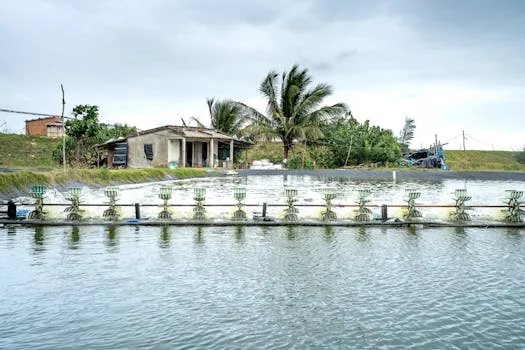
Ghana EPA LI 2267 mandates that all industrial effluent discharged into Kumasi’s water bodies must maintain a TSS below 30 mg/L and a COD below 250 mg/L. These regulations are significantly more stringent than those of a decade ago, reflecting the increased pollution load on the Subin and Oda rivers. For municipal sewage, the limits are slightly relaxed to TSS < 50 mg/L and BOD < 30 mg/L, yet many legacy systems in the city fail to meet these levels consistently.
The Kumasi Metropolitan Assembly (KMA) adds local layers of compliance, particularly concerning pH levels (which must remain between 6 and 9) and residual chlorine. For facilities discharging into sensitive ecosystems, residual chlorine must be kept under 0.5 mg/L. This has led many engineers to move away from heavy chlorination in favor of UV or ozone disinfection. the management of biosolids is a critical compliance pillar. Research indicates that Kumasi’s centralized wastewater treatment requires a 99% reduction in pathogens for sludge to be classified as "Class A" biosolids, suitable for land application (ScienceDirect 2023).
When selecting equipment, it is vital to match the technology to the specific discharge goal. For example, a DAF system is indispensable for a food processing plant in the Kumasi industrial zone to manage high FOG loads, but it may require a downstream biological stage to meet the COD limits of 250 mg/L. Conversely, MBR systems are increasingly favored for hospitality and commercial developments because they naturally meet reuse standards for irrigation, bypassing the need for extensive tertiary treatment. This is similar to how Gauteng’s suppliers compare to Kumasi’s market in terms of moving toward circular water economies.
| Parameter | Industrial Limit (LI 2267) | Municipal Limit (KMA) | Equipment Best Suited |
|---|---|---|---|
| TSS (mg/L) | < 30 | < 50 | MBR, Package Plant |
| COD (mg/L) | < 250 | < 250 | MBR, DAF (with bio) |
| BOD (mg/L) | < 50 | < 30 | MBR, Activated Sludge |
| FOG (mg/L) | < 10 | < 20 | DAF System |
| Pathogens | 99.9% reduction | 99% reduction | UV/Ozone, MBR |
Cost Breakdown: Sewage Treatment Equipment in Kumasi (2025 Data)
Capital Expenditure (CAPEX) for sewage treatment equipment in Kumasi is influenced by the degree of automation, material of construction (carbon steel vs. stainless steel), and the required treatment capacity. For 2025, package plants for small-scale applications generally range from ₵500,000 to ₵2,000,000 for flows up to 10 m³/h. As capacity increases to 50 m³/h, prices scale to between ₵2,000,000 and ₵5,000,000. Large municipal-grade package plants exceeding 80 m³/h can reach ₵12,000,000.
Operating Expenditure (OPEX) is a critical factor for Kumasi facility managers, where electricity costs are a primary concern. Energy consumption typically ranges from ₵0.20 to ₵0.50 per cubic meter of treated water. Chemical costs, primarily for coagulants and flocculants in DAF or clarifier systems, add another ₵0.10 to ₵0.30 per cubic meter. Annual maintenance, including membrane cleaning, pump servicing, and sensor calibration, should be budgeted between ₵50,000 and ₵200,000 depending on the system's complexity.
While MBR systems have a higher CAPEX (ranging from ₵1.5M for small units to over ₵10M for large-scale municipal applications), their lower OPEX in terms of sludge handling and chemical use often makes them more attractive over a 15-year lifespan. DAF systems offer a middle ground, with CAPEX starting at ₵800,000, but they require a consistent budget for chemical consumables to maintain FOG removal efficiency.
| Equipment Type | CAPEX (₵) Range | OPEX (₵/m³) | Lifespan (Years) |
|---|---|---|---|
| Package Plant (WSZ) | 500K – 5M | 0.25 – 0.45 | 15–20 |
| DAF System | 800K – 8M | 0.40 – 0.80 | 10–15 |
| MBR System | 1.5M – 10M+ | 0.30 – 0.60 | 15–25 |
| Lamella Clarifier | 300K – 2M | 0.15 – 0.35 | 20+ |
How to Choose the Right Sewage Treatment Equipment for Kumasi Projects
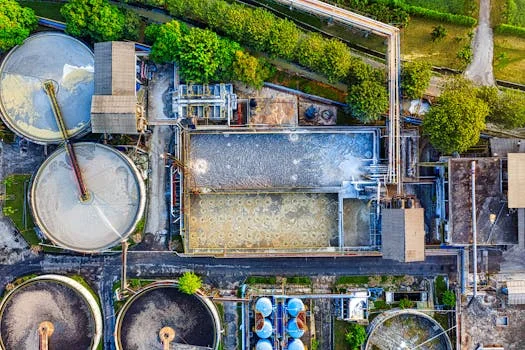
Choosing the correct equipment requires a systematic engineering approach that begins with a comprehensive lab analysis of the raw influent. In Kumasi, industrial wastewater from textile or food processing often exhibits high variability in pH and organic load, meaning a "one-size-fits-all" solution will likely fail EPA audits. The following decision framework should guide procurement managers:
Step 1: Define Influent Characteristics. Conduct 24-hour composite sampling to determine average and peak levels of TSS, COD, FOG, and pH. Typical Kumasi food processing wastewater may show FOG levels above 500 mg/L, necessitating a DAF unit as a primary stage.
Step 2: Match Equipment to Compliance. If the goal is river discharge, a package plant or MBR is necessary to hit the < 30 mg/L TSS target. If the goal is simple pre-treatment before discharging into a municipal sewer, a Lamella clarifier might suffice.
Step 3: Evaluate Footprint Constraints. For existing facilities in dense industrial zones like Asokwa, space is at a premium. MBR systems provide the highest treatment density, while WSZ series package plants can be installed underground to preserve surface space for logistics and parking.
Step 4: Compare CAPEX vs. OPEX. A DAF system has a lower initial cost but higher ongoing chemical expenses. An MBR system requires a higher upfront investment but offers lower long-term costs through reduced sludge volume and the potential for water reuse savings.
Step 5: Assess Local Support. Ensure the supplier provides on-site training for Kumasi-based operators and maintains a local inventory of critical spare parts, such as air diffusers, filter membranes, and dosing pumps. Documentation support for Ghana EPA permitting is a non-negotiable requirement.
Decision Logic: If the site is space-constrained and requires high-quality effluent for reuse, then consider an MBR System. If the wastewater has high oil and grease content (e.g., slaughterhouses or palm oil mills), then consider a DAF System. If the project is a residential development requiring low-maintenance, hidden infrastructure, then consider a WSZ Package Plant.
ROI Calculator: Sewage Treatment Equipment for Kumasi Facilities
The return on investment (ROI) for sewage treatment equipment in Kumasi is calculated by balancing the cost of the system against the avoidance of EPA fines and the reduction in freshwater procurement costs. EPA fines for non-compliance in the Ashanti Region can range from ₵200,000 to over ₵1,000,000 per year for repeat offenders, making compliance the fastest route to ROI.
Water reuse provides the second major pillar of ROI. With freshwater costs in Kumasi averaging ₵2.00/m³, treating effluent for reuse in non-potable applications at an OPEX of ₵0.50–₵1.50/m³ creates a direct saving of up to ₵1.50 for every cubic meter treated. For a facility processing 500 m³ per day, this translates to annual savings of over ₵270,000. Additionally, modern MBR systems are designed to be 30% more energy-efficient than the older activated sludge plants commonly found in the region (HydropureWater field data, 2025).
The formula for calculating ROI is: ROI = [(Annual Savings + Fines Avoided) - Annual OPEX] / CAPEX * 100.
| Equipment Type | Payback Period (Years) | Annual Savings (₵) | ROI (%) |
|---|---|---|---|
| MBR System (Reuse) | 3.5 – 5.0 | 450,000 – 900,000 | 22% |
| DAF System (Compliance) | 2.0 – 4.0 | 300,000 – 600,000 | 28% |
| Package Plant (WSZ) | 4.0 – 6.0 | 150,000 – 400,000 | 18% |
Frequently Asked Questions
What are the most important Ghana EPA limits for Kumasi industries in 2025?
The most critical limits under LI 2267 are TSS < 30 mg/L and COD < 250 mg/L for any industrial discharge. For food processing, FOG must be under 10 mg/L. Failure to meet these results in immediate fines. Most local suppliers now calibrate their equipment specifically to meet these 2024-2025 thresholds using multi-stage biological and mechanical filtration.
How long does it take to install a package sewage treatment plant in Kumasi?
Installation typically takes 4 to 8 weeks following site preparation. This includes 2 weeks for civil works, 1 week for mechanical installation of the WSZ or MBR units, and 1 to 2 weeks for commissioning and biomass cultivation. Local suppliers reduce this timeline by holding stock in Ghana, avoiding the 3-month shipping delay associated with international orders.
Can treated sewage water be reused for irrigation in the Ashanti Region?
Yes, provided the equipment meets the "Class A" reuse standard. MBR systems are the preferred choice for this, as they produce effluent with turbidity < 1 NTU and zero detectable fecal coliforms. This water is safe for landscaping, dust suppression, and certain industrial cooling processes, significantly reducing the facility's reliance on municipal water supplies.
Are used sewage treatment systems a viable option for Kumasi projects?
While used equipment has a lower CAPEX, it often fails to meet the 2025 Ghana EPA standards due to outdated technology. obtaining EPA certification for used machinery is difficult because of the lack of performance guarantees. Most Kumasi engineers recommend new, warranted systems to ensure long-term compliance and access to local spare parts.