Top 10 Sewage Treatment Equipment Suppliers in Gauteng: 2025 Engineering Buyer’s Guide with Costs, Compliance & ROI Data
Gauteng’s sewage treatment equipment market in 2025 offers solutions from compact package plants (ZAR 500K–2M) to industrial MBR systems (ZAR 5M–15M), with leading suppliers specializing in high-compliance and energy-efficient technologies. This guide compares 10 top equipment categories by technical specs (e.g., TSS removal: 92–99%), cost benchmarks, and ROI data to help procurement managers select equipment that meets SANS 241 and NEMA standards while optimizing payback periods (3–10 years).
Why Gauteng’s Sewage Treatment Market Demands Data-Driven Supplier Selection
Gauteng’s water stress is reaching a critical threshold, with 40% of municipal wastewater treatment plants failing to meet SANS 241 standards as of the 2023 Department of Water and Sanitation (DWS) report. For industrial facility operators and residential developers, this municipal failure shifts the burden of treatment to the private sector. Relying on outdated or undersized equipment leads to immediate compliance risks and long-term financial hemorrhaging.
The cost of non-compliance in South Africa is no longer a minor administrative hurdle. Under the National Environmental Management Act (NEMA), companies found discharging non-compliant effluent face fines of up to ZAR 5 million or 10-year imprisonment for directors. Beyond legal penalties, the operational cost of an inefficient system is staggering. A poorly designed 100 m³/h plant can incur O&M cost overruns of ZAR 200,000 to ZAR 500,000 annually due to excessive chemical dosing and sludge handling inefficiencies.
Consider the scenario of a Johannesburg-based food processing plant that recently incurred a ZAR 3.2 million fine. The facility utilized an undersized system that could not handle peak COD loads, leading to illegal discharge into the municipal grid. This failure stemmed from a "lowest-bidder" procurement strategy that ignored technical capacity in favor of initial capital savings. In Gauteng's current regulatory climate, selecting a sewage treatment equipment supplier in gauteng south africa requires a rigorous analysis of flow dynamics, peak load handling, and local effluent bylaws.
Top 10 Sewage Treatment Equipment Suppliers in Gauteng: Technical Specs Compared
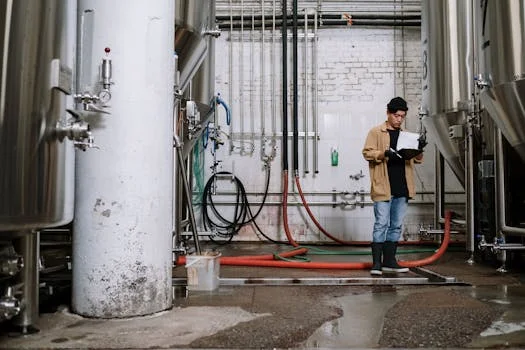
Technical specifications for sewage treatment systems in Gauteng vary significantly between modular package plants and high-capacity membrane bioreactors, with TSS removal rates ranging from 92% to 99% depending on the technology tier. When evaluating suppliers, engineers must prioritize parameters that impact the total cost of ownership, specifically energy consumption (kWh/m³) and the physical footprint required for installation in high-value Gauteng real estate.
The following matrix compares the primary equipment categories available in the Gauteng market. These benchmarks are derived from supplier data and third-party testing reports from the CSIR (Council for Scientific and Industrial Research) and DWS standards.
| Supplier Category | Equipment Type | Capacity (m³/h) | TSS Removal (%) | COD Removal (%) | Energy Use (kWh/m³) | Compliance |
|---|---|---|---|---|---|---|
| Tier 1 Local Specialist | Package Plant | 1–50 | 95% | 90% | 1.5 | SANS 241 |
| International OEM | MBR System | 10–2,000 | 99%+ | 96% | 3.5 | NEMA/SANS |
| Industrial Pretreatment | DAF System | 4–300 | 92% | 85% | 2.2 | Municipal Bylaw |
| Modular Provider | SBR Plant | 5–100 | 94% | 88% | 1.8 | SANS 241 |
| Mining Sector OEM | Clarification | 50–500 | 90% | 70% | 1.2 | DWS General |
| Commercial Specialist | Greywater Reuse | 1–20 | 98% | 92% | 2.0 | SANS 241-1 |
| Custom Engineering Firm | Activated Sludge | 100+ | 93% | 89% | 2.5 | NEMA |
| Rapid Deployment Unit | Containerized MBR | 5–50 | 99% | 95% | 3.8 | SANS 241 |
| Low-Cost Provider | Septic/Bio-Filter | 1–10 | 85% | 75% | 0.5 | Domestic Only |
| Chemical Specialist | Dosing Systems | N/A | N/A | N/A | 0.8 | SABS Approved |
While many providers offer "off-the-shelf" solutions, the most critical performance gap in Gauteng is energy efficiency. MBR systems provide the highest effluent quality for water reuse but require significantly more power than a compact sewage treatment plant for residential complexes, which balances compliance with a lower operational footprint.
Cost Breakdown: Sewage Treatment Equipment in Gauteng (2025 Data)
Capital expenditure for sewage treatment equipment in Gauteng is influenced by import duties on specialized components (15–25% for membranes) and the premium on skilled labor in the Randburg-Sandton-Midrand industrial corridor. For 2025, budgeting must account for both the hardware and the associated civil and regulatory costs.
| Equipment Type | Equipment Cost (ZAR) | Installation & Civil (ZAR) | Permitting (ZAR) |
|---|---|---|---|
| WSZ Series Package Plants | 500K – 2M | 300K – 1M | 50K – 150K |
| DAF Systems | 1M – 5M | 500K – 1.5M | 80K – 200K |
| Industrial MBR Systems | 5M – 15M | 1.5M – 4M | 150K – 300K |
| Chemical Dosing Skids | 200K – 1M | 50K – 200K | 20K – 50K |
Hidden costs often derail project budgets in Gauteng. Installation labor rates in the province range from ZAR 500 to ZAR 800 per hour, nearly double the rates found in rural provinces. civil works for underground systems can fluctuate based on Gauteng’s varied geology, from hard rock in some areas to dolomitic conditions in others. For a detailed cost breakdown for Johannesburg projects, procurement managers should factor in a 15% contingency for site-specific civil engineering requirements.
Financing is an increasingly viable route for Gauteng businesses. GreenCape’s 2025 budget includes ZAR 10 million in annual grant funding for water-efficient projects, which can be leveraged to offset the initial cost of a high-efficiency DAF system for industrial pretreatment.
Compliance Checklist: Meeting South African Standards for Sewage Treatment
Effluent discharge in South Africa is governed by a tripartite regulatory framework consisting of SANS 241, the National Environmental Management Act (NEMA), and the Water Services Act. In Gauteng, these national standards are augmented by municipal bylaws (e.g., Johannesburg Water or City of Tshwane) which often impose stricter limits on Fats, Oils, and Grease (FOG) and heavy metals due to the density of industrial activity.
To ensure equipment meets these requirements, procurement managers must verify the following documentation from any supplier:
- SANS 241 Certification: Effluent must meet Class 1 or 2 standards if any form of reuse or irrigation is intended.
- DWS General Authorization: Proof that the equipment can consistently meet COD < 75 mg/L and TSS < 25 mg/L.
- NEMA Registration: Environmental authorization from the Gauteng Department of Agriculture and Rural Development (GDARD) for plants processing over 2,000 m³ per day.
- Certified Test Reports: Recent performance data verified by SABS or CSIR labs.
A common compliance failure in the Gauteng market involves "silent" chemical use. Some suppliers achieve high TSS removal by dosing excessive amounts of chlorine or aluminum sulfate without disclosing the chemical residual limits, which can lead to municipal fines. Always request a 12-month projected chemical consumption and sludge disposal plan before final selection.
ROI Calculator: Which Sewage Treatment System Pays Back Fastest in Gauteng?
The return on investment for sewage treatment equipment in Gauteng is primarily driven by the avoidance of municipal sewerage fees, which currently range from ZAR 50 to ZAR 150 per m³ depending on the effluent's strength. By treating and reusing water on-site, facilities can achieve a payback period of 3 to 10 years.
The standard ROI formula for these systems is: (Capital Cost + Installation) / (Annual Savings - Annual O&M Costs).
| System Type | Avg. O&M (ZAR/m³) | Annual Savings (Est) | Payback Period |
|---|---|---|---|
| Package Plant | 1.5 – 3.0 | ZAR 720,000 | 3.2 Years |
| DAF System | 2.0 – 4.0 | ZAR 1,200,000 | 4.5 Years |
| MBR System | 3.0 – 6.0 | ZAR 2,500,000 | 6.8 Years |
For example, a 50 m³/h package plant costing ZAR 1.8 million can save a facility ZAR 720,000 per year in avoided sewerage fees. After accounting for ZAR 150,000 in annual maintenance (electricity, sludge removal, and labor), the system pays for itself in just over three years. For projects requiring high-purity water for cooling towers or irrigation, an MBR system for water reuse in hotels and commercial buildings offers the highest long-term ROI despite the larger upfront investment, as it replaces expensive municipal potable water (ZAR 20–50/m³).
Supplier Selection Framework: 5 Questions to Ask Before Signing a Contract
Selecting a sewage treatment equipment supplier in gauteng south africa requires looking beyond the price tag to ensure long-term operational viability. Use this framework to vet potential partners during the RFP process:
- Scalability: Is the system modular? Can it handle a 20% increase in flow if your facility expands, or will you need to replace the entire unit? Modular MBRs are typically superior in this regard compared to fixed DAF units.
- Local Support: Does the supplier have technicians based in Gauteng? A 48-hour response time is the industry standard; avoid suppliers who must fly engineers in from Cape Town or overseas.
- Customization: Can the supplier provide a comparison of modular vs. conventional systems tailored to your specific influent (e.g., high sugar content for beverage plants vs. high protein for abattoirs)?
- Training: Do they provide a certified operator training program? High-tech systems like MBR require specialized knowledge that your existing maintenance staff may lack.
- Gauteng Case Studies: Can they provide references for a similar project in Midrand, Sandton, or Vanderbijlpark? Local references prove the supplier understands Gauteng’s specific water chemistry and municipal inspectors.
For industrial applications, refer to this Gauteng-specific industrial wastewater guide to ensure your equipment checklist aligns with regional environmental priorities.
Frequently Asked Questions
Q: What is the average price of a sewage treatment plant in Gauteng?
A: Package plants typically cost between ZAR 500,000 and ZAR 2 million for capacities of 1–50 m³/h. Industrial-grade MBR systems range from ZAR 5 million to ZAR 15 million. It is vital to budget an additional 20–30% for civil works and permitting.
Q: Which sewage treatment system is best for a residential complex in Gauteng?
A: Underground package plants (WSZ Series) are the preferred choice. They offer 95% TSS removal, operate quietly, and have a small footprint, making them ideal for complexes with 50 to 500 units. They ensure compliance with SANS 241 for garden irrigation use.
Q: How do I verify a supplier’s compliance with South African standards?
A: Request a formal compliance pack including SABS/CSIR test reports, a letter of General Authorization from the DWS, and proof of GDARD registration. If a supplier cannot produce these, the risk of municipal fines (up to ZAR 5M) falls entirely on the property owner.
Q: What are the maintenance costs for sewage treatment equipment in Gauteng?
A: Maintenance (O&M) ranges from ZAR 1.5 to ZAR 6.0 per cubic meter treated. Package plants are the most economical (ZAR 1.5–3.0/m³), while MBR systems are higher (ZAR 3.0–6.0/m³) due to the cost of membrane replacement every 5 to 7 years.
Q: Can I install a sewage treatment plant without a permit in Gauteng?
A: No. You must obtain a discharge permit from your local municipality (e.g., Johannesburg Water) and, in most cases, environmental authorization from GDARD. These permits can take 3 to 6 months to process and cost between ZAR 50,000 and ZAR 200,000 in professional fees.