Why Munich Hospitals Need Specialized Wastewater Treatment
Munich hospitals are under increasing pressure to manage their wastewater effectively, driven by stringent EU and German environmental regulations. While approximately 98% of hospital effluent in Munich is directed to municipal wastewater treatment plants (WWTPs), as per Stadtentwässerung München data from 2023, pre-treatment is often mandatory, especially for facilities discharging into sensitive areas. The unique contaminant profile of hospital wastewater, characterized by high Chemical Oxygen Demand (COD) ranging from 300–1,200 mg/L, Biological Oxygen Demand (BOD) of 150–600 mg/L, and Suspended Solids (TSS) between 100–400 mg/L, alongside significant levels of pharmaceutical residues and pathogens like E. coli and Pseudomonas, necessitates specialized treatment beyond standard municipal capabilities (WHO 2022 hospital wastewater guidelines). A prime example is Klinikum rechts der Isar, Munich’s largest university hospital. Following a 300-bed expansion in 2024, the hospital undertook a €2.1 million wastewater system upgrade. This upgrade not only incorporated advanced heat recovery technologies, such as the Huber SE system which demonstrably reduces energy costs by approximately 30%, but also integrated Membrane Bioreactor (MBR) filtration to meet increasingly strict Bavarian discharge limits for emerging contaminants. Failure to comply with the German Wastewater Ordinance (AbwV) can lead to substantial penalties, with the Bavarian Environmental Agency reporting fines of up to €50,000 and potential operational shutdowns for non-compliant facilities in 2023.
EU and German Hospital Wastewater Discharge Standards: 2025 Compliance Checklist
Ensuring compliance with the complex web of EU and German wastewater regulations is paramount for Munich hospitals. The EU Urban Waste Water Directive 91/271/EEC sets critical discharge limits for sensitive areas, including Munich. For BOD₅, the limit is <25 mg/L; for COD, it’s <125 mg/L; and for TSS, it's <35 mg/L. the directive mandates limits for total nitrogen (<15 mg/L) and total phosphorus (<2 mg/L) as outlined in Annex I. The German AbwV (Wastewater Ordinance) imposes additional stringent requirements, specifying a pH range of 6–9, a maximum temperature of 35°C, and strict limits for heavy metals, such as mercury (<0.05 mg/L) and cadmium (<0.1 mg/L). Bavarian state-specific rules further refine these requirements, mandating pre-treatment for hospitals exceeding 200 beds and requiring quarterly sampling for pharmaceutical residues like carbamazepine and diclofenac, as per the BayAbwV 2024. Looking ahead, the proposed EU Pharmaceutical Strategy, expected to introduce limits for 12 priority pharmaceutical substances (e.g., ciprofloxacin, 17β-estradiol) by 2026, necessitates proactive planning and system upgrades (European Commission 2024 draft). To aid facility managers and engineers in navigating these requirements, a comprehensive compliance audit is essential.
| Step | Action | Frequency/Notes | Compliance Status (Y/N) |
|---|---|---|---|
| 1 | Verify current discharge permits against EU Directive 91/271/EEC and German AbwV. | Annually | |
| 2 | Confirm adherence to sensitive area limits (BOD₅ <25 mg/L, COD <125 mg/L, TSS <35 mg/L). | Monthly sampling and analysis | |
| 3 | Monitor pH, temperature, and heavy metal concentrations. | Daily for pH/Temp, Quarterly for metals | |
| 4 | Implement quarterly sampling for key pharmaceutical residues (e.g., carbamazepine, diclofenac). | Quarterly (as per Bavarian rules) | |
| 5 | Assess readiness for potential 2025/2026 EU Pharmaceutical Strategy limits (priority substances). | Ongoing review of EU directives | |
| 6 | Maintain detailed records of all sampling, analysis, and maintenance activities. | Continuous; 5-year retention | |
| 7 | Establish a reporting protocol to the local environmental authority (e.g., Kreisverwaltungsreferat in Munich). | As required by permit, minimum annually | |
| 8 | Ensure pre-treatment systems are operational and meet capacity requirements (>200 beds). | Weekly checks, Annual full service | |
| 9 | Conduct regular operator training on system operation and emergency procedures. | Bi-annually | |
| 10 | Review and update the hospital's wastewater management plan annually. | Annually |
Hospital Wastewater Treatment Technologies: Engineering Specs and Use-Case Matching
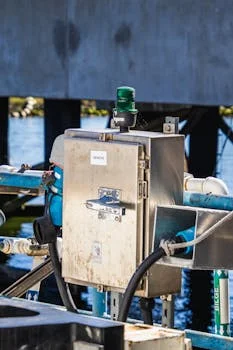
Selecting the appropriate wastewater treatment technology is critical for Munich hospitals to meet stringent discharge standards, particularly concerning pharmaceutical residues and pathogens. A comparative analysis of leading technologies reveals distinct advantages and disadvantages based on specific hospital needs and operational constraints. Membrane Bioreactor (MBR) systems, utilizing PVDF membranes with a pore size of approximately 0.1 μm, are highly effective, achieving up to 99% pathogen removal and 95% COD reduction. However, MBRs necessitate robust pre-screening, such as that provided by GX Series Rotary Mechanical Bar Screens, to prevent membrane fouling. These systems are ideal for space-constrained urban hospitals in Munich due to their compact footprint. Dissolved Air Flotation (DAF) systems excel at removing 92–97% of TSS and 60–80% of fats, oils, and grease (FOG). Optimal performance requires chemical dosing, typically with polyaluminum chloride, making them suitable for hospitals with a high solids loading, such as large surgical centers. For pathogen inactivation, Chlorine Dioxide (ClO₂) generators offer a powerful solution. These generators produce 50–20,000 g/h of ClO₂, achieving a 99.9% pathogen kill rate with minimal disinfection byproducts (DBPs). ClO₂ is particularly favored in hospitals with existing chemical dosing infrastructure. A notable case study from the Bavarian Hospital Association (2023) highlighted a 150-bed Munich hospital that successfully reduced pharmaceutical residues by 85% through a combined MBR and ClO₂ treatment approach, effectively meeting the proposed 2025 draft EU limits. While advanced oxidation processes (AOPs) can offer further pharmaceutical removal, their higher energy consumption and complexity often make MBR and ClO₂ a more practical choice for Munich’s current regulatory landscape.
| Technology | Primary Application | Typical COD Removal Efficiency (%) | Typical BOD Removal Efficiency (%) | Typical TSS Removal Efficiency (%) | Pathogen Removal (%) | Pharmaceutical Removal (%) | Footprint | Energy Use (kWh/m³) | Estimated OPEX (€/m³) |
|---|---|---|---|---|---|---|---|---|---|
| MBR (e.g., /product/2-mbr-integrated-wastewater-treatment.html) | High-quality effluent, space-constrained sites | 90-95 | 95-99 | 98-99.9 | 99+ | 30-60 (variable, depends on specific compounds) | Small | 0.8 - 1.5 | 0.60 - 1.10 |
| DAF (e.g., /product/4-dissolved-air-flotation-daf-machine.html) | High solids and FOG loading | 60-80 | 50-70 | 92-97 | Moderate (relies on TSS removal) | 10-30 | Medium | 0.3 - 0.7 | 0.30 - 0.60 |
| Chlorine Dioxide (ClO₂) (e.g., /product/11-chlorine-dioxide-generator.html) | Disinfection, odor control | N/A (primarily disinfectant) | N/A | N/A | 99.9+ | 10-25 (oxidative effect) | Small (generator) | 0.1 - 0.3 | 0.10 - 0.25 |
| Ozone (AOP) | Advanced oxidation, recalcitrant compounds | 80-95 | 70-90 | N/A | 99.9+ | 60-95 (highly variable) | Medium | 1.5 - 3.0 | 0.40 - 0.80 |
Cost Breakdown: Hospital Wastewater Treatment Systems in Munich (2025)
Budgeting for hospital wastewater treatment systems in Munich requires a clear understanding of both capital expenditure (CAPEX) and operational expenditure (OPEX). For a system capable of treating 50 m³/day, typical for a small clinic, CAPEX can range from €800,000 to €1.2 million. Larger regional hospitals requiring a capacity of 200 m³/day can expect CAPEX between €2 million and €3.5 million. University hospitals, such as Klinikum rechts der Isar with its extensive capacity, may face CAPEX exceeding €4 million to €5 million. OPEX is a significant ongoing cost, generally falling between €0.50 and €1.20 per cubic meter of treated wastewater. This OPEX is primarily driven by energy consumption (30–40%), chemical usage (20–30%), membrane replacement costs for MBR systems (15–25%), and labor (10–15%). For instance, a 200 m³/day MBR system might incur OPEX of €0.80–€1.20/m³ treated, according to data from the Munich Hospital Engineering Consortium (2024). The return on investment (ROI) can be enhanced by integrating heat recovery systems, like the Huber SE solution at Klinikum rechts der Isar, which can save an estimated €120,000 annually. Water reuse for non-potable applications and the avoidance of substantial fines for non-compliance (up to €50,000 annually) also contribute significantly to the financial justification. Munich hospitals can explore funding avenues such as Bavarian state grants, which can cover up to 40% of CAPEX for energy-efficient systems, and EU LIFE Program funding specifically for projects focused on pharmaceutical removal.
| System Size (m³/day) | Estimated CAPEX (€) | Estimated OPEX (€/m³)** | Typical Payback Period (Years)* |
|---|---|---|---|
| 50 (Small Clinic) | 800,000 – 1,200,000 | 0.50 – 0.90 | 5 – 8 |
| 200 (Regional Hospital) | 2,000,000 – 3,500,000 | 0.60 – 1.10 | 4 – 7 |
| 500 (University Hospital) | 4,000,000 – 5,000,000+ | 0.70 – 1.20 | 3 – 6 |
| *Payback period is highly dependent on energy savings, water reuse, and avoided fines. | |||
| **OPEX includes energy, chemicals, maintenance, and sludge disposal. MBR systems may have higher membrane replacement costs. | |||
Vendor Selection Checklist: 10 Questions to Ask Munich Wastewater Treatment Suppliers
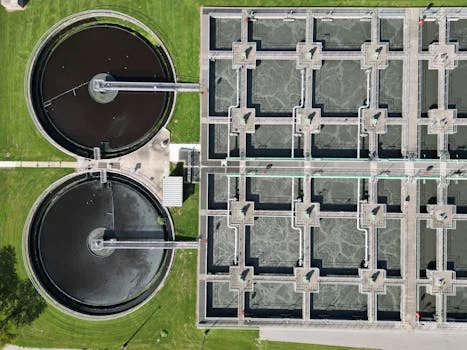
Selecting the right vendor is crucial for the successful implementation and long-term performance of a hospital wastewater treatment system. A rigorous evaluation process, guided by specific questions, ensures that the chosen supplier can meet the unique demands of Munich’s regulatory environment and the hospital’s operational needs. Facility managers and procurement teams should prioritize vendors with demonstrable expertise in navigating EU Directive 91/271/EEC and the Bavarian AbwV, including specific experience with pharmaceutical residue limits. Requesting local references from Munich hospitals with similar system sizes and contaminant profiles provides invaluable insight into real-world performance and client satisfaction. Performance guarantees are paramount; inquire about guaranteed removal efficiencies for key parameters like COD, BOD, TSS, and pathogens, and understand the penalties for non-compliance with these guarantees. Crucially, clarify the vendor's maintenance and support structure, including emergency service response times within Munich and the scope of warranty coverage. Energy efficiency is another key consideration; ask for specific energy consumption figures (kWh/m³ treated) and whether heat recovery options can be integrated. A structured checklist helps in objectively comparing vendors and ensuring all critical aspects are covered.
| # | Question | Vendor Response (Y/N/Details) | Score (1-5) |
|---|---|---|---|
| 1 | Can you provide a turnkey solution that meets EU Directive 91/271/EEC and Bavarian AbwV requirements, including pharmaceutical residue limits? | ||
| 2 | Provide 3 Munich hospital references with similar system sizes and contaminant profiles. | ||
| 3 | What specific removal efficiencies (COD, BOD, TSS, pathogens, pharmaceuticals) are guaranteed, and what are the penalties for non-compliance? | ||
| 4 | What is your emergency service response time in Munich, and what is included in the warranty? | ||
| 5 | What is the specific energy consumption (kWh/m³ treated) for your system, and can you provide a heat recovery option? | ||
| 6 | Describe your experience with pharmaceutical residue removal technologies and their efficacy. | ||
| 7 | What are the projected CAPEX and OPEX for a system sized for our hospital's daily flow rate? | ||
| 8 | What training and ongoing support do you offer for hospital maintenance staff? | ||
| 9 | Can you provide case studies or data demonstrating successful implementation in similar healthcare settings? | ||
| 10 | What is your approach to system modularity and future expansion or upgrades? |
Frequently Asked Questions
What is the pH of hospital wastewater? The pH of hospital wastewater typically ranges from 6.5 to 8.5. However, it can fluctuate significantly due to specific operational activities. For instance, accidental spills of disinfectants can temporarily lower the pH to 4–5, while intensive cleaning cycles might increase it to 9–10 (source: WHO 2022). Maintaining pH within the acceptable range is critical for the efficiency of biological treatment processes and for meeting regulatory discharge limits.
What is an STP plant in a hospital? An STP plant, or Sewage Treatment Plant, is an on-site system designed to treat wastewater generated by a hospital before it is discharged. These systems employ various technologies to remove pollutants. For example, Klinikum rechts der Isar’s STP integrates heat recovery with advanced MBR filtration to ensure compliance with stringent environmental standards.
What is an effluent treatment plant for hospitals? An Effluent Treatment Plant (ETP) is a general term for systems that treat wastewater from industrial or medical facilities. In a hospital context, an ETP typically includes primary treatment stages like screening and equalization, followed by secondary biological or chemical treatment processes such as MBR, DAF, or chlorine dioxide disinfection to remove a broad spectrum of contaminants.
How much does hospital wastewater treatment cost in Munich? In Munich, the capital expenditure (CAPEX) for hospital wastewater treatment systems can range from approximately €800,000 for a 50 m³/day system to over €5 million for a 500 m³/day university hospital system. Operational expenditure (OPEX) typically falls between €0.50 to €1.20 per cubic meter treated, depending on the chosen technology and energy efficiency of the system (source: Munich Hospital Engineering Consortium 2024). For alternative approaches to pharmaceutical removal, consider how Munich’s standards compare to other regions.
What are the discharge limits for hospital wastewater in Munich? Munich hospitals must adhere to the EU Directive 91/271/EEC limits for sensitive areas, which include BOD₅ <25 mg/L, COD <125 mg/L, and TSS <35 mg/L. The German AbwV adds further requirements, such as maintaining a pH between 6 and 9 and keeping the temperature below 35°C. Specialized compact hospital wastewater treatment systems for Munich clinics are often designed to meet these combined stringent requirements.
Related Equipment
The following HydropureWater products are engineered for the wastewater challenges discussed above:
- compact hospital wastewater treatment systems for Munich clinics — view specifications, capacity range, and technical data
Need a customized solution? Request a free quote with your specific flow rate and pollutant parameters.