Brazil’s MBR (Membrane Bioreactor) wastewater treatment systems combine activated sludge treatment with submerged PVDF membrane filtration (0.08–0.1 µm pore size) to deliver near-reuse-quality effluent (<1 NTU turbidity, <5 ppm BOD) while reducing footprint by 60% vs. conventional systems. In 2025, CAPEX for municipal MBR plants in Brazil ranges from BRL 5M (100 m³/day) to BRL 20M (1,000 m³/day), with OPEX of BRL 0.80–1.50/m³. Key drivers include CONAMA 430/2011 discharge limits, water scarcity in São Paulo/industrial hubs, and industrial reuse mandates. Local suppliers (e.g., Grupo EP) and international vendors (e.g., Toray, Veolia) compete on membrane lifespan, energy efficiency, and after-sales support.
Why Brazil’s Wastewater Challenges Demand MBR Technology
Brazil faces increasing water scarcity and stringent environmental regulations, making advanced wastewater treatment systems like MBR essential for sustainable development. São Paulo’s severe 2014–2016 water crisis, which saw reservoir depletion by 20%, significantly accelerated industrial water reuse adoption, with MBR systems enabling 70–90% recovery rates (per Veolia 2023 data). This directly reduces reliance on freshwater sources, critical for industrial continuity in regions prone to drought.
Brazil’s CONAMA 430/2011 resolution sets strict discharge limits for water bodies, such as BOD <5 ppm for Class 2 rivers. Conventional activated sludge systems often struggle to consistently meet these low discharge limits without extensive tertiary treatment, as demonstrated by the need for advanced solutions in facilities like Toray’s Mirassol plant, which opted for MBR to achieve <5 ppm BOD. MBR’s inherent ability to produce high-quality effluent makes compliance more reliable.
Industrial sectors, including food and beverage, pulp and paper, and textiles, are increasingly subject to state-level reuse mandates. For instance, São Paulo’s Law 16.337/2016 promotes industrial water reuse, making MBR’s consistent high-quality effluent (<1 NTU turbidity) critical for meeting reuse standards for non-potable applications like cooling towers and process water. MBR technology ensures the treated water meets the necessary parameters for these applications.
Brazil’s diverse climate, with temperature ranges typically spanning 15–35°C, significantly impacts biological treatment efficiency. While conventional systems can experience performance fluctuations with temperature shifts, MBR systems offer greater resilience. The high biomass concentration and long sludge retention times inherent to MBR allow for more stable biological activity across varying temperatures, ensuring consistent treatment performance even under challenging climatic conditions.
How MBR Systems Work: Engineering Principles for Brazilian Projects
MBR systems integrate biological treatment with membrane filtration, offering a compact and efficient solution for high-quality wastewater treatment. The typical MBR process flow involves three main stages: (1) Anoxic and aerobic biological treatment within a bioreactor, (2) membrane filtration where treated water is drawn through submerged membranes, and (3) a final disinfection stage using chlorine dioxide or UV to ensure effluent quality. In a typical configuration, the bioreactor tank contains submerged flat-sheet or hollow-fiber membranes, where the activated sludge is retained, allowing only clean water to permeate.
Membrane types are a critical consideration for Brazilian applications due to varying influent characteristics. Flat-sheet membranes, such as those used in HydropureWater’s DF series PVDF flat-sheet membrane modules (0.1 µm pore size), are often preferred for their robustness against fouling and easier maintenance, typically operating with energy consumption of 0.3–0.5 kWh/m³. Hollow-fiber membranes, exemplified by GE ZeeWeed, offer higher packing density and typically operate at 0.4–0.7 kWh/m³ but can be more susceptible to irreversible fouling from certain industrial influents. The choice depends on the specific wastewater quality and operational priorities.
Flux rates, or the volume of permeate produced per unit of membrane area per hour, are tailored to influent type. For municipal sewage, typical flux rates range from 15–25 L/m²/h, with Toray’s Mirassol plant achieving 25 L/m²/h. Industrial wastewater, especially from sectors like textile or food processing with higher organic loads and suspended solids, typically requires lower flux rates of 10–20 L/m²/h to mitigate membrane fouling.
Sludge retention time (SRT) in MBR systems is generally 15–30 days for municipal applications and 10–20 days for industrial wastewater. Brazil’s warm climate, which promotes faster biological kinetics, often allows for shorter required SRTs compared to temperate regions, contributing to smaller bioreactor volumes and reduced capital costs.
Effective membrane cleaning protocols are vital for sustaining flux and extending membrane lifespan. These typically involve regular backwashing with permeate and periodic chemical cleaning using agents like sodium hypochlorite (NaOCl) to remove foulants. The frequency and intensity of these cleaning cycles vary significantly with influent quality; for instance, wastewater with high FOG (fats, oils, and grease) loads, common in food processing, necessitates more frequent and robust chemical cleaning regimens.
| Parameter | Flat-Sheet Membranes | Hollow-Fiber Membranes |
|---|---|---|
| Pore Size | 0.08–0.1 µm | 0.04–0.1 µm |
| Energy Consumption (Aeration) | 0.3–0.5 kWh/m³ | 0.4–0.7 kWh/m³ |
| Fouling Resistance | High (easier cleaning) | Moderate (can be more prone to clogging) |
| Packing Density | Lower | Higher |
| Maintenance Complexity | Lower | Higher |
| Typical Applications | Industrial, High TSS/FOG | Municipal, Lower TSS |
HydropureWater’s integrated MBR system (10–2,000 m³/day) offers robust performance for diverse Brazilian wastewater challenges.
MBR vs. Conventional Systems: Performance, Cost, and Compliance Comparison for Brazil
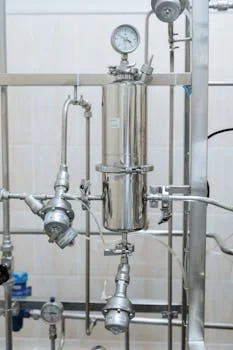
MBR systems consistently outperform conventional wastewater treatment technologies in effluent quality and footprint, making them highly attractive for meeting Brazil’s stringent discharge and reuse standards. While conventional activated sludge and MBBR (Moving Bed Biofilm Reactor) systems offer viable solutions, MBR's integrated design provides distinct advantages, particularly in urban areas or for industrial water reuse applications.
| Metric | MBR System | Conventional Activated Sludge | MBBR System |
|---|---|---|---|
| Effluent Quality | BOD <5 ppm, TSS <2 ppm, Turbidity <1 NTU | BOD 20–30 ppm, TSS 20–30 ppm, Turbidity 5–10 NTU (without tertiary) | BOD 10–20 ppm, TSS 10–20 ppm, Turbidity 2–5 NTU (with tertiary) |
| Footprint (m²/m³/day) | 0.05–0.1 | 0.15–0.25 | 0.1–0.18 |
| Energy Consumption (kWh/m³) | 0.8–1.5 (including aeration & membranes) | 0.3–0.6 (aeration & pumping) | 0.4–0.8 (aeration & pumping) |
| Sludge Production (kg TSS/kg BOD removed) | 0.4–0.6 | 0.5–0.8 | 0.3–0.5 |
| Capital Expenditure (BRL/m³/day) | 50,000–80,000 | 20,000–40,000 | 30,000–55,000 |
| Operational Expenditure (BRL/m³) | 0.80–1.50 (municipal), 1.20–2.00 (industrial) | 0.40–0.80 | 0.60–1.00 |
MBR systems excel in meeting CONAMA 430/2011 discharge limits, consistently achieving BOD <5 ppm and TSS <20 ppm, which is critical for discharge into sensitive Class 2 rivers. Conventional activated sludge systems typically achieve BOD 20–30 ppm without tertiary treatment, often requiring additional clarification or filtration steps, such as Lamella clarifiers for tertiary treatment in conventional systems, to meet stricter limits. While MBR’s initial CAPEX (BRL 50,000–80,000 per m³/day) is generally higher than conventional systems (BRL 20,000–40,000 per m³/day), its OPEX of BRL 0.80–1.50/m³ (municipal) includes membrane replacement costs (BRL 80–150/m² with a 5–8 year lifespan), which are factored into the lifecycle cost.
For Brazilian projects, the decision tree often favors MBR for water reuse in industrial hubs or where strict compliance is paramount due to its superior effluent quality and smaller footprint. Activated sludge remains a cost-effective option for rural municipal plants with lower reuse demand and less stringent discharge requirements. MBBR systems strike a balance, offering a compact footprint and good performance for sites requiring moderate upgrades without full MBR investment.
Designing an MBR System for Brazil: Key Parameters and Local Challenges
Designing an MBR system for Brazil requires careful consideration of influent variability, climatic conditions, and specific industrial challenges to ensure optimal performance and longevity. Influent variability is a significant factor, necessitating designs that can handle peak flows of 2–3 times the average daily flow and wide organic load fluctuations. For example, food processing wastewater can have COD levels ranging from 1,000–5,000 mg/L, while municipal sewage typically falls between 300–800 mg/L COD. The system must be robust enough to manage these swings without compromising effluent quality.
Brazil’s temperature range, typically 15–35°C, profoundly impacts biological kinetics within the bioreactor. Higher temperatures generally accelerate microbial activity, which can reduce the required bioreactor volume. However, aeration rates must be precisely controlled to maintain dissolved oxygen (DO) levels, typically 1.5–2.5 mg/L, which are optimal for biological treatment within this temperature range and prevent membrane fouling. Adjustments to mixed liquor suspended solids (MLSS) concentrations are also necessary; higher MLSS (>8,000 mg/L) can be maintained at warmer temperatures to enhance treatment efficiency.
Membrane fouling is a persistent challenge, especially with industrial wastewater high in FOG (fats, oils, and grease). Effective strategies include pre-treatment steps like HydropureWater’s DAF systems for MBR pre-treatment, which can significantly reduce FOG and suspended solids before the MBR stage. Increased aeration within the membrane tank also helps scour membrane surfaces, reducing cake layer formation. Grupo EP’s case studies in the food industry in Brazil highlight the importance of tailored pre-treatment and operational adjustments to mitigate fouling effectively.
Energy optimization is another critical design parameter. Blowers, which supply aeration for biological treatment and membrane scouring, are major energy consumers. Implementing variable-frequency drives (VFDs) for blowers can reduce energy consumption by 20–30% during low-load periods, such as nighttime municipal flows, leading to substantial operational cost savings. Proper sizing of the membrane area is based on the design flux rate, typically 1 m² per 15–25 L/h. Bioreactor volume is determined by the required F/M (food-to-microorganism) ratio, generally maintained between 0.05–0.15 kg BOD/kg MLSS/day, ensuring sufficient contact time for organic degradation.
Brazil’s MBR Regulatory Landscape: CONAMA 430, State Standards, and Water Reuse Rules
Navigating Brazil’s complex regulatory environment is crucial for any MBR project, as compliance impacts design, operation, and permitting. The cornerstone of wastewater discharge regulation is CONAMA 430/2011, which sets effluent quality limits based on the receiving water body’s classification (Class 1–4). For instance, discharge into a Class 2 river mandates strict limits such as BOD <5 ppm and TSS <20 ppm. MBR’s ability to consistently produce effluent with <1 NTU turbidity and very low BOD simplifies compliance compared to conventional systems, which often require additional polishing steps.
Beyond federal regulations, state-level standards often impose additional requirements, particularly in industrial and densely populated areas. São Paulo’s CETESB, for example, enforces Resolution 84/2005 for industrial reuse, specifying parameters for various non-potable applications. Similarly, Rio de Janeiro’s INEA has specific norms like NT 202/2018 for municipal plants. These state standards may dictate tighter limits for certain pollutants or specific monitoring frequencies, necessitating MBR systems designed for robust performance.
| Regulatory Body/Standard | Jurisdiction | Key Requirements/Focus |
|---|---|---|
| CONAMA 430/2011 | Federal | Establishes national discharge limits for effluents into water bodies (e.g., BOD <5 ppm for Class 2 rivers, TSS <20 ppm). |
| CETESB Resolution 84/2005 | São Paulo State | Defines quality parameters for industrial water reuse, promoting specific treatment levels for various applications. |
| INEA NT 202/2018 | Rio de Janeiro State | Sets technical standards for municipal wastewater treatment plants, including effluent quality for discharge. |
| ABNT NBR 13.969/1997 | National (Technical Standard) | Guidelines for non-potable water reuse, specifying quality requirements for different reuse categories. |
| São Paulo Law 16.337/2016 | São Paulo State | Mandates and incentivizes industrial water reuse, driving demand for high-quality effluent systems like MBR. |
Water reuse regulations are also gaining prominence. ABNT NBR 13.969/1997 provides national guidelines for non-potable reuse, while São Paulo’s Law 16.337/2016 directly mandates industrial reuse in certain contexts. MBR systems play a critical role in meeting these stringent reuse standards, often achieving <2 NTU turbidity, which is suitable for cooling tower makeup water, irrigation, and process water, reducing industrial reliance on freshwater. The permitting process for wastewater treatment plants in Brazil can be lengthy, typically 6–12 months, and requires extensive documentation, including environmental impact assessments for plants exceeding 1,000 m³/day capacity. Understanding São Paulo’s industrial wastewater treatment requirements is essential for project planning.
MBR System Costs in Brazil: CAPEX, OPEX, and ROI for Municipal and Industrial Projects
Understanding the financial implications of MBR systems in Brazil is crucial for project planning and securing investment. Capital Expenditure (CAPEX) for MBR plants varies significantly by scale and application. For municipal plants, CAPEX typically ranges from BRL 5M for smaller facilities (100 m³/day) to BRL 20M for larger ones (1,000 m³/day). Industrial MBR plants, designed for higher organic loads and specific effluent requirements, can see CAPEX between BRL 8M (200 m³/day) and BRL 30M (2,000 m³/day). On a per-unit basis, this translates to BRL 50,000–80,000 per m³/day of treatment capacity. Membrane replacement, a significant CAPEX component, costs BRL 80–150/m² and is typically required every 5–8 years.
Operational Expenditure (OPEX) for MBR systems in Brazil ranges from BRL 0.80–1.50/m³ for municipal wastewater and BRL 1.20–2.00/m³ for industrial applications. A typical OPEX breakdown shows energy accounting for 40–50% (primarily for aeration and pumping), labor for 20–30%, chemicals for 10–20% (for membrane cleaning), and membrane replacement amortization contributing 10–15% annually.
Return on Investment (ROI) for MBR systems is primarily driven by water reuse savings and avoided discharge fees. Industrial users in Brazil can save BRL 2.50–5.00/m³ by reusing treated wastewater, while municipal plants can mitigate discharge fees of BRL 0.50–1.50/m³. A sample ROI calculation for a 500 m³/day industrial plant demonstrates a payback period of 3–5 years, driven by significant water conservation and reduced operational costs from freshwater procurement. For municipal plants, ROI can be 7-10 years, depending on local discharge regulations and incentives.
| Parameter | Municipal MBR (500 m³/day) | Industrial MBR (500 m³/day) |
|---|---|---|
| Estimated CAPEX | BRL 25M (BRL 50,000/m³/day) | BRL 35M (BRL 70,000/m³/day) |
| Estimated OPEX/m³ | BRL 1.20 | BRL 1.60 |
| Annual OPEX (BRL) | BRL 219,000 | BRL 292,000 |
| Water Reuse Savings/m³ | N/A (focus on compliance) | BRL 3.50 |
| Avoided Discharge Fees/m³ | BRL 1.00 | BRL 0.80 |
| Annual Savings/Benefits (BRL) | BRL 182,500 | BRL 788,400 (Reuse + Avoided Fees) |
| Estimated Payback Period | ~7–10 years | ~3–5 years |
Several financing options exist for MBR projects in Brazil. The BNDES (Brazilian Development Bank) offers attractive long-term loans for municipal sanitation projects, supporting infrastructure development. Public-private partnership (PPP) models are also increasingly utilized for industrial reuse projects, enabling private investment in exchange for long-term operational contracts and guaranteed water supply.
Selecting an MBR Supplier for Brazil: Checklist and Local vs. International Vendors
Choosing the right MBR supplier in Brazil involves balancing advanced technology with local expertise, ensuring long-term operational success and regulatory compliance. A thorough evaluation process is critical to mitigate risks and optimize investment. Key criteria include membrane lifespan, which should ideally be 5–8 years, and energy efficiency, with systems typically operating between 0.3–0.7 kWh/m³. Robust after-sales support, including local service centers and readily available spare parts, is paramount for minimizing downtime in Brazil. Suppliers must demonstrate clear compliance with CONAMA 430/2011 and relevant state standards, backed by proven case studies in Brazilian operating conditions.
| Selection Criterion | Key Questions to Ask | Ideal Response/Consideration |
|---|---|---|
| Membrane Lifespan | What is the guaranteed membrane lifespan? What are typical replacement cycles in similar Brazilian projects? | 5–8 years, with clear warranty and performance guarantees. |
| Energy Efficiency | What is the system's specific energy consumption (kWh/m³)? Are VFDs included for blowers? | 0.3–0.7 kWh/m³; VFDs for blowers for 20–30% energy savings. |
| After-Sales Support | Do you have local service centers, technical staff, and spare parts inventory in Brazil? What is the response time for emergencies? | Yes, local presence is crucial; 24/7 support preferred. |
| Regulatory Compliance | How does your system ensure compliance with CONAMA 430/2011 and specific state standards (e.g., CETESB)? | Proven track record of meeting <5 ppm BOD, <1 NTU turbidity; regulatory expertise. |
| Case Studies in Brazil | Can you provide references or site visits to MBR installations in Brazil, especially for similar influent types? | Multiple successful installations, especially for high-FOG or specific industrial sectors. |
| Fouling Prevention | What specific strategies are employed for high-FOG influent? What is the warranty for membrane fouling? | Integrated pre-treatment (DAF), optimized aeration, robust cleaning protocols. |
| Lead Times | What are the typical lead times for membrane modules and complete systems? | Preferably shorter lead times (e.g., 3-6 months) for critical components. |
Local suppliers like Grupo EP, based in São Paulo, have a distinct advantage with over 20 MBR installations across Brazil. Their deep understanding of local regulations, climate, and operational challenges can lead to more tailored and responsive solutions. Other regional EPCs and Saneamento Ambiental in Rio de Janeiro also offer localized expertise. Conversely, international suppliers such as Toray (Japan), known for its Mirassol plant, Veolia (France), with a significant São Paulo reuse project, and Suez (France) provide access to advanced membrane technology and global R&D. However, they may involve longer lead times (6–12 months) and potentially higher CAPEX due to import logistics and currency fluctuations.
When issuing an RFP, key questions to ask suppliers include: "What is the guaranteed flux rate at 30°C for my specific wastewater type?" "What is the warranty for membrane fouling in high-FOG influent, and what are the recommended pre-treatment solutions?" "Can you provide a detailed lifecycle cost analysis for a 10-year period, including projected membrane replacement and energy costs?"
Frequently Asked Questions
Which is better for Brazil: MBR or MBBR?
MBR is generally better for projects in Brazil requiring high-quality effluent for water reuse or strict compliance with CONAMA 430/2011 discharge limits. MBBR systems are often more suitable for cost-sensitive municipal plants in rural areas with lower reuse demand and less stringent discharge requirements, offering a balance between performance and investment.
What are the disadvantages of MBRs in Brazil?
The primary disadvantages of MBRs in Brazil include higher CAPEX compared to conventional systems, potential membrane fouling issues (especially with high-FOG industrial influent), higher energy consumption (mainly for aeration and pumping), and the need for skilled operators for optimal performance and maintenance.
How does Brazil’s sewage problem impact MBR adoption?
Brazil’s significant sewage problem, with approximately 50% of sewage untreated (SNIS 2023), drives demand for compact, high-efficiency wastewater treatment systems like MBR, particularly in rapidly urbanizing areas. MBR's small footprint and high effluent quality make it ideal for addressing sanitation deficits in space-constrained urban environments and for protecting receiving water bodies.
What is the typical payback period for an MBR system in Brazil?
The typical payback period for an MBR system in Brazil ranges from 3–7 years for industrial water reuse projects, where significant savings are realized from reduced freshwater consumption and avoided discharge fees. For municipal plants, where benefits are often measured in compliance and environmental protection, the payback period can be longer, typically 7–10 years.
Can MBR systems handle Brazil’s industrial wastewater (e.g., textiles, food processing)?
Yes, MBR systems can effectively handle Brazil’s diverse industrial wastewater, including from textiles and food processing. However, proper pre-treatment (such as Dissolved Air Flotation or DAF for high-FOG loads) and adjusted flux rates (typically 10–20 L/m²/h for industrial wastewater) are crucial to prevent membrane fouling and ensure stable operation.