Wisconsin wastewater treatment plant costs in 2025 range from $900,000 for small village upgrades (such as the Cascade project) to $484 million for statewide infrastructure initiatives, with municipal plants averaging $6 million to $55 million depending on capacity and technology. For example, Baldwin’s $18 million plant, supported by a $3.575 million USDA grant, serves as a critical benchmark for rural communities, while Portage’s $55 million upgrade highlights the significant capital required for advanced biosolids drying and nutrient removal. Key cost drivers include the chosen treatment method—conventional activated sludge typically costs $3 to $8 per gallon, while Membrane Bioreactor (MBR) systems range from $5 to $12 per gallon—compliance with Wisconsin DNR standards, and the chosen financing structure. Use this guide to compare technologies, estimate budgets, and calculate ROI for your project.
Why Wisconsin’s Wastewater Treatment Costs Are Rising in 2025
The Wisconsin Department of Natural Resources (DNR) NR 217 standards for phosphorus and nutrient reduction necessitate significant capital upgrades for approximately 60% of the state’s municipal treatment facilities in 2025. According to DNR 2024 compliance reports, these regulations impose stringent effluent limits that conventional secondary treatment often cannot meet without supplemental filtration or chemical precipitation stages. This regulatory pressure is compounded by the fact that 40% of Wisconsin’s 600+ wastewater plants are over 30 years old, according to the EPA Clean Watersheds Needs Survey, meaning many facilities are operating beyond their original design life.
Population growth in regional hubs like Portage and Oshkosh is further driving the need for capacity expansions. In Portage, the $55 million upgrade project is not merely about volume but about managing the escalating costs of biosolids disposal. Landfill restrictions in Wisconsin have become more stringent, leading to a surge in hauling fees. By integrating advanced biosolids drying systems, municipalities can reduce disposal volumes by up to 40%, offsetting high capital expenditures with lower long-term operational costs. The rising cost of materials—specifically stainless steel and specialized polymers—has added a 15-20% premium to equipment procurement compared to 2022 levels.
Industrial facility managers in the state face similar pressures. The Wisconsin DNR has increased oversight on industrial discharges, particularly for food processing and manufacturing sectors. These industries often require high-efficiency pre-treatment, such as DAF systems for Wisconsin food processing and industrial pre-treatment, to avoid heavy municipal surcharges or to meet direct discharge permits. The convergence of aging infrastructure, strict nutrient limits, and shifting solids management policies has created a high-cost environment that requires precise engineering and financial planning.
Wisconsin Wastewater Treatment Plant Costs: Real Project Benchmarks (2023–2025)
Recent project data from Wisconsin municipalities shows that the "cost per gallon" of treated capacity varies significantly based on the level of technology and the scope of biosolids management. While smaller rural plants face higher per-gallon costs due to a lack of economies of scale, larger facilities often see their budgets inflated by complex nutrient removal requirements and urban site constraints. The following table provides a breakdown of recent benchmarks to assist in wastewater treatment plant cost in wisconsin usa estimations.
| Location | Capacity (MGD) | Technology Type | Total Project Cost | Cost per Gallon | Primary Funding Source |
|---|---|---|---|---|---|
| Baldwin, WI | 0.5 MGD | Conventional Activated Sludge | $18,075,000 | $36.15 | USDA Loan/Grant ($3.575M Grant) |
| Portage, WI | 3.2 MGD | Conventional + Biosolids Drying | $55,000,000 | $17.18 | CWSRF / State Grants |
| West Bend, WI | 1.5 MGD | Water Treatment (Facility Only) | $6,000,000 | $4.00 | Municipal Bonds |
| Oshkosh, WI | Varies | Multi-Phase Upgrades | $40,000,000+ | N/A | Municipal Utility Funds |
| Cascade, WI | Small Village | Upgrade/Retrofit | $900,000 | Varies | We Energies / Local Funds |
Engineering data suggests that for a greenfield municipal project in Wisconsin, the capital expenditure (CapEx) for a conventional activated sludge plant typically ranges from $3 to $8 per gallon of design flow. However, as seen in the Baldwin example, small-capacity plants (under 1 MGD) often exceed these averages due to fixed costs in mobilization, engineering, and administrative overhead. Conversely, high-efficiency MBR systems for space-constrained Wisconsin municipalities and industries may carry a higher initial price tag of $5 to $12 per gallon but offer superior effluent quality that meets the most stringent DNR phosphorus limits without the need for tertiary clarifiers.
Cost Drivers: How Treatment Method, Capacity, and Compliance Impact Your Budget
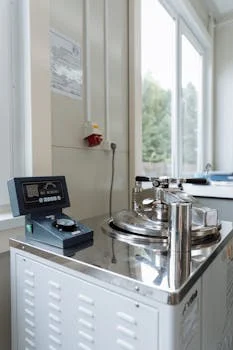
The primary determinant of a wisconsin wastewater treatment plant budget is the required effluent quality, which dictates the complexity of the treatment train. Under Wisconsin DNR NR 217, phosphorus limits can be as low as 0.075 mg/L in sensitive watersheds. Achieving these levels requires advanced biological nutrient removal (BNR) or tertiary filtration, which typically adds 20% to 30% to the total capital cost of the facility. Engineering-level cost breakdowns show that the mechanical equipment package—comprising aerators, pumps, and control systems—accounts for 35% of the budget, while civil works and underground piping account for 45%.
Capacity impacts costs through the principle of economies of scale. HydropureWater field data (2025) indicates that doubling the capacity of a plant from 1 MGD to 2 MGD typically increases the capital cost by only 60-70%, rather than 100%. This is because many components, such as the headworks building, laboratory, and administrative offices, do not scale linearly with flow. However, site-specific conditions in Wisconsin, such as high water tables or rocky glacial till, can increase excavation and foundation costs by $500,000 to $1.5 million for mid-sized plants.
Biosolids handling has emerged as a dominant cost driver in 2025. The Portage project's $55 million budget reflects a growing trend toward thermal drying systems. While a belt press or centrifuge dewatering system might cost $1 million to $3 million, adding a dryer can increase that by $5 million to $10 million. Despite this, the reduction in hauling costs—often the largest O&M expense for Wisconsin plants—can result in a payback period of 7 to 10 years. For industrial applications, implementing underground package sewage treatment plants for rural Wisconsin communities can significantly reduce the footprint and civil engineering costs associated with traditional surface-level tanks.
Wisconsin Wastewater Treatment Technologies Compared: Costs, Efficiency, and Use Cases
Selecting the appropriate technology requires a balance between initial capital outlay and long-term operational efficiency. In Wisconsin’s climate, biological processes must be designed to handle cold-weather kinetics, which often necessitates larger tank volumes or insulated reactors, impacting the cost of conventional systems. The following table compares the four most common technologies deployed in the state.
| Technology | Capital Cost (CapEx) | O&M Cost (OpEx) | Footprint Req. | Effluent Quality (TSS) | Best Use Case |
|---|---|---|---|---|---|
| Conventional Activated Sludge | Low ($3–$8/gal) | Moderate | High | <30 mg/L | Large Municipalities (e.g., Portage) |
| MBR (Membrane Bioreactor) | High ($5–$12/gal) | High (Energy/Chem) | Very Low | <5 mg/L | Space-constrained / Water Reuse |
| DAF (Dissolved Air Flotation) | Moderate ($2–$6/gal) | Moderate (Chem) | Low | <50 mg/L | Food Processing / High FOG |
| Lagoons / Facultative Ponds | Very Low ($1–$4/gal) | Low | Very High | <50 mg/L | Rural/Small Village (Land available) |
For municipal engineers, the decision framework often hinges on land availability and future compliance. If a site is land-locked, the MBR technology is often the only viable path despite the higher municipal sewage treatment cost per gallon. MBRs eliminate the need for secondary clarifiers and sand filters, consolidating the treatment process into a single footprint. Understanding how lamella clarifiers reduce footprint and cost in Wisconsin plants can provide an intermediate solution for plants needing to upgrade capacity within existing tankage. In contrast, for industrial pre-treatment of high-strength organic loads, DAF systems remain the industry standard for removing fats, oils, and grease (FOG) before discharge to a municipal sewer.
Financing Your Wisconsin Wastewater Treatment Plant: Grants, Loans, and ROI Calculators
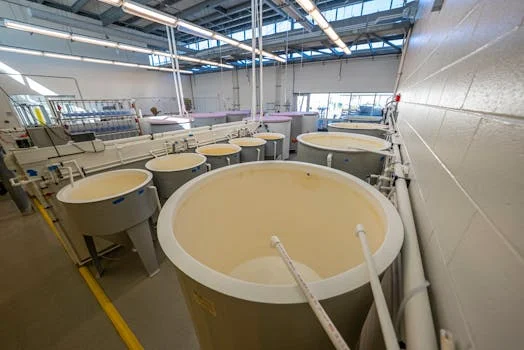
Securing financing is a multi-year process that typically involves a combination of federal grants and low-interest state loans. The Wisconsin Clean Water Fund Program (CWFP) is the primary vehicle for municipal financing, offering subsidized interest rates (often 1-2%) for projects that address DNR compliance issues. In 2024, the state approved $484 million in funding to support these upgrades. For rural communities with populations under 10,000, the USDA Rural Development program provides a mix of loans and grants; Baldwin’s success in securing a $3.575 million grant is a prime example of how rural municipalities can mitigate the "small-scale" cost penalty.
Industrial facilities often utilize private financing or Public-Private Partnerships (P3s) to fund wastewater infrastructure. Tax-exempt industrial revenue bonds can provide lower interest rates for projects that demonstrate environmental benefits. When evaluating the investment, procurement teams should use a Total Cost of Ownership (TCO) model rather than focusing solely on the purchase price. A higher-efficiency system that reduces chemical consumption by 20% can save a mid-sized facility over $100,000 annually in O&M costs.
| Financing Type | Interest Rate | Annual Debt Service | Total Lifetime Cost | Payback Period (Estimated) |
|---|---|---|---|---|
| CWFP Low-Interest Loan |