An online ammonia analyzer for wastewater uses either ion-selective electrodes (ISE) for <±0.5 mg/L accuracy at 2–200 mg/L or photometric indophenol for ±0.03 mg/L down to 0.05 mg/L; expect <0.2 mL reagent per sample and 10 min service every 10–12 weeks on current models.
Why NH4-N accuracy decides your permit safety margin
Analytical uncertainty in an online ammonia analyzer directly dictates the operational setpoint of a wastewater treatment plant, often forcing operators to run processes more aggressively than necessary to avoid permit violations. For a facility with a monthly average discharge limit of 5.0 mg-NH4-N/L, a standard analyzer uncertainty of 15% requires a target effluent concentration of 4.3 mg/L or lower to ensure compliance. This 0.7 mg/L "safety buffer" represents a significant expenditure in aeration energy and carbon source addition that could be reclaimed with higher instrument precision (HydropureWater field data, 2025).
Regulatory pressure regarding nutrient discharge is intensifying, with EPA 2024 enforcement actions citing 87 plants for exceedances specifically linked to analyzer drift and improper calibration cycles. When an instrument drifts by even 0.5 mg/L in a low-limit environment, the reported data may trigger a violation even if the actual laboratory-verified concentration is within limits. The choice of measurement technology is the primary variable in this risk equation. According to data from WTW technical white papers, indophenol photometric methods (following DIN 38 406) deliver a Relative Standard Deviation (RSD) of approximately 1.8% at concentrations below 10 mg/L, whereas Ion-Selective Electrode (ISE) systems typically exhibit an RSD of 4–6% in the same range.
For technical procurement managers, the "permit safety margin" is a financial metric. Operating a plant at a 15% safety margin rather than a 5% margin can increase blower electricity consumption by 8-12% in activated sludge systems. By selecting an analyzer with a lower limit of detection and higher repeatability, the facility can safely move the operational setpoint closer to the actual permit limit, reducing the over-treatment of wastewater and extending the life of aeration equipment. Understanding how to optimize dissolved oxygen control alongside ammonia monitoring is essential for achieving these integrated energy savings.
ISE vs photometric vs colorimetric: measurement principles and error sources
Ion-selective electrodes (ISE) operate by measuring the potential difference across a membrane sensitive to ammonium ions, but their accuracy is frequently compromised by the presence of interfering ions such as potassium, which has a similar ionic radius. In industrial settings, ISE sensors are susceptible to poisoning by sulfides, magnesium, and surfactants—common constituents in textile and chemical manufacturing wastewater. While ISE systems offer the lowest initial CAPEX and real-time response, the hidden costs include electrode refresh requirements, which typically average $350 per year per sensor, and the need for frequent manual cleaning to prevent biofouling on the membrane surface.
Photometric indophenol analyzers utilize a wet-chemistry approach where the sample is mixed with hypochlorite and phenol (or salicylate) in a temperature-controlled reaction cell, typically maintained at 45°C ±0.1°C. This reaction forms a blue-colored indophenol complex, the intensity of which is proportional to the ammonia concentration. This method is highly resistant to the ionic interferences that plague ISE sensors. However, it requires precise fluidics and reagent management. Modern photometric units have transitioned to micro-fluidics to minimize waste, but they still require a stable environment to prevent the formation of bubbles in the optical path, which can cause "spiking" in the data logs.
Colorimetric vanadate-molybdate systems are generally reserved for high-purity water or very low-level ammonium effluents, providing a narrow 0–2 mg/L measurement window. These are rarely used in raw influent or primary effluent monitoring due to their extreme sensitivity to turbidity and suspended solids. For most industrial wastewater applications, the choice remains between the speed of ISE and the regulatory-grade accuracy of photometric indophenol.
| Technology | Typical Range | Accuracy | Primary Interferences | Maintenance Needs |
|---|---|---|---|---|
| ISE (Electrode) | 0.2–1,000 mg/L | ±5% of reading | Potassium, Sodium, Sulfides | Monthly calibration, annual tip replacement |
| Photometric (Indophenol) | 0.05–50 mg/L | ±2% of reading | High Turbidity, Color | Reagent swap every 3-6 months |
| Colorimetric (Molybdate) | 0–2 mg/L | ±1% of reading | Phosphate, Silica | High; sensitive to optical fouling |
2025 model comparison: Hach NH6000sc, WTW Alyza IQ, IC Controls 8010cX
The 2025 market for online ammonia analyzers is defined by a shift toward "maintenance-free" fluidics and drastic reductions in reagent consumption. The Hach NH6000sc remains a benchmark for reliability in municipal settings, utilizing a gas-diffusion method that separates the ammonia from the sample matrix before measurement. This design virtually eliminates interference from color and turbidity. However, it carries a higher reagent consumption rate of approximately 0.4 mL per sample. At a standard measurement frequency of 4 cycles per hour, the annual reagent cost typically reaches $1,240, excluding the cost of replacement pump tubing and filters.
The WTW Alyza IQ NH4 represents the current state-of-the-art in reagent efficiency, utilizing a photometric indophenol method that consumes less than 0.2 mL of reagent per test. A standard 2.5 L reagent canister can last up to 285 days when operating at 15-minute intervals. This model is particularly attractive for plants focusing on sustainability, as it generates only about 15 liters of chemical waste per year. Its modular design allows for 10-minute service intervals every 10–12 weeks, which is a significant reduction compared to older "wet chemistry" cabinets that required monthly multi-hour overhauls.
For industrial applications requiring extreme uptime, the IC Controls 8010cX offers an integrated auto-calibration feature that runs every 24 hours to compensate for sensor drift. According to the IC Controls technical manual, the unit boasts a Mean Time Between Failures (MTBF) of 11,000 hours. While its reagent costs are mid-range, its ability to self-verify against a known standard makes it the preferred choice for remote discharge points where weekly technician visits are not feasible. When combined with automatic chemical dosing systems for pH and reagent feed, the 8010cX provides a robust solution for closed-loop nutrient control.
| Feature | Hach NH6000sc | WTW Alyza IQ | IC Controls 8010cX |
|---|---|---|---|
| Measurement Method | Gas Diffusion / Colorimetric | Photometric Indophenol | Colorimetric / ISE Options |
| Reagent Use (per sample) | 0.4 mL | <0.2 mL | 0.35 mL |
| Annual Reagent Cost | $1,240 | $850 | $980 |
| Service Interval | 8 Weeks | 12 Weeks | 10 Weeks |
| Waste Generated/Year | ~35 Liters | ~15 Liters | ~28 Liters |
Installation checklist: sample conditioning, heating, and interferences
Successful online ammonia monitoring is 20% instrument selection and 80% sample conditioning. To prevent premature pump failure and optical fouling, the sample delivery system must maintain a constant pressure between 2 and 4 bar. An upstream 100 µm stainless steel pre-filter is mandatory for any wastewater application to remove large particulates and biological clumps. For analyzers located outdoors or in unheated galleries, the sample line must be heat-traced to prevent the precipitation of fats, oils, and grease (FOG), which can coat the internal capillaries of the analyzer.
Sample temperature must be stabilized between 10°C and 30°C for optimal chemical reaction kinetics. If the sample temperature exceeds 35°C—common in industrial cooling loops or anaerobic digester centrate—a Peltier cooler must be installed upstream of the analyzer. High temperatures cause dissolved gases to come out of solution, forming micro-bubbles that interfere with the photometric light path, leading to erratic "noisy" readings. in high-alkalinity waters, an acidification loop may be required to precipitate calcium carbonate before it reaches the measurement cell, where it would otherwise form a white "fog" on the optical windows.
Finally, the distance between the sample intake and the analyzer should be minimized to reduce lag time. A lag of more than 15 minutes can render the analyzer useless for real-time aeration control. If a long run is unavoidable, a "fast-loop" bypass system should be implemented, where a high-volume pump circulates the sample at high velocity to a point near the analyzer, with only a small fraction being drawn into the instrument for analysis. This ensures the analyzer is always seeing a "fresh" representation of the process stream.
Total cost of ownership: spreadsheet for 3-year budget approval
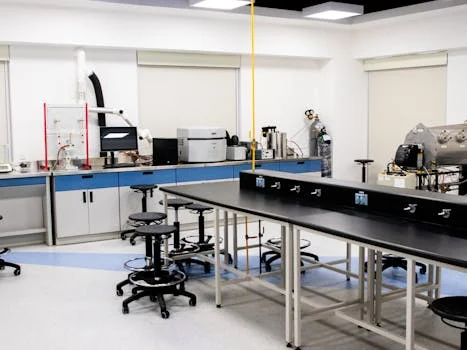
Justifying the purchase of an online ammonia analyzer to finance teams requires a transition from discussing CAPEX to Total Cost of Ownership (TCO). While the initial purchase price of the IC Controls 8010cX ($14,800) is lower than the WTW Alyza IQ ($16,200) or the Hach NH6000sc ($18,900), the 3-year OPEX often reverses the ranking. When factoring in reagents, consumables like pump tubes and filters, and the labor hours required for routine service, the Alyza IQ often emerges as the most cost-effective solution for long-term operation (HydropureWater field data, 2025).
For a typical 3-year budget cycle, the OPEX for the Alyza IQ averages $2,040 per year, compared to $3,110 per year for the NH6000sc. The Return on Investment (ROI) is typically achieved by comparing the online analyzer cost against manual lab analyses. At a conservative lab cost of $6.50 per sample and a requirement for 2.5 samples per day (including weekends and holidays), a facility spends over $5,900 annually on manual testing. An online analyzer not only replaces this cost but provides 35,040 data points per year (at 15-minute intervals) compared to the 912 points provided by daily grab samples, offering vastly superior process visibility.
| Cost Component (3-Year) | Hach NH6000sc | WTW Alyza IQ | IC Controls 8010cX |
|---|---|---|---|
| Initial CAPEX | $18,900 | $16,200 | $14,800 |
| Reagents (3 Years) | $3,720 | $2,550 | $2,940 |
| Consumables/Parts | $2,400 | $1,450 | $1,850 |
| Labor (at $75/hr) | $3,210 | $2,120 | $2,610 |
| Total 3-Year TCO | $28,230 | $22,320 | $22,200 |
Frequently Asked Questions
How often does an online ammonia analyzer need calibration?
ISE-based analyzers typically require calibration every 24 to 72 hours due to electrode drift. Photometric analyzers are much more stable and can often go 30 days between calibrations, though many modern units feature automated daily "standard checks" to verify accuracy without operator intervention.
Can these analyzers handle high-salinity wastewater?
High salinity interferes with ISE membranes significantly. For brine or high-TDS industrial wastewater, a gas-diffusion photometric analyzer (like the NH6000sc) is preferred, as it physically separates the ammonia gas from the salty matrix before the measurement occurs.
What is the typical lifespan of an online ammonia analyzer?
With a rigorous maintenance schedule, a high-quality online analyzer has a service life of 7 to 10 years. The electronics usually outlast the fluidic components, which may require a comprehensive "overhaul kit" every 3 to 4 years to replace internal valves and seals.
Do cold temperatures affect the readings?
Yes, the indophenol reaction is temperature-dependent. Ensure your analyzer has an internally heated reaction cell. If the sample line is not heat-traced, ammonia can also be lost to the pipe walls or biological activity can occur within the line, leading to false low readings.