What Is Typical Sohar Wastewater Treatment Plant Cost?
Sohar wastewater treatment plant cost for industrial sites of 1,000–10,000 m³/day typically runs $1,200–$2,500 per m³/day of CAPEX in 2025 budgeting, with OPEX of $0.30–$0.80 per m³ treated. Unit CAPEX can fall by up to 30% above 5,000 m³/day. Energy often takes up to 40% of OPEX; membrane replacement for MBR or RO is commonly scheduled every 5–7 years.
Sohar’s industrial build-out under Oman Vision 2040, especially in Sohar Freezone and the Sohar Industrial Port Area (SIPA), is lifting both CAPEX and OPEX for new plants. A $132 million hazardous waste treatment facility in Sohar Freezone was announced in 2023, and the OMR 7.4 billion SIPA wastewater plant tender in 2014 shows how large local infrastructure packages can be. Middle East water-sector EPC costs rose about 12% year-on-year in 2024 (MEED 2024 data), driven by inflation and supply-chain friction. Petrochemical, steel, and power effluents here often carry high TSS, swinging COD, and oils, greases, or metals, so process trains run richer than municipal baselines.
Water Treatment Plant Cost Breakdown by CAPEX and OPEX
A practical water treatment plant cost breakdown for Sohar separates installed capital from ongoing treatment cost. For 1,000–10,000 m³/day industrial plants, 2025 CAPEX estimates sit at $1,200–$2,500 per m³/day. Larger trains gain scale: unit cost may drop by up to 30% above 5,000 m³/day, consistent with Toshiba’s 10,000 m³/day DBO facility valued at OMR 3.27 million (about $8.5 million). OPEX usually lands between $0.30 and $0.80 per m³. Energy can reach 40% of operating spend, then chemicals, labor, and membrane swaps every 5–7 years on MBR or RO trains.
Indirect items still move the total. Land lease in Sohar Freezone often runs OMR 0.5–OMR 1.2 per m²/year. Sludge disposal commonly costs OMR 50–OMR 150 per ton, depending on cake dryness and disposal route. Permitting lead time of 6–12 months also ties up cash before first flow. Most plants we size for SIPA tenants run toward the lower end of the CAPEX band when pre-treatment is strong and reuse is limited to utility water.
| Cost Component | Estimated Percentage of CAPEX (for a 5,000 m³/day plant) | Typical Cost Range ($/m³/day) |
|---|---|---|
| Biological Treatment (e.g., aeration, clarification) | 25% | $300 - $625 |
| Membrane Systems (MBR/RO) | 20% | $240 - $500 |
| Civil Works (tanks, piping, buildings) | 15% | $180 - $375 |
| Automation & Control Systems | 10% | $120 - $250 |
| Pre-treatment (screening, grit removal) | 10% | $120 - $250 |
| Sludge Handling Equipment | 8% | $96 - $200 |
| Ancillary Equipment (pumps, blowers) | 7% | $84 - $175 |
| Engineering & Commissioning | 5% | $60 - $125 |
For high-TDS industrial trains that need tight effluent or reuse quality, review our MBR systems for Sohar’s high-TDS industrial wastewater when comparing membrane CAPEX shares in the table above.
What Does a Level 0 Cost Breakdown Cover?
A Level 0 cost breakdown is an order-of-magnitude CAPEX screen used before FEED, typically built from capacity, process block percentages, and local adders rather than vendor quotes. For Sohar, start with $1,200–$2,500 per m³/day, allocate about 25% to biological treatment and 20% to membranes for a 5,000 m³/day case, then add Freezone lease, sludge route, and a 6–12 month permit window. This early cut is enough to compare EPC versus DBO cash timing, not to freeze a bid. Procurement teams should refresh the screen once influent COD, TDS, and oil loads are measured.
Selection checklist for a Level 0 estimate in Sohar:
- Design flow and peaking factor (m³/day)
- Influent TSS, COD, TDS, and oil/grease ranges
- Discharge versus reuse target under Ministerial Decision 159/2020
- Need for DAF, MBR, RO, or conventional activated sludge
- Sludge dryness target and disposal route cost (OMR/ton)
- Contract model preference (EPC fixed CAPEX vs DBO bundled O&M)
- EIA and Freezone/SIPA permit duration (months)
EPC vs. DBO Contracts in Sohar: Which Model Saves You More?
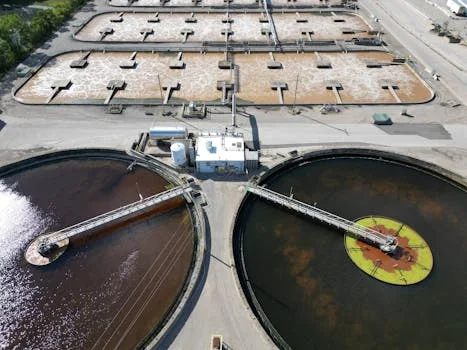
Contract form changes who carries O&M risk after mechanical completion in Sohar. Engineering, Procurement, and Construction (EPC) packages, such as the OMR 7.4 billion SIPA wastewater plant tender pattern, deliver design-to-commissioning on a fixed-price CAPEX basis while the owner keeps full O&M cost and compliance duty. Design-Build-Operate (DBO) deals, such as the Toshiba and Majis Industrial Services OMR 3.27 million agreement, usually cut upfront CAPEX and place 10–20 years of operation with the contractor, often with performance guarantees and steadier OPEX.
DBO fits plants with stable wastewater quality or thin in-house O&M benches. EPC fits highly customized trains where the owner wants day-one operating control. Fixed CAPEX certainty under EPC does not remove membrane energy or sludge disposal volatility after handover.
| Dimension | EPC (Engineering, Procurement, Construction) | DBO (Design-Build-Operate) |
|---|---|---|
| CAPEX | Higher upfront cost, fixed price | Lower upfront cost, variable long-term OPEX |
| OPEX | Client bears full responsibility and cost | Included in contract, predictable over term |
| Risk Allocation | Client assumes all O&M risk | O&M risks transferred to contractor |
| Compliance Management | Client responsible for ongoing compliance | Contractor typically guarantees compliance |
| Flexibility & Control | Full control over operations | Less direct control over day-to-day operations |
| Sohar Example | SIPA wastewater plant tender (OMR 7.4bn) | Toshiba-Majis DBO project (OMR 3.27mn) |
Engineering Specs That Drive Costs in Sohar’s Wastewater Plants
Influent quality from petrochemical, steel, and power plants around Sohar sets equipment duty and installed cost. TSS commonly runs 200–1,500 mg/L and COD 500–3,000 mg/L. TDS often exceeds 1,000 mg/L and can reach 10,000 mg/L in petrochemical and power blowdown streams (data based on Majis Industrial Services reports). Those ranges decide whether DAF, MBR, RO, or conventional activated sludge carry the load.
Dissolved Air Flotation (DAF) typically removes 85–95% of TSS and 70–85% of oil and grease, so it is a frequent headworks step. Membrane Bioreactors (MBR) reach 95–99% TSS and COD removal when discharge or reuse limits are tight. Reverse Osmosis (RO) can cut about 98% of TDS, at higher energy use and fouling risk. For Sohar’s high-solids sludge, plate-and-frame filter presses may cost OMR 200–400 per ton of dry solids processed; centrifuges often sit at OMR 150–300 per ton with higher equipment CAPEX. Oman’s Ministerial Decision 159/2020 sets strict effluent limits and often pushes MBR when reuse is required, because conventional activated sludge alone may miss the quality target and raise both CAPEX and OPEX.
| Treatment Technology | Typical TSS Removal (%) | Typical COD Removal (%) | Typical TDS Removal (%) | Estimated Cost per m³ Treated ($) |
|---|---|---|---|---|
| Dissolved Air Flotation (DAF) | 85-95 | 30-50 | N/A | $0.10 - $0.25 |
| Membrane Bioreactor (MBR) | 95-99 | 95-99 | N/A | $0.35 - $0.70 |
| Reverse Osmosis (RO) | 99+ | 99+ | 98 | $0.50 - $1.20 |
| Conventional Activated Sludge | 90-95 | 85-95 | N/A | $0.20 - $0.40 |
Oil and grease spikes are common on SIPA petrochemical drains; size DAF systems for Sohar’s oil/grease and suspended solids removal before biological stages. Cake handling then drives OPEX—pair the train with sludge dewatering solutions for Sohar’s high-solids industrial waste when dry-solids cost sits in the OMR 200–400 per ton band.
Local Compliance Checklist: Avoiding Costly Delays in Sohar
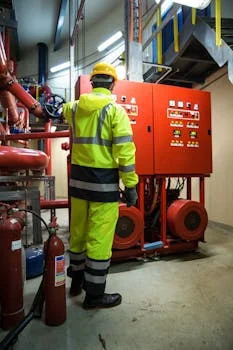
Regulatory sequencing in Oman still governs schedule risk for industrial wastewater plants in Sohar. Typical steps include an Environmental Impact Assessment (EIA), approval from the Ministry of Environment and Climate Affairs (MECA), and site permits from Sohar Freezone or SIPA authorities. EIA duration of 6–12 months is a frequent underestimate. Seasonal load swings, including higher pollutant peaks in wet periods, also create non-compliance risk if the design basis is a single dry-season sample.
Ministerial Decision 159/2020 remains the core discharge rule set. Penalties for violations can run OMR 5,000–OMR 50,000 per case. DBO structures can simplify ongoing compliance because the operator often holds permit duties and performance guarantees, as in Toshiba’s project where O&M was tied to regulatory adherence. Owners on EPC still need an internal monitoring plan from day one.
- Environmental Impact Assessment (EIA): Comprehensive study of potential environmental effects.
- Ministry of Environment and Climate Affairs (MECA) Approval: Formal sign-off on the EIA and proposed treatment strategy.
- Sohar Freezone/SIPA Permits: Site-specific approvals for construction and operation.
- Effluent Discharge Standards: Adherence to limits for parameters like TSS (<1,000 mg/L), COD (<1,000 mg/L), pH (6-9), and zero visible oil/grease.
- Water Reuse Standards: If applicable, meeting stricter quality criteria for recycled water.
- Sludge Management Plan: Approved procedures for handling and disposal of treatment by-products.
- Monitoring & Reporting: Regular submission of wastewater quality data to regulatory bodies.
- Emergency Response Plan: Protocols for accidental spills or system failures.
- Noise & Air Emission Controls: Compliance with local environmental standards.
- Chemical Storage & Handling: Adherence to safety regulations for treatment chemicals.
For process and documentation context beyond Freezone paperwork, see our note on Oman’s industrial wastewater treatment standards and compliance alongside the Sohar permit list above.
ROI Calculator: How to Justify Your Sohar Wastewater Treatment Plant
Investment cases for a plant in Sohar rest on a simple ROI screen: (Annual Savings + Revenue from Recycled Water) / (CAPEX + OPEX). For a 5,000 m³/day plant, reuse credit matters. If recycled process water is valued at OMR 0.80/m³ against freshwater at OMR 1.20/m³, water savings alone can approach OMR 1.2 million per year. Avoiding regulatory fines that can reach about OMR 200,000 annually for repeated non-compliance further lifts the return.
Sector results diverge with reuse potential. Petrochemical sites with high demand often land 12–18% ROI. Power plants with large cooling volumes but limited reuse more often see 8–12%. Steel mills with high effluent volume and moderate reuse potential may achieve 6–10%. DBO contracts can stabilize OPEX and make those percentages easier to defend in board papers. With strong reuse and avoided fines, payback for an industrial wastewater treatment plant in Sohar often falls in the 5–10 year range, depending on sector and operating efficiency. Compact sites in industrial parks may also compare package wastewater treatment plants for Sohar’s industrial parks when flow sits well below 1,000 m³/day.
| Industry Sector | Estimated Annual Water Savings ($/m³) | Potential Fines Avoided (Annual, $) | Estimated ROI (%) | Key Drivers |
|---|---|---|---|---|
| Petrochemical | $0.50 - $1.00 | $50,000 - $200,000+ | 12-18% | High water demand, extensive reuse potential, stringent discharge limits |
| Power Generation | $0.30 - $0.70 | $20,000 - $100,000 | 8-12% | Large water volumes, cooling tower blowdown, limited reuse |
| Steel Manufacturing | $0.20 - $0.50 | $10,000 - $75,000 | 6-10% | Process water, cooling, wash water, potential for moderate reuse |
Who This Is For and Next Step
This guide is for plant engineers, EPC estimators, and procurement managers budgeting industrial wastewater trains in Sohar Freezone or SIPA. Buyers who only need a municipal package with no oil, metals, or high TDS should look at simpler package plants instead of a full MBR–RO line. If you already have flow, COD/TSS/TDS, and a discharge or reuse target, request a scoped CAPEX/OPEX sheet through our Sohar wastewater treatment plant cost inquiry so the Level 0 screen can be checked against your influent data.
Frequently Asked Questions
What is the average cost of an industrial wastewater treatment plant in Sohar for a 5,000 m³/day capacity?
CAPEX for a 5,000 m³/day industrial plant in Sohar typically falls between $1,200 and $2,500 per m³/day, or about $6 million to $12.5 million installed. That band excludes land acquisition and permitting soft costs. Actual position inside the range depends on membrane share, sludge equipment, and whether reuse-quality RO is required. Owners should add Freezone lease and a 6–12 month EIA path when comparing bids.
How do EPC and DBO contracts differ in terms of cost for Sohar projects?
EPC contracts usually carry higher fixed upfront CAPEX and leave all later OPEX with the client. DBO contracts lower initial capital and fold multi-year operating cost into a predictable service fee, often for 10–20 years. EPC suits custom process control; DBO suits stable loads and thin O&M teams. Compliance guarantees are more often written into DBO performance schedules than into pure EPC handovers.
What are the primary drivers of OPEX for a wastewater treatment plant in Sohar?
Energy is the primary OPEX driver and can reach 40% of operating cost on aerated or membrane-heavy trains. Chemicals, labor, and membrane replacement every 5–7 years for MBR and RO follow next. Sludge disposal at OMR 50–OMR 150 per ton can rival chemicals when cake solids are low. High TDS duty that forces RO will push both energy and membrane line items above the municipal average.
What are the typical effluent discharge limits under Oman's Ministerial Decision 159/2020 for industrial wastewater?
Typical industrial discharge checks under Ministerial Decision 159/2020 include TSS below 1,000 mg/L, COD below 1,000 mg/L, and pH between 6 and 9, with no visible oil or grease. Metal and other pollutant caps vary by industry and discharge point. Reuse duties are stricter than end-of-pipe limits and often require MBR or RO. Non-compliance penalties can run OMR 5,000–OMR 50,000 per violation.
How much does sludge dewatering cost per ton in Sohar?
Sludge disposal and dewatering costs in Sohar commonly range from OMR 50 to OMR 150 per ton, depending on cake moisture and the disposal route. Plate-and-frame filter presses for high-solids industrial sludge may cost OMR 200–400 per ton of dry solids processed, while centrifuges often land at OMR 150–300 per ton with higher equipment CAPEX. Dewatering choice therefore trades operating cost against installed capital.