Understanding Industrial Effluent Treatment in Ankara
Selecting an effluent treatment plant in Ankara requires a thorough understanding of industrial wastewater characteristics and local discharge regulations. Effluent treatment plants (ETPs) remove pollutants from industrial wastewater to comply with environmental discharge norms set by regulatory authorities. While specific local municipal limits must be verified on site, advanced membrane technologies can polish treated wastewater to meet EU Water Framework Directive standards for agricultural or potable reuse. Industries in Turkey, contributing to broader regional machinery production, generate complex waste streams that demand systematically designed, efficient treatment solutions.
Turkey's position within the MIST economy group, which holds a 6% share of global machinery exports according to economic data, highlights ongoing industrial production growth. Manufacturing processes generate waste streams containing toxic elements such as nitrogen, phosphorus, heavy metals, and complex hydrocarbons. Left untreated, these discharges degrade surface water bodies and natural channels.
Controlling raw effluent is a critical public health and environmental protection mandate. Data from the State Inspectorate for Environment Protection (PIOS) indicates that approximately 60% of untreated wastewater creates potential or actual threats to public health and the environment. ETPs serve as the primary containment and treatment barrier, purifying process water before it enters municipal sewer networks or receiving rivers around Ankara.
Key Industrial Wastewater Types and Contaminants
Industrial wastewater characteristics vary significantly depending on raw-material processing and manufacturing methods. A facility processing food or agricultural inputs generates distinct organic loads compared to chemical or heavy manufacturing plants. Designing an effective engineering strategy requires profiling the specific contaminants present in the raw influent.
- Dairy Industry Effluents: Characterized by high biological oxygen demand (BOD), fats, and protein suspensions. Physicochemical methods—including chemical precipitation and coagulation/flocculation—achieve up to 98% efficiency in treating dairy wastewater.
- Pharmaceutical & Life Sciences: Life science manufacturing maintains high commercial output rate (~70%) while generating toxic, complex liquid waste streams. Studies indicate membrane filtration accounts for almost 9% of effluent removal operations across pharmaceutical processing plants.
- Chemical Processing & Heavy Manufacturing: High chemical oxygen demand (COD) streams demand specialized primary clarification. A Dissolved Air Flotation (DAF) System removes emulsified oils, greases, and suspended solids prior to secondary biological processing.
- Textile Manufacturing: Involves high dye concentrations, variable pH, and synthetic fibers. Selecting appropriate technology requires evaluating process variations as detailed in technical analyses of Textile Wastewater Treatment in Turkey.
- Power & Heavy Infrastructure: Electric power plants generate steam condensate effluents that may exceed agricultural irrigation criteria even when satisfying baseline sewer connection thresholds. Nuclear power applications require isolation of liquid radioactive waste such as tritium, while steel plants require treatment for coke oven by-product effluents. Petroleum plants rely on API gravity separators for bulk oil removal.
Advanced ETP Technologies for High-Quality Effluent
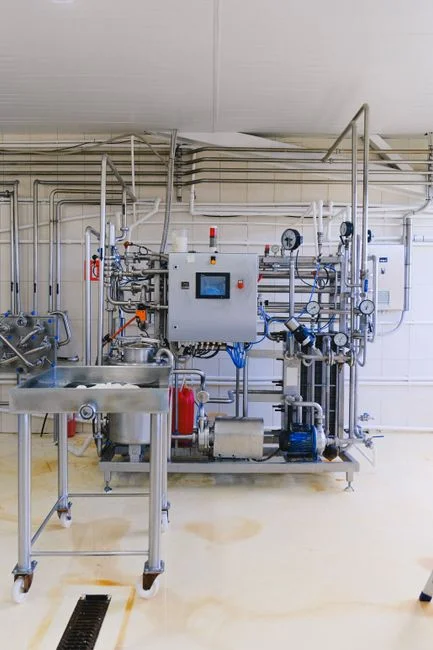
Meeting stringent discharge parameters or implementing zero liquid discharge (ZLD) strategies requires advanced filtration and secondary polishing technologies. Traditional centralized treatment schemes often lack the efficiency needed for strict environmental compliance, driving adoption of advanced membrane systems.
Direct nanofiltration polishes secondary wastewater treatment plant effluent to EU Water Framework Directive (WFD) standards, yielding water suitable for agricultural irrigation or indirect potable reuse. Academic studies demonstrate that membrane filtration techniques consistently remove more than 90% of heavy metals, such as copper ions, from industrial process streams.
For high-performance biological clarification, integrating an MBR Membrane Bioreactor Wastewater Treatment System replaces conventional gravity clarifiers with ultrafiltration membranes. This process produces a high-clarity permeate, suitable as feed to a tertiary Ultrafiltration (UF) Water Treatment System or reverse osmosis process. Combining biological degradation with physical separation creates a compact footprint suited for congested industrial plots in Ankara.
Engineers also evaluate hybrid treatment configurations that integrate physical separation, chemical oxidation, and biological digestion to enable resource recovery. For natural tertiary polishing, surface-flow constructed wetlands provide secondary micropollutant removal for facilities with suitable land availability, complementary to decentralized strategies seen in Rural Sewage Treatment Options in Turkey.
Selecting an Effluent Treatment Plant for Ankara: A Decision Framework
Plant selection must begin with a complete laboratory characterization of raw wastewater streams. Key parameters include peak and average flow rates, pH ranges, total suspended solids (TSS), BOD, COD, temperature, and specific heavy metal concentrations. Operating parameters must align with Ankara's municipal sewer discharge standards or local river basin discharge permits, which the buyer must request directly from local environmental regulators.
Facilities seeking operational efficiency and resource recovery can examine regional models such as Industrial Wastewater Reuse & Sludge Drying in Turkey, where process integration minimizes freshwater intake and sludge disposal costs. The decision framework below structures key regulatory and commercial evaluation criteria.
| Discharge route or influent problem | Governing rule or process option | What data settles it |
|---|---|---|
| Direct river or stream discharge near Ankara site | EU WFD polishing via Nanofiltration / Reverse Osmosis | Target discharge parameters verified by local environmental authority vs. raw effluent lab assay |
| High emulsified oil and heavy organic load (Chemical/Food processing) | Physicochemical coagulation followed by DAF clarification | Laboratory bench Jar testing and FOG/TSS concentration profiles |
Procuring industrial ETP equipment requires validating scope boundaries and verifying technical specifications with equipment manufacturers. Use the following checklist when issuing Request for Quotations (RFQs) to regional vendors.
| Quote line item | Technical scope to specify | Red flags to check before signing |
|---|---|---|
| Biological & Membrane Treatment Package | Membrane pore size, flux rates (LMH), aeration blower redundancy, and automated CIP (clean-in-place) skid inclusion | Omission of peak hydraulic peaking factors or missing membrane replacement warranties |
| Sludge Dewatering & Solid Handling | Filter press or decanter centrifuge sizing, polymer dosing station, dry solids percentage guarantee | Failure to specify feed sludge concentration and chemical conditioning consumption rates |
Frequently Asked Questions
How much does an industrial effluent treatment plant in Ankara cost?
Capital (CAPEX) and operating (OPEX) costs depend on daily hydraulic capacity, influent COD/BOD concentrations, and required effluent purity. Buyers must request vendor proposals based on a complete 24-hour composite laboratory wastewater assay rather than relying on generic estimates, as chemical dosing requirements and membrane surface areas drive long-term system expenses.
How do I choose the right ETP supplier and equipment sizing for an Ankara facility?
Select suppliers that provide verified pilot-plant testing data for your specific industry classification, offer local field engineering support, and guarantee compliance with local environmental discharge limits. Sizing requires submitting minimum, average, and peak hourly hydraulic flow rates alongside maximum loading spikes to prevent operational failure during production peak periods.
What contaminant removal efficiency can physicochemical treatment methods achieve?
In applications such as dairy wastewater treatment, combined physicochemical methods—including chemical precipitation and coagulation/flocculation—achieve up to 98% removal efficiency for suspended solids and organic contaminants. Efficacy depends on proper chemical selection and mixing retention times.
Can advanced membrane systems enable industrial wastewater reuse?
Yes. Direct nanofiltration polishes secondary effluent to meet stringent EU Water Framework Directive standards for agricultural or industrial reuse. Additionally, membrane filtration systems remove over 90% of specific heavy metals, such as copper ions, protecting downstream unit operations.