What Montenegro’s Current Infrastructure Programme Changes
Select a wastewater treatment and water reuse system in Montenegro by defining the required discharge or reuse outcome first, then matching it to site flow, influent quality, footprint and operating constraints. Confirmed local context includes planned investments in wastewater treatment plants and related systems in Cetinje, Tivat, Kotor, Niksic, Pljevlja and Ulcinj; all projects were expected to start by end of 2025, with completion expected in 2028. Package plants, membrane bioreactors and ultrafiltration serve different duties, so final selection requires site data and applicable permit conditions rather than product capacity alone.
The European Commission identifies water and sanitation infrastructure projects in those six municipalities, including wastewater treatment plants, related infrastructure and water supply systems. Its objective is to bring Montenegro closer to EU environmental standards while improving public health, the environment and municipal services and supporting tourism and economic diversification. The programme states that construction in Kotor and Tivat was already under way in 2024, all projects were expected to start by end of 2025 and completion was expected in 2028.
This confirms active municipal investment rather than a nationally uniform equipment prescription for a buyer. It does not establish that a hotel, factory or rural development will receive the same treatment route, discharge permit or reuse approval. The municipal context should frame the decision, while the equipment scope remains site-specific. The distinction between secondary versus tertiary wastewater treatment becomes explicit only after the destination and receiving requirements are known.
Choose the Route by Discharge and Reuse Requirements
Define the receiving destination before selecting equipment, such as permitted discharge, irrigation, industrial process water reuse, non-potable use or another specified application. Academic literature treats treated sewage effluent as part of the broad reclaimed-water category and identifies its use in agriculture, while the National Academies overview separates drinking water, non-potable urban uses, irrigation, industrial process water, groundwater recharge and environmental purposes. Those categories have different quality and quantity requirements; neither source provides a site-specific Montenegrin reuse approval.
Request four documents before final polishing is selected: the intended-use description, the required effluent-quality specification, the permit pathway and the identity of the party responsible for risk assessment. For industrial process water reuse, also identify the process contact, materials involved and whether the water will enter a product or equipment stream.
| Discharge route or influent problem | Governing rule or process option | What data settles it |
|---|---|---|
| Permitted municipal or surface-water discharge | Define the required treatment level from the applicable discharge permit; distinguish secondary treatment from additional nutrient, solids or disinfection control. | Montenegrin environmental permit, receiving-water conditions, discharge point and sampling requirements. |
| Non-potable urban reuse | Match treatment and disinfection to the intended use and user exposure; confirm the local authorization route before purchasing polishing equipment. | Reuse specification, application schedule, risk assessment, distribution points and responsible authority. |
| Industrial process water reuse | Assess the industrial wastewater reuse systems: MBR versus UF against the receiving process rather than drinking-water assumptions. | Influent COD, BOD, suspended solids, nutrients, oil and grease, pH and toxicity; process water-quality specification. |
| Agricultural reuse of reclaimed water | Use the site-specific risk evaluation to determine the required treatment and operating controls. | Crop and irrigation method, seasonal demand, effluent quantity and quality, storage and distribution controls. |
Compare Package, MBR, UF and Combined Treatment Routes
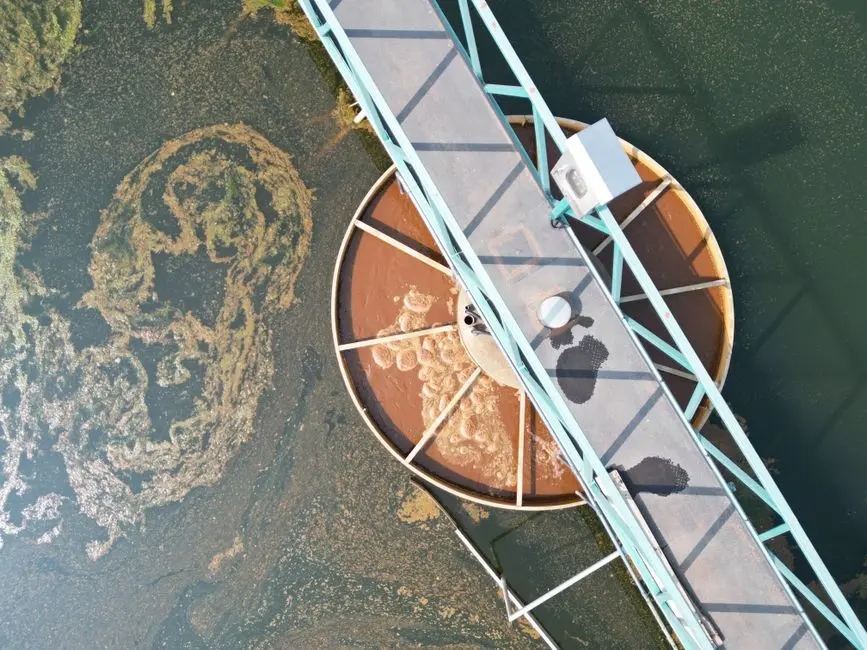
Choose a treatment route by matching process duties to the required effluent and site constraints. A buried WSZ package plant combines anoxic and aerobic treatment, sedimentation and disinfection in one unit for residential, hotel, hospital, factory and rural applications. Its suitability depends on the hydraulic load, influent characteristics, installation conditions and required effluent specification.
Use an integrated MBR wastewater treatment system when compactness or high-quality biological separation justifies membrane treatment. The MBR combines activated sludge with submerged PVDF membrane filtration and provides near-reuse-quality effluent. That description does not remove the need to define the target quality, guarantees, membrane data and pretreatment requirements.
Use an ultrafiltration water treatment system as pretreatment or polishing where removal of bacteria, colloids and suspended solids without chemicals is the required duty. UF does not by itself provide the biological treatment needed for raw wastewater, so it should not replace a biological train without a documented process basis.
A combined package, MBR and UF route may be necessary when the wastewater requires biological treatment, solids separation, membrane treatment and disinfection. Confirm that route through wastewater characterization and a design-basis or pilot review. Compare footprint, civil works, power demand, operator availability, maintenance access, sludge handling and the consequences of each unit failing to meet its duty.
Build the RFQ and Pre-Signature Acceptance Scope
Identify missing data in the RFQ before asking bidders to commit. Require peak and average flow, wastewater characteristics, the discharge or reuse target, site constraints and required operating performance. If these inputs are missing, request them as open items rather than allowing each bidder to assume a different design basis.
| Quote line item | Technical scope to specify | Red flags to check before signing |
|---|---|---|
| Design basis and guaranteed duty | Average and peak flow; influent characterization; discharge or reuse specification; guaranteed process and effluent performance at stated duty points. | Capacity quoted without a design flow or influent basis; unspecified peak-load treatment; no named acceptance document. |
| Treatment process and pretreatment | State biological treatment, clarification or membrane separation, disinfection, equalization and any required pretreatment as separate duties. | UF presented as a substitute for biological treatment; omissions that would foul membranes or upset biological stages. |
| Controls, utilities and civil interface | Define pumping, power, controls, instrumentation, chemical dosing where applicable, remote monitoring and required civil works. | Unclear site-supplied utilities; buried equipment without access, lifting or maintenance provisions; controls outside the supplier scope. |
| Sludge and residuals | Assign sludge extraction, storage, transport or disposal responsibilities and identify monitoring requirements. | Residual handling excluded from the price or legally assigned to the buyer without an agreed route. |
| Commissioning and acceptance | Set performance tests, sampling methods, stabilization evidence, training, documentation and acceptance remedies against the discharge or reuse specification. | Only a product description is accepted as proof; no universal Montenegrin numerical limit is inserted without the applicable permit or reuse specification. |
| Operations and commercial support | List spare parts, maintenance tasks, remote support, response coverage and service pricing for sewage treatment plant servicing and KPIs. | Unclear exclusions, consumables priced indefinitely, no performance remedy and no monitoring obligation after handover. |
Keep acceptance criteria route-specific. A discharge-route test should demonstrate compliance with the permit at the agreed sampling points; a reuse project should additionally demonstrate the specified quality for the intended application and any required monitoring. The available material does not supply a universal numerical Montenegrin limit, so the RFQ must cite the applicable permit, reuse specification or client-issued performance schedule.
Frequently Asked Questions
What should a buyer request before comparing prices for a wastewater treatment and water reuse system in Montenegro?
Request each bidder to price against the same site-input and acceptance schedule: average and peak flow, influent characterization, intended discharge or reuse application, required effluent specification, footprint, utilities, civil works and commissioning tests. Ask for capital cost, installation exclusions, utilities, consumables, sludge handling, maintenance and spare parts separately. Without this common basis, price differences may reflect different scope assumptions rather than different treatment efficiency.
How should a buyer select a supplier and size the treatment system?
Evaluate suppliers against the complete process scope, guaranteed duty points, process calculations, membrane data where applicable, materials, controls, sludge handling, commissioning evidence, monitoring and service support. Confirm that each proposed capacity is derived from the submitted flow and influent data and that the supplier accepts measurable performance criteria. This check reduces compliance and sizing risk without treating the municipal programme as approval for a private reuse application.
Is UF alone suitable for industrial wastewater reuse?
UF is not suitable for raw wastewater on its own. It is a pretreatment or polishing technology for bacteria, colloids and suspended solids, but it does not establish biological treatment for raw wastewater. Request the wastewater characterization and intended process-water specification, then require the bidder to identify whether biological treatment, solids separation, disinfection or other pretreatment is necessary before UF.
What site information must be obtained before issuing equipment bids?
Obtain wastewater flow data covering peak and average conditions; COD, BOD, suspended solids, nutrients, oil and grease, pH and toxicity; the discharge route and applicable permit conditions; the intended reuse specification; available footprint, soil, groundwater and installation constraints; and power, operator and maintenance-access requirements. These inputs determine the treatment train and expose whether a proposed route is technically comparable.