
Start with the discharge route and evidence boundary
The immediate decision is not which hospital treatment system is universally best, but which route fits the site's wastewater characteristics, discharge destination, reuse objective and installation constraints. A package A/O plant, MBR system and compact medical-wastewater unit should be compared against measured flow and quality, verified Mexican permit conditions and hospital infection-control requirements. The available material includes a historical Mexico City hospital disinfection installation and an academic comparison of peracetic acid with sodium hypochlorite, but it does not establish current discharge limits or comparative supplier performance.
Identify whether the hospital will discharge to a sewer, discharge directly to a water body, reuse treated effluent, or install local treatment before discharge. That choice determines which authority must confirm the applicable conditions and whether disinfection is the final treatment step or part of a broader reuse specification. Request the permit conditions from the federal, state and municipal authority responsible for the receiving route; do not treat sewer connection approval as proof that direct discharge is allowed.
The publication titled “Installation of a water disinfection system in a Mexico City hospital” provides historical project context only. It cannot be used to infer current Mexican limits, hospital-wide treatment requirements or acceptance values for another site. The hospital wastewater treatment engineering and compliance guide can help organize the technical scope, but local conditions must still be obtained from the responsible authority.
Collect the site data that settles the equipment choice
The equipment route cannot be selected reliably until average flow, peak-hour flow, wastewater quality, reuse requirements and site constraints are documented. Ask the hospital engineering team for metered flow data covering the hospital's actual operating pattern, not an estimate copied from another facility.
| Discharge route or influent problem | Governing rule or process option | What data settles it |
|---|---|---|
| Unseparated hospital wastewater | Prepare a segregated flow balance before selecting a biological or compact treatment route. | Average and peak-hour flow from toilets, laboratories, kitchens, laundries, clinical cleaning activities and other identified streams. |
| Variable organic load or laboratory discharges | Assess whether equalization and pretreatment are required before the selected biological process. | Representative analysis covering BOD, COD, suspended solids, oil and grease, pH, temperature, salinity and microbiological indicators. |
| Direct discharge or treated-water reuse | Define the required treatment and disinfection sequence from the verified discharge or reuse specification. | Receiving sewer or water body, authority-issued permit conditions, intended reuse application and applicable water-quality target. |
| Limited construction space or difficult access | Compare package, MBR and compact installations against access, power and maintenance constraints. | Available footprint, soil conditions, drainage, electrical supply, backup power, sludge-removal route and equipment access. |
Request the analysis from a laboratory using a sampling plan that represents normal hospital operations. If reuse is contemplated, state the application separately; general hospital sewage disinfection criteria do not establish suitability for the intended reuse. A supplier should not select and size a medical wastewater treatment system from peak flow alone.
Send suppliers the same site-data pack and identify which items remain unverified. A missing flow record, absent permit condition or undefined reuse target should remain an explicit quotation assumption until confirmed, rather than becoming an embedded equipment selection.
Compare package A/O, MBR and compact medical treatment
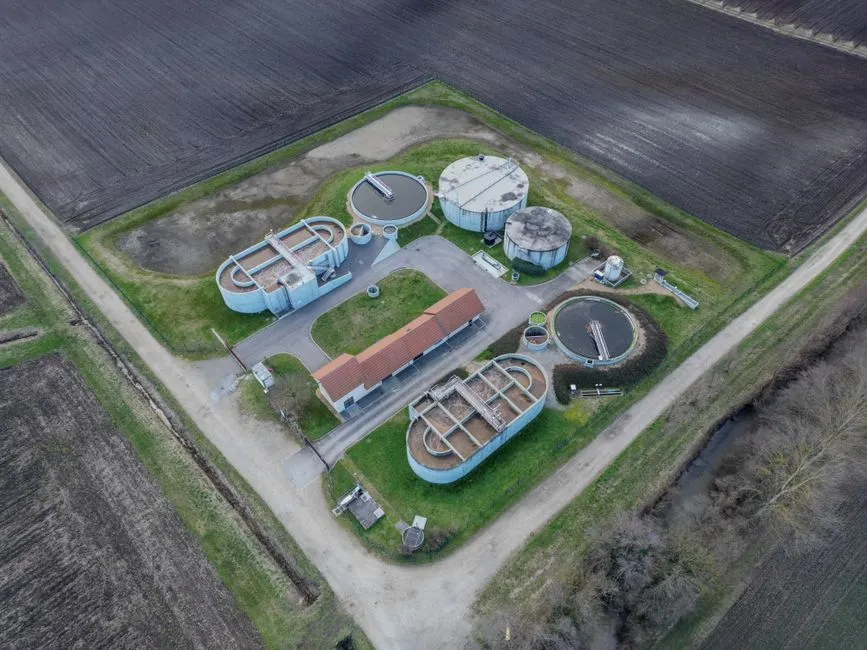
The appropriate choice is the route whose process, footprint, operating requirements and acceptance obligations match the hospital's data and discharge route.
- Package A/O with integrated disinfection: Compare this route when a buried or mobile installation, automated operation and limited footprint are priorities. Require the supplier to define the biological process, solids handling, disinfection method, controls, duty arrangement and installation boundary. An underground package sewage treatment plant quotation should identify which site works and utilities are included.
- MBR: Compare this route when membrane solids separation, compact installation or reuse-related effluent quality are central requirements. Request the membrane configuration, cleaning method, replacement provisions, recovered-solids route and performance obligations. The hospital dialysis wastewater MBR case study may inform the questions asked, but its project flow and conditions must not be transferred to a different hospital without validation.
- Compact medical-wastewater treatment: Compare this route for smaller facilities only after checking measured flow, wastewater characteristics, operating attendance, sludge handling and local acceptance conditions. “Compact” describes the installation arrangement, not a guarantee that the unit can accept every hospital stream.
Evaluate ozone, peracetic acid and sodium hypochlorite disinfection as alternatives or components of the selected train. The academic study titled “Comparative study of wastewater disinfection by-product formation during wastewater disinfection by peracetic acid versus sodium hypochlorite” supports a documented comparison of by-product formation. It does not establish that either disinfectant is preferable for every Mexican hospital; the comparison must be tied to the verified wastewater composition, permit conditions, operator controls and downstream use.
Specify the treatment and disinfection acceptance tests
Convert the selected route into measurable supplier commitments before comparing quotations. The purchase schedule should define the treatment train, disinfection method, controls, instrumentation, duty points, operating sequence, influent basis, guaranteed effluent parameters, test methods, sampling points, test duration and required documentation.
| Quote line item | Technical scope to specify | Red flags to check before signing |
|---|---|---|
| Equipment and process guarantee | State the applicable flow and wastewater basis, treatment stages, disinfection stage, duty points and required effluent guarantees. | Performance claims without a defined influent basis, sampling method, test duration or acceptance threshold. |
| Factory and site acceptance | Require FAT and site acceptance testing covering controls, alarms, interlocks, duty arrangements, sampling and documented operating sequence. | Commissioning is called an installation check without procedures, records, acceptance criteria or responsibility for unresolved deficiencies. |
| Disinfection comparison | Compare disinfectant compatibility, monitoring, operator training, chemical supply and by-product formation assessment. | A preference for ozone, peracetic acid or sodium hypochlorite is asserted without wastewater, permit or reuse inputs. |
| Services and handover | Include training, spares, maintenance access, manuals, laboratory support, sludge removal, chemicals, power and waste disposal. | Training, consumables, testing, disposal or civil connections are omitted from the price. |
Set acceptance thresholds from the verified permit and reuse specification, not from this guide or a supplier catalogue. Where either document is unavailable, state that acceptance values remain open and make the permit confirmation or reuse water-quality target a pre-order condition.
Build an RFQ that exposes commercial exclusions

A comparable RFQ must separate every cost and responsibility rather than asking for a turnkey price with unspecified boundaries. Include the measured flow basis, wastewater profile, discharge route, reuse objective, site conditions, required guarantees and delivery schedule in the enquiry document.
- Request separate prices for equipment, civil works, installation, electrical work, commissioning, training, spares, initial chemicals, laboratory testing and waste disposal.
- Attach the site-data matrix and label each missing input as “to be confirmed by the hospital,” “to be verified by the authority” or “to be included by the supplier.”
- Identify exclusions for foundations, tanks, roads, drainage, electrical supply, backup power, access, sludge removal, hazardous-waste handling and local approvals.
- Require model-specific documents supporting any treatment, disinfection or reuse claim, including its operating basis and proposed acceptance method.
- Use the hospital wastewater treatment guide for Mérida to organize the enquiry, while treating it as project guidance rather than evidence of Mexican approval requirements.
Treat an undefined disposal route, unconfirmed local approval, missing site data or unsupported performance claim as a pre-signature issue. A low quotation that excludes civil work, power, chemicals, sludge handling, testing or commissioning is not a comparable bid.
Frequently Asked Questions
How should a hospital wastewater treatment system in Mexico be sized?
Size it from metered average and peak-hour flow, the composition of segregated hospital streams, the verified discharge route and the required reuse application. Request laboratory analysis and authority-issued permit conditions; neither the available project excerpts nor a supplier catalogue provides a universal sizing basis for a Mexican hospital.
Is an MBR system better than a packaged A/O plant for a hospital wastewater project?
Compare MBR when membrane solids separation, compact installation or reuse-related effluent quality drive the decision; compare packaged A/O when buried or mobile installation, automation and footprint are the priorities. Require each supplier to state its treatment train, wastewater basis, solids handling, disinfection stage, utilities, maintenance and acceptance tests before making the selection.
What should a supplier include in a hospital wastewater treatment and disinfection quotation?
Require separate pricing for equipment, civil works, installation, electrical work, commissioning, training, spares, chemicals, laboratory testing and waste disposal. Also require model-specific technical documents, an exclusions register and clear responsibility for connections, sludge, utilities and local approvals.
Which permit and acceptance documents should be verified before ordering in Mexico?
Obtain the applicable federal, state and municipal permit conditions from the authority responsible for the receiving sewer or water body, together with any written reuse specification. Before order, confirm the equipment submittal, FAT procedure, site acceptance procedure, training and handover records, and contractual effluent guarantees with defined test methods and sampling points. The hospital wastewater treatment engineering and compliance guide can support scope development, but it does not replace current local approval documents.
