Define the wastewater and receiving route before selecting equipment
Select a high-COD industrial wastewater treatment system by matching the treatment train to the actual wastewater, not by capacity alone. Relevant industries may generate effluent with chemical oxygen demand (COD) from several thousand to tens of thousands of milligrams per liter, making direct biological treatment vulnerable to shock loads and inhibitory compounds. A staged train commonly combines pretreatment, anaerobic treatment, aerobic treatment and polishing where justified. The supplier needs influent COD, flow variability, BOD/COD ratio, temperature, pH, salinity, oil and grease, and target effluent data before final selection.
Start with a site-specific sampling plan rather than accepting a single laboratory COD value. Request the influent COD range, sampling method, BOD/COD ratio, suspended solids, oil and grease, pH, salinity and temperature. Also identify any toxic, refractory or inhibitory compounds and provide the resulting analytical reports. These inputs determine whether equalization and physical pretreatment can protect the biological stages, whether an industrial wastewater treatment equipment selection guide supports the proposed train, and what remains unresolved.
Document the receiving route before selecting polishing equipment. Confirm whether the treated water will be reused, discharged to a municipal sewer, or discharged to another identified destination. Obtain written confirmation from the responsible authority or sewer operator of any applicable COD limit, receiving-water sensitivity, monitoring requirement and pretreatment obligation. Industrial wastewater reuse may require a different treatment objective from sewer discharge, including additional treatment and water-quality controls.
The available Montenegro excerpt identifies the Republic of Montenegro but does not establish a discharge criterion, design capacity or oversight authority for this duty. The quoted COD concentration must be tied to its sampling method and operating condition rather than treated as a generic local requirement. Request site-specific confirmation before issuing a compliant technical scope.
Match the process to the contaminants and operating risk
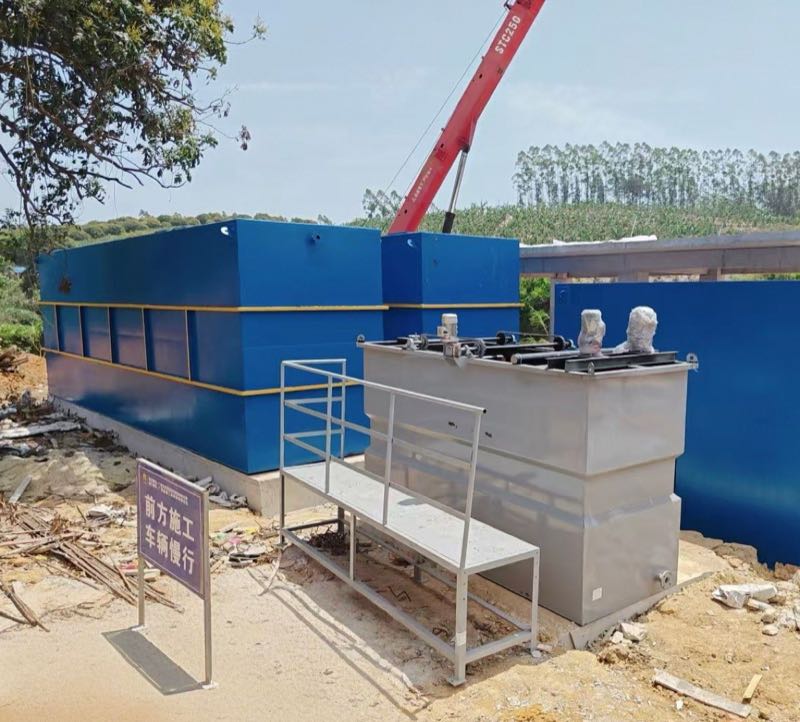
Use a staged process because no single unit should be expected to remove every high-COD component. Screen physical pretreatment, anaerobic treatment, aerobic treatment and advanced polishing against the contaminants, hydraulic variation, sludge route, footprint and reuse or discharge objective. These process steps help ensure the system remains resilient against variable influent loads.
Dissolved air flotation is appropriate when analysis confirms suspended solids, oil and grease, FOG or colloidal material that could overload downstream biology. Review DAF pretreatment for high-COD wastewater as a candidate stage, but require the supplier to define its removal objective and chemical or waste handling. Equalization should also be assessed against flow peaks, concentration swings and the hydraulic profile proposed for biological treatment.
Use advanced oxidation only where analysis identifies refractory or inhibitory organics that must be made more biodegradable before biological treatment. Its inclusion should be tied to analytical findings, the proposed reaction chemistry, reagent demand, residual-byproduct control and downstream biological impact rather than to COD concentration alone.
Consider an anaerobic wastewater reactor for high-strength, biodegradable effluent. Require the supplier to justify that choice using COD load, BOD/COD ratio, inhibition, temperature, pH, salinity, hydraulic profile, biogas objectives and resulting sludge yield. Follow it with aerobic biological treatment where further organic removal and stabilization are required. If reuse requires a tighter or more consistent effluent quality, ask bidders to explain where an MBR wastewater treatment system or another polishing step provides value.
| Discharge route or influent problem | Governing rule or process option | What data settles it |
|---|---|---|
| Suspended solids, oil and grease, FOG or colloidal material | Assess equalization and physical pretreatment before biological treatment; consider DAF where its removal duty is demonstrated. | Sampling results for suspended solids, oil and grease, FOG, particle distribution, flow peaks and the proposed hydraulic profile. |
| High-strength but biodegradable organic load | Screen anaerobic treatment followed by aerobic treatment and polishing where justified. | COD load, BOD/COD ratio, temperature, pH, salinity, inhibition assessment, treatability test and biogas objectives. |
| Refractory or inhibitory organics | Use advanced oxidation only where the analytical objective is to improve biological biodegradability. | Compound-specific analysis, toxicity or inhibition findings, proposed oxidation chemistry and downstream acceptance criteria. |
| Industrial wastewater reuse or a sensitive receiving route | Add aerobic treatment, membrane treatment or other polishing according to the confirmed use and receiving-water conditions. | Written destination criteria, reuse application, required COD limit, monitoring method and confirmation of pretreatment obligations. |
Use biological performance evidence without treating it as a guarantee
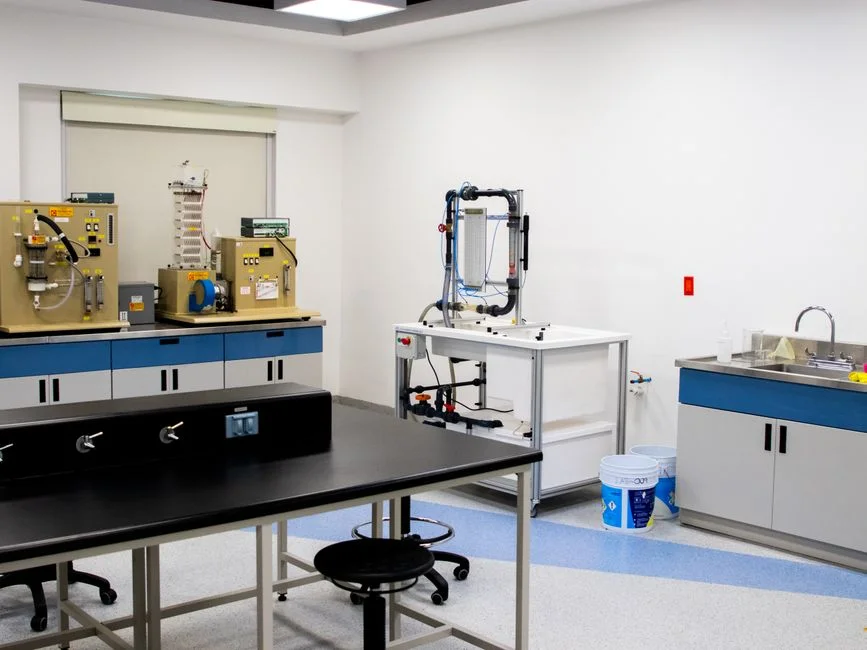
Require site-specific treatability evidence before transferring published removal percentages into a contract. A three-phase fluidized-bed reactor study treated 1,500 L/day of high-strength wastewater containing 5,000 mg/L COD and 230 mg/L ammonia at an 8 h hydraulic residence time. Under the study’s designed conditions, it removed 91.7% of COD and 56.7% of ammonia (Ryerson University Library and Archives, S4).
Those results describe a defined experimental condition, not a Montenegro installation and not a general guarantee for every high-strength effluent. Ask each bidder to provide a site-specific treatability test or an equivalent validation protocol covering the actual wastewater, selected temperature and pH conditions.
Define acceptance testing before signing. Specify sampling points, laboratory responsibilities, test methods, test duration and influent stability criteria. State what happens if an influent condition falls outside the agreed design envelope, and distinguish a failed equipment acceptance test from an influent outside the guaranteed basis. To compare alternative package scopes, use the DAF, MBR and package treatment route comparison as a commercial framework, not as evidence of site performance.
Build the quotation around scope, guarantees and handover
Issue the RFQ only after identifying the design basis and unresolved local requirements. Each bidder should state the proposed treatment train, design flow, influent design basis, duty assumptions, units, materials, controls, utilities, civil interfaces, installation, commissioning and training. Ask each bidder separately to list missing data, the party responsible for supplying it and any design conditionality.
Require commercial exclusions to be explicit rather than buried in general terms. The offer should separately state whether incoming sewer work, permits, external power, sludge disposal, chemicals, sampling, operator attendance and long-term spare parts are included.
| Quote line item | Technical scope to specify | Red flags to check before signing |
|---|---|---|
| Process design basis | Design flow, influent COD range, sampling method, flow variation, BOD/COD ratio, temperature, pH, salinity, suspended solids, oil and grease and inhibition data. | Unspecified “design COD,” a single flow without peak conditions, or performance promised without stating the corresponding influent envelope. |
| Equipment and civil interface | Every treatment stage, duty, materials, controls, utilities, installation boundaries, incoming and outgoing connections and required civil works. | Accessories or site works omitted, utilities undefined, or supplier and contractor responsibilities not separated. |
| Performance acceptance | Sampling points, test methods, laboratory responsibility, test duration, influent stability conditions, pass criteria and consequences of failure. | No defined test protocol, use of an unspecified sample, or warranty triggered only by laboratory analysis rather than influent verification. |
| Sludge, chemicals and utilities | Expected sludge and FOG handling routes, chemical use, residual handling, power demand, water demand and consumables. | Consumables excluded from price, disposal route unresolved, or sludge characteristics not provided for the receiving facility. |
| Commissioning and handover | Operator training, operating manual, control narratives, spare parts, maintenance schedule, local service arrangements and completion records. | Training limited to attendance, no manuals or control documentation, or delivery and service support left undefined. |
Use the industrial effluent treatment and DAF selection guide to identify questions about pretreatment, but require the final quotation to follow the site’s wastewater characterization, confirmed receiving route and acceptance protocol.
Verify Montenegro requirements before ordering
Obtain site-specific confirmation from the relevant industrial park, municipal sewer operator or environmental authority before treating the proposal as locally compliant. Request written confirmation of the applicable influent pretreatment conditions, effluent COD limit, sampling method, monitoring frequency and any reuse criteria. The available material does not establish a Montenegro-specific COD limit, permitting route or equipment-approval rule, so these requirements must be verified rather than inferred from general European practice.
Include delivery risk in supplier qualification. Require confirmation of local power availability, drainage, site access, flood exposure, winter operating conditions and access to commissioning and service support. The quotation should state lead time, transport responsibilities, customs or import assumptions where applicable, installation sequence, commissioning duration, training arrangements and the availability of local spare parts and technical support.
Before accepting an offer, ask the bidder to reconcile every promised treatment stage with the confirmed receiving route. Any process step or guarantee that cannot be traced to an accepted site input, laboratory method or written receiving requirement remains a design assumption. Document those assumptions and assign responsibility for closing them before manufacturing release.
Related Equipment
- MBR wastewater treatment system — specifications, capacity range, and technical data
Further Reading
Frequently Asked Questions
Why are flow and COD insufficient for final sizing?
Flow and COD do not show how much of the organic load is biodegradable, inhibitory or separable. Final sizing also needs flow variability, BOD/COD ratio, temperature, pH, salinity, suspended solids, oil and grease, toxicity or inhibition results, hydraulic profile and the confirmed effluent objective. These inputs determine pretreatment duty, reactor selection, equalization, polishing and the operating envelope for a guarantee.
What should a fixed-scope equipment quotation include?
Require a process description, design flow, influent design basis, equipment list, materials, controls, utilities, civil interfaces, installation, commissioning, training and handover documents. Identify exclusions for incoming sewer work, permits, external power, chemicals, sludge disposal, sampling, operator attendance and spare parts. Also require the bidder to state what information remains missing and who must provide it before the design becomes final.
How should treatment performance and acceptance testing be assessed?
Use a site-specific treatability test and define sampling points, test methods, laboratory responsibility, test duration, influent stability criteria and pass conditions. Published reactor results can inform the evaluation but cannot replace site testing. The S4 three-phase fluidized-bed study, for example, reported 91.7% COD removal under its stated 1,500 L/day, 5,000 mg/L COD, 230 mg/L ammonia and 8 h hydraulic-residence-time condition; that scope must not be presented as a blanket guarantee.
How can a buyer verify local compliance, supplier capability and delivery support?
Obtain written site-specific confirmation of the COD limit, discharge or reuse route, sampling method, monitoring frequency and pretreatment obligations from the responsible authority or sewer operator. Then check the supplier’s proposed process against those requirements, review site utilities and installation constraints, and make local commissioning, training, spare-parts and service support contractual deliverables. If the bidder cannot identify the applicable authority or required site inputs, its price is not yet a comparable procurement offer.