Define the South Korean Greywater Reuse Route
Selecting a greywater recycling system in South Korea requires comparing UF, MBR, and packaged biological treatment against actual source flow, peak demand, incoming wastewater quality, required end use, and local approval routes. UF is strongest when the aim is solids, colloid, and bacteria control before reuse or downstream treatment; MBR is more appropriate when biological treatment and membrane separation must be combined. Greywater normally represents 50–80% of household wastewater generation, but this figure does not size an industrial system. The correct next step is to collect site inputs, confirm the applicable Korean requirements for the intended reuse route, and issue an RFQ with measurable acceptance criteria.
Define the project boundary before selecting equipment. Record whether the proposal covers household, commercial, or industrial greywater, which fixtures are included, and whether toilet waste is excluded from the segregated stream. A 2023 review confirms that segregating greywater at the source enables separate treatment strategies for decentralized reuse [S4].
Identify the receiving use and regulatory pathway. The project owner and relevant Korean authority should confirm whether the treated water will be used directly, discharged indirectly through another receiving system, discharged to the sewer, or handled under another regulated route. The supplied research does not establish a universal numerical water-quality or discharge limit for a generic South Korean project; therefore, applicable Korean requirements must be obtained for the specified application.
Keep three obligations separate in the quotation: the duty to control the greywater source, the duty to treat the resulting stream, and the duty to satisfy the receiving or reuse conditions. The UF versus MBR greywater recycling comparison can support technology evaluation, but its site context does not replace Korean approval or design documentation.
Collect the Site Inputs That Determine Capacity
Measured flow and quality data must be obtained before asking suppliers to size a unit. Request hourly and daily average flows, seasonal and event peaks, storage volume, and the required reuse flow. The reusable portion of the plant should reflect actual demand and discharge conditions rather than an assumed percentage of total wastewater generation.
A 2023 review states that greywater, excluding toilet waste, represents 50–80% of daily wastewater generation in a typical household and is characterized by low organic strength and high volume [S4]. Use that figure only as household background. It is not a plant-sizing factor for a commercial or industrial installation, where fixture coverage, operating hours, and contaminant profiles may differ.
Obtain source-specific wastewater characteristics: suspended solids, colloids, organic load, nutrients, pH, salinity, fats, and any contaminants associated with the industrial process. Document footprint, installation depth, available power, drainage, maintenance access, receiving-system pressure, and planned operating hours. For an MBR option, use the integrated MBR wastewater treatment system reference to identify biological and membrane stages that must be priced and guaranteed separately.
| Discharge route or influent problem | Governing rule or process option | What data settles it |
|---|---|---|
| Unknown hourly or seasonal flow variation | Base treatment capacity on documented demand and peak conditions; consider equalization where variation requires it | Hourly and daily flow records, seasonal and event peaks, storage volume and required reuse flow |
| Toilet waste or other high-strength waste entering the stream | Correct source segregation before selecting a greywater process train | Fixture-by-fixture source map, drainage schematic and representative source samples |
| Industrial contaminants not represented by household greywater | Evaluate biological, membrane and pretreatment suitability against the actual contaminant profile | Source-specific analysis for suspended solids, colloids, organics, nutrients, pH, salinity, fats and process contaminants |
| Poor membrane feed condition or unreliable backwash access | Provide pretreatment, equalization and accessible maintenance provision before UF or MBR | Fouling indicators, feed temperature and chemistry where relevant, available footprint, utilities and maintenance-access plan |
| Reclaimed-water demand differs from treatment production | Align storage and treatment output with the receiving system rather than sizing only to the largest flow | Daily reuse profile, storage requirement, pressure requirement, operating hours and planned shutdowns |
Ask the project owner for monitoring records and representative samples, not just vendor questionnaires. That evidence determines whether the stream can enter membrane operation directly or requires equalization, biological treatment, solids removal, or other pretreatment.
Compare UF, MBR and Packaged Biological Treatment
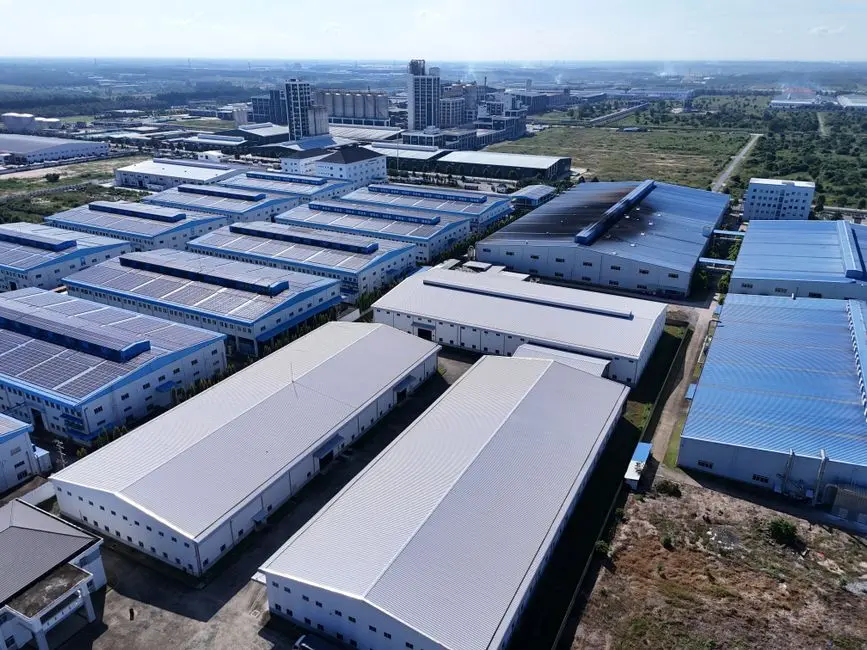
Choose the process by required treatment function rather than by equipment name. UF is appropriate when the principal objective is bacteria, colloid, and suspended-solids control, provided the feed is suitable for membrane pretreatment. MBR is the stronger candidate when biological treatment and membrane separation must operate as an integrated train for water reuse with low solids in the treated effluent. Packaged biological treatment suits a site needing a compact, largely automated sewage-treatment package where an A/O biological process, sedimentation, and disinfection can meet the application.
UF does not remove the organic load addressed by biological treatment. Treating it as a complete substitute requires evidence that the incoming organic load and intended reuse outcome are already satisfied by upstream treatment. A 2023 review presents biological systems and physicochemical methods as complementary treatment routes, including nature-based systems, biofilm systems, MBR, membrane filtration, sorption, ion exchange, and UV disinfection [S4].
For a more specific equipment review, compare the hollow-fiber UF system against the integrated MBR wastewater treatment system. The greywater recycling equipment selection guide provides additional decision context, but it does not establish Korean acceptance criteria.
- Choose UF when: upstream treatment has addressed biodegradable organics, the feed is membrane-compatible, and the required function is solids, colloid, and bacteria control.
- Choose MBR when: biological degradation and membrane separation are both required, and low-solids effluent is central to the reuse specification.
- Choose packaged biological treatment when: the source is suitable for the proposed biological process and the package can provide the required treatment stages within the available footprint and operating arrangement.
- Reject an incomplete comparison when: a quotation treats “UF,” “MBR,” and “biological package” as interchangeable despite providing no feed characterization, treatment train, or guarantee.
Map the Treatment Train to the End Use
Assign each treatment function before finalizing the equipment list. Source segregation limits what enters the stream; equalization manages flow and composition variation; pretreatment protects downstream equipment; biological treatment addresses biodegradable organics; membrane filtration separates solids and colloids; and disinfection applies where required by the confirmed reuse specification. Do not assume that a segregated greywater inlet will always be stable enough for direct membrane operation.
The treatment families identified in the 2023 review include nature-based systems, biofilm systems, MBR, membrane filtration, sorption, ion exchange, and UV disinfection [S4]. These families perform different functions and should not be collapsed into a generic treatment claim.
For a reuse route that requires disinfection, ask the supplier to define the equipment, dose or operating conditions, performance claim, and monitoring method. Review UV disinfection equipment as one possible treatment component, but require the proposed configuration to be tied to the confirmed reuse specification and receiving conditions.
Ask each bidder to state which steps are required for each reuse application and which values are guaranteed, typical, or conditional. The supplier should identify the sample point, parameter, test method, and condition that demonstrate compliance. For industrial wastewater reuse, the industrial wastewater reuse systems comparison can help structure that request; the Korean project document must still govern acceptance.
Build an RFQ That Separates Technical Scope from Sales Claims
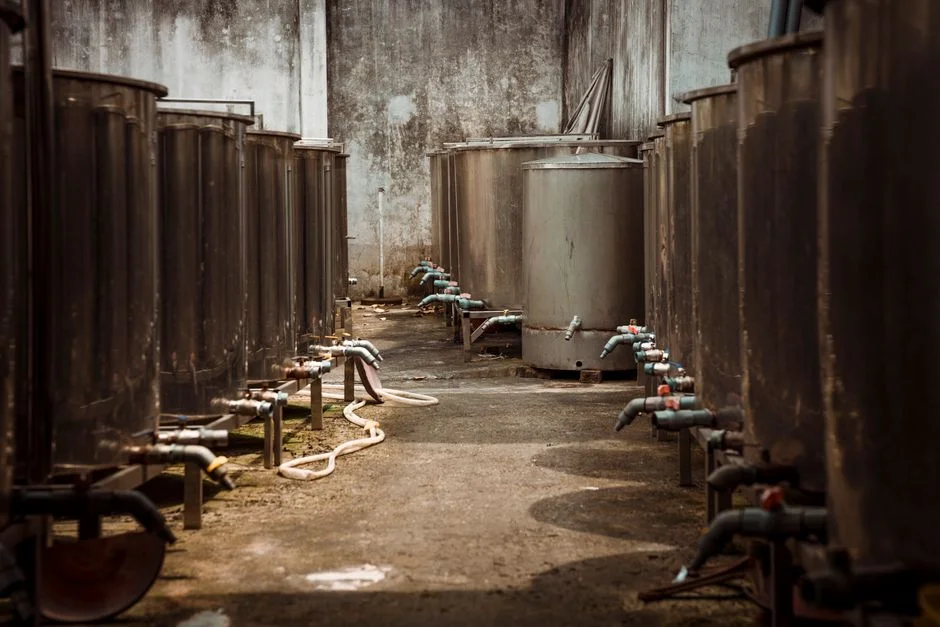
Require the RFQ to separate the incoming-flow basis, treatment capacity, process guarantee, membrane or media specification, controls, utilities, and civil works. A supplier should state whether capacity refers to average flow, peak flow, hydraulic loading, or another operating basis. Unsupported phrases such as “re-use quality” are incomplete unless the quotation defines the parameter, test method, threshold, and acceptance condition.
Define the performance acceptance test, sampling method, test parameters, and responsibility for providing compliant influent and receiving-system conditions. Price commissioning, operator training, spare parts, membrane or media replacement, remote monitoring, and maintenance support as separate items. State the delivery, installation and permitting assumptions, electrical and drain requirements, schedule, exclusions, and documentary evidence proposed for the Korean approval route.
| Quote line item | Technical scope to specify | Red flags to check before signing |
|---|---|---|
| Design basis and treatment capacity | Measured average and peak flows, source characteristics, storage assumptions and the required treated-water flow | Capacity based only on household percentages, an unstated design flow or an unidentified peak basis |
| Treatment performance guarantee | Named parameters, sample location, test method, threshold, test duration and acceptance procedure | “Re-use quality” without parameters, or typical values presented as contractual guarantees |
| Process train and pretreatment | Equalization, solids control, biological treatment, membrane separation and disinfection functions relevant to the feed | UF offered as a biological-treatment substitute without organic-load evidence, or omissions concealed in a general equipment line |
| Membrane, media and replacement | Materials or general construction, operating envelope, cleaning method, replacement interval basis and unit pricing | Unspecified consumables, no replacement price, or replacement excluded despite the supplier controlling design conditions |
| Controls and utilities | Instrumentation, automation, power demand, drains, backwash or cleaning water, access and monitoring responsibilities | Civil, electrical and utility works left undefined or excluded without a stated allowance |
| Delivery, installation and commissioning | Supply boundary, transport assumptions, lifting access, installation sequence, utilities, testing, training and handover documents | Delivery date or installation scope depends on undefined site conditions and permitting tasks |
| Compliance evidence | Applicable Korean approval pathway, authority correspondence, quality documentation and responsibility for each submission | Supplier claims local approval without identifying the authority, route, document or customer obligation |
| Maintenance and support | Preventive tasks, response arrangements, spare parts, membrane or media replacement and operator competency requirements | Support and consumables omitted from price, or performance conditional on undocumented maintenance |
Normalize quotations before comparison. Every bidder should answer the same design-basis questions, identify exclusions, state schedule assumptions, and attach evidence for material performance claims. A lower equipment price is not comparable if the bid excludes pretreatment, civil work, consumables, commissioning, or approval support.
Frequently Asked Questions
How should UF and MBR be compared for a South Korean greywater recycling project?
Compare the functions required for the actual reuse route. Use UF where upstream biological treatment is adequate and the principal requirement is solids, colloid, and bacteria control; use MBR where biological treatment and membrane separation must be integrated. Require each supplier to identify the treatment train, feed assumptions, guaranteed parameters, test method, and Korean approval basis so the options are compared on equivalent scope.
What site data is required before sizing a greywater treatment system?
Obtain hourly and daily flows, seasonal and event peaks, storage requirements, reuse demand, source segregation, wastewater composition, footprint, installation depth, utilities, maintenance access, and receiving-system pressure. Representative samples and monitoring records should establish suspended solids, colloids, organic load, nutrients, pH, salinity, fats, and any industrial contaminants. Do not size from the household 50–80% greywater statistic cited by the 2023 review [S4].
What should a greywater equipment quotation include for delivery and commissioning?
Require separate prices for equipment, transport, installation, electrical and drain connections, commissioning, training, documentation, remote monitoring, spare parts, and membrane or media replacement. The quotation should state the delivery boundary, site assumptions, schedule, exclusions, and the responsible party for each approval step. Treat an undated delivery promise or undefined commissioning prerequisite as an unresolved commercial risk.
How should the buyer verify that a supplier's reuse claim matches the applicable Korean requirements?
Ask the project owner or relevant authority to confirm the receiving use, discharge route, applicable water-quality requirements, and reviewing authority. Then require the supplier to connect each claim to a named parameter, sample point, test method, threshold, and acceptance procedure. A general reuse statement, foreign case study, or equipment brochure does not establish compliance for the proposed Korean project.