Define the discharge route and Canadian approval path
Choosing a hospital wastewater treatment and disinfection system in Canada begins with the discharge route, applicable jurisdiction, wastewater composition and peak flow. Municipal sewer discharge, an off-site treatment route and on-site treatment require different equipment scopes. A compact system may suit smaller facilities, while an MBR or buried package plant can serve larger flows; final disinfection still needs project-specific validation. A 2026 pilot study found 2-3 log inactivation with UV LEDs at a municipal wastewater plant, but noted that organic matter and wastewater chemistry affected reactions. The practical output is a route matrix and RFQ checklist that converts site inputs into measurable treatment, testing, commissioning and handover requirements.
Match hospital wastewater conditions to the treatment route
The treatment train must be selected only after the owner and project engineer establish the receiving route and the wastewater characterization. The missing information is often substantial: average, peak and minimum flow; BOD5, COD, suspended solids, turbidity, pH and temperature; nutrients; relevant contaminants; connected departments; and any special waste streams. These data determine hydraulic loading, biological treatment, solids handling and whether disinfection is the final barrier or one part of a larger train.
Map infectious-disease areas, laboratories, pharmacy areas and other special streams separately. Healthcare wastewater may contain pharmaceuticals, pathological biological material and, in some facilities, chemicals or radioisotopes, according to Newster’s hospital-wastewater overview. A general hospital flow total does not establish how those streams should be segregated, pretreated or documented.
For a buried non-residential package solution, ask the supplier to demonstrate how its process handles the measured flow and wastewater profile. The underground integrated sewage treatment plant combines anoxic and aerobic biological contact oxidation, sedimentation and disinfection in a buried unit. That configuration may be relevant to a hospital package-plant scope, but it still requires site-specific hydraulic, loading, solids and access checks.
For a more treatment-intensive route, ask the supplier to demonstrate membrane sizing, solids removal, redundancy and maintainability. An MBR membrane bioreactor wastewater treatment system may be suitable where the documented treatment objectives justify the additional process and maintenance scope. A compact medical wastewater unit should be considered only where its documented flow, footprint and regulatory scope match the facility; these units are intended for clinics and small medical facilities.
| Discharge route or influent problem | Governing rule or process option | What data settles it |
|---|---|---|
| Municipal sewer | Define whether the required scope is pretreatment for sewer acceptance or a more extensive treatment train. | Owner’s applicable sewer requirements; current wastewater analysis; average, peak and minimum flow; discharge hours; solids and pH data. |
| Off-site treatment route | Specify the receiving facility’s acceptance conditions and the required on-site pretreatment or disinfection interface. | Written acceptance criteria from the receiving operator; transport route; tankage and operating arrangements; sampling requirements. |
| Controlled discharge or planned reuse | Define treatment and disinfection against the receiving environment or reuse purpose rather than relying on generic pathogen claims. | Receiving-site characterization; reuse application; target organisms; required log reduction; residual and by-product criteria; independent approval pathway. |
| Special hospital streams | Determine whether segregation, equalization or dedicated pretreatment is necessary before the main treatment process. | Department-by-department flow and contaminant inventory; sampling plan; pharmacy, laboratory, pathology and isotope-source information. |
| Package, MBR or compact route | Compare documented hydraulic capacity, treatment objectives, footprint, solids route, controls and maintenance access. | Verified influent data; supplier design basis; process drawings; guarantees; utilities; redundancy; installation boundary. |
Select and validate the disinfection stage
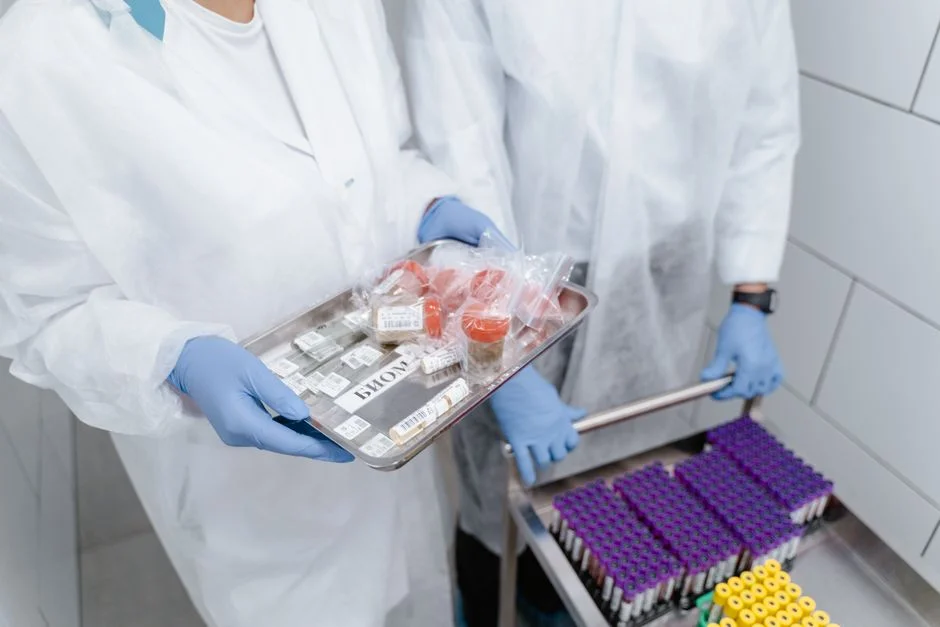
The validation target must be defined before selecting UV-C, chlorine dioxide, ozone or another disinfection method. The RFQ should state the required reduction or log inactivation, target organisms, test conditions, sampling point, analytical method, test frequency and acceptance authority. Hospital wastewater treatment and disinfection must be judged against the actual treated effluent and downstream use, not by lamp type or chemical name alone.
A pilot study published in RSC Advances on 21 Aug 2026, volume 16, issue 43, pages 52458-52470, demonstrated 2-3 log inactivation with UV LEDs at a municipal wastewater treatment plant. That result is not a universal hospital performance guarantee. The same study found that water-matrix composition, particularly organic matter, substantially influenced UV-induced photochemical reactions.
The chemistry also affects non-target outcomes. The study reported 16-60% degradation for naproxen, diclofenac, sulfamethoxazole and ciprofloxacin, while acetaminophen concentrations increased 2-3-fold after UV irradiation. It also states that UV-LED performance at pilot scale requires further evaluation against diverse microorganisms, micropollutants and metabolites in complex wastewater matrices. These findings support an effluent-quality review and a project-specific UV-LED dossier rather than a general claim that UV will improve every contaminant outcome.
For chemical disinfection, request a dossier addressing the treated-water matrix, contact time, dosing control, residual at the relevant point, by-products, downstream consequences and operational hazards. For UV, request intensity or dose calculation, fouling and scaling controls, lamp condition monitoring, reactor configuration and validation records. The broader hospital wastewater route-selection guide provides additional context for comparing discharge decisions, while the 30 m³/day dialysis-centre MBR case study is useful as a project-reference document rather than a universal sizing rule.
Build an RFQ that makes supplier proposals comparable
Every bidder must receive the same source-data schedule and response format. The schedule should include flow, wastewater analysis, receiving route, applicable requirements, reuse goals, footprint, utilities, installation constraints and the sludge or residuals route. If these inputs are blank, label them “to be determined”; do not allow each bidder to use a different design basis.
Require proposals to state the process basis, design flow, treatment train, disinfection method, equipment duties, materials, controls, alarms, utilities, installation boundary, commissioning tests, excluded work, warranty and handover deliverables. Make performance acceptance measurable by defining analysis methods, sampling points, test frequency, correction periods and required documentation. Require lifecycle information covering consumables, membrane or lamp replacement, cleaning, spare parts, operator training, remote support, maintenance access and warranty terms.
| Quote line item | Technical scope to specify | Red flags to check before signing |
|---|---|---|
| Design basis and source data | Average, peak and minimum flow; complete wastewater analysis; connected departments; discharge route; applicable requirements; reuse objectives. | Undefined flows, assumed influent quality, missing peak factors or no stated discharge destination. |
| Treatment process | Process basis, treatment objectives, hydraulic loading, biological capacity, solids separation, sludge route and redundancy. | Equipment selected by hospital name or daily flow alone; no calculation basis; excluded pretreatment or sludge handling. |
| Disinfection system | Target organisms, log reduction, sampling point, analytical method, residual or dose criteria, fouling controls and validation plan. | Generic efficacy claims, untested lamp or chemical performance, no actual-effluent matrix or no acceptance method. |
| Controls and instrumentation | Process control philosophy, alarms, interlocks, setpoint responsibility, trend records, local controls and communications interface. | Alarms left undefined, supplier-controlled setpoints without approval, or remote-access requirements omitted. |
| Installation and utilities | Civil, structural, mechanical, electrical, piping, drainage, access, power, water and utilities boundary. | Open-ended exclusions, unclear excavation or disposal responsibility, and site constraints omitted. |
| Commissioning and acceptance | Factory acceptance, delivery inspection, wet commissioning, performance tests, correction periods and acceptance certificate. | “Demonstration” substituted for a test protocol; no sampling method, correction period or signed record requirement. |
| Lifecycle and support | Consumables, replacement intervals, spare parts, training, maintenance access, remote support and warranty. | Price-only comparison with no operating burden, support scope or consumables included. |
Plan delivery, commissioning and handover

Design approval must be tied to the receipt of verified site data, the owner’s identified approvals, design freeze dates and approved drawings. Factory acceptance, delivery inspection, installation, wet commissioning, performance testing and final acceptance should be treated as separate phases. Each milestone requires a responsible party, entry criteria, hold points, test records, acceptance criteria and a formal approval document.
For hospital wastewater treatment commissioning, require signed test results, operating manuals, as-built drawings, control narratives, alarm and setpoint records, training attendance, spare-parts lists, warranty documents and residual or chemical-handling information. The handover package should also include the approved process basis and a clear boundary between supplier obligations and owner responsibilities.
Osorno’s hospital water-system experience provides a helpful reference for schedule planning. Osorno states that complete hospital water-system disinfection may take 5 days to two weeks, depending on hospital size, and reports that 16 days were needed for the South Health Campus in Calgary. Those are water-distribution disinfection references, not guarantees for hospital wastewater treatment plant commissioning. Construction, wet commissioning and performance testing should be planned as separate activities with their own site constraints and acceptance documents.
Further Reading
Frequently Asked Questions
What capacity does a hospital wastewater treatment and disinfection system in Canada need?
Capacity must be selected from average, peak and minimum flows, wastewater characteristics, discharge route and operating conditions. Existing research does not establish a universal sizing rule. Request the verified flow series, peak-factor basis, hourly and daily wastewater analysis, connected departments and treatment objectives; require each bidder to show how its documented capacity and process loading address those inputs.
How should disinfection be selected and validated?
Select the method against the actual treated effluent, target organisms, required reduction, residual or dose criteria, downstream use and wastewater chemistry. Require a project-specific validation protocol with sampling points, analytical methods, test conditions and acceptance criteria. The 2026 municipal pilot showing 2-3 log inactivation with UV LEDs is useful evidence, but it is not a hospital acceptance guarantee.
What documents should be required at commissioning and handover?
Require signed performance-test records, approved sampling and analytical procedures, operating manuals, as-built drawings, control narratives, alarm and setpoint records, training attendance, spare-parts lists and warranty documentation. Final acceptance should confirm that excluded work has been closed or transferred to a named responsible party.
How should suppliers be compared for a package plant, MBR and compact system?
Compare each bidder on the same verified design basis, treatment objectives, equipment duties, materials, controls, utilities, installation boundary, commissioning tests, excluded work and lifecycle support. For an integrated package, MBR or compact unit, request the supplier’s sizing calculation, process drawings, performance basis, maintenance plan and warranty. Compare whole-life obligations rather than equipment price alone.