Establish the Site and Discharge Route
Connecting to an available sewer, installing a buried A/O package plant, or specifying an MBR system are the primary options for a hotel sewage treatment plant in Jamaica. Start with verified flow, waste characteristics, discharge point, and NEPA licence requirements, because no single route fits every site. A Negril hotel EIA required connection to the Negril Sewage System and reported BOD in excess of 20,000 to 50,000 mg/l. That value is site-specific and must not be transferred automatically to another property. Use the comparison matrix and RFQ worksheet below to separate preliminary selection from final design.
Confirm the property municipality, proposed discharge point, receiving-water constraints, and whether an appropriate sewer connection is available. For the Negril precedent, NEPA’s published EIA excerpt required the proposed hotel wastewater system to be linked to the Negril Sewage System. That instruction applies to that project and discharge arrangement; it does not establish sewer availability for other Jamaican hotels.
Do not adopt the Negril waste-stream value for another site. Request flow measurements and representative influent samples from the subject hotel, covering guest accommodation, kitchen, laundry, pool, and any other significant discharge. The Jamaican sewage treatment plant selection guide provides a useful starting point for comparing the sewer, A/O, and MBR routes.
Compare Sewer, A/O and MBR Treatment Routes
The choice between these routes depends on verified discharge access, hydraulic and organic loading, available land, reuse requirements, operating resources, and sludge-disposal arrangements. Selecting the right method requires weighing these variables against the specific constraints of the facility.
A sewer may remove the on-site treatment obligation where an appropriate connection is available, but it does not eliminate the need to confirm capacity, connection conditions, ownership, and the applicable approval route. For an on-site biological route, assess the applicable A/O or biological contact oxidation capacity against both flow and contaminant loading. For MBR, assess the required treatment quality, membrane area, site constraints, and operating controls; a MBR wastewater treatment system should not be selected solely because membrane technology is specified by name.
| Discharge route or influent problem | Governing rule or process option | What data settles it |
|---|---|---|
| Available public sewer | Consider sewer connection where an appropriate route, capacity and approval are confirmed. | Sewer availability letter or utility confirmation; connection point; applicable capacity, fees and discharge conditions. |
| No suitable sewer connection | Compare a buried A/O package sewage treatment plant with MBR using the same design basis and discharge route. | Average and peak flow; wastewater characterization; footprint; soil; access; power; effluent destination. |
| Strong or variable organic influent | Assess process loading and pretreatment needs; do not size from flow alone. | Representative sampling plan, laboratory results, operating-day variation and kitchen or laundry discharge information. |
| Reuse or stringent discharge requirement | Compare the treatment, disinfection and reuse provisions of each proposed route. | Reuse quantity and use; required final water quality; receiving-water or reuse conditions. |
| Limited operating resources | Compare routine attendance, controls, training and sludge handling. | Operator availability; remote monitoring expectations; maintenance access; sludge removal and disposal route. |
The Negril EIA reported a waste stream with BOD in excess of 20,000 to 50,000 mg/l. If the subject hotel’s sampling establishes a similarly strong stream, the bidder must show how its proposed capacity and pretreatment arrangement accommodate that loading rather than relying on hotel flow rate alone. A wastewater-characterization study and Jamaica-specific engineering review remain necessary before final process selection.
Verify Wastewater Quality and Treatment Capacity
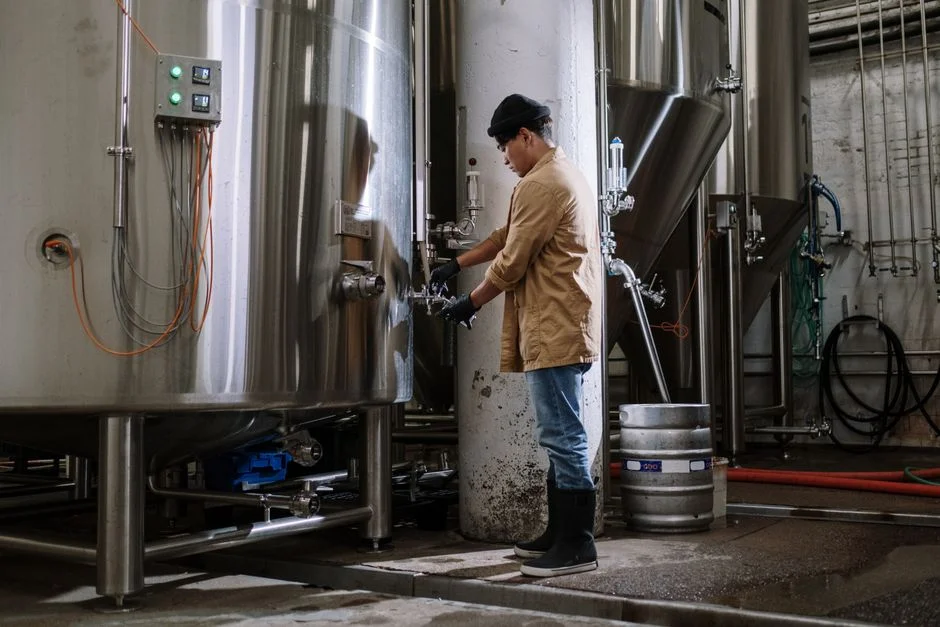
Design flow must be established from documented occupancy and measured discharge data, not from guest-room count alone. The bidder’s basis should identify average daily flow, peak hourly flow, seasonal occupancy, kitchen and laundry loads, pool discharges, and any industrial-strength waste.
Define the sampling plan before quotations are evaluated. Identify each sampling point, the operating periods represented, the number of samples, the parameters to be tested, and the laboratory. The hotel A/O package plant and MBR comparison explains why treatment capacity must be tied to wastewater characteristics as well as flow.
Ask bidders to identify which data they will supply and which inputs they require from the owner. Any assumed flow, BOD loading, or discharge quality left unresolved should appear as an explicit quotation assumption, with the corresponding design consequence.
Check NEPA Licensing and Operating Requirements
The legal discharge route must be confirmed before finalizing equipment, specifically whether the proposal is trade effluent or sewage effluent and whether a licence granted by NEPA is required. The SRC states that operating a wastewater treatment plant for discharge of trade or sewage effluent without a licence granted by NEPA is illegal under the Natural Resource Conservation Act. The applicable category, licence conditions, and final limits must be confirmed for the specific hotel and discharge point.
Do not put a numerical effluent limit into the specification unless it is supported by the applicable approval or licence. A complete compliance plan should allocate responsibility for operator training, sludge safety, maintenance access, monitoring, records, and corrective action. The SRC offers feasibility, troubleshooting, and training support and works with NEPA on wastewater-treatment compliance; the hotel sewage treatment route comparison highlights the operating responsibilities that should accompany an on-site proposal.
Turn the Preferred Route into an RFQ
Issuing one common RFQ to every bidder ensures that quotations are compared on the same technical basis. Require the design flow, treatment basis, proposed process, discharge route, footprint, utilities, controls, commissioning tests, and O&M assumptions. Each supplier should state exclusions so that civil works, installation, training, spares, and long-term service are not left to interpretation.
| Quote line item | Technical scope to specify | Red flags to check before signing |
|---|---|---|
| Design basis and process equipment | Design flow, characterization basis, treatment route, process capacity and proposed discharge point. | Equipment selected from room count alone; unsupported BOD assumption; no stated treatment basis. |
| Civil works and installation | Excavation, foundations, buried installation, pipework, access, power and drainage interfaces. | Site works, access roads or utility connections omitted from the price. |
| Controls and commissioning tests | Controls, alarms, testing, demonstration, documentation and acceptance criteria. | Performance promised without a defined test method, sample condition or acceptance threshold. |
| Sludge handling | Sludge generation assumptions, storage, testing, removal, transport and disposal documentation. | Sludge destination omitted; owner’s disposal obligation not identified. |
| Training, spares and O&M | Operator training, recommended spares, maintenance schedule, support scope and service pricing. | Unlimited support claimed without staffing assumptions; critical spares excluded. |
Assign responsibility for wastewater-flow data, laboratory analysis, site surveys, permit support, training, spare parts, and sludge-disposal documentation. Ask for an itemized quote covering equipment, civil works, installation, commissioning, training, spares, warranty, and long-term O&M. Unexplained performance guarantees, material exclusions, and untested acceptance criteria are pre-signature red flags.
Related Equipment
- buried A/O package sewage treatment plant — specifications, capacity range, and technical data
Frequently Asked Questions
How is the required treatment capacity established for a Jamaican hotel?
Base capacity on measured wastewater flow and characterization, not guest-room count alone. Request average daily flow, peak hourly flow, seasonal occupancy, kitchen, laundry, pool, and any industrial-strength discharge information, then require the selected process to state how it handles the verified flow and BOD loading.
What should a complete hotel sewage-treatment quotation include?
Require itemized prices for equipment, civil works, installation, commissioning, training, spares, warranty, and long-term O&M. The quote should also define the design flow, treatment basis, discharge route, utilities, controls, commissioning tests, sludge handling, permit-support responsibilities, and every exclusion.
How should a buyer check a supplier before selecting a treatment route?
Check the supplier’s proposed process against the hotel’s verified site inputs and ask for the design calculations, reference experience, commissioning protocol, and O&M assumptions. Reject a quotation that cannot explain capacity, treatment performance, site constraints, operator involvement, or sludge disposition without qualification.
What must be verified for NEPA licensing and final acceptance?
Confirm the wastewater category, discharge point, applicable licence requirements, and project-specific conditions with NEPA or the appropriate authority. Final acceptance should follow agreed commissioning tests using a defined sampling method and acceptance criteria; neither a generic NEPA reference nor an unsupported numerical effluent limit is sufficient.