Identify the rule that controls the discharge
No single nationwide PFAS discharge limit exists for every industrial plant. The applicable obligation depends on the plant’s state, industrial category, direct or POTW discharge route, NPDES or pretreatment permit, and any state-specific limits. As of the July 2026 CRS update, EPA had not finalized PFAS effluent limitation guidelines or biosolids requirements, but permit authorities may impose case-specific monitoring, best management practices, and technology-based limits. Industrial plants should verify permit conditions, identify PFAS sources, obtain representative analytical data, and compare source control, pretreatment, and treatment options before selecting equipment.
Begin with four documents and facts: the state and locality of the discharge and receiving water; whether wastewater enters regulated waters directly or passes through a POTW; the plant’s industrial category and production processes; and the current NPDES or pretreatment authorization. The Congressional Research Service explains that the Clean Water Act authorizes EPA and delegated states to limit or prohibit pollutant discharges through NPDES permits. For industrial users discharging to a POTW, pretreatment requirements may govern instead.
Ask the permitting authority for written confirmation of whether the permit contains PFAS monitoring, best management practices, pollution prevention, study conditions, or case-specific technology-based effluent limits. CRS reports that EPA has developed ELGs for 59 industrial source categories, but no PFAS-specific ELG had been finalized. That distinction matters: the absence of a final PFAS ELG does not mean that a permitted plant is free of enforceable requirements.
Keep the compliance record classified. Current permit conditions are verified obligations; proposed rules and draft guidance are change risks; voluntary best practices are not permit limits unless incorporated into an authorization, order, or approved plan. The worksheet should also preserve the effective date and status of each document reviewed.
Match the compliance route to the receiving point
Select the compliance route based on the receiving point, then verify the instrument that imposes obligations at that location. A direct discharger must work from its NPDES permit. An indirect discharger must work from the POTW’s pretreatment requirements as implemented locally. A plant should not infer that direct-discharge limits apply to sewer discharge, or that POTW acceptance eliminates industrial-user duties.
| Discharge route or influent problem | Governing rule or process option | What data settles it |
|---|---|---|
| Direct discharge to regulated waters | NPDES technology-based and water-quality-based conditions, monitoring points, reporting duties and any PFAS-specific study condition | Current NPDES permit, discharge monitoring report, receiving-water information and written interpretation from the permitting authority |
| Industrial discharge to a POTW | Local pretreatment standards, sewer-use ordinance, industrial-user permit, pass-through and interference controls, BMPs and reporting requirements | POTW permit and rules, industrial-user authorization, monitoring history and POTW confirmation of applicable PFAS conditions |
| No PFAS-specific ELG for the plant’s category or process | Case-by-case technology-based limits or monitoring may still be imposed by the permitting authority | Industrial category, process description, PFAS-bearing materials, pollutant data and correspondence with EPA or the delegated state authority |
| PFAS reaches a mixed industrial and domestic sewer system | Source characterization may be needed before the POTW can evaluate pass-through, interference or a future permit condition | Representative industrial wastewater profile, flow diagram, receiving POTW’s influent data and the POTW’s information request |
For direct dischargers, review the NPDES permit rather than relying on a general federal PFAS summary. For indirect dischargers, obtain the POTW’s local permit, sewer-use ordinance, pretreatment standards, monitoring requirements, and pass-through or interference provisions. If the site is a POTW industrial user, document who owns each obligation: the plant, the POTW, or both.
Use the CRS finding as the controlling fallback: where EPA has not established an ELG for the industrial category or facility type, or where PFAS and the relevant process were not considered when an ELG was developed, the permitting authority may impose technology-based limits on a case-by-case basis. The same authority may require monitoring or special studies. Analytical availability affects how that authority proceeds, so method suitability must be resolved early.
Build a defensible PFAS data and source-control plan

Locate PFAS-bearing inputs first, because a treatment bid based only on a finished wastewater sample may miss the source and the most economical control. Inventory raw materials, process aids, coatings, solvents, surfactants, and waste streams, then connect each potential source to its discharge point. The buyer should request a representative wastewater profile for every regulated analyte, together with flow rate and a treatment-train flow diagram.
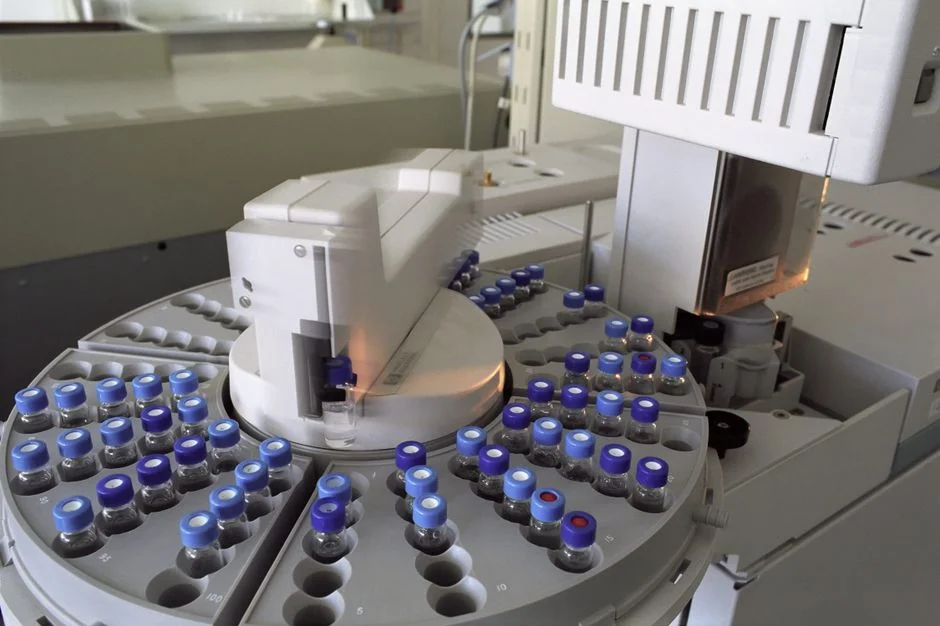
Align the sampling plan with the permit’s monitoring language and laboratory method. EPA Method 1633A tests for 40 PFAS compounds in eight environmental media, including surface water and wastewater. Request the laboratory’s method version, analyte list, reporting limits, sample containers, preservation, holding time, chain of custody, QA/QC samples, and detection handling. Those documents establish whether the results can support a permit comparison, source-control decision, or equipment guarantee.
Document PFAS source reduction before crediting downstream equipment with control. Depending on the process, options may include eliminating a PFAS-bearing input, substituting an input, changing a process step, segregating a waste stream, or implementing pollution prevention. Record the operational constraint, responsible owner, verification method, and effect on wastewater quantity and quality. A more detailed approach to industrial wastewater pretreatment for sewer discharge can help organize the receiving-point and source-control interface.
Keep source control and treatment claims separate. Eliminating a PFAS input at the point of use may reduce mass loading before dilution, while treatment addresses the wastewater that enters the selected train. Neither claim should be made without site-specific evidence.
Select treatment based on the contaminant and permit objective
Require an analytes-by-concentration profile, wastewater flow rate, treatment objective, and residual-disposal route before comparing equipment. The objective may be source reduction, pretreatment compliance, a permit concentration or mass limit, water-quality-based treatment, or preparation for further treatment at the POTW. Without those inputs, a generic “PFAS removal” claim cannot be compared with the permit.
Evaluate existing treatment duties separately from PFAS removal. Dissolved solids, oil and grease, colloids, and suspended solids may affect how PFAS-containing water is conditioned and separated. An industrial DAF pretreatment system and an MBR wastewater treatment system address different parts of an industrial treatment train; the required scope must follow the contaminant profile and process objective rather than the equipment name.
Include PFAS-bearing residuals in procurement. Spent media, sludge, filters, and concentrated waste streams may require characterization and a defined disposal route. Treatment does not itself resolve downstream waste obligations, and a supplier that excludes residuals from its quote may leave the buyer with an unpriced disposal gap. For sludge dewatering interfaces, review the filter press process flow for sludge dewatering so that residual handling is connected to the treatment-train flow diagram.
Put permit findings and technical scope into the quotation
Make the quotation auditable: the bidder must identify the governing permit, applicable PFAS analytes, design influent and effluent basis, treatment objective, test protocol, and residual route. If a permit condition is unresolved, label the associated work “permit-contingent” and state what change would trigger a revised scope or price. A technical reference to industrial effluent treatment and DAF selection should not replace site-specific design inputs.
| Quote line item | Technical scope to specify | Red flags to check before signing |
|---|---|---|
| Permit and compliance basis | Governing permit or POTW requirement, applicable analytes, monitoring points, reporting duties, permit-contingent items and named regulatory assumptions | Quote cites only generic PFAS rules or treats a POTW acceptance letter as proof that no industrial-user duty exists |
| Source-control verification | PFAS-bearing material inventory, candidate elimination or substitution actions, responsible party, implementation record and wastewater-profile review | Removal is credited without an influent basis, source baseline or method capable of detecting the claimed change |
| Design influent and treatment objective | Analyte-by-concentration basis, flow rate, water-quality data, treatment objective, operating scenario and interface with upstream and downstream units | Single concentration or flow value is used without identifying its sampling date, averaging basis or operating condition |
| PFAS performance guarantee | Defined analyte scope, design basis, test protocol, sampling points, acceptance method, correction remedy and responsibility for laboratory quality assurance | Generic removal percentage, undefined “PFAS” scope or reliance on an unspecified laboratory method |
| Residual management | Expected media, sludge, filter and concentrate streams; sampling, characterization, handling, transport and disposal interfaces | Residuals are excluded without naming the waste streams or assigning disposal responsibility |
| Commissioning and handover | Operator training, instrumentation verification, performance testing, monitoring plan, recordkeeping, calibration and corrective-action procedure | Acceptance testing is limited to equipment startup and excludes PFAS sampling or permit-compliance verification |
Do not sign on the basis of unqualified removal claims. Require each performance claim to state its design basis, test protocol, and acceptance method. The same discipline applies to residual management: without a named waste stream and disposal route, apparent treatment performance may only transfer the contaminant to another waste stream.
Frequently Asked Questions
What discharge limits apply to a plant in a state without a published PFAS rule?
Do not assume that no limit means no obligation. Identify whether the plant discharges directly or through a POTW, then ask the NPDES permitting authority or POTW pretreatment authority to confirm the monitoring, BMP, pollution-prevention, or technology-based conditions applicable to the facility. CRS reports that permit authorities may impose case-specific technology-based limits even where EPA has not finalized a PFAS-specific ELG.
What influent and permit data are needed to size treatment equipment?
Request the current permit, PFAS analytes and concentrations for each regulated analyte, wastewater flow rate, representative water-quality data, and a treatment-train flow diagram. Also obtain the receiving POTW’s requirements when applicable. These inputs establish the design basis and prevent a bidder from sizing against a generic PFAS profile.
What should a supplier document to prove PFAS treatment performance?
Require the supplier to state the defined analyte scope, design influent and effluent basis, test protocol, sampling points, and acceptance method. Identify EPA Method 1633A or the permit-required method and require laboratory QA/QC documentation. A generic removal percentage without those conditions is not an acceptance criterion.
Should source control, pretreatment, final treatment and residual handling be quoted together?
Request an integrated scope with separate priced line items. Source reduction may reduce the load entering pretreatment and final treatment; residuals from each stage still require a defined disposition. Explicitly price monitoring, permit-contingent work, operator training, commissioning, performance testing, and residual handling so exclusions remain visible before signature.