Confirm the Site's Wastewater Route
There is no single sewage-treatment route to assume for a hotel in Haiti. A central sewer may be appropriate where a regulated service connection is available, but a buried A/O package plant can suit sites with limited space and simpler on-site operation, while MBR may be justified where tighter solids separation or water reuse is required. Haiti’s infrastructure context makes site verification essential: Port-au-Prince was described as one of the world’s largest cities without a central sewage system, and some luxury hotels reportedly rely on tanker-delivered water. The practical next step is to compare sewer, A/O and MBR options using verified flow, effluent, reuse, footprint, power and staffing requirements before requesting a supplier quotation.
Sewer availability must be confirmed before pricing an on-site plant. NPR described Port-au-Prince as one of the largest cities in the world without a central sewage system, so a sewer connection must not be treated as an established utility service simply because it appears on a city map (S2).
The hotel must identify the responsible authority for its specific location. DINEPA implements sector policy, coordinates donor assistance and regulates service providers; regional service providers under DINEPA are OREPA, while municipalities are intended eventually to assume responsibility for water supply and sanitation (S4). Ask the project’s DINEPA, OREPA or municipal contact for written confirmation of:
- Connection eligibility and the exact receiving authority;
- Wastewater ownership, network capacity and available connection point;
- Connection fees, pretreatment requirements and permitted discharge conditions;
- Responsibility for construction, commissioning, downstream operation and maintenance; and
- Whether the hotel must remain responsible for pumping, storage or treatment if the connection is delayed.
That confirmation should become a priced alternative in the RFQ, not a verbal assumption. The broader infrastructure comparison is explained in the sewer-versus-package-treatment decision method.
Match Hotel Flows and Reuse Needs to the Process
Treatment routes must be sized from measured wastewater conditions rather than occupancy estimates alone. Obtain daily and peak flows, occupancy-related variation, BOD, COD, suspended solids, fats, oils and grease, pH and temperature before selecting equipment. For a hotel receiving water by tanker, confirm delivered volumes because tanker supply can determine both wastewater generation and peak flows; S4 reports that some luxury hotels have disconnected from the public network and receive all water by tanker trucks.
The intended use of the treated water dictates the choice between A/O and MBR systems. If there is no reuse requirement, avoid paying for membrane capability that the discharge route does not need. If reuse is required, state whether it is for irrigation, toilet flushing, cooling, laundry or another use, and ask the applicable Haitian authority and intended reuse user to confirm the required effluent quality.
| Discharge route or influent problem | Governing rule or process option | What data settles it |
|---|---|---|
| Sewer connection is theoretically available | Use the sewer route only after written confirmation of eligibility, capacity, pretreatment and downstream responsibilities | Authority letter, service boundary, connection quotation and operating agreement |
| Limited footprint or difficult access for conventional plant works | Price a buried A/O biological treatment plant as a packaged on-site option | Available footprint, soil, groundwater, flood level, excavation access and buried-system installation constraints |
| Tighter solids separation or defined water reuse is required | Compare an MBR membrane bioreactor system against A/O, using the reuse purpose as the basis of comparison | Effluent target, receiving point, reuse application, operator availability and maintenance access |
| Hotel flow varies with occupancy or tanker deliveries | Select the hydraulic and biological design from verified flow profiles rather than a single nominal rate | Daily flow records, occupancy schedule, tanker volumes, peak periods and kitchen laundry contributions |
| Fats, oils and grease may enter the collection system | Require a defined pretreatment and solids-management arrangement appropriate to the influent | Wastewater analysis, kitchen and laundry practices, grease loading and proposed pretreatment |
Energy recovery options should be evaluated independently from the primary treatment system. S1 describes a combined sewage-sludge-to-power process in which a gasifier produces syngas and separate equipment generates power and treats gas. That does not establish that a standard hotel treatment package includes energy recovery. The hotel A/O versus MBR treatment comparison is the more relevant commercial reference for route selection.
Compare Sewer, A/O and MBR Routes
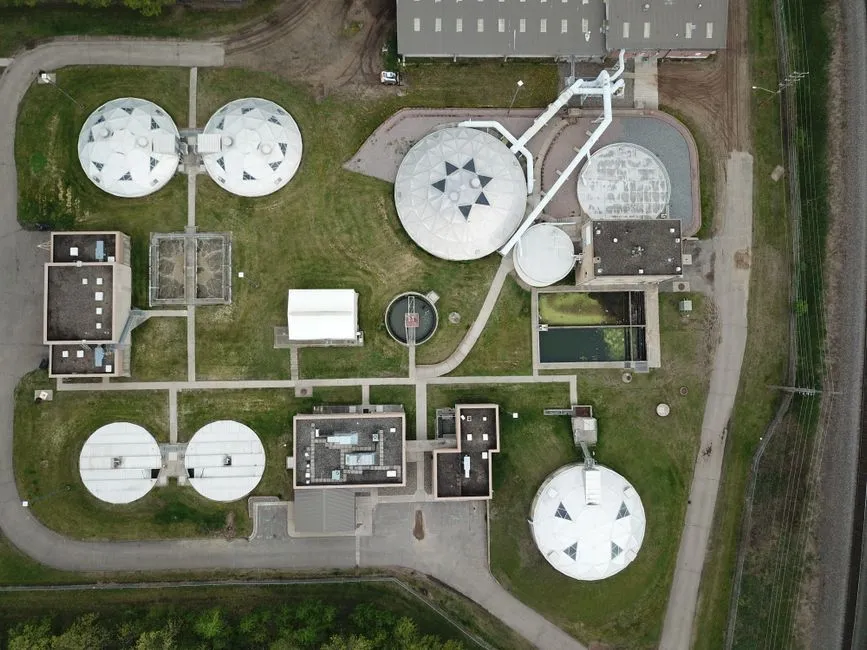
Select the route with confirmed service, effluent requirements and operating capacity rather than the lowest initial quotation. A sewer is the practical option only where the receiving authority confirms service availability and downstream operation. An A/O package is appropriate when the hotel needs an on-site biological process, a constrained footprint and a conventional solids-separation arrangement. MBR becomes relevant when the verified effluent or reuse requirement justifies membrane solids separation and the hotel can support the associated operation.
Compare all three routes using the same inputs:
- Design flow and the method used to establish peak flow;
- Influent characteristics and the design wastewater basis;
- Effluent target, receiving point and reuse purpose;
- Footprint, soil, groundwater, flood exposure and construction access;
- Electrical supply, backup-power needs and control requirements;
- Operator competence, remote support and frequency of attended maintenance; and
- Replacement, consumable and sludge-handling obligations over the equipment life.
For commercial comparison, request a buried WSZ A/O package sewage treatment plant proposal and an MBR membrane bioreactor system proposal against the same verified site data. Ask each supplier to identify any route-specific exclusions, particularly excavation, pumps, tanks, controls, power distribution and final effluent testing.
Build an RFQ Scope That Exposes Missing Inputs
Every unconfirmed input must be visible in the quotation to avoid project delays. Each supplier should state the design flow, peak-flow method, wastewater basis, process assumptions, effluent guarantee, available power, footprint and commissioning criteria. Request named alternatives wherever the quoted flow rate, treatment standard, footprint or delivery date depends on information the hotel has not confirmed.
Purchase costs must be separated from the operational costs required to sustain the system. NPR reported that Haiti’s sewage-treatment challenges involve money and power, and that the operating plant was struggling to cover its operating costs (S2). A credible quotation should therefore expose energy demand, consumables, operator time, sludge disposal, replacement intervals and preventive-maintenance responsibilities rather than presenting only equipment supply.
| Quote line item | Technical scope to specify | Red flags to check before signing |
|---|---|---|
| Design basis | Design flow, peak-flow method, occupancy assumptions, wastewater analysis, effluent target and receiving point | A quoted flow with no calculation method, or treatment performance promised without identifying the wastewater basis |
| Equipment supply | Process units, pumps, screens or pretreatment, biological treatment, solids separation, controls, instruments and required ancillaries | A package is described without stating what is supplied or which site works are excluded |
| Site works | Excavation, foundations, access roads, lifting, drainage, backfill, fencing and connections to the hotel collection system | “Delivered” or “installed” wording that leaves civil work, excavation or connection work unpriced |
| Electrical and controls | Incoming supply, transformers, panels, cabling, control system, alarms, backup-power interface and electrical approvals | No stated available-power assumption or omission of backup-power requirements |
| Freight and logistics | Port handling, inland transport, customs responsibilities, unloading, permits and site delivery conditions | No named destination, delivery scope or clear allocation of import and customs risk |
| Commissioning and training | Installation supervision, wet commissioning, operator training, performance testing, as-built documents and handover | Commissioning starts only after an undefined date, with no responsible party or acceptance record |
| Warranty and lifecycle support | Warranty scope, local support arrangement, preventive-maintenance schedule, initial spares and consumables | Warranty depends on an unverified power supply, or local support and spare-parts supply are excluded |
| Sludge-to-energy scope | Separate any gas generation, gas treatment, power generation and associated feedstock systems from the wastewater package | A supplier merges energy-recovery claims into the hotel treatment package without identifying the distinct equipment and operating obligations |
S1 identifies electrical generation, gas treatment and other modules as distinct parts of a sewage-sludge-to-power process. Any energy-recovery proposal should therefore be scoped separately. Do not infer that a plate-frame filtration component alone establishes a complete sludge-to-energy system; a supplier offering sludge-conditioning equipment should identify its operating purpose and exclusions.
Set Performance, Delivery and Acceptance Tests
Completion is defined as verified performance, not shipment or installation alone. The quotation should specify factory testing, site wet commissioning, hydraulic testing, control-system checks, disinfection verification and a representative performance test using the agreed wastewater basis.
Numerical acceptance limits should be finalized only after the applicable Haitian site requirement and intended reuse route have been verified. Then specify the parameter, sampling point, test method, witness rights, number of test events and responsibility for non-compliance and retesting. This is especially important where the treated water may be reused: the acceptance basis must match the reuse application rather than a generic “treated wastewater” description.
The handover package must include:
- As-built drawings, equipment manuals and process descriptions;
- Control narratives, alarm settings and emergency procedures;
- Preventive-maintenance schedules and a named local support arrangement;
- Initial spares, consumables and handling instructions;
- Operator training records and competency confirmation; and
- Commissioning and performance-test records, including exceptions and corrective actions.
Delivery dates are conditional on approved drawings, confirmed site access, completed foundations, available electrical supply and the supplier’s stated lead time. Containerized sewage treatment plant sizing for Haiti provides a related framework for checking that hydraulic assumptions and site constraints are resolved before shipment.
Further Reading
Frequently Asked Questions
Should the hotel connect to a central sewer or install an on-site plant?
Connect to a central sewer if the relevant authority confirms that a connection is available, the hotel is eligible, pretreatment is accepted and downstream operation and maintenance responsibilities are defined. Otherwise, price an on-site solution. Obtain a written service confirmation from DINEPA, the responsible OREPA or the municipality before comparing the connection against a packaged plant.
What flow and wastewater data must be submitted before a supplier can size the system?
Submit daily and peak flow profiles, occupancy-related variation, BOD, COD, suspended solids, fats, oils and grease, pH and temperature. Add the intended reuse purpose, receiving point, available footprint, soil and groundwater conditions, flood exposure, power quality, backup-power requirements and operator availability. These inputs allow competing suppliers to use the same sizing basis.
What should a complete hotel wastewater-treatment quotation include?
The quotation should separate equipment, freight, customs, civil works, installation, electrical work, commissioning, training, initial spares, warranty and preventive maintenance. It must also state energy and consumable assumptions, performance criteria, exclusions, delivery conditions and named alternatives for every unconfirmed design input. A lower equipment price is not comparable unless the total operating and site-work scope is visible.
Which acceptance tests should be required before final payment?
Require factory testing, site wet commissioning, hydraulic and control checks, disinfection verification and a representative performance test. Define sampling locations, parameters, methods, witnessing rights and retesting responsibility in the contract. Hold final payment against accepted records, operating documentation, training completion, spare-parts handover and closure of performance exceptions.