Confirm the Project Jurisdiction and Discharge Route
For domestic sewage treatment in The Hague, start by confirming the discharge route: connect to the public sewer where available and accepted, use a buried A/O package plant for decentralized treatment, or select an MBR system where membrane solids separation or higher reuse quality is required. The available documents do not establish The Hague’s Dutch permit limits or sewer-acceptance rules, so obtain those locally. Then submit flow, peak wet-weather flow, effluent duty, footprint, power and maintenance-access data with the request for a sewage treatment quotation.
The project jurisdiction must be The Hague, Netherlands, not the Town of Hague, New York. The Town of Hague material refers to a New York municipality at Hague, NY 12836 and its municipal sewer system; it does not establish treatment requirements for a Dutch site. This distinction also applies to the United States regulatory source: the Environmental Protection Agency explains that NPDES permits govern specified municipal wastewater discharges to waters of the United States, but that remit does not establish the Dutch permit authority or applicable limits for The Hague.
Ask the project owner to identify the intended route in writing: public sewer connection, an on-site decentralized sewage treatment plant, or treatment followed by discharge to a permitted receiving route. If the sewer is the preferred route, obtain confirmation from the municipality or relevant authority that a connection is technically available, permitted at the proposed capacity and acceptable at the project address. If no suitable sewer connection is available, document that outcome before evaluating packaged treatment.
Also define the wastewater source. State whether the design flow is domestic-only or includes hotels, hospitals, canteens, laundry, laboratories, staff facilities or other commercial loads. Commercial kitchens may require grease management, while healthcare or laundry flows may change pretreatment, monitoring and operating requirements. The comparison of sewer, A/O and MBR treatment routes provides a useful structure, but its jurisdiction and process criteria must not be transferred to The Hague without verification.
Compare Sewer, A/O Package and MBR Routes
Choose the sewer route when a public connection is available, accepted and compatible with the project’s waste stream; otherwise compare a buried A/O package plant with an MBR against the required effluent duty, reuse objective and site constraints. The distinction matters because treatment technology alone cannot determine compliance.
The US Environmental Protection Agency describes separate sanitary sewers as collecting wastewater without providing widespread drainage for runoff, while combined sewers carry both sanitary sewage and stormwater in one pipe and can overflow during wet weather. It also explains that infiltration and inflow can create sanitary sewer overflows and operational problems at treatment facilities. These are general source descriptions, not evidence of the configuration or capacity of The Hague’s sewer network.
Use a buried A/O package plant when a decentralized biological route is appropriate, the site can accommodate excavation and access, and the verified treatment duty does not require membrane filtration. A supplier may describe this as a buried A/O package treatment plant, but the quotation still needs a defined design flow, influent basis, effluent duty and discharge point.
Use an integrated MBR treatment system when the project requires membrane-based solids separation or a higher reuse quality. Do not assign MBR an automatic advantage without project-specific effluent criteria, reuse conditions and lifecycle requirements. The academic work on constructed wetlands combined with microbial fuel cells does not provide a verified performance figure or a basis for selecting equipment for The Hague.
DAF should remain outside the default domestic route unless a verified influent or discharge requirement identifies oil, grease, solids or colloids that must be removed. Its presence would then require a defined pretreatment and solids-handling scope.
| Discharge route or influent problem | Governing rule or process option | What data settles it |
|---|---|---|
| Public sewer connection | Use only after availability, connection acceptance, design flow and receiving-route requirements are confirmed by the relevant Dutch authority. | Municipal connection confirmation; applicable sewer and discharge conditions; project address; domestic and commercial flow components. |
| No suitable public sewer connection | Screen a decentralized biological route, using a buried A/O package plant when the verified duty and site conditions support it. | Available footprint; excavation depth; soil and groundwater conditions; design and peak flow; effluent duty; access and power. |
| Membrane solids separation or higher reuse quality required | Compare an MBR route against the confirmed treatment and reuse criteria rather than against generic performance claims. | Effluent-quality specification; reuse application; intended receiving route; pretreatment needs; membrane maintenance and replacement scope. |
| Wet-weather flow, infiltration or inflow | Separate genuine wastewater load from stormwater and unwanted water entering the proposed installation. | Peak-hour flow; peak-day and seasonal data; stormwater-entry assessment; infiltration and inflow investigation; site drainage records. |
| Oil, grease, solids or colloidal removal identified | Add DAF or another pretreatment only where a verified influent or discharge requirement justifies it. | Influent characterization; sampling plan; responsible laboratory; solids and residual-handling route. |
Collect the Flow, Site and Effluent Inputs
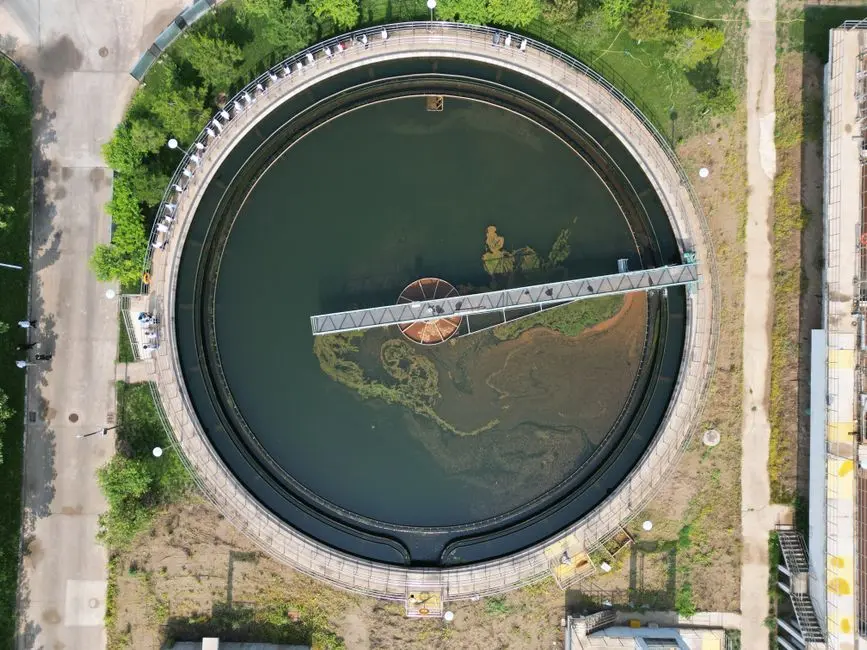
Final equipment size cannot be selected from the label “domestic wastewater plant”; it requires a documented flow and site design basis. Ask the project owner or design consultant for average daily flow, peak-hour flow, peak-day factor and expected seasonal variation.
Determine whether the proposed peak wet-weather flow includes stormwater entry, infiltration or inflow. The US Environmental Protection Agency notes that large volumes of infiltration and inflow can cause sanitary sewer overflows and treatment-facility operating problems, while significant wet-weather flow increases can challenge treatment efficiency, reliability and unit-process control. Although this is not a The Hague design rule, it identifies measurements the project team should resolve locally.
Request the receiving-route criteria, reuse objective, intended discharge point and any applicable permit conditions from the local authority or client. If reuse is planned, specify what the water will serve and the required quality at the point of use. The Dutch wastewater reuse equipment comparison can help structure the equipment question, but it does not replace a site-specific reuse specification.
Complete the physical design inputs: excavation depth, groundwater level, soil conditions, available footprint, lifting access, electrical supply and arrangements for sludge or other residual removal. Also assign responsibility for sampling, laboratory analysis, discharge monitoring and regulatory submissions. These boundaries should appear in the quotation rather than remain assumed during installation.
- Obtain the wastewater flow record and identify the source of every flow component.
- Measure the site constraints and confirm access for installation, maintenance and residual handling.
- Request the receiving-route and reuse criteria from the authority or client.
- Name the party responsible for monitoring, laboratory work and regulatory submissions.
Turn the Selection into an RFQ and Acceptance Scope
A comparable quotation must state the same design basis, treatment route and receiving point. Require each bidder to identify design flow, operating flow range, influent assumptions, required effluent duty, proposed treatment route, discharge point and any exclusions that prevent an apples-to-apples comparison.
Separate the commercial structure into equipment, shipping, installation, excavation, foundations, internal piping, external discharge piping, electrical works, controls, commissioning, training, warranty and operations and maintenance pricing. A total equipment price alone does not establish the installed cost or the owner’s operating burden.
Request a utilities and consumables list, preventive-maintenance schedule, recommended spare parts, monitoring scope and stated response time for service support. Ask bidders to state explicitly whether sludge removal, effluent reuse, laboratory testing, permit support, winter operation and performance guarantees are included or excluded.
Make provisional acceptance depend on documented tests selected only after the project confirms the applicable criteria and site conditions. The quotation should identify the proposed test methods, sampling points, responsible parties, acceptance records and remedy for non-conformance. It should not claim compliance with an unverified The Hague limit.
| Quote line item | Technical scope to specify | Red flags to check before signing |
|---|---|---|
| Design basis and treatment route | State design flow, peak-flow basis, influent characteristics, effluent duty, reuse objective, receiving route and treatment process. | Unverified flow assumptions; “domestic” described without occupancy or discharge data; no identified discharge point. |
| Supply and installation | Separate equipment, freight, site works, excavation, foundations, piping, electrical works, controls, commissioning and training. | Equipment-only price presented as a turnkey price; foundations, external piping or electrical connections omitted. |
| Effluent and reuse arrangements | Define the required duty, reuse application, pumping, storage and the party responsible for monitoring and reporting. | No reuse or discharge criteria; laboratory analysis, permit support or discharge monitoring excluded. |
| Operations and maintenance | List utilities, consumables, preventive maintenance, inspections, spare parts, service support and residual-removal duties. | Consumables or membrane replacement excluded; sludge disposal left unassigned; support response time not stated. |
| Commissioning and provisional acceptance | Define tests, sampling points, documents, acceptance records, training handover and remedies for failed tests. | Acceptance relies on subjective visual inspection or an unidentified performance guarantee; authority requirements remain unconfirmed. |
| Permit and site-condition responsibilities | Allocate surveys, authority liaison, permit applications, groundwater management, winter operation and any performance guarantee. | Supplier assumes approvals without naming the permit route; soil or groundwater exclusions are not priced. |
Frequently Asked Questions
Which flow and site inputs control the final size of a domestic wastewater plant?
Size the plant from the documented design basis, not a generic household load. Obtain average daily flow, peak-hour flow, peak-day factor and seasonal variation, then add the verified design and operating flow ranges proposed by bidders. Check footprint, excavation depth, soil, groundwater, access, power and residual handling against that basis. A flow and level sensor selection guide can support monitoring design, but it does not establish The Hague’s flow or site conditions.
What evidence should a sewage treatment quotation contain?
Require the quotation to state its design flow, flow range, influent basis, effluent duty, treatment route, discharge point and included site works. It should also identify commissioning tests, sampling responsibilities, utilities, consumables, maintenance, warranty, training, exclusions and any unresolved permit or ground-condition assumptions. The package-plant procurement comparison illustrates why those boundaries must be explicit, but its local criteria do not apply automatically in The Hague.
How should A/O package and MBR options be compared for the required effluent duty?
Ask each bidder to price the same confirmed effluent and reuse criteria, then separate treatment equipment from pretreatment, pumping, reuse infrastructure, monitoring and maintenance. Include membrane cleaning, replacement, energy demand and operator requirements when comparing MBR with A/O. Do not select by process label alone: the project-specific duty and receiving route determine whether the added membrane stage is justified.
Which local requirements and responsibilities must be confirmed before acceptance?
Obtain written confirmation of the applicable Dutch environmental, sewer-connection and discharge conditions from the project owner, municipality or designated authority. Identify who will submit permit documents, conduct sampling and laboratory analysis, operate the system, monitor discharges, remove residuals and respond to non-conformance. Provisional acceptance should use documented tests tied to those confirmed requirements, not to an unverified local limit. The sewer, A/O and MBR procurement comparison provides a framework for those responsibilities, not Dutch regulatory evidence.