Choose the discharge route before selecting equipment
Hospital wastewater treatment and disinfection in Somalia requires an initial assessment of the discharge route: use a compliant sewer connection where available, or specify an on-site package plant or MBR when independent treatment is required. A practical on-site train combines mechanical pretreatment, biological treatment, and final disinfection. Disinfectant selection should be evaluated for microbial control and by-product formation; a 2012 Carleton University study compares peracetic acid with sodium hypochlorite. Before selecting equipment, obtain daily and peak flow data, wastewater analyses, sewer-access details, the receiving environment, and applicable local requirements.
Do not select a treatment train based on the hospital’s location alone. First, establish where the effluent will go, whether the receiving sewer or environment is legally acceptable, and whether downstream treatment can reliably handle the wastewater. The supplied hospital treatment guidance describes treatment before discharge into the environment or sewer according to local legislation, but it does not establish Somalia-wide sewer coverage or effluent limits. The hospital wastewater treatment engineering and compliance guide provides a useful reference structure, while the site-specific authority remains decisive.
| Discharge route or influent problem | Governing rule or process option | What data settles it |
|---|---|---|
| Reliable municipal sewer connection is available | Route hospital wastewater to the sewer only after confirming that the connection, downstream treatment capacity and local requirements support that discharge route. | Written confirmation from the sewer operator and applicable authority; sewer route, connection point, access arrangements and required pretreatment. |
| No sewer, unreliable access, or no demonstrated downstream treatment capacity | Specify an on-site package sewage treatment plant or another independent treatment route. | Site survey, final discharge point, receiving-environment assessment, average and peak flow, available footprint and required effluent quality. |
| On-site treatment is required but the effluent must also enter a sewer | Use a hybrid route in which treatment and disinfection occur on site before controlled sewer discharge. | Applicable sewer pretreatment requirements, downstream treatment agreement and the point at which ownership and compliance transfer occur. |
| Effluent is intended for reuse | Define the reuse endpoint and required effluent quality before choosing package treatment or MBR. | Reuse application, recipient quality requirements, monitoring provisions and confirmation of what the authority will accept. |
Match hospital wastewater risks to the treatment train
Match each treatment step to a specific contaminant or objective that can be demonstrated. Hospital wastewater may contain chemicals, pharmaceuticals, pathological biological agents and radioisotopes. These hazards do not justify one fixed process for every hospital; the wastewater analysis, discharge route and acceptance criteria must identify which constituents require dedicated controls.
The baseline is mechanical pretreatment followed by disinfection before discharge into the environment or sewer under applicable legislation. This arrangement addresses physical contamination and microbial hazards, but filtration and disinfection do not remove the organic load that biological treatment is intended to reduce. Add biological treatment where BOD, COD or other verified loads require it, and add polishing or reuse treatment only where the acceptance criteria justify the added scope.
Request a representative analysis covering BOD, COD, suspended solids, pH, oil and grease, nutrients, salts, pharmaceuticals and pathogens of concern. Include radioisotopes or other hazardous constituents where the hospital’s clinical activities make them relevant. The medical wastewater treatment equipment scope should then map each identified risk to a treatment step, monitoring point and acceptance test rather than relying on a generic hospital-wastewater label.
Compare package plants, MBR systems and disinfection equipment

Choose package treatment or MBR by resolving footprint, treatment objective, automation and downstream requirements rather than treating the two as interchangeable categories. A package plant provides an integrated biological route; an MBR adds membrane solids separation and may be considered when the verified flow, footprint and reuse objective justify it. Disinfection is a final control step, not a substitute for biological treatment.
The WSZ underground package sewage treatment plant is suited to a compact, fully automated anoxic/aerobic route with integrated sedimentation and disinfection where its treatment duty and footprint match the site. Confirm average flow, peak flow, influent loading, installation constraints, effluent criteria and maintenance access before selecting it. The product description supports this architecture, but it does not establish performance for an unspecified Somali hospital.
Consider an MBR when membrane solids separation, a smaller treatment footprint or a reuse-oriented effluent objective is required. Confirm the required hydraulic and treatment duty and the final receiving route first. The West African hospital MBR case study can inform the bidder’s questions, but its site-specific flow and design should not be transferred to another hospital without current wastewater and site data.
Compare disinfection separately. Use an on-site chlorine dioxide disinfection generator where controlled on-site production and microbial inactivation are required, subject to chemical supply, storage, operator competence, safety controls and monitoring. Consider UV-C where chemical-free final disinfection is preferred, provided hydraulic, turbidity, lamp-maintenance and power conditions support reliable performance.
No single disinfectant is universally best for Somali hospitals. The decision should examine site water chemistry, distribution-system risk, by-product considerations, maintenance capacity and local approval. The Carleton University comparison of peracetic acid and sodium hypochlorite is useful background for by-product review, but it should not replace current site testing or approval requirements.
Build an RFQ scope with objective acceptance criteria
A complete quotation must define the design basis, process boundary and proof of performance. Require each bidder to state design average and peak flow, influent design loads, treatment train, operating mode, standby provisions, footprint, utilities, civil works, site-specific exclusions, controls and commissioning responsibilities. If those items are not stated, the quote cannot be compared on a common scope.
Define preliminary and final acceptance separately. Preliminary acceptance should verify installation, utilities, controls, safety systems, operator training and readiness for testing. Final acceptance should use mutually agreed project-specific criteria for hydraulic capacity, treatment performance, disinfection control, automatic controls and effluent quality. Do not insert an unverified generic limit into the RFQ; obtain the applicable Somali or local requirements and any hospital, donor or environmental-authority criteria first.
| Quote line item | Technical scope to specify | Red flags to check before signing |
|---|---|---|
| Design basis and process train | Average and peak flow, measured influent loads, treatment objectives, process stages, duty, standby arrangements and final discharge route. | Design flow is absent; equipment is selected by bed count or population alone; civil, electrical and discharge works are excluded without clarification. |
| Mechanical pretreatment and biological treatment | Screening or separation requirements, biological treatment stage, solids handling, odor control, sludge removal and site-specific hazardous-contaminant controls. | No process calculations; no sludge-management route; no explanation of how the proposed equipment handles the verified wastewater analysis. |
| Disinfection system | Selected technology, dose or performance basis, contact arrangement, monitoring, residual or dose verification, chemical storage and operator safety provisions. | Only microbial-removal claims are provided; chemical supply, power reliability, maintenance or residual monitoring is excluded. |
| Controls, commissioning and handover | Automatic controls, alarms, local instruments, SCOPE, testing, operator training, manuals, spare parts and local maintenance support. | Acceptance is described as “successful operation” without test methods or data; commissioning, training or after-sales responsibility is ambiguous. |
| Price and schedule | Itemized equipment, works, freight, import duties, installation, commissioning, exclusions, payment milestones and delivery schedule. | No delivery basis or exclusions; price depends on undefined flow, loads, footprint or civil work; no responsibility is assigned for site approvals. |
Plan site verification before the equipment order
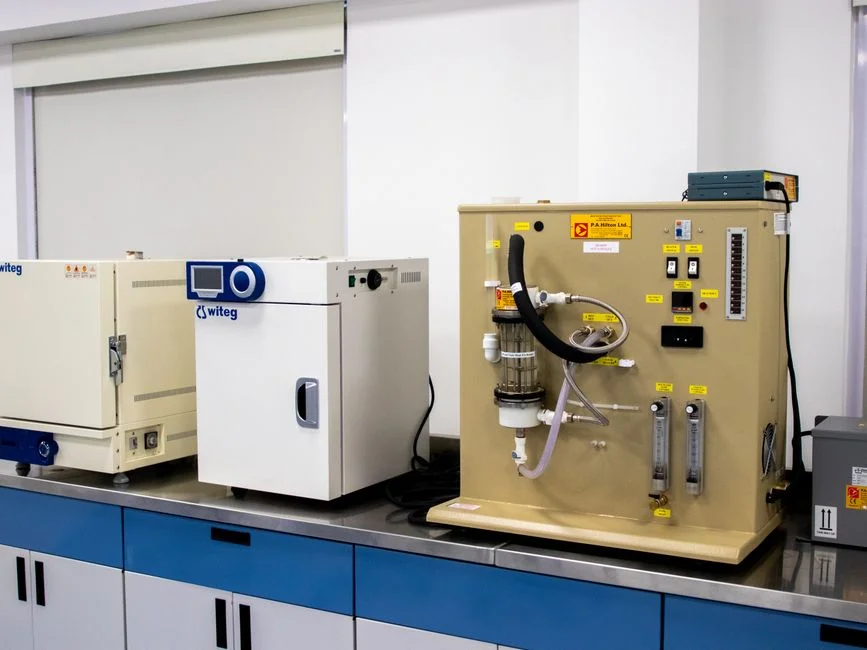
Convert the route decision into a site-specific design package before releasing the equipment order. Verify average and peak flows, storage requirements, sewer connection status, final discharge point, power quality, backup-power arrangements, available footprint, soil conditions and flood exposure. For flows, obtain meter data where available and reconcile it with clinical activity, operating hours and known discharge events; for wastewater quality, obtain a representative laboratory analysis rather than relying only on assumptions.
Assign regulatory confirmation explicitly. The hospital owner should coordinate, but the confirming party may be the local environmental authority, sewer operator, engineering consultant or equipment supplier depending on the issue. Request written confirmation of the permitted discharge route, effluent criteria, pretreatment requirements, electrical safety, chemical-storage rules, occupational-safety controls and local environmental approvals.
Use the hospital treatment and disinfection route comparison to structure the site-data review, while recognizing that Laos-specific information does not establish Somali requirements. The RFQ should state that final process selection remains conditional on the verified analysis, route confirmation and site survey, and that material changes to those inputs require the bidder to identify their design and price consequences.
Frequently Asked Questions
When is an MBR preferable to a package plant for a Somali hospital?
Prefer an MBR when the verified project requires membrane solids separation, a smaller footprint or a reuse-oriented effluent objective. Ask for membrane duty calculations, expected solids loading, footprint, controls, cleaning requirements, spare parts and evidence of performance against the agreed effluent criteria. A package plant remains a candidate when its anoxic/aerobic treatment route, integrated solids handling and disinfection meet the same requirements within the available footprint.
How should the hospital define and verify the discharge route?
Identify the final receiving point first, then obtain written confirmation from the relevant sewer operator or local authority. The confirmation should state whether discharge to sewer, surface water, groundwater or another environment is permitted, what pretreatment or effluent criteria apply, and whether downstream treatment has been demonstrated to handle the hospital load. Do not treat the existence of a sewer connection as sufficient regulatory evidence.
What technical and commercial information must be included in a supplier quotation?
Require an itemized quotation covering design flow and loads, process train, equipment duty, footprint, utilities, civil and electrical works, controls, commissioning, training, manuals, spare parts, local support, freight, taxes, installation, exclusions, payment milestones and delivery schedule. Treat prices and delivery dates as unverified until the supplier submits them against the complete site basis. Red flags include an undefined flow, omitted civil works, no acceptance method and no allocation of regulatory or commissioning responsibility.
How should disinfection performance be demonstrated before acceptance?
Define the test method, test conditions, sampling point, responsible party and acceptance criterion in the purchase documents. Depending on the selected process, require verification of dose, residual, contact performance, automatic-control response or UV-C operating conditions, supported by operating records. Any microbial testing should use an approved method and the project-specific criterion obtained from the relevant authority; a general statement that the unit “disinfects” is not acceptance evidence.