Identify the wastewater and permit route first
No treatment configuration for a high-COD industrial wastewater treatment system in Laos can be confirmed without wastewater analysis and the permit route. A DAF-led system is suitable when removable oil, grease, suspended solids, or colloidal material could overload biological treatment; an MBR system is appropriate when compact biological treatment and low suspended solids are priorities. A combined DAF–MBR route addresses both pretreatment control and polished biological effluent. Final selection requires COD concentration and load, flow variability, BOD/COD ratio, toxicity, and the applicable effluent or reuse requirement.
First establish whether the project will discharge to a receiving water, sewer, drain, reuse application, or zero-liquid-discharge system. Request the applicable Lao PDR industrial or handicraft wastewater regulations, permit conditions, and supporting approval documents from the responsible authority. The available Laos overview identifies regulations for industrial and handicraft wastewater, but it does not establish a universal industrial COD limit.
Do not infer an industrial discharge limit from public-canal monitoring. One Laos assessment reports BOD5 of 19–32 mg/L and COD–Cr of 38–101 mg/L in public canals, describing ambient organic-pollutant levels rather than an industrial effluent standard. The receiving-water category and the permit written for the specific project must govern the acceptance criteria.
Before comparing equipment, request representative composite and time-varying samples from each discharge stream. The buyer should obtain COD, BOD, flow rate, pH, temperature, oil and grease, suspended solids, toxicity indicators, soluble salts, and residual organic characteristics. The Laos wastewater context and treatment-selection discussion can support site-specific assessment, but its focus on Vientiane domestic wastewater and alternatives based on trickling-filter and activated-sludge technologies does not provide direct industrial high-COD sizing criteria.
Compare DAF, MBR and combined treatment routes
A DAF-led, MBR, or combined approach addresses specific influent challenges and effluent requirements. Select the route by matching the dominant contaminant and required effluent quality to the treatment functions that must be purchased. DAF addresses separable material; MBR provides combined biological treatment and membrane solids separation; a combined train provides upstream removal followed by biological polishing. The DAF, MBR and reuse comparison for high-COD wastewater provides a useful process-level reference, but it does not establish Laos-specific industrial design data.
| Discharge route or influent problem | Governing rule or process option | What data settles it |
|---|---|---|
| Removable oil, grease, suspended solids or colloidal matter | Use DAF-led pretreatment where these fractions could overload downstream biological treatment. | Oil-and-grease and suspended-solids concentrations, removal tests, flow profile and the biological design basis. |
| Biodegradable high-strength wastewater requiring biological removal | Use a staged anaerobic aerobic treatment train when characterization supports biodegradability. Anaerobic selection depends on COD load, BOD/COD ratio, inhibition, temperature, pH, salinity and hydraulic profile. | COD mass load, BOD/COD ratio, toxicity or inhibition tests, temperature, pH, salinity and treatability results. |
| Low suspended solids and compact biological treatment are procurement priorities | Consider an MBR-led route, subject to pretreatment and confirmed biological treatability. | Confirmed effluent COD and solids requirements, floor-space constraints, flow variability and utility demand. |
| High-strength pretreatment control plus polished effluent or reuse | Use a DAF–MBR combination when both functions are required; add polishing only if the agreed reuse or discharge objective requires it. | Oil, grease and solids data; influent COD load; receiving-water or reuse route; required COD and suspended-solids performance. |
A staged approach—pretreatment, anaerobic treatment, aerobic treatment, and advanced polishing—is the more defensible baseline for high-COD industrial effluent than direct biological treatment without characterization. The industrial wastewater treatment equipment selection guide should be used to check whether the proposed route addresses the actual contaminant problem rather than relying on COD concentration alone.
Turn the selected route into a complete treatment train
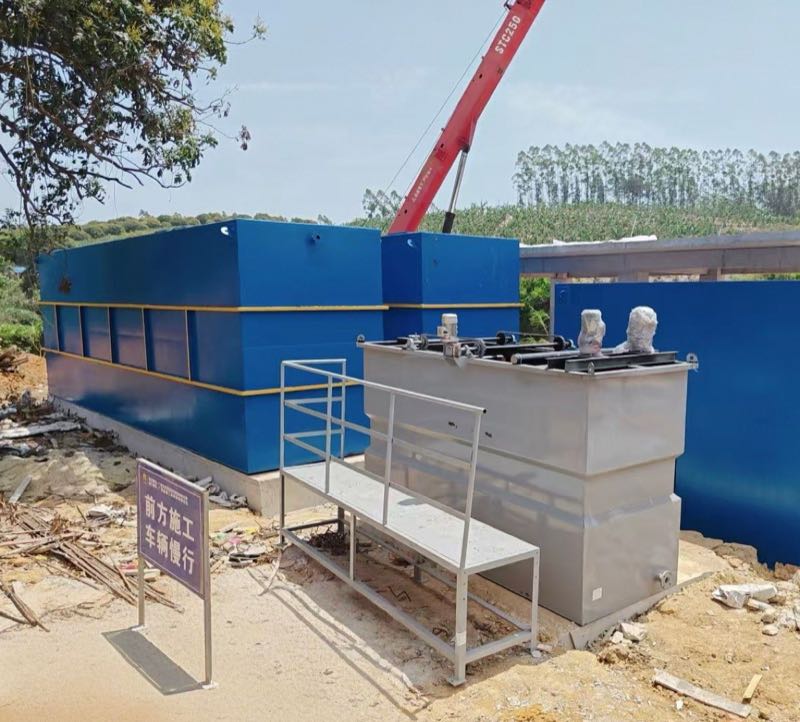
The quotation must allocate every process function and interface; a single “DAF system” or “MBR system” description is not enough to establish operability. Equalization and screening are justified where flow or solids variation is documented. Oil, grease, and solids removal should be assigned to the selected pretreatment stage, while anaerobic or other organic-load reduction follows only after the wastewater is shown to be biodegradable and non-inhibitory to the proposed process.
Aeration, MBR, or another polishing stage should follow wherever the upstream process cannot meet the confirmed effluent requirement. For a DAF–MBR configuration, the supplier must define how recovered solids, scum, DAF float, and membrane cleaning waste enter the solids-handling route. The DAF system for high-COD industrial wastewater pretreatment should be evaluated on its specified feed condition and pretreatment duty, not on nominal equipment capacity alone.
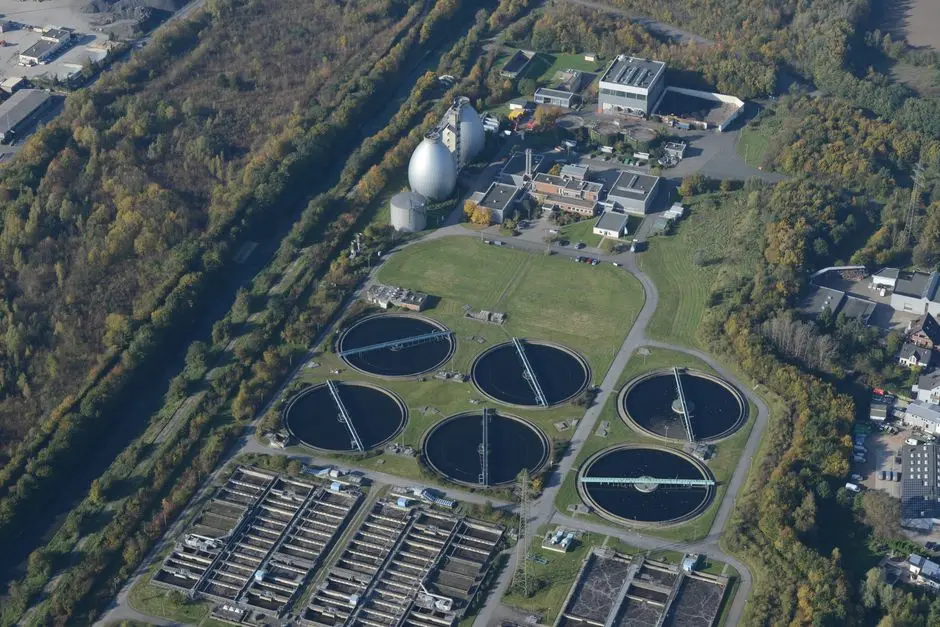
Where biological treatment is included, request the hydraulic and organic loading calculation, aeration strategy, membrane configuration, cleaning provisions, control logic, and utility demand for an integrated MBR wastewater treatment system. Some large Lao industries use wastewater plants with anaerobic and aerobic treatment units, which confirms the relevance of staged biological treatment in the country, but it does not supply transferable sizing parameters.
- Define equalization, screening, and pretreatment from the documented flow, solids, and oil-and-grease problems.
- Confirm biodegradability and inhibition before assigning anaerobic or aerobic organic-load reduction.
- Apply MBR or another polishing stage only against the agreed COD, solids, and operating-stability requirements.
- Close the water, sludge, and chemical mass balances across every unit.
Request a COD, solids, sludge, and hydraulic mass balance for the complete train. The supplier should state what enters each unit, what leaves as treated water, what leaves as sludge, float, or concentrated waste, and which operating controls alter those streams. That document is the check on whether the proposed equipment functions as one treatment system rather than a collection of disconnected products.
Build an RFQ scope with acceptance criteria
A comparable RFQ should fix the design basis, permit assumptions, and performance boundary before suppliers price equipment. Require the design influent, design flow, treatment objective, discharge or reuse destination, receiving-water category, and governing permit assumptions. Missing values should be identified as open items rather than converted into unsupported guarantees.
| Quote line item | Technical scope to specify | Red flags to check before signing |
|---|---|---|
| Design basis and process calculations | Guaranteed influent basis; hydraulic and COD load calculations; process flow diagram; equipment list; control philosophy; utility demand. | Omitted design flow, BOD/COD ratio, toxicity, oil and grease, or unexplained equipment sizing. |
| Treatment equipment and interfaces | Allocate equalization, screening, pretreatment, biological treatment, polishing and solids removal to specific units; identify materials of construction and control setpoints. | Generic package descriptions with no feed basis, duty data, drainable arrangement or downstream connection. |
| Civil, installation and utilities | Define the installation boundary, foundations, access, piping, electrical supply, drains, compressed air, chemicals and utility connections. | “Turnkey” language that excludes site works, installation or utility connections. |
| Residuals and sludge handling | State sludge yield, characteristics, dewatering method, final handling route and included ancillary equipment. | No destination or storage basis for sludge, DAF float or membrane-cleaning waste. |
| Commissioning and acceptance | Factory testing, site commissioning, performance test protocol, training, spares, warranty, documents and agreed acceptance limits for COD, flow, suspended solids, pH and stability. | Guarantees stated without an agreed influent envelope or without separating factory and site tests. |
Make acceptance depend on a stable, agreed influent envelope rather than on COD alone. Include the applicable flow, suspended-solids, pH, and operating-stability criteria. A sludge route should also appear in scope; if dewatering is required, request the relevant plate-and-frame filter-press solution only after confirming the expected solids characteristics.
Do not use the public-canal COD–Cr range of 38–101 mg/L as an industrial acceptance limit. The supplier should provide the permit assumption behind each guarantee, while the buyer retains responsibility for confirming that assumption with the relevant authority and the receiving-water or reuse route.
Related Equipment
- integrated MBR wastewater treatment system — specifications, capacity range, and technical data
Frequently Asked Questions
When should DAF be selected alone, and when is biological treatment still required?
Select DAF alone as pretreatment only when its verified removal duties are sufficient for the agreed reuse or discharge objective. If biodegradable organic load remains after the separable oil, grease, solids, and colloidal fractions are removed, include biological treatment and define whether that function is provided by MBR or another selected process.
What COD and flow data must a supplier receive before sizing the system?
Require the influent COD concentration profile, total COD mass load, flow rate, and its daily and seasonal variation. Also require BOD, suspended solids, oil and grease, pH, temperature, salinity, toxicity, and residual organic characteristics. These inputs support the COD load calculation and determine whether pretreatment, anaerobic, aerobic, and polishing stages are justified.
What should be included in a turnkey quotation beyond the treatment equipment?
Request the process flow diagram, hydraulic and organic calculations, equipment and controls, civil and installation boundary, utilities, sludge handling, commissioning, training, spares, warranty, and performance-test protocol. Clarify which off-site services, electrical works, foundations, connections, and residual-disposal costs are excluded. A price comparison is meaningful only after these exclusions are aligned.
How should factory testing, site acceptance and discharge compliance be separated?
Define factory testing as verification of fabrication, function, and controls; define site acceptance as installation, commissioning, and demonstration at the agreed influent envelope; and define discharge compliance as performance against the applicable permit or reuse requirement. Require separate acceptance records so that successful factory testing is not presented as proof of site effluent performance or regulatory compliance.