Select the treatment route from the reuse requirement
For a Greek hotel, resort or commercial property, specify UF, an MBR or a packaged biological treatment route only after confirming the greywater sources, peak flow, intended reuse and local approval requirements. UF can polish wastewater after suitable upstream treatment, while MBR combines biological treatment with membrane separation. A packaged A/O plant may suit smaller sites where a simpler train is acceptable. Greek evidence includes a completed Lesvos hotel demonstration and recent wastewater-reuse pilots around Athens, but it does not establish a complete permit pathway for every site.
Begin with the intended endpoint. The Lesvos demonstration identifies irrigation and toilet flushing as non-potable uses at hotels outside centralized wastewater infrastructure. A future higher-grade application should remain outside the current specification until its water-quality requirements and approval route are established.
Next, define what enters the stream. The source-segregation screen used by the Greywater Action Network excludes toilet waste and wastewater from washing diapers. Bathroom sinks, showers, tubs and washing machines are included; kitchen sinks, dishwashers, showers and laundry require explicit confirmation because their inclusion changes the required grease, solids and pretreatment control.
Do not select equipment from average daily flow alone. Request peak and hourly flows, seasonal variation, the plumbing layout, influent characteristics, available footprint, power supply, storage requirements and the distribution method for reclaimed water. A typical household greywater stream represents 50–80% of daily wastewater generation, according to the review published in Sustainable Water Management, but that household finding does not establish a hotel’s design flow.
| Discharge route or influent problem | Governing rule or process option | What data settles it |
|---|---|---|
| Reclaimed water for irrigation | Define the permitted application, irrigation method and required water quality before selecting treatment. The Lesvos project identifies irrigation as a non-potable use. | Reuse demand by season, landscape area, irrigation timing, soil and drainage conditions, local approval route, and a sample influent analysis. |
| Reclaimed water for toilet flushing | Specify the fixture demand, storage requirement, pumping arrangement and fit-for-purpose reuse criteria. | Average and peak toilet-flushing flow, fixture count, pressure requirements, storage duration and distribution peak. |
| Kitchen sinks or dishwasher discharge included | Provide source-specific pretreatment; the Lesvos demonstration routes this wastewater through a grease interceptor and collection tank before further treatment. | Fixture inventory, duty hours, grease and solids sampling, cleaning chemicals, drainage temperature and plumbing separation. |
| Toilet waste or diaper-washing wastewater present | Do not classify the stream as the screened greywater source. Define a separate treatment and approval route before procurement. | Fixture-by-fixture drainage plan, contamination assessment and confirmation from the appointed Greek environmental or water professional. |
| Treatment required but reuse demand is intermittent or seasonal | Compare storage, overflow and reuse-distribution options before deciding whether the full flow should be treated. | Monthly reuse profile, equalization requirement, tank volume basis, storm or surplus-flow route and permitted discharge alternative. |
For further route logic, compare UF versus MBR selection for regional greywater recycling with UF, MBR and package-plant comparison for greywater recycling.
Match UF, MBR and packaged treatment to the site
Choose the process by the required removal tasks and operating constraints, not by nominal capacity alone. UF is a membrane separation step that needs suitable upstream treatment; MBR combines biological treatment and membrane separation; a packaged biological plant may provide a simpler route where the permitted reuse quality and site constraints allow it.
The integrated MBR wastewater treatment system specified by HydropureWater is described as providing near-reuse-quality effluent through filtration below 1 μm, occupying 60% less footprint than conventional systems and covering capacities from 10 to 2,000 m³/day. These are supplier specifications, not a demonstrated performance at the selected Greek site and not a substitute for process design against the actual influent.
The academic treatment review separates the tasks: biological systems, membrane bioreactors, membrane filtration, sorption, ion exchange and UV disinfection do not perform the same function. Ask each bidder to identify which unit provides biological degradation, which performs membrane separation, and where disinfection occurs.
| Discharge route or influent problem | Governing rule or process option | What data settles it |
|---|---|---|
| High-quality non-potable reuse is required | Evaluate MBR as an integrated biological and membrane-separation route, or UF after an adequately specified biological stage. | Treated-water specification, design and operating flows, organic loading, membrane fouling risk, pretreatment duty, footprint and control requirements. |
| Smaller site with a simpler treatment route | Evaluate a packaged biological plant and confirm that its effluent and installation arrangement suit the reuse endpoint. | Average and peak loading, hydraulic retention or loading basis, treated-water target, underground or above-ground constraints, utilities and access. |
| Constructed wetland is proposed | Retain upstream grease and solids control and verify available treatment area, distribution, drainage and seasonal performance. | Hydraulic loading, substrate, footprint, groundwater and soil conditions, odor control, redundancy and downstream disinfection needs. |
| Reclaimed water is intended for future higher-grade use | Do not claim current treatment will satisfy an undefined future specification. | The future endpoint, its applicable quality criteria, additional treatment or polishing requirements, storage conditions and approval pathway. |
Request the route comparison described in the greywater recycling route comparison, then require each bidder to complete the same data fields.
Apply the Greek evidence without overstating compliance
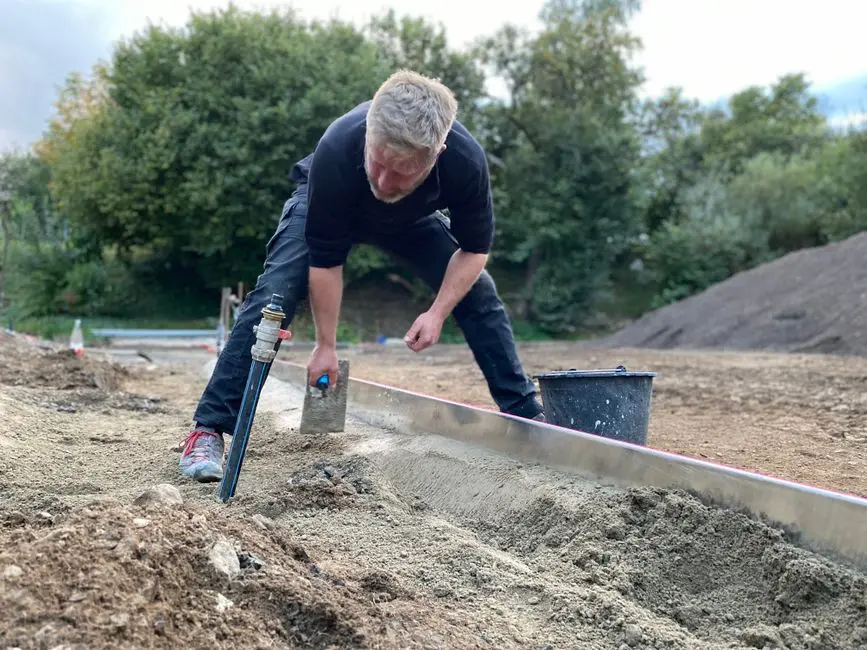
Treat Greek demonstrations as evidence that particular configurations have been implemented, not as a universal equipment mandate or permit. The completed Lesvos hotel demonstration proves relevance for a decentralized tourism-site application; the Markopoulo pilot shows a different treatment configuration near Athens. Neither establishes every condition applicable to a private Greek property.
At the Delfinia Hotel in Molyvos, the treatment train included source collection, a grease interceptor, collection tank, coarse filtration, constructed wetland, chlorination, storage tanks, pumping and hydraulic controls. The wetland consisted of four pallet tanks arranged in parallel as a vertical unsaturated subsurface-flow system with a total treatment surface area of approximately 5 m², according to the University of the Aegean project description. The installation treated kitchen-sink and dishwasher wastewater for non-potable applications and produced Class B reclaimed water in accordance with the principles of EU 2020/741. That is a project-specific statement, not a blanket Greek effluent specification.
The Markopoulo wastewater-recycling project was inaugurated in December 2025 and was developed by the Athens Water Supply and Sewerage Company and the National Technical University of Athens, according to Greek Reporter. Its reported configuration combines membrane bioreactor technology with ultraviolet treatment, solar power and digital monitoring and control. These features demonstrate a project approach; they do not establish a required technology for every Greek hotel.
Ask the site owner or appointed Greek environmental and water professional to confirm the applicable permit, discharge, reuse and public-health route. Obtain the responsible authority’s written position and the approval conditions before ordering equipment. The absence of a complete route in the available project evidence is a procurement risk, not evidence that no route exists.
Build a quote-ready scope and acceptance checklist
Make every quotation describe the same complete train and the same performance responsibility. Require a process flow covering segregation, equalization, grease interception, solids removal, biological treatment, filtration where needed, disinfection, storage, pumping and reuse distribution. The quotation should also state design flow, operating flow, the hydraulic-retention or loading basis, treated-water target, footprint, utilities, control philosophy, routine maintenance and commissioning method.
Include the demonstrated Lesvos elements where they fit the site: source collection, grease interception, coarse filtration, constructed wetland, chlorination, storage, pumping and hydraulic controls. Where the brief identifies UV disinfection, ask suppliers to provide the proposed unit and performance basis. HydropureWater describes its UV sterilizer range as chemical-free, effective against chlorine-resistant Cryptosporidium and Giardia, and available in several installation configurations; these are supplier claims requiring project-specific verification.
Require acceptance tests, test methods, guarantees and responsibility to be stated. The available project information provides no universal numerical acceptance thresholds for a Greek installation, so do not accept an undefined “compliant” label as a performance guarantee.
| Quote line item | Technical scope to specify | Red flags to check before signing |
|---|---|---|
| Source segregation and equalization | Fixture-by-fixture source list, separate drainage concept, flow basis, equalization duty, overflow and surplus-flow route. | Unverified average flow, no peak-flow basis, mixed sanitary streams, or no defined destination for water exceeding reuse demand. |
| Grease interception and solids removal | Applicable duty for kitchen and laundry flows, accessible collection and maintenance arrangement, coarse filtration specification and disposal route. | Generic pretreatment wording, omitted cleaning-chemical considerations, inaccessible sludge or grease removal, or no fouling-control basis. |
| Biological treatment | Selected process, hydraulic and organic design basis, selected option only where justified, odour control and performance target. | Nominal capacity without loading data, no redundancy decision, or an assumed reuse quality without design influent. |
| UF, MBR or other membrane stage | Treatment task, membrane or filtration specification, pretreatment requirements, cleaning regime, controls and replacement responsibility. | UF presented as a complete treatment train, unspecified membrane condition, or omitted operating and maintenance demands. |
| Disinfection and storage | Selected disinfection method, dose or performance criteria, contact or operating basis, storage condition, residual-management requirements. | “Disinfection installed” without a measurable basis, uncontrolled storage, or no protection between treatment and reuse. |
| Pumping, distribution and controls | Reuse demand, pump duty, storage logic, pressure and flow control, power demand, access and manual fallback. | Omitted peak distribution demand, no fail-safe route, inaccessible controls, or utility requirements excluded from the price. |
| Commissioning and acceptance | Test protocols, sampling points, test methods, required results, responsible party, training, spares and handover documents. | No responsible party, no sampling method, undefined “acceptance,” or compliance claimed without the applicable Greek approval. |
Use the same RFQ structure for every bidder, with UF versus MBR selection for regional greywater recycling informing the technology schedule rather than replacing project-specific design.
Frequently Asked Questions
Should a Greek hotel choose UF, an MBR or a packaged biological plant?
Choose UF as a polishing stage only when suitable upstream treatment is specified; choose MBR where integrated biological treatment and membrane separation fit the reuse target; and consider a packaged biological plant where the treated-water specification, footprint and operating conditions support it. The decision starts with source segregation, peak flow, reuse endpoint and local approval conditions—not with the technology name.
What site information is required to size a greywater recycling system in Greece?
Provide peak and average hourly flows, seasonal variation, a fixture-level source inventory, influent results for fats, oils, suspended solids, pathogens and relevant micropollutants, and the plumbing layout. Also provide the intended reuse quantity and quality, footprint and soil or drainage constraints, available power, pumping and storage needs, and the responsible authority’s written approval requirements. These inputs determine hydraulic and organic loading, pretreatment duty and the required train.
What should a supplier include in a comparable quotation?
Require a process flow and priced equipment schedule covering segregation, equalization, grease interception, solids removal, biological treatment, filtration, disinfection, storage, pumping, controls and reuse distribution. Each quotation should state design and operating flow, the hydraulic-retention or loading basis, treated-water target, footprint, utilities, maintenance, commissioning tests, guarantees and responsible party. A capital-price comparison is meaningful only if the scopes are equivalent.
How should a buyer establish cost and avoid an unsuitable supplier?
Ask each bidder to price the complete commissioned scope and identify exclusions, utilities, consumables, maintenance, replacement responsibilities and local installation approvals. No Greek project price or supplier quotation is established in the available evidence, so request written pricing rather than assume a budget figure. Before selecting a supplier, verify its proposed performance basis, operating experience with the stated source stream, acceptance method and local commissioning support. The underground WSZ package treatment plant is one supplier option to