Establish the discharge route and hazardous streams
Choose a hospital wastewater treatment and disinfection system in Lithuania by first fixing the discharge route and segregating laboratory, radioactive, cytotoxic and other hazardous streams. Biological treatment requires verified peak flow, organic load and local discharge limits; disinfection technology must match the receiving route, residual requirements and by-product risk. The supplied evidence reports 400–1200 L wastewater per bed per day in developed countries and notes that hospital effluent can have 5–15 times the intrinsic toxicity of urban effluent. Because these figures do not establish Lithuanian discharge limits, those must be confirmed with the competent authorities before equipment selection.
The first procurement decision is the legal and physical destination of the effluent. Confirm whether the hospital will discharge to a municipal sewer, discharge directly to a receiving water, or send water to a controlled reuse destination. A direct discharge or reuse route may require a separate environmental permit and technical assessment, while a sewer connection requires confirmation from the municipality or sewer operator. Use the hospital treatment and disinfection route comparison as a decision framework, but do not transfer conditions from another jurisdiction.
Obtain separate flow and pollutant profiles for ward, kitchen, laundry, laboratory, pharmacy, oncology and other special-discharge streams. The relevant academic review identifies greywater as potentially containing residues from washing, bathing, laboratory processes and laundry, including genotoxic or cytotoxic agents. It also states, based on WHO guidance, that direct discharge of hazardous liquids and chemical wastes—including photochemicals, aldehydes, colorants and pharmaceuticals—to the sewer is prohibited, and that medical-laboratory wastewater requires separate collection and pretreatment. Pretreatment may include sediment filtration, acid–base neutralization or autoclaving, as identified in that review.
Radioactive wastewater must be collected and stored separately until its radioactivity has decreased to a safe limit, according to the same WHO-based guidance. Request the hospital’s radioactive-material inventory and handling procedures from the radiation-protection lead. The system should exclude radioactive, cytotoxic and incompatible chemical streams unless the supplier has explicitly designed and accepted them.
| Discharge route or influent problem | Governing rule or process option | What data settles it |
|---|---|---|
| Municipal sewer discharge | Obtain written connection and pre-treatment requirements from the sewer operator; exclude prohibited hazardous discharges. | Discharge point, sewer authority requirements, laboratory and pharmacy waste inventories, and proposed sampling plan. |
| Direct discharge to receiving water | Treat the project as a permitted direct discharge; establish applicable effluent, residual and monitoring conditions with the competent environmental authority. | Receiving-water description, proposed outfall, environmental permit application requirements and authority correspondence. |
| Controlled reuse | Define the reuse application and required water quality before selecting biological treatment and disinfection. | End use, reuse destination, health-facility requirements and authority approval pathway. |
| Laboratory, pharmacy, oncology or radioactive streams | Separate collection and appropriate pretreatment; do not send excluded streams into the general biological train. | Stream-specific analyses, waste classifications, pretreatment acceptance criteria and regulator confirmation. |
Compare biological treatment and disinfection routes
Biological treatment and disinfection routes must be compared against the required effluent use rather than generic quality claims. A packaged biological plant is a practical candidate where the site needs an integrated treatment train with limited civil and installation complexity. An MBR should be considered when the discharge objective requires stronger solids separation or the project is being developed around reuse. Specialist disinfection must then be assessed against residual requirements, by-product controls, footprint, utilities, operator competence and monitoring obligations.
The compact hospital wastewater treatment and ozone disinfection system combines anoxic and aerobic biological contact oxidation, sedimentation and disinfection in an underground package concept. The MBR integrated wastewater treatment system is relevant where membrane separation and reuse-oriented applications justify the added process and maintenance demands. Neither option should be accepted as sized until the supplier confirms the actual duty point and treatment objectives.
The reported 400–1200 L wastewater per bed per day in developed countries provides preliminary hospital wastewater-generation context. Final sizing must use measured average and peak flows rather than a bed-count rule alone. Hospital wastewater characteristics, quantities and handling methods vary between countries and within a country, so a Lithuanian hospital’s own data must govern.
For disinfection, compare ozone, chlorine dioxide, UV and hypochlorite only after obtaining the route-specific residual, by-product, monitoring and permit conditions. A compact on-site chlorine dioxide hospital effluent disinfection system and a multi-stage filtration and ozone route may suit different installation and operating priorities; “chemical-free ozone” does not eliminate by-product, safety or monitoring requirements. Request the dose, contact conditions, analytical method, residual-monitoring method, operator requirements and emergency provisions for each proposal.
| Discharge route or influent problem | Governing rule or process option | What data settles it |
|---|---|---|
| General hospital discharge with controlled biological treatment | Compare an integrated package plant with an MBR after excluding hazardous streams. | Measured average and peak flow, COD/BOD load, solids, footprint, utilities, sludge route and reuse objective. |
| Disinfection for sewer or direct discharge | Select the technology only after the receiving authority defines residual and monitoring conditions. | Written discharge criteria, receiving-water or sewer requirements, by-product limits and compliance-test method. |
| Reuse-oriented treatment | Evaluate MBR or a route with validated solids separation and downstream disinfection. | Intended reuse endpoint, required parameters, reuse authorization and validation sampling plan. |
| Hazardous or pharmaceutical streams | Provide separate collection and approved pretreatment rather than relying on the main biological train. | Stream-specific analyses, waste classifications, pretreatment acceptance criteria and regulator confirmation. |
Size the system from measured site inputs
System sizing must be derived from a measured site profile, including average daily flow, peak hourly flow, the diurnal profile, occupied-bed count and seasonal variation. The 30 m³/day hospital dialysis wastewater MBR case study illustrates why a specific flow basis is necessary, but a case-study flow must not be transferred to a different hospital.
Obtain COD, BOD, suspended solids, nitrogen, phosphorus, pH, temperature and relevant contaminant analyses. The academic review reports that hospital wastewater can contain pharmaceutical residues, pathogens, chemical reagents, radionuclides and other harmful matter. It also states that the intrinsic toxicity of hospital effluents can be 5–15 times greater than urban effluent and may inhibit activated sludge in wastewater treatment plants. That finding supports conservative pretreatment and biological inhibition checks, but it does not provide a Lithuanian design load or a universal equipment factor.
Give the supplier a data sheet containing each stream’s average and peak flow, sampling point, sampling method, analysis results, operating schedule, planned future expansion and treatment objective. Where data is missing, require the supplier to state the assumption, design margin and verification method in the offer. Do not allow a quotation to substitute “hospital wastewater flow rate” for an auditable duty point.
For biological capacity, request the selected process, reactor volume, hydraulic loading, organic loading, solids-retention strategy, equalization assumptions, sludge-production estimate and treatment performance at the stated influent range. For disinfection, request the design flow, dose or intensity, contact time, residual basis, monitoring instruments and treatment performance at worst-case water quality. These figures must be reconciled in the final process flow diagram.
Verify Lithuania-specific requirements before ordering
Require confirmation from the relevant Lithuanian authorities before relying on a supplier’s compliance statement. For a municipal sewer connection, identify the municipality or sewer operator controlling connection conditions. For direct discharge or controlled reuse, identify the competent environmental authority and obtain the applicable permit pathway. The buyer should also establish whether the hospital’s own environmental permit, waste obligations and sewer agreement need to be amended.
Request written confirmation of the discharge route, analytical parameters, sampling frequency, residual-disinfection limits, and requirements for sludge and special waste. Do not present international regulatory examples as Lithuanian limits. The hospital wastewater treatment engineering specifications and compliance guide can help structure a specification check, but only the Lithuanian authority can establish the applicable conditions for the site.
Require every supplier to name the permit, consent, technical standard, test method or design basis supporting each declared performance claim. The supplier should also identify which documents remain the customer’s responsibility, including site surveys, authority applications, operator training and final performance testing. For comparison with another jurisdiction’s procurement issues, the hospital wastewater treatment and disinfection systems for Kosovo route can be read as a reference for questions to ask, not as evidence of Lithuanian compliance.
Turn the selection into an RFQ and acceptance checklist
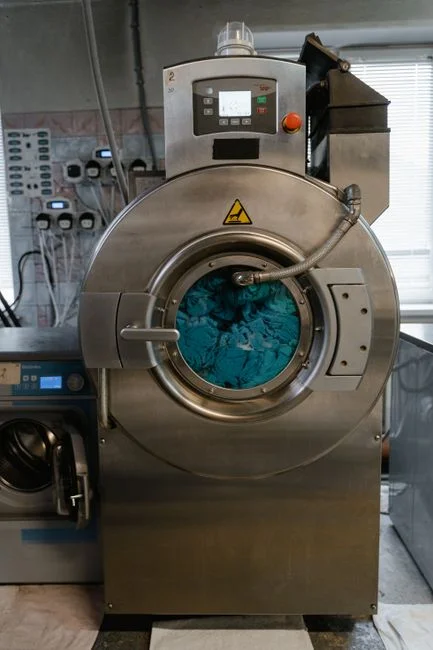
Issue the RFQ as a scope-allocation document. Price civil works, equalization, biological treatment, tertiary treatment, disinfection, controls, sludge handling, utilities, commissioning and compliance testing separately. Require a guaranteed process flow, duty point, treatment performance criteria, backup strategy, alarm list, maintenance schedule and spare-parts quotation. Make site data, authority approval, operator training and final performance testing explicit customer or supplier deliverables.
| Quote line item | Technical scope to specify | Red flags to check before signing |
|---|---|---|
| Civil works, equalization and installation | Define excavation, foundations, access, drainage, bunding, utilities, underground constraints and site-restoration responsibilities. | Civil works omitted, or the treatment train is quoted without confirmation that it fits the available footprint. |
| Biological and tertiary treatment | State process stages, design flow, load basis, sludge handling, odor control and performance-guarantee parameters. | Guarantee relies only on outlet turbidity; pretreatment, sludge removal or maintenance scope is missing. |
| Disinfection and instrumentation | Define dose or intensity, contact conditions, residual monitoring, interlocks, alarms and analytical verification. | Microorganism claims are presented without a design basis, test method or authority acceptance. |
| Controls, utilities and backup | List power, compressed air, water, chemical requirements, duty/standby arrangements and failure modes. | Utility demand or backup strategy is unpriced and depends on site assumptions not listed in the offer. |
| Commissioning and compliance testing | Assign training, trial runs, sampling, laboratory testing, documentation, handover and performance acceptance. | Final testing or regulator submissions are left as customer obligations without scope or acceptance criteria. |
| References and guarantees | Require comparable hospital applications and verifiable performance records tied to stated influent and effluent conditions. | Unqualified “compliant system” references, unsupported guarantees or missing permit assumptions. |
Frequently Asked Questions
How do average flow, peak flow and occupied beds affect preliminary sizing?
Use average and peak flow to define hydraulic duty, and use measured wastewater analyses to define biological and disinfection loading. Occupied beds can provide preliminary generation context: the academic review reports 400–1200 L per bed per day in developed countries. Treat that as a screening figure only and request the hospital’s actual daily flow, hourly peak, diurnal profile, seasonal variation and wastewater analyses before selecting capacity.
Which discharge route should determine the disinfection comparison?
The sewer, receiving-water or reuse destination should determine the comparison because it sets the required residual, by-product controls, monitoring and permit conditions. Ask the relevant authority for written criteria, then require each supplier to demonstrate how ozone, chlorine dioxide, UV or hypochlorite meets those conditions at the stated design flow and worst-case water quality.
What should a complete hospital wastewater treatment quotation include?
The quotation should separately price civil works, equalization, biological treatment, tertiary treatment, disinfection, controls, sludge handling, utilities, commissioning, operator training and compliance testing. It should also state the duty point, process flow, performance criteria, backup strategy, alarms, maintenance schedule and spare parts. A low equipment price that leaves these items undefined is not a comparable offer.
How can a buyer verify Lithuanian compliance claims and unsupported promises?
Ask the supplier to identify the exact Lithuanian consent, permit condition, technical standard or test method supporting each claim, then confirm the applicable requirements with the municipality, sewer operator or competent environmental authority. Reject guarantees based only on outlet turbidity, generic statements that a system is “compliant,” or claims that omit hazardous-stream pretreatment, sludge handling or final performance testing.