Define the Wastewater and Plant Duty
Select an industrial effluent treatment plant and DAF system in Gabon by documenting representative wastewater analyses, average and peak flows, stream composition, treatment objectives, available utilities, and the intended discharge or reuse route. Use those inputs to define pretreatment, chemical conditioning, dissolved air flotation, downstream polishing, and sludge handling. Research establishes no Gabon-specific discharge limits or responsible authority; obtain written confirmation from the relevant local authority rather than treating general DAF benchmarks as compliance criteria.
Build the site-specific duty before selecting equipment
Request representative sampling and analysis covering COD, suspended solids, pH, turbidity, and TDS. These are the wastewater variables identified in the modelling study as inputs from equalization-tank effluent; that study is a preprint, and its numerical modelling results should not be treated as design guarantees. Add oil and grease, free oil, surfactants, colloid characteristics, sulphide, and other stream-specific contaminants where relevant.
Obtain average flow, peak flow, operating schedule, future expansion assumptions, stream segregation requirements, and available footprint from the project owner. State the required final effluent quality and discharge route. If treated water is intended for reuse, identify the receiving process and its water-quality requirements. Where no route is documented, the discharge destination, sewer connection, or receiving environment remains an unresolved commercial and compliance input.
Define the industrial wastewater ETP as a complete treatment train rather than a DAF vessel with ancillaries. The tannery example reviewed separates effluent, removes coarse solids by screening, balances flow in an aerated tank, conditions the wastewater with aluminium sulphate and polymer, floats the solids, and sends the resulting sludge to storage and a high-pressure belt press. That sequence illustrates the interfaces a supplier must price; it is not a Gabon-specific standard.
Choose the Treatment Train
Match each influent problem to the step that addresses it, because dissolved air flotation is primarily a solids-separation process rather than a standalone ETP solution. In the tannery example, physical removal at the earliest practical stage protects pumps, pipework, and downstream equipment; balancing then addresses flow variation before flocculation and DAF.
| Discharge route or influent problem | Governing rule or process option | What data settles it |
|---|---|---|
| Coarse solids, rags or pump protection | Provide screening or segregation ahead of the treatment train. | Characterization of stream solids, flow path and pump protection requirements. |
| Variable flow or industrial effluent equalization needs | Include industrial effluent equalization with mixing and, where needed, aeration. | Average and peak flows, operating schedule, soluble COD and settled-solids behavior. |
| Oil, grease, fats and floatable material | Evaluate FOG removal and source segregation before DAF. | Free-oil, oil-and-grease and surfactant results for each stream. |
| Colloidal or finely suspended solids | Use coagulation and flocculation before an industrial dissolved air flotation system. | Suspended solids, turbidity, COD, pH and jar or pilot-test results. |
| Final objective extends beyond solids separation | Add biological treatment, filtration, disinfection or reuse treatment as demonstrated by the effluent data. | Required final quality, discharge route, biodegradability and downstream sensitivity. |
| Contaminated sludge or float | Include thickening, sludge holding, dewatering and a defined disposal route. | Sludge characteristics, available footprint, utilities and final disposal method. |
Specify coagulant and flocculant selection as an engineering task rather than naming products before testing. The tannery case added aluminium sulphate and polymer before flotation, followed by automatic skimming and sludge pumping. A PLC-controlled chemical dosing system may form part of the selected train, but the RFQ should require the supplier to justify dose, mixing, and control assumptions against representative wastewater.
Do not select a specific biological route without wastewater data. If COD removal remains insufficient after the selected physical and chemical steps, require the bidder to propose a downstream process and demonstrate that the proposed outlet meets the stated objective. Filtration or disinfection should be added only where the reuse or discharge requirement justifies them.
Set the DAF Performance and Operating Basis
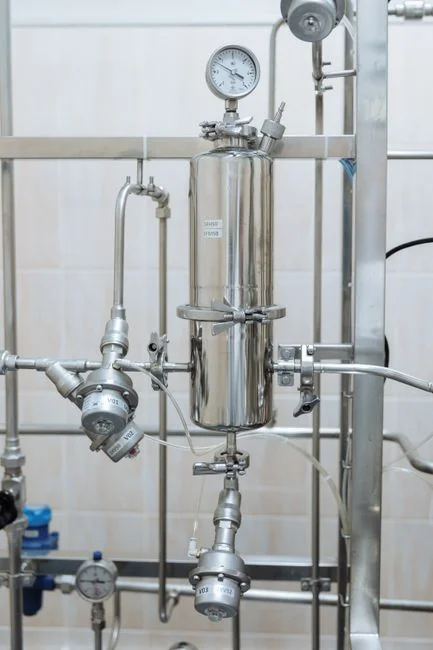
Define the operating conditions before asking suppliers to guarantee performance. Require each bidder to state design flow, peak-flow handling, recycle arrangement, air-saturation conditions, bubble approach, and chemical-conditioning assumptions. Also define whether the quoted unit handles raw industrial effluent, equalized effluent, or conditioned feed.
The modelling study reports that static and dynamic models behaved differently under shock loads, and time lags involving past data had greater potential in model prediction. This is a warning against sizing from one steady operating condition. Require bidders to explain how batch discharges, diurnal flow changes, accumulated solids, and chemical-dosing variation affect tank residence, recycle demand, and solids removal.
Specify automatic skimming, controls, maintenance access, and sludge-discharge arrangements as part of the operating scope. For a micro-bubble flotation system, ask for the proposed bubble-generation method and the relationship between recycle flow, pressure, and solids capture. Require the DAF system engineering specifications to identify duty, controls, materials, utilities, and interfaces, rather than relying on a generic removal percentage.
Keep performance evidence separate from regulatory compliance. The tannery source reports that its primary treatment removed an average of 95% of suspended solids and 70–80% of COD, but that result belongs to a specific site, wastewater, and treatment arrangement. It is not a general DAF guarantee for Gabon.
Build the RFQ and Acceptance Criteria
Issue a common data package so bidders size and price the same duty. Require the RFQ to contain the wastewater analyses, average and peak flows, stream segregation and equalization requirements, treatment objectives, utilities, footprint, installation location, power availability, local documentation requirements, and proposed discharge or reuse route.
Price the complete industrial wastewater ETP scope, including screening, equalization, chemical dosing, DAF, controls, sludge handling, electrical works, installation, commissioning, training, and maintenance support. Make exclusions explicit so that a missing inlet works item, sludge dewatering system, duty pump, or local installation service does not remain buried in general wording.
| Quote line item | Technical scope to specify | Red flags to check before signing |
|---|---|---|
| Wastewater characterization and design basis | Representative analyses, average and peak flows, operating schedule, expansion allowance and final effluent objective. | Equipment sized from averages while peak flow is left undefined. |
| Industrial effluent equalization | Volume basis, mixing, aeration, access, controls and outlet duty. | Tank described as balancing storage without a defined flow-control function. |
| Coagulation and flocculation | Reagents, dosing range, mixing, pH control and chemical consumption assumptions. | Chemical dose or consumption omitted or guaranteed without representative testing. |
| DAF unit and ancillaries | Design duty, peak handling, recycle, aeration, skimming, controls and maintenance access. | No stated recycle arrangement, solids outlet or test conditions. |
| Sludge handling | Collection, pumping, holding, thickening, dewatering, storage and disposal interfaces. | Sludge route ends at an unpriced discharge point. |
| Installation and commissioning | Civil interfaces, electrical works, utilities, local permits, FAT, SAT, training and documentation. | Delivery-only quotation presented as an installed ETP. |
| Lifecycle and service | Spare parts, consumables, maintenance plan, software support and local service capability. | Chemical use, maintenance access and response capability remain undefined. |
Require a factory acceptance test and site acceptance test under agreed conditions with representative wastewater. Define sampling points, test duration, flow conditions, analytical methods, influent characterization, and outlet limits. Do not accept a generic removal guarantee without defined inputs. Use the DAF unit selection framework for industrial wastewater to compare submitted technical and commercial responses consistently.
Plan Commissioning and Long-Term Operation
Do not treat commissioning as the moment the equipment first runs. The modelling case used inputs collected during an 8-hour monitoring period across one year, and its static and dynamic models responded differently to shock loads. This supports a commissioning plan that checks start-up, changes in duty, and recovery after upset rather than demonstrating one stable condition.
Before acceptance, confirm chemical supply and storage, instrument calibration, start-up sequence, interlocks, alarm response, operator training, as-built documentation, and the agreed DAF installation and commissioning protocol. The handover file should include operating procedures, control narratives, maintenance tasks, drawings, and test records.
Schedule preventive maintenance and monitoring for flow, solids loading, pH, chemical dosing, DAF performance, and sludge movement. Review chemical consumption and operating conditions against the commissioned baseline. Where the wastewater contains sulphide, confirm any source-specific treatment before mixing; the reviewed tannery case separately oxidised sulphide-bearing liquors before combining them with other effluent streams.
Further Reading
Frequently Asked Questions
What wastewater analyses and flow data are needed before selecting a DAF unit?
Request representative COD, suspended solids, pH, turbidity, and TDS results, plus oil and grease, free oil, surfactants, and colloid characteristics where relevant. Provide average flow, peak flow, operating schedule, and future expansion assumptions. Require jar or pilot testing when chemical conditioning or solids capture remains uncertain.
When does dissolved air flotation require biological treatment or another polishing step?
Add downstream treatment when the required final objective extends beyond physical and chemical separation. The decision should be based on the proposed outlet quality, the biodegradability of the residual COD, the receiving route, and the sensitivity of any reuse process. Do not select a biological route from COD alone.
What should be included in a comparable DAF quotation for a Gabonian site?
Request itemized pricing for screening, industrial effluent equalization, coagulation and flocculation, the DAF unit, controls, sludge handling, electrical works, installation, commissioning, training, utilities, chemical consumption, consumables, spare parts, delivery terms, local service capability, and documented exclusions. This gives bidders a common scope and makes missing cost elements visible.
How should DAF performance be accepted without treating source benchmarks as guarantees?
Set test conditions against representative wastewater and state analytical methods, sampling points, flow and loading conditions, outlet limits, and acceptance procedures in the RFQ. Treat the tannery case’s average 95% suspended-solids removal and 70–80% COD removal as site-specific evidence only. Obtain written confirmation of the Gabon discharge route and applicable requirements before using any outlet limit.