Define the Water Quality and End Use
An industrial reverse osmosis water treatment system in Croatia should be selected after the buyer defines the required permeate quality, feedwater characteristics, recovery target, and reject-water route. RO uses pressure to force feedwater through a semi-permeable membrane, producing permeate while retaining dissolved and suspended contaminants in a reject stream (S1). Supplied evidence reports removal of over 99% of contaminants including dissolved solids, organics, bacteria, and pyrogens (S1), but this does not establish site suitability. Fresh and brackish RO generally uses 2–17 bar (30–250 psi), while wastewater-reuse systems can use low-pressure designs when feed conditions permit (S4, S5).
Begin with the output, not the equipment. Ask the plant engineer or process owner for the required permeate quality, permeate flow, operating schedule, and intended application. A process-reuse stream, cooling-water application, boiler-feed application, and permitted-discharge route create different quality and documentation requirements. Do not treat a general contaminant-removal claim as proof that the water will meet a project-specific process or environmental specification.
Map every relevant stream before selecting a route: raw feedwater, pretreatment effluent, RO permeate, post-treatment water, and reject concentrate. For each stream, record its destination and the person responsible for its operation, discharge, or reuse. The industrial RO water treatment system scope can provide a reference for pharmaceutical, semiconductor, food and beverage, and power-generation applications, but those sector examples do not establish the requirements of a Croatian site.
Separate three decisions in the process design: contaminant removal, recovery, and energy demand. Low-pressure RO can reduce pumping energy when feedwater quality, treatment objectives, and system design permit, but it is not universally suitable (S4). Recovery must be evaluated against the feedwater analysis and the route for the reject stream rather than selected independently of them.
Match the Feedwater to the Correct RO Route
Select the RO route only after the feedwater source and required output are documented. Fresh and brackish RO generally requires 2–17 bar (30–250 psi), whereas seawater requires 40–82 bar (600–1200 psi) (S5). For wastewater reuse, biological or physical pretreatment must be defined alongside RO; RO is an advanced treatment stage rather than a complete wastewater plant by default (S4, S5). Evaluating these parameters ensures the chosen technology aligns with site-specific influent conditions.
Request the feedwater source, seasonal flow, temperature, and pressure, together with conductivity, TDS, hardness, silica, organics, and turbidity. These inputs determine whether low-pressure RO, conventional RO, or an advanced wastewater-reuse train is technically credible. They also establish the feedwater assumptions behind any recovery, energy, or membrane-life claim.
| Discharge route or influent problem | Governing rule or process option | What data settles it |
|---|---|---|
| Fresh or brackish feedwater | RO generally operates at 2–17 bar (30–250 psi) for these applications (S5). | Provide source water, seasonal flow, conductivity, TDS, hardness, silica, temperature and inlet pressure. |
| Seawater feedwater | RO requires 40–82 bar (600–1200 psi) (S5), so the pressure and pumping scope must be checked separately from fresh or brackish designs. | Provide salinity, source-water temperature, seasonal production demand and available electrical supply. |
| Low-pressure RO candidate | Use only where feedwater quality, treatment objectives and system design allow lower-pressure operation; S4 states that not every application is suitable. | Obtain a supplier route comparison stating the feedwater assumptions, target permeate quality, operating pressure and energy demand. |
| Wastewater-reuse feedwater | Define the biological or physical pretreatment route before finalizing RO; wastewater reuse commonly places RO within an advanced treatment train (S4, S5). | Request source-water composition, biological treatment status, turbidity, organics, conductivity and the required reuse specification. |
| Reject stream with no defined destination | RO retains contaminants in a separate reject stream, so treatment selection cannot be separated from disposal or recycling planning (S1). | Obtain the reject flow, concentration basis, disposal route, receiving-water requirements and applicable site permit conditions. |
Where UF is being considered as a pretreatment or alternative route, use the UF pretreatment for industrial RO reference to compare the required feedwater data, outlet quality, and downstream role with the site analysis.
Protect Performance Through Pretreatment and Controls
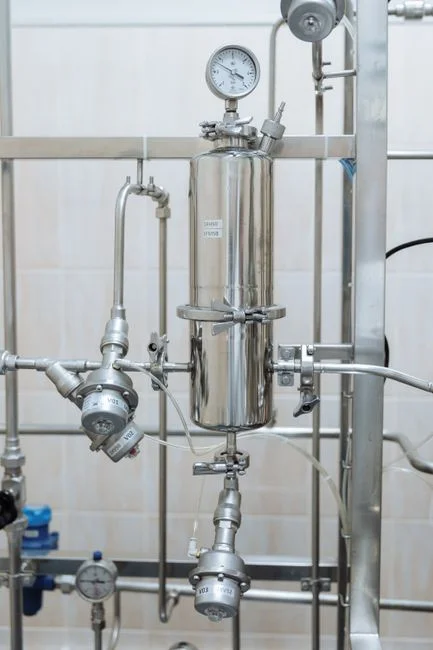
Protect membrane performance by making pretreatment an explicit part of the quotation. RO and NF membranes are susceptible to fouling, particularly with challenging or marginal water, and pretreatment is a necessity for RO systems (S3, S5). A supplier should define the pretreatment criteria instead of relying on a generic statement that the feed is suitable. Proper pretreatment ensures the longevity of the downstream RO components.
Require the supplier to state the pretreatment route, membrane material, cleaning method, normalized permeate flow, salt passage, and monitoring instruments supplied. The pretreatment scope should be traceable to the feedwater risks: suspended solids and turbidity, colloids, organics, hardness, and silica. Where the route includes UF, the UF pretreatment for industrial RO comparison should identify whether bacteria, colloids, and suspended solids are removed before the RO membrane and what operating conditions are required.
Do not accept a guaranteed RO recovery rate until the supplier states the feedwater assumptions and operating conditions behind it. Recovery is linked to feed salinity, membrane selection, and system design, so a fixed percentage without its basis is not a comparable commercial commitment (S5).
The control scope should also be defined. For a PLC-controlled RO skid, request the control philosophy, alarms, interlocks, instrument list, data logging, membrane-cleaning sequence, and operator access. These requirements should be aligned with the proposed pretreatment and the operator’s maintenance capability, rather than added as a generic automation package.
Build the Quotation and Acceptance Package
Make the RFQ comparable by requiring every supplier to state the design feedwater, required permeate flow and quality, recovery basis, operating pressure, and power demand. Require a clear scope boundary covering pretreatment, high-pressure pumping, membranes, controls, valves, instruments, cleaning, commissioning, and operator training. Standardizing these inputs allows for a direct comparison of technical proposals.
Turn the selected route into contractable items. Each line should identify what is supplied, what performance is promised, how it will be tested, and what remains the buyer’s responsibility. The water-treatment parts, valves and media reference can help the buyer check that support equipment is not omitted from a headline skid price.
| Quote line item | Technical scope to specify | Red flags to check before signing |
|---|---|---|
| Design basis and permeate performance | Design feedwater composition, seasonal flow, required permeate flow, permeate quality, operating hours and recovery basis. | Missing feedwater assumptions, a recovery guarantee without operating conditions, or quality stated without a measurable acceptance method. |
| Pretreatment | Define the required process, equipment, media or membranes, control criteria and duty before the RO stage. | Pretreatment is named but not defined, or membrane-protection criteria are absent. |
| RO membrane and pressure-vessel assembly | State membrane material, configuration, vessel arrangement, cleaning method, normalized permeate flow and salt passage. | Only “RO membranes” is specified, or cleaning access and replacement responsibility are excluded. |
| Pumping and energy scope | State operating pressure, pump duty, power demand, electrical supply requirements and any energy-recovery arrangement. | Low-pressure operation is promised without feedwater conditions, or installation power is excluded. |
| Controls and instrumentation | Specify the PLC-controlled RO skid functions, alarms, interlocks, instruments, data logging and cleaning controls. | Controls are included only as a general allowance, without an instrument list or functional description. |
| Commissioning and acceptance | Agree feed and permeate flow, electrical input, permeate quality and stabilized recovery tests, with deviation and rectification procedures. | Acceptance depends on undocumented feedwater, single test values, or no contractual rectification process. |
| Reject-water management | Define reject flow and concentration assumptions, collection, disposal or recycling interfaces, and responsibility for final disposal. | Reject disposal is treated as a buyer problem without a documented route or interface data. |
| Training and handover | Define operator training, operating manuals, maintenance records, spare parts and technical support handover. | Training is mentioned without hours or materials, or technical documentation is excluded from delivery. |
Put acceptance tests in the purchase agreement rather than treating them as commissioning details. Tests should use agreed feed and permeate flow, electrical input, permeate quality, and stabilized recovery. The agreement should state how deviations are recorded, who corrects them, what evidence demonstrates closure, and whether unresolved deviations permit rejection, repair, or replacement.
Confirm Local Execution and Reject-Water Responsibility
Allocate Croatian regulatory and site responsibilities before placing the order. Ask the Croatian site operator to identify the discharge route, permit conditions, and receiving-water or reuse requirements. Available technical evidence does not establish those site-specific conditions, so a general municipal or wastewater-reuse description cannot be used as proof of compliance. Aligning these requirements with local regulations is essential for project success.
Require a documented reject-water route because RO retains contaminants in a separate reject stream (S1). The RFQ should state the design reject flow and concentration assumptions, collection and storage interfaces, and the party responsible for disposal or recycling. If the reject route cannot be documented, the recovery target and commercial scope remain unresolved.
Confirm installation power, utilities, access, drainage, foundations, and commissioning responsibilities. Specify which party provides connections, local approvals, operator resources, and sampling support. The scope should also state how performance data will be collected and retained.
Use the dissolved-air flotation machine reference only as an interface reference when physical pretreatment is being evaluated. It does not establish a Croatian permit condition, reject disposal route, or feedwater quality. Keep general wastewater-reuse evidence separate from local compliance evidence.
Frequently Asked Questions
How should the required RO capacity be sized for a Croatian industrial project?
Size capacity from the required permeate flow, operating schedule, feedwater analysis, recovery basis, and seasonal source-water conditions. Ask each supplier to state the design feedwater and the resulting permeate flow, recovery, and operating pressure; do not select a nominal skid size from feedwater flow alone. If reuse is the destination, also obtain the applicable reuse specification from the plant engineer or site operator.
What information is needed to compare RO operating and capital costs?
Request a quotation with the design feedwater, required permeate flow and quality, recovery basis, operating pressure, power demand, pretreatment scope, membrane cleaning, control package, and reject-water route. For a comparable capital-cost review, request itemized equipment, installation, commissioning, training, and maintenance inclusions. Without site utilities, feedwater analysis, and reject-disposal inputs, no reliable operating-cost comparison can be completed; ask for the supplier’s calculation basis rather than accepting an unsupported total.
Which performance tests should be included in the purchase agreement?
Include tests at agreed feed and permeate flow, electrical input, permeate quality, and stabilized recovery. Specify sampling points, instruments, test duration, acceptance limits, deviation recording, and rectification procedures. A recovery or energy claim should not be accepted unless the agreement identifies the feedwater and operating conditions used to establish it.
Which supplier qualifications and deliverables should be checked before ordering?
Check that the supplier has documented experience with the selected feedwater and end use, and request the design basis, membrane and pretreatment specifications, PLC-controlled RO skid description, electrical demand, commissioning plan, operator training, manuals, and reject-water interface. Use the industrial RO treatment-route and RFQ checklist as a cross-check, and see the related