Confirm the funding route before selecting equipment
EU support can assist sanitation investment in the Western Balkans, though available evidence does not identify an open grant call, guaranteed funding amount or country-specific tender. The six economies covered are Albania, Bosnia and Herzegovina, Kosovo, Montenegro, North Macedonia and Serbia. Investment decisions should connect the Green Agenda’s 2025–2030 policy horizon with a site-specific treatment route, sludge handling, financing, qualified operators and long-term maintenance. For procurement, request design flow, influent characteristics, discharge route, land conditions and service-level requirements before selecting packaged A/O, MBR or industrial pretreatment equipment.
Start by creating a funding record for each proposed site: WB6 country, municipality, project sponsor, programme name, funding instrument, verified call or tender reference, application status and approval date. General references to EU wastewater funding do not establish that a particular sanitation project is eligible or funded. Do not build the equipment budget around an assumed subsidy percentage, grant ceiling or reimbursement rate.
Use the Green Agenda for the Western Balkans and its Revised Action Plan 2025–2030 as a policy-alignment checkpoint. GIZ states that discussions involving the six Western Balkan economies contribute to implementing that plan, particularly commitments to reduce water pollution and bring environmental standards closer to those of the European Union. That supports policy relevance, but it does not identify an open call or award.
For each site, ask the funding authority or programme intermediary for the current call guidelines, approved business plan, procurement plan, grant-agreement conditions, consortium rules, eligible-applicant definition, procurement threshold, co-financing requirement and financial-control requirements. WBIF describes investments that improve water and sanitation, pollution prevention, climate-smart technologies and resilience, but the buyer must verify which instrument and call apply to the project. An underground integrated A/O sewage treatment plant should therefore be treated as a candidate route, not proof of funding eligibility.
Match the wastewater route to site conditions
Wastewater treatment processes require documented flow data, composition and receiving route before selection. Request design flow, peak flow, current load, COD, BOD, TSS, nutrients, pathogens, oil and grease, and relevant industrial contaminants. Obtain flow records and representative influent sampling, then define the required effluent quality or reuse specification from the applicable permit and receiving-water or reuse requirements.
A packaged A/O route is a candidate for decentralized sewage treatment; an integrated MBR wastewater treatment system is a candidate where compact treatment or reuse-oriented duties warrant evaluation; and a dissolved air flotation machine is a candidate for industrial streams containing suspended solids, FOG, oil and grease. These are screening decisions, not selections. Final sizing requires site flow, load, effluent requirements and operating assumptions.
| Discharge route or influent problem | Governing rule or process option | What data settles it |
|---|---|---|
| Decentralized sewage serving a defined catchment | Evaluate packaged A/O treatment as a candidate. | Design and peak flow, current load, sewer connection, footprint, flood exposure, power availability and permit requirements. |
| Compact footprint or a reuse destination with defined water-quality requirements | Evaluate MBR treatment as a candidate. | Influent COD and BOD, TSS, nutrients, required reuse specification, membrane operating basis, footprint and utilities. |
| Industrial stream with suspended solids, FOG, oil and grease | Evaluate DAF as a candidate pretreatment route. | Influent characteristics and variability, oil and grease measurements, downstream treatment route and discharge specification. |
| Uncertain discharge destination or incomplete flow data | Do not freeze equipment selection; close the data gap first. | Confirmed discharge route, permit conditions, network maps, current wastewater load and intended reuse destination. |
Record the sewer connection, receiving-water route, reuse destination, available footprint, soil conditions, groundwater level, flood exposure and power availability. Supplier catalogue capacities describe offered equipment ranges; they are not project design capacities. The design engineer must convert verified site data into process calculations, duty assumptions and civil interfaces.
Build the lifecycle and sludge scope
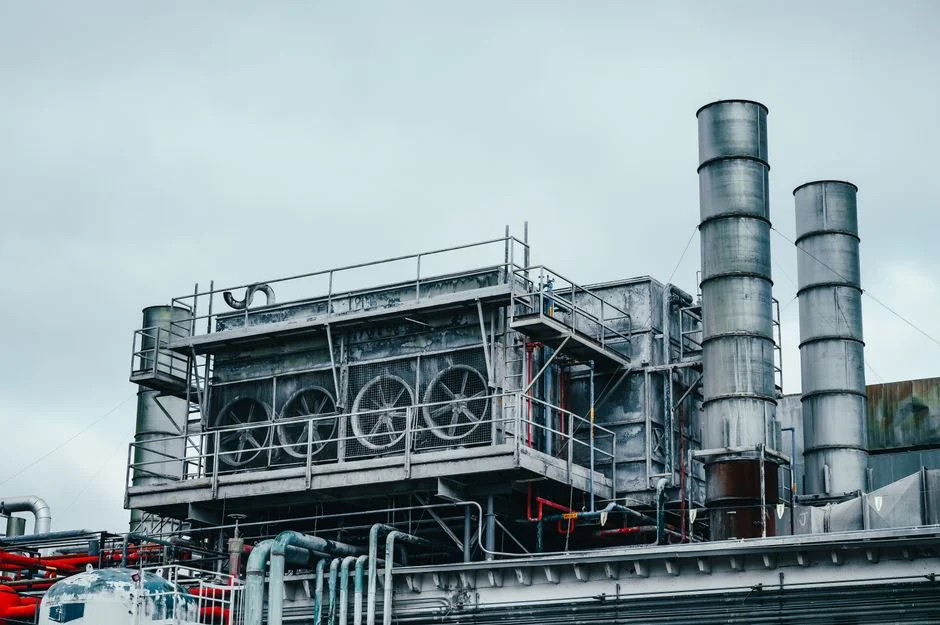
Financing, qualified staffing, maintenance and safe sludge management must be assigned alongside the treatment equipment. GIZ identifies these as central requirements: treatment plants need reliable financing, qualified professionals and safe solutions for managing the sludge produced during treatment. Infrastructure alone does not guarantee clean water.
Put sludge generation, characterization, conditioning, dewatering, storage, transport, permitted destination and contractor responsibilities into separate quotation items. Do not allow “sludge handling” to remain an undefined exclusion. Where mechanical dewatering is considered, filter press selection for industrial sludge should be based on actual sludge characteristics, available filtrate handling and the destination route.
Define operator training, preventive maintenance, spare parts, remote monitoring, emergency response and performance-review intervals. Identify which tasks remain with the utility after handover. GIZ reports that in June 2026, 19 wastewater treatment plant operators from the Western Balkans worked with Swiss colleagues at 15 treatment plants in Switzerland. That RCDN+ exchange supports practical workforce collaboration, but it does not set the training duration, competency level or cost for this project.
For projects requiring specialised treatment and disinfection controls, wastewater treatment and disinfection systems in Kosovo can inform the question set; the project sponsor must still confirm the site-specific waste stream and applicable permit conditions.
Turn the selected route into bid-ready requirements
Bidders must state the process basis and performance boundaries in measurable terms. Require design flow, treated-load basis, duty cycle, footprint, utility demand, control philosophy, retention time, sludge output and included accessories. Quote the automatic chemical dosing system only against the selected treatment route, chemical inventory, storage and dosing-control requirements.
| Quote line item | Technical scope to specify | Red flags to check before signing |
|---|---|---|
| Equipment supply | Process basis, design flow, treated-load basis, duty cycle, footprint, utilities, controls, retention time, sludge output and accessories. | Only catalogue capacity is stated; process calculation, duty assumptions or included ancillaries are missing. |
| Civil works and installation | Sewer and discharge interfaces, foundations, access, power, drainage, flood protection and required site works. | Civil scope is excluded or civil interfaces are not aligned with the supplier’s design. |
| Commissioning and performance acceptance | Agreed influent and effluent specification, sampling method, test duration, availability requirement, remedy for non-performance and acceptance authority. | Acceptance has no duration, sampling method, remedy or responsibility for obtaining test influent. |
| Operations and maintenance | Training, preventive maintenance, consumables, spare parts, remote monitoring, emergency response, review intervals and sludge responsibilities. | Training is described only as handover; maintenance, consumables or residual handling are excluded. |
| Documentation and handover | Technical submittals, operating manuals, permit support, commissioning records, test results, warranty and as-built information. | Documentation is delivered only at final payment, or permit support is assumed without a defined deliverable. |
Separate equipment supply, civil works, installation, commissioning, training, consumables, maintenance and long-term spare-parts support in the commercial schedule. Set acceptance tests around an agreed influent and effluent specification, sampling method, test duration, availability requirement and remedy for non-performance. Do not insert unverified EU subsidy percentages, grant ceilings, reimbursement rates or delivery dates; obtain them from the applicable call and contract documents.
Allocation of project inputs and responsibilities
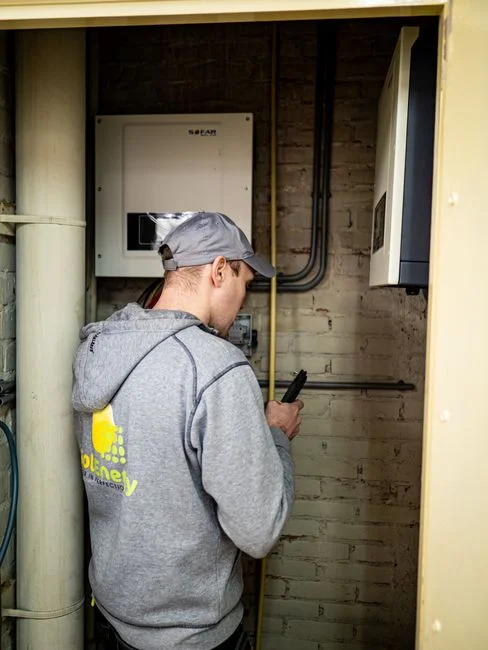
Each missing input must be assigned to the party that controls it. The municipal utility or project owner should provide flow records, network maps, land constraints, the current O&M structure and the intended discharge or reuse route. These are the facts that determine whether a packaged system is technically and institutionally deliverable.
The design engineer should confirm process calculations, duty assumptions, civil interfaces, utilities, control requirements and performance guarantees. The funding authority or programme intermediary should verify eligibility, procurement rules, co-financing, reporting and financial-control requirements. The supplier should provide process guarantees, technical submittals, installation and commissioning deliverables, training, documentation, warranty and measurable acceptance criteria.
A World Bank review of public-investment management in the Western Balkans supports attention to capital-expenditure trends and regional public-investment practices, but it does not establish a project-specific award or procurement rule. Check the project’s financial model and evidence of institutional capacity before submission; for site-specific planning, domestic sewage treatment using a sewer or A/O plant is a reference point rather than proof of suitability for a WB6 site.
Further Reading
Frequently Asked Questions
How can a buyer verify an actual EU-funded sanitation opportunity?
Request the current call or programme guidelines and a written eligibility determination naming the WB6 country, municipality, applicant, funding instrument and procurement rules. Record a verified call or tender reference. General Green Agenda or WBIF policy language is not evidence of an open call, an award, a country allocation or an eligible grant amount.
Which site information is needed before comparing A/O, MBR and DAF quotations?
Request design and peak flow, current load, COD, BOD, TSS, nutrients, pathogens, oil and grease, relevant industrial contaminants, the effluent or reuse specification, sewer connection, footprint, flood exposure and power availability. These inputs distinguish a decentralized sewage route from an MBR or industrial-pretreatment route and allow bidders to size their offers on the same basis.
What acceptance tests and remedies should appear in a performance-based quotation?
State the agreed influent and effluent specification, sampling method, test duration, plant availability requirement, acceptance authority and remedy for non-performance. Also require commissioning records and test results before final acceptance. Without those elements, a supplier’s general performance statement cannot be compared consistently with another bid.
How should operator training, maintenance and sludge management be allocated?
Define a handover package with competency-based operator training, preventive-maintenance tasks, consumables, spare parts, remote monitoring and emergency response. Price sludge characterization, conditioning, dewatering, storage, transport and permitted disposal as separate responsibilities. Confirm which tasks transfer to the utility and which remain contractual supplier obligations; do not assume the equipment warranty covers residual management or long-term operating costs.