Define the Croatian project route before selecting equipment
For a Croatian sewage project, choose among a public sewer, an underground A/O package plant, or an MBR system by first confirming the outlet route. A sewer connection is the practical option where the utility can legally and hydraulically accept the wastewater. An underground A/O package sewage treatment plant suits decentralized biological treatment, while an MBR sewage treatment system should be justified by the effluent or reuse requirement and supported by the necessary operating capability.
Ask the client or discharge authority for the applicable Croatian permit, and ask the sewer operator for its acceptance conditions. The available research does not identify a project-specific permit, numerical discharge limit or approving authority, so none should be inferred. Record the outlet as gravity sewer, treated discharge or reuse, and name the party responsible for confirming each route.
Use the 2025 Energy Nexus study of Croatia’s largest national wastewater treatment plant in Zagreb as national sludge-management context, not as a design specification. Its observations concern anaerobically digested sludge at that plant and cannot establish the production rate, dewatering performance or outlet requirement for another Croatian site.
- Obtain the sewer operator’s connection and acceptance requirements, including available capacity and the responsibilities of each party.
- Obtain the discharge permit or authority confirmation required for treated discharge, identifying the required effluent characteristics and sampling obligations.
- Define the reuse purpose and quality requirement, including whether the effluent will feed irrigation, process use or another controlled application.
- Confirm whether the project will require treatment, disinfection, sludge handling, reuse preparation or a combination of these duties.
Compare sewer, A/O package and MBR treatment routes
Select the route that matches the confirmed outlet and treatment responsibility, then test it against verified flow, wastewater composition, reuse requirements and operating constraints. Capacity-only comparisons are insufficient because an A/O package and an MBR have different process stages, solids handling duties and maintenance requirements.
| Discharge route or influent problem | Governing rule or process option | What data settles it |
|---|---|---|
| A legally available public sewer can accept the wastewater | Use the sewer route when the sewer operator confirms hydraulic capacity, acceptance conditions and responsibility for downstream treatment. | Operator confirmation, available sewer capacity, connection requirements and the legal outlet route. |
| No suitable sewer or decentralized treatment is required | Evaluate an underground A/O package plant where biological treatment, sedimentation and disinfection can be delivered in a compact buried installation. | Design flow, peak-flow basis, COD, BOD, suspended solids, fats, oils and grease, pH, temperature, footprint and burial depth. |
| High-quality effluent or a defined reuse target must be achieved | Evaluate MBR where membrane treatment is justified by the confirmed effluent or reuse specification and the operator can maintain the process. | Required effluent characteristics, reuse analysis, membrane-cleaning regime, control requirements, operator capability and replacement provisions. |
| Wastewater characteristics vary substantially | Do not select from average flow alone; identify the peak-flow basis and influent concentrations that control equalization and biological loading. | Hourly or campaign flow data, seasonal and peak factors, laboratory analysis and the design-capacity definition. |
The comparison of sewer, A/O and MBR routes provides additional context for direct evaluation. The packaged sewage plant selection for a housing project also illustrates why site requirements should precede equipment choice.
Assess sludge, energy and downstream treatment needs
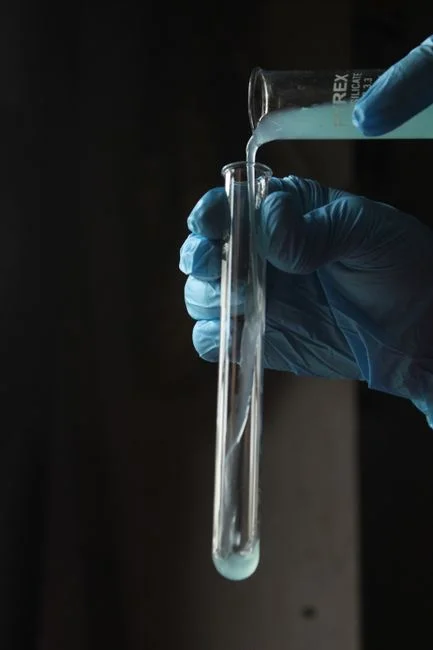
Define sludge, utilities and downstream duties before accepting a treatment route. A biological reactor is only one part of the required installation, and comparing reactor configurations without specifying solids handling can conceal a substantial scope difference.
The Energies study estimated annual sewage-sludge production for future Croatian wastewater treatment plants at 20–25 kgDM per people equivalent and biogas production at 5.8–7.3 Nm³ per people equivalent. The same source states that biogas can be converted into 12–16 kWhel/PE of electricity and 19–24 kWhth/PE of heat. These figures support a site-specific review of energy recovery; they do not establish the energy balance or commercial viability of an individual package plant.
Ask the supplier to identify the expected sludge stream, solids concentration, storage arrangement, dewatering objective, disposal route and final destination. Specify sludge dewatering separately from the wastewater treatment train. A plate and frame filter press should be considered only after its filtration area and operating requirements have been checked against the actual sludge quantity and properties.
- Request the projected sludge mass and moisture basis, explaining how it was derived.
- Request the proposed dewatering method, required area, auxiliary utilities and cake-disposal route.
- Request utility consumption for the selected duty cycle and confirm whether sludge or biogas equipment is included.
- Request the control and monitoring required for unattended or remotely operated operation.
Build a quotation-ready technical scope
Issue the RFQ only with a stated site-information package, and require each bidder to return assumptions, exclusions and guarantees against the same scope. A capacity-only quotation does not expose differences in treatment stages, civil works, utilities or long-term operating responsibilities.
| Quote line item | Technical scope to specify | Red flags to check before signing |
|---|---|---|
| Design basis and influent | Design flow, peak-flow basis, seasonal factors, wastewater analysis, occupancy basis and confirmation method for missing data. | Unstated assumptions, an unexplained capacity figure or treatment design based only on average domestic flow. |
| Outlet and environmental requirements | Gravity sewer, treated discharge or reuse route; applicable permit or sewer conditions; required effluent characteristics and sampling. | Permit conditions are left “to be confirmed” after contract award or are omitted from the guarantee. |
| Treatment equipment | Required biological, solids-separation, disinfection, storage and reuse stages, duty cycle and automation scope. | Equipment list omits ancillary vessels, pumps, controls, screens, odor control or disinfection. |
| Sludge and utilities | Sludge generation basis, storage, dewatering objective, disposal responsibility, power, water, drainage and chemical requirements. | Sludge handling or civil works are excluded without a named price allowance and responsibility. |
| Commissioning and handover | Factory and site tests, operator training, documentation, commissioning, spare parts, warranty and local service response. | Performance testing is undefined, warranty boundaries are vague or local support is not contractually confirmed. |
Require bidders to state every deviation from the requested scope. Separate equipment, civil works, installation, commissioning, utilities, sludge disposal, training and service so that commercial comparisons do not conceal differences in technical responsibility.
Set acceptance criteria before contract signature

Convert the selected route into handover tests tied to the agreed duty and outlet. The contract should identify the design basis, treatment-performance evidence, control functions, utilities and documentation required before acceptance.
Agree which assumptions must be confirmed by wastewater analysis or site survey. If the design flow, influent concentration or reuse requirement remains unknown, record the confirmed method for resolving it rather than converting it into an unqualified performance guarantee.
- Define factory and site acceptance tests for treatment performance, controls, alarms, automatic operation, availability and utilities consumption.
- Attach the applicable sewer-acceptance or discharge requirements to the acceptance schedule.
- Require operator training, maintenance schedules, approved spare-parts lists, warranty boundaries and local service response commitments.
- Assign responsibility for sludge removal, dewatering, transport and disposal.
- Record the documents required at handover, including operating instructions, drawings, test results and asset registers.
Do not infer Croatian discharge limits or permit conditions from national sludge research. The client, discharge authority or sewer operator must provide the applicable project requirements before they are written into final acceptance criteria. A packaged sewage treatment project workflow can help structure the supplier discussion, but its project-specific terms must not be transferred to the Croatian site without verification.
Frequently Asked Questions
When is an underground A/O package plant preferable to an MBR system?
Prefer an underground A/O package plant when the confirmed outlet does not require an MBR-level effluent specification and the project benefits from a compact biological process. Prefer MBR when the permit or reuse analysis requires higher-quality effluent and the operator has the process-control, membrane-cleaning, monitoring and replacement capability needed to maintain it. The decision must be based on the required effluent characteristics, reuse target and site constraints rather than on reactor type alone.
What site data does a supplier need before quoting an underground sewage treatment plant in Croatia?
Request design flow, peak-flow and seasonal factors, raw wastewater characteristics, outlet route, permit or sewer-acceptance conditions, reuse requirements, available footprint, burial depth, power, drainage, sludge destination and O&M responsibility. Ask for wastewater analysis and site measurements rather than allowing the supplier to silently assume these inputs.
What should a complete sewage-plant quotation include?
Require the quotation to state the treatment stages, design basis, performance obligations, duty cycle, automation, utilities, civil-work boundaries, sludge handling, commissioning, testing, training, documentation, spare parts, warranty and service response. It should also list exclusions, assumptions, utilities consumption and deviations from the RFQ. No reliable price comparison can be made until those items are aligned.
How should acceptance testing and local supplier support be specified?
Define factory and site tests against the agreed design flow, influent basis, outlet requirement and reuse target, with objective criteria for treatment performance, controls, alarms, automatic operation and utilities consumption. Separately require operator training, maintenance documentation, spare-parts commitments, warranty boundaries and a contractual local service response time. Do not accept “compliant” or “operational” without a defined test method and acceptance requirement.