Start with the reuse, not the treatment train
A greywater recycling system in Belgium should be selected from the intended reuse and required effluent quality, not from a generic equipment list. Source separation can simplify treatment: greywater excludes toilet waste and typically represents 50–80% of household wastewater generation (S4). Belgian projects may benefit from the established secondary-circuit practice described for rainwater reuse (S5). MBR, UF, biological treatment and packaged sewage plants can each fit, but the correct route depends on feed data, reuse quality, footprint, automation and local permit conditions. The practical output is a route matrix, a site-input request list and an RFQ acceptance checklist.
Determine whether the treated water is intended for irrigation, toilet flushing, process reuse, discharge or another application. The receiving party or authority should provide the water-quality specification, sampling method, permitted reuse location and operating frequency. The commercial greywater route-selection method provides a useful structure for turning that requirement into a treatment brief.
Source separation is a central decision. Keep blackwater and kitchen waste separate if cleaner nutrient recovery or simplified greywater treatment is required. The ANCHOR project in Ghent treated blackwater, kitchen waste and greywater separately before selected flows were combined; the greywater and blackwater decantate then passed through denitrification-nitrification, with phosphorus and COD removal, before ultrafiltration, activated carbon for colour removal, heat exchange and chlorination (S5).
Flanders requires a secondary circuit in new houses for rainwater reuse (S5). That is relevant Belgian context, but it is not proof that greywater reuse has one universal legal rule. Ask the responsible Flemish or Walloon authority for the requirements applying to the project’s location and reuse. The evidence does not establish a universal Belgian greywater effluent limit or permit requirement.
Compare the greywater treatment routes
Choose a route by matching the feed composition and reuse target to the barriers required between them. No supplied study establishes one universally optimal greywater technology: constructed wetlands have proved effective in one real-greywater study, while the ANCHOR demonstrations show the need to resolve individual barriers such as colour, pathogens, settling and membrane leakage (S1, S2, S5). These performance variances highlight the necessity of comparing specific routes against your project's technical parameters.
| Discharge route or influent problem | Governing rule or process option | What data settles it |
|---|---|---|
| Source-separated greywater for toilet flushing or irrigation | Compare biological or packaged treatment, an MBR membrane bioreactor wastewater treatment system, an ultrafiltration water treatment system, and constructed wetlands. | Influent COD, BOD, total nitrogen, total phosphorus, suspended solids, colour and pathogen data; intended reuse quality; average and peak flow; footprint and maintenance access. |
| Quality sensitive to colour or pathogens | Use explicit treatment and disinfection barriers. In Ghent, activated carbon addressed colour and chlorination was the final step; Helsingborg experienced membrane leakage associated with pathogen concerns (S5). | Receiving-party limits, sampling locations and frequency, membrane-integrity monitoring, disinfection performance evidence and residual-handling requirements. |
| Variable flow, settling or biological stability | Assess biological treatment and the consequences of poor settling or filamentous growth. The Helsingborg train included anaerobic, aerobic, sedimentation, drum-filter and membrane stages, but poor settling reduced treatment performance (S5). | Hydraulic profile, organic loading, sludge-handling proposal, monitoring plan, redundancy and operator workload. |
| Constructed wetland route | Consider a horizontal flow constructed wetland as an onsite biological option. Its performance still depends on the actual feed and site conditions (S2). | Feed characteristics, hydraulic retention requirements, available footprint, climate exposure, planting and media details, and seasonal monitoring data. |
The comparison is not simply MBR versus UF. MBR integrates biological treatment with membrane separation, while UF requires an appropriate upstream process and remains dependent on feed condition. Packaged treatment may simplify integration, but the offer must define its treatment barriers, controls, residuals and performance guarantee. Every extra process step creates potential failure points and maintenance work (S5).
Test the route against site data and reuse requirements
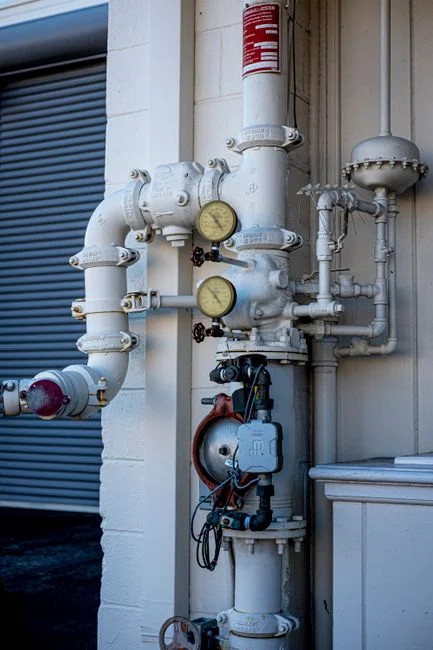
Do not accept a size or price until the supplier has the site inputs needed to establish the hydraulic and treatment basis. Request average and peak greywater flow, hydraulic-retention requirements, available footprint, maintenance access, drainage route, power supply and the reuse demand profile.
Request measured influent data and a proposed effluent specification covering COD, BOD, total nitrogen, total phosphorus, suspended solids, colour and pathogens. The supplied evidence does not establish universal Belgian limits for these parameters, so obtain the applicable specification from the receiving party and authority.
ANCHOR provides useful scale references, not transferable design guarantees. At the Helsingborg pilot, fixed-bed biological treatment followed by ultrafiltration produced approximately 25 m³ of permeate per day (S5). In Ghent, De Nieuwe Dokken is a city district with 400 housing units and an onsite project that collects blackwater, kitchen waste and greywater separately (S5). These cases demonstrate the need to test actual flows, barriers and reuse arrangements.
Make the supplier explain how monitoring, membrane cleaning, cartridge replacement, biological maintenance and operator workload affect total cost of ownership. In Ghent, the operator was investigating additional sensors to guarantee effluent quality because the existing PLC did not measure minute by minute (S5). An underground integrated sewage treatment system should therefore be assessed on monitoring access and maintenance consequences, not footprint alone.
Turn the selected route into a quotation and acceptance criteria
Compare offers as complete performance scopes rather than equipment prices. Require a site-specific process flow diagram, hydraulic calculation, equipment list, controls narrative, utilities list, O&M plan, spare-parts schedule, commissioning protocol and acceptance-test method. Clear documentation of these elements prevents operational discrepancies after installation.
| Quote line item | Technical scope to specify | Red flags to check before signing |
|---|---|---|
| Design basis and feed-water data | Document average and peak flow, analysis results, separation strategy, reuse demand, hydraulic retention and design assumptions. | Missing feed-water data, generic flow assumptions or a design basis that differs from the site. |
| Treatment process and effluent specification | Define each treatment barrier, expected effluent quality, permitted reuse point and responsibility for verifying the specification. | Undefined reuse quality, no sampling protocol or filtration treated as sufficient colour and pathogen control without evidence. |
| Membranes, media and replacement | State materials, configuration, cleaning method, replacement triggers, expected replacement work and spare-parts coverage. | No guaranteed flux or effluent performance and no clear membrane-replacement cost or responsibility. |
| Controls, monitoring and operator workload | List instruments, alarms, data logging, remote access, manual checks, routine frequencies and alarm response duties. | Automatic operation is promised without defined monitoring or with routine intervention left unpriced. |
| Civil works, utilities and drainage | Identify excavation, access, power, drainage, residual disposal, connections and interfaces with the receiving system. | No responsibility matrix for civil works, utilities, commissioning, residuals or discharge route. |
| Delivery, commissioning and validation | Include delivery, installation, start-up, commissioning, validation samples, operator training and acceptance handover. | Installation or validation is excluded, or sample results do not determine acceptance. |
| Operating and life-cycle costs | Price energy, chemicals, biological maintenance, membrane cleaning, media or cartridge replacement, labour and residual disposal. | Only initial equipment cost is quoted, or operating exclusions make the offer non-comparable. |
For the Ghent ANCHOR case, colour removal and pathogen control should be explicit acceptance items because they were identified as the parameters requiring particular care for the soap-factory reuse specification (S5). A further greywater RFQ and route comparison, together with the greywater treatment option comparison, can support bid clarification, but the Belgian site data and receiving specification must remain the governing basis.
Frequently Asked Questions
How do I choose between MBR, UF and a packaged sewage treatment plant for a Belgian greywater project?
Choose by the required reuse quality and the feed condition, then compare the complete treatment train. MBR combines biological treatment with membrane separation; UF needs an appropriate upstream process; a packaged plant still requires a defined treatment sequence, control strategy and performance guarantee. Ask each supplier to demonstrate how its route addresses the specified nutrients, colour, pathogens and site constraints.
What site data must I provide before a supplier can size and quote the system?
Provide average and peak greywater flow, the reuse demand profile, measured COD, BOD, total nitrogen, total phosphorus, suspended solids, colour and pathogen data, and confirmation of how blackwater and kitchen waste are collected. Also provide the footprint, access, power supply, drainage route, hydraulic-retention expectations and automation requirements. Without these inputs, a supplier cannot establish a defensible hydraulic basis.
How should effluent acceptance testing and reuse-quality verification be defined?
Agree the receiving-party quality specification, sampling points, methods, frequency, operating conditions and consequences of a failed result before signature. The acceptance protocol should identify how colour, pathogens and any reuse-specific parameters are measured. Do not convert a single demonstration result into a general Belgian compliance claim.
What should the quotation include for delivery, installation, commissioning, training and operating costs?
Request separately priced delivery, installation, civil interfaces, commissioning, validation samples, training, initial membranes or media, chemicals, energy, preventive maintenance, replacement work, operator labour and residual disposal. If no firm quotation is available, ask the supplier to state its pricing basis, assumptions and exclusions so competing bids remain commercially comparable.