Start with the discharge route and segregated streams
The first decision for a hospital in Bulgaria is whether wastewater will enter a municipal sewer after controlled pretreatment or receive dedicated on-site treatment before discharge. Hazardous laboratory, pharmaceutical, radiochemical and dental streams must be segregated; WHO guidance cited in the research prohibits direct discharge of hazardous liquids and chemical wastes to sewer. Hospital effluent may inhibit activated sludge, so measured flow and contaminant data are essential. Bulgarian infrastructure figures are historical and must not be treated as current permit rules.
Map the discharge route before selecting equipment. Separate domestic sewage, blackwater, greywater, storm water, laboratories, pathology, pharmacy, kitchens, laundries and clinical-unit discharges on a site plan. The hospital sewer pretreatment versus on-site plant comparison is useful for checking how each stream should be handled before it joins any shared train.
Do not send all hospital wastewater to one package plant without confirming the source streams. WHO guidance cited in the research states that hazardous liquids and chemical wastes, including photochemicals, aldehydes, colorants and pharmaceuticals, must not be discharged directly to sewer, and medical-laboratory wastewater requires separate collection and pretreatment. Potential pretreatments include sediment filtration, acid-base neutralisation or autoclaving, depending on the waste and local requirements.
Request daily flows and contaminant profiles for oncology, pathology, radiology, pharmacy, dental and laboratory areas. The academic source reports that urine and faeces from wards such as oncology can contribute around 50%–80% of the total toxic discharge concentration in hospital wastewater. Other constituents identified in the same source include pharmaceuticals, pathogens, chemical reagents and radionuclides.
Before proceeding, ask the hospital’s environmental manager to obtain the current Bulgarian wastewater permit, the sewer-acceptance conditions from the receiving operator, and confirmation of whether the location is classified as a sensitive area. WaterWorld reported that approximately 95% of Bulgarian towns had a sewer network and that 70 urban wastewater treatment plants served 5.7 million P.E.; those historical figures do not establish the present route or permit conditions for a specific hospital.
Compare sewer pretreatment and on-site treatment
Sewer pretreatment is the appropriate choice when the receiving authority accepts the discharge and its conditions can be met reliably for the hospital’s identified pollutants. On-site treatment is required when direct discharge must be treated at the hospital, reuse is required, sewer acceptance is uncertain, or a controlled train is needed for segregated hazardous streams.
The need for verified municipal compatibility is material: the academic source reports that hospital effluent’s intrinsic toxicity can be 5–15 times greater than urban effluent and may inhibit activated sludge. A conventional package plant cannot substitute for checking sewer acceptance against the measured profile.
WaterWorld reported stricter rules for wastewater disposal in sensitive areas, where treatment plants must include tertiary treatment, and described much of the Black Sea Coast and several river-basin areas as sensitive. Treat this as a planning trigger, then confirm the current project-specific obligation with the competent authority. The MBR versus package plant for hospital wastewater comparison helps frame the next selection step after the route is settled.
| Discharge route or influent problem | Governing rule or process option | What data settles it |
|---|---|---|
| Compliant municipal sewer is available | Use controlled medical wastewater pretreatment followed by the sewer route where the receiving operator confirms acceptance. | Current permit, sewer-acceptance conditions, measured flow, contaminant analysis and written confirmation of the treatment required before connection. |
| Direct discharge to receiving water | Specify a complete on-site treatment and disinfection train under the project-specific Bulgarian wastewater permit. | Permit parameters, receiving-water classification, discharge point, microbiological and chemical objectives, and any tertiary-treatment requirement. |
| Sewer acceptance or capacity is uncertain | Use an on-site route as the planning basis until the authority confirms compatibility and required pretreatment. | Peak-hour flow, toxicity evidence, pollutant concentrations, receiving-plant operating conditions and written discharge approval. |
| Reuse is required | Compare an on-site A/O route with an MBR route, then add the required disinfection and reuse-specific treatment. | Reuse application, required effluent quality, monitoring parameters, intended reuse points and operating-response requirements. |
Select a treatment train from the wastewater profile
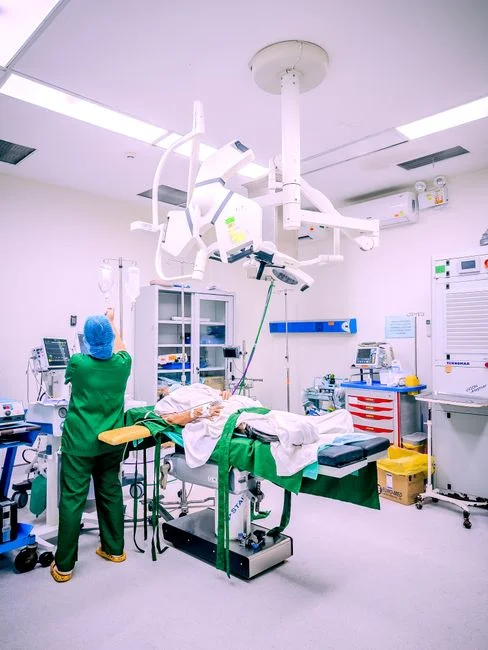
Each treatment function should be selected based on a measured influent problem rather than the label “hospital sewage treatment plant in Bulgaria.” Screening and solids removal protect downstream biological and membrane equipment; biological treatment addresses biodegradable organic loading; final disinfection addresses the specified microbiological outcome.
For a sewer-pretreatment route, the relevant package is often medical wastewater pretreatment rather than a complete biological plant. For an on-site route, compare an underground A/O package sewage treatment plant with an MBR wastewater treatment system. A/O biological contact oxidation should be assessed where its biological process and footprint fit the hydraulic and organic load. Submerged membrane separation should be evaluated where compact treatment, solids separation or reuse quality justifies the additional process requirements.
Do not treat the package description as evidence that every pathogen or pharmaceutical residue has been removed. The academic source identifies pharmaceuticals, radionuclides, metals, solvents, disinfectants and pathogens among hospital-wastewater constituents. The final train must follow the analytical results and the permit, including a dedicated disinfection step where required.
| Discharge route or influent problem | Governing rule or process option | What data settles it |
|---|---|---|
| Rags, grit, screenings or high solids | Specify pretreatment appropriate to the waste before biological or membrane equipment. | Separate stream flows, solids and grit observations, screening requirements and downstream equipment protection criteria. |
| Biodegradable organic loading | Evaluate A/O biological contact oxidation for the on-site biological stage. | BOD, COD, influent variability, retention requirements, peak flow and anticipated biological loading. |
| Compact solids separation or reuse quality justifies added process complexity | Evaluate an MBR route with the required membrane, solids-management and disinfection stages. | Flow and load profile, membrane design basis, cleaning method, solids handling, reuse criteria and operator competence. |
| Pathogens require a specified microbiological outcome | Add final disinfection based on the permit or reuse specification. | Coliform and other microbiological data, target residual or log-reduction requirement, contact conditions and monitoring method. |
| Pharmaceuticals, metals or other identified contaminants | Define dedicated treatment or controlled pretreatment after identifying the responsible stream. | Separate stream sampling, compound-specific analysis, removal objective, residual-handling route and discharge or reuse limits. |
Build the quote scope and acceptance criteria
A comparable quotation must state the design basis and performance boundaries, not just name a plant. Ask every supplier to identify design flow, peak-flow method, incoming wastewater basis, treatment objectives, guarantees, commissioning boundaries and excluded works. Require the packaged sewage treatment plant selection information to be applied to this hospital’s actual streams and permit rather than treated as a generic residential scope.
Ask for guarantees only after the required effluent values and sampling protocol are agreed. An unspecified reference to EU requirements is not an enforceable performance guarantee. The quotation should also identify site survey, civil works, power and control integration, hazardous-stream connections, sludge handling, sampling, training, spares, warranty and ongoing service support.
| Quote line item | Technical scope to specify | Red flags to check before signing |
|---|---|---|
| Design basis | Daily flow, peak-hour flow, wastewater characteristics, operating hours and included future or departmental changes. | Unstated design flow, use of bed counts instead of measured flow, or assumptions that exclude clinical peaks. |
| Treatment objectives | Named influent and effluent parameters, applicable permit or sewer conditions, sampling locations and acceptance method. | “Meets EU standards” without named values, no sampling method and no enforceable remedy for failure. |
| Hazardous-stream connections | Separate collection, pretreatment, isolation, monitoring and final disposition for laboratory, pharmacy, pathology and other segregated streams. | Uncontrolled connection of hazardous liquids to the shared plant or omission of discharge interlocks. |
| Civil and site works | Survey, excavation, foundations, pipework, access, drainage, power, controls, lifting and reinstatement scope. | Supply-only wording that leaves civil works or connections to the hospital. |
| Sludge and residuals | Generation, collection, storage, removal, treatment, transport and disposal responsibility. | No stated residual route or assumption that the equipment supplier owns regulated waste transport. |
| Commissioning and handover | Testing, training, operating documents, monitoring equipment, spares, warranty and service response. | Commissioning begins only after permit approval, or performance is not demonstrated under representative operating conditions. |
Before signature, freeze the acceptance test: confirm representative influent, operate at the agreed flow, sample at agreed points, use an agreed laboratory method, compare results with named criteria, and document deficiencies and retesting. Keep the WaterWorld infrastructure figures as background only; verify present sewer availability, receiving-plant capability and current requirements before relying on them.
Frequently Asked Questions
How should a hospital sewage treatment plant in Bulgaria be sized?
Size it from measured flow and contaminant data, not bed count or a generic hospital assumption. The academic source reports wastewater generation of 400–1200 L per bed per day for hospitals in developed countries, but the hospital’s own shift and peak flows must govern the design. Obtain flow records by shift, peak-hour monitoring, departmental wastewater profiles and analyses covering BOD, COD, TSS, total nitrogen, total phosphorus, pH, coliforms, pharmaceuticals and identified metals. Require each supplier to show how those inputs determine the selected treatment capacity.
How do I identify the applicable Bulgarian discharge and sewer-acceptance requirements?
Obtain the current project-specific Bulgarian wastewater permit and written sewer-acceptance conditions from the receiving authority. Ask for confirmation of whether the discharge is direct to a receiving water or indirect through a municipal sewer, and whether the location is regulated as a sensitive area. Do not rely on general sewer-coverage figures or historical treatment inventories to establish the applicable limits.
How should I compare an A/O package, MBR and medical wastewater pretreatment supplier?
Compare suppliers against the same project inputs and treatment functions. An A/O package must demonstrate biological and hydraulic adequacy; an MBR must also address membrane design, cleaning, solids separation and reuse quality; medical wastewater pretreatment must address the specific hazardous streams and contaminants. Require a stream-by-stream treatment map, exclusions, operating data references, commissioning plan and guarantees tied to named parameters rather than broad statements about compliance.
What should be included in a fixed-price quotation and performance test?
The quotation should define flow basis, treatment objectives, sampling protocol, supply and civil-work boundaries, hazardous-stream connections, sludge handling, commissioning, training, spares, warranty and exclusions. Without a project-specific quotation, request an itemised offer after supplying the permit, sewer conditions, flow data, wastewater analyses, site survey information and required reuse or discharge quality. The performance test should use agreed influent conditions, named parameters, defined sampling points, an accepted laboratory method and a documented remedy for non-compliance.