Start with the hospital's discharge route and receiving environment
Choose between hospital sewer pretreatment and an on-site hospital sewage treatment plant by first identifying the permitted discharge route, the receiving utility's acceptance conditions and the reuse objective. For a hospital wastewater project in Benin, local evidence identifies a contamination concern, but it does not establish current discharge limits or approval requirements. Treat the sewer and on-site routes as unconfirmed until the relevant authority provides written acceptance, permit and effluent-quality conditions.
University of Benin Teaching Hospital wastewater was investigated in Benin City, where researchers reported that discharge of hospital wastewater contaminated receiving water, soil and air and potentially created health hazards. That finding supports investigating the complete discharge chain; it does not prove that a particular discharge from another facility would fail a current legal standard. For guidance on sewer pretreatment compared with on-site hospital sewage treatment, use the same sequence: identify the route, obtain the governing conditions, then size the barrier.
Ask the municipality or other responsible authority for written confirmation of:
- Whether hospital sewage may enter the public sewer and whether equalization, screening, solids control or local pretreatment is mandatory.
- The applicable effluent limits, monitoring requirements and approval authority; none are identified in the available Benin evidence.
- Any restrictions on pharmaceutical, disinfectant, chemical or radioactive waste entering the sewer.
- Conditions for surface-water discharge, effluent reuse or irrigation, including any water-quality acceptance criteria.
If no sewer acceptance or direct-discharge approval is available in writing, do not select equipment on the assumption that approval will be granted. Resolve that commercial and compliance risk first.
Characterize the wastewater before sizing the plant
Medical wastewater treatment plants must not be sized from bed count alone. Establish measured average, peak and minimum flows, pollutant loads and prohibited-waste characteristics; hospital wastewater can contain medicines, disinfectants and hazardous chemical residues that affect both biological treatment and downstream sludge handling.
The Benin City study identified Klebsiella, Pseudomonas and Serratia as the most frequently distributed isolates in UBTH hospital wastewater. Use this finding to justify a sampling programme, not to assign a treatment capacity. Obtain current site measurements and records from the hospital's operations, clinical laboratory, pharmacy, housekeeping and maintenance teams.
Use the Benin sewage treatment plant sizing method alongside this site-data request. The table converts missing information into measurable procurement inputs.
| Discharge route or influent problem | Governing rule or process option | What data settles it |
|---|---|---|
| Sewer acceptance is unresolved | Municipal-sewer route remains conditional on written utility and authority acceptance | Written sewer-acceptance conditions, required pretreatment, discharge limits and responsible authority |
| Hydraulic load is not established | Size the selected plant from measured flows rather than bed count | Average, peak and minimum sewage flow rates, with the associated sampling periods |
| Organic and solids loads are uncertain | Define biological treatment and solids-removal duties from measured influent characteristics | Current and design BOD, COD and total suspended solids, plus soluble-solids and pH records |
| Special waste streams may be present | Determine whether segregation or local pretreatment is needed before the main treatment train | Pharmaceutical, disinfectant, chemical and radioactive waste characterization, including origin and disposal route |
| Reuse is intended | Set the biological and disinfection acceptance criteria before selecting the process | Intended reuse, receiving conditions and written water-quality criteria |
| Installation conditions may constrain the layout | Compare package and MBR configurations against the available site | Footprint, soil conditions, power supply and installation constraints |
Compare sewer pretreatment, A/O package treatment and MBR
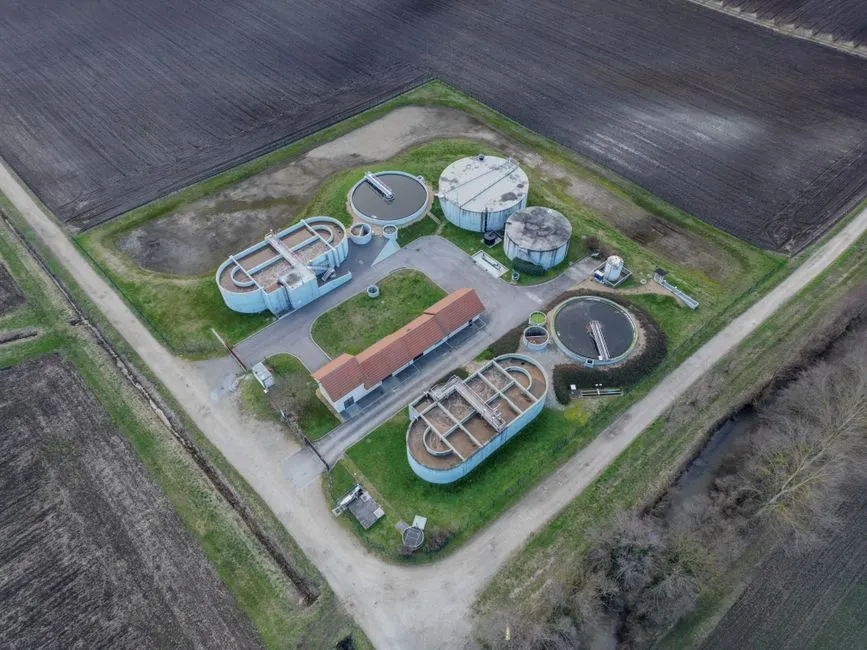
Select the route only after the discharge obligation is documented. Sewer pretreatment is appropriate when the receiving authority confirms acceptance and the pretreatment design protects both the sewer and downstream biological treatment; it should not be treated as an assumed discharge permission. Establishing the discharge route allows for a direct comparison of treatment technologies.
Use an underground A/O package sewage treatment plant as one on-site option, subject to verified flows, loads, footprint and treatment objectives. A/O biological contact oxidation provides a defined biological route, but the quotation must explain how the selected process handles the measured organic load, solids and the site's receiving requirements.
Use an MBR membrane bioreactor wastewater system when the project requires the separation and solids-control performance associated with that process and accepts the associated operating, cleaning and membrane-management obligations. The available Benin evidence does not justify a blanket preference for either route.
Compare the MBR versus package-plant hospital wastewater guidance against the hospital's own conditions, including:
- Verified flow and pollutant loads against the supplier's stated design basis.
- Whether the offer provides the required treatment stages and final disinfection.
- Civil works, utilities, controls, access, noise, odour and installation constraints.
- Duty, standby, maintenance, operator competence and membrane or replacement requirements where applicable.
- The disposal route for separated solids and the consequences for downstream treatment.
A defensible decision follows this sequence: obtain written route conditions; characterize the wastewater; define the treatment objective; solicit technically equivalent offers; then compare whole-life obligations. Do not let a quoted treatment capacity replace missing site data.
Design the biological and disinfection barriers for resistant bacteria
Biological treatment and final disinfection must be specified as one performance chain. Resistant-bacteria evidence shows why a biological stage alone cannot be accepted without a monitored disinfection barrier and effluent-sampling plan.
Over eight weeks of sampling, the academic study collected 245 Escherichia coli and 167 Staphylococcus aureus strains from untreated hospital wastewater, the receiving sewage-treatment-plant inlet and its post-treatment outlet. It reported multidrug-resistant E. coli types at the inlet and on three occasions at the outlet, and multidrug-resistant S. aureus types at the inlet and on two occasions at the outlet. These findings support a treatment train that addresses resistant organisms through biological treatment, effective final disinfection, containment and verified effluent quality; they do not establish that a particular indicator level will be achieved.
Require the supplier to identify:
- The treatment and disinfection stages intended to control resistant bacteria.
- Sampling points for untreated influent, process stages and final treated effluent.
- Test parameters, sampling frequency and acceptance criteria agreed with the buyer and relevant authority.
- Operational checks for the disinfection barrier and corrective-action arrangements when results are unsatisfactory.
- Commissioning samples that address the receiving route and any reuse objective.
The available evidence does not identify a current Benin-specific log-reduction requirement or applicable indicator limit. Require the authority or contract documents to provide that basis; do not convert the study's organism detections into an invented compliance threshold.
Build a quotation-ready scope and catch pre-signature gaps

Quotations must be comparable by defining the design basis, performance obligations and supply boundaries before comparing price. The table below should accompany every route proposal. Standardizing these requirements prevents costly scope gaps during installation.
| Quote line item | Technical scope to specify | Red flags to check before signing |
|---|---|---|
| Design basis and treatment objectives | Design flow, measured pollutant loads, discharge route, treatment stages and receiving or reuse criteria | Capacity based only on bed count, an unspecified average flow or generic hospital assumptions |
| Process and equipment duty | Process configuration, operating mode, duty and standby arrangements, final disinfection, controls and monitoring | No declared process basis, no effluent objective or treatment stages omitted from the offer |
| Installation and utilities | Footprint, civil works, power, drainage, access, installation, commissioning and connection boundaries | Civil works, cabling or utility connections excluded without clear responsibility and price |
| Performance acceptance | Sampling points, test parameters, acceptance criteria, commissioning protocol and acceptance samples | Acceptance based only on startup, visual inspection or unstated manufacturer's claims |
| Operations and maintenance | Operator training, manuals, routine maintenance, spare parts, warranty and technical support | No operator competency plan, maintenance schedule or clearly identified warranty scope |
| Sludge and residuals | Separation, storage, handling, transport and final disposal responsibilities | Sludge described as an incidental output with no destination, containment or responsibility assigned |
| Delivered and installed cost | Equipment, freight, insurance, installation, civils, utilities, commissioning, training, sludge disposal and annual O&M shown separately | A single headline price hides exclusions that materially change installed cost or operating obligations |
Before signature, reconcile every quotation against the same site-data schedule and written authority conditions. Record unresolved assumptions as exclusions requiring priced alternatives or written clarification. Award only after the selected supplier has closed the technical gaps or the parties have explicitly accepted them with defined responsibilities.
Frequently Asked Questions
How should a hospital sewage treatment plant in Benin be sized?
Size it from measured average, peak and minimum flows and verified pollutant loads, including BOD, COD and total suspended solids. Use hospital bed count only as supporting operational context. Ask the supplier to show the design flow, peak-load treatment and margin against the documented site data; do not accept a capacity figure without its basis.
Which route should be chosen: municipal sewer pretreatment or an on-site plant?
Choose municipal sewer pretreatment only after the responsible authority confirms in writing that hospital sewage will be accepted and states any required pretreatment or discharge conditions. Choose an on-site route when written discharge or reuse criteria cannot be met through the sewer, or when site constraints and verified loads support a complete local treatment train. Confirm permits before ordering either route.
When is an MBR system preferable to an A/O package treatment route?
Compare them using the same measured influent, final effluent objectives, footprint, utilities, civil works, operator requirements and residual-disposal conditions. An MBR should be selected where its defined separation and solids-control performance meets the documented requirement and the hospital can support its cleaning, membrane-management and maintenance obligations; otherwise, justify the A/O route against the same criteria.
What should a supplier quotation include for hospital wastewater treatment in Benin?
Request a total installed-cost scope separating equipment, freight, installation, civils, utilities, sludge disposal, commissioning, training and annual O&M. The offer should also identify design flow, process stages, sampling points, test parameters, acceptance criteria, operator training, spare parts, warranty and routine maintenance. Where no quotation exists, these are the inputs the buyer must obtain before comparing prices.