Hyundai's Ellabell permit expansion: the direct answer
Hyundai Motor Group Metaplant America's plant in Ellabell, Georgia, expanded its permitted wastewater output by about 500,000 gallons per day, roughly 1,900 m³, to support production of 200,000 vehicles, Georgia Public Broadcasting reported on October 22, 2026. For an auto plant, that step turns on three things: a pretreatment permit that fixes the metal limits the factory must meet before discharge, an on-site system that removes copper, zinc and paint solids reliably at peak hourly flow, and a receiving plant able to handle the remaining organic load. The North Bryan facility relies on a membrane bioreactor, which removes solids and biodegradable organics but not dissolved metals, so metals removal stays the factory's responsibility.
This guide turns that news into a procurement framework. It covers what changed at the Ellabell plant, why a 2024 discharge failure still shapes the site's permit, which paint-shop streams carry the metals load, how dissolved air flotation and lamella clarification compare for those streams, and how to size and budget a pretreatment train so that a supplier's quotation covers the right duty.
What changed at Ellabell in October 2026
The Metaplant started a second evening shift in early August 2026, which moved it toward an annual output of 200,000 vehicles. Georgia Public Broadcasting reports that the plant's permitted wastewater output rose by about half a million gallons a day to support that level. The company had earlier announced a target of up to 500,000 vehicles a year, and Hyundai CEO Jose Muñoz said over the summer that output could climb to 800,000. The plant now builds three models, two electric and one hybrid, and the company told the station the range could grow to ten.
Water moves with that ramp. According to the same report, the plant can draw more than 6 million gallons a day, about 22,700 m³, from four wells in Bryan and Bulloch counties that tap the Floridan aquifer. That arrangement holds until a regional surface water plan takes effect. Inside the factory, water finishes metals, purges sediment from equipment and cools machinery. The leftover stream goes to the North Bryan Water Reclamation Facility just across Interstate 16 and leaves through an underwater outfall into the Ogeechee River.
Read as a design number, 500,000 gallons a day is about 1,900 m³ a day, or 79 m³/h averaged around the clock. If the added volume is generated across two shifts, the average rises to roughly 118 m³/h during production hours, and hourly peaks will sit above that. The report gives no hourly profile, so treat these figures as arithmetic that shows why peak flow, not the daily average, decides equipment size.
Why the permit sets the design basis
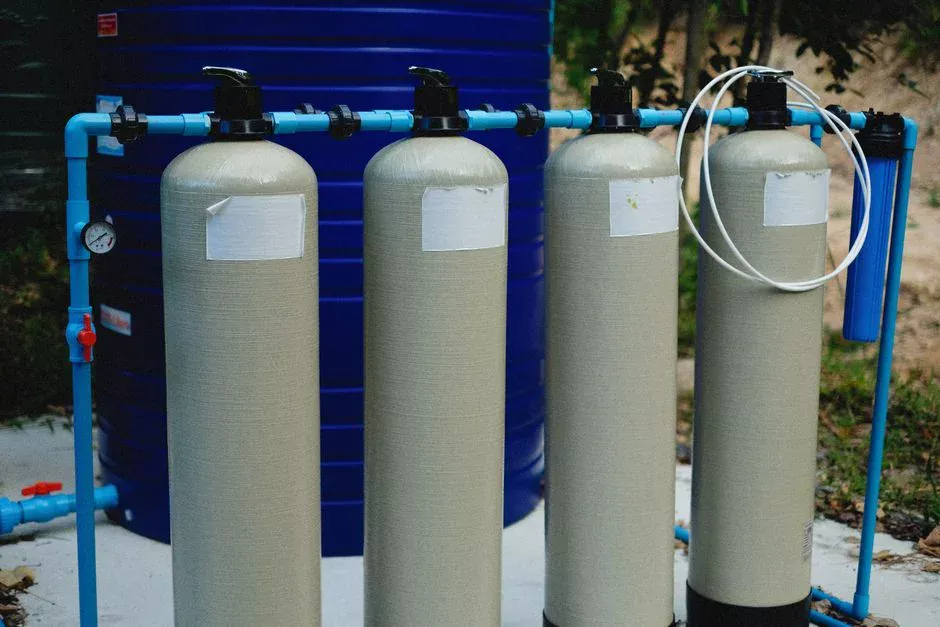
The site's history shows why the permit matters more than any single piece of equipment. Savannah stopped accepting the plant's wastewater on September 26, 2024, after city technicians found copper at more than six times the allowable limit and zinc at more than twice the limit, The Current reported in March 2025. More than 5.2 million gallons were then trucked to third-party plants in the last four months of 2024. In May 2025 the Georgia Environmental Protection Division fined Hyundai Motor Group Metaplant America $30,000 under a consent agreement that cited, among other things, discharging industrial wastewater to a publicly owned treatment works without an industrial pretreatment permit.
The long-term answer was a new county facility. The $129 million North Bryan County plant, which uses a membrane bioreactor, began full operation in the first week of February 2026 and pipes its discharge less than two miles to the Ogeechee. It is a state-permitted municipal facility that must report the quality of what it releases.
Under the US Environmental Protection Agency's General Pretreatment Regulations (40 CFR Part 403), an industrial user that sends process wastewater to a publicly owned treatment works must meet national prohibitions, any applicable categorical standards, and local limits set by the treatment plant. Many automotive metal-finishing operations fall under the Metal Finishing Effluent Guidelines (40 CFR Part 433). The result is a permit that fixes pollutant limits, sampling points, self-monitoring duties and, as at Ellabell, a maximum daily flow.
For a supplier, the first document to request is that permit with its local limits table, not a flow figure. The limits show which pollutants need removal, whether they are analyzed as total or dissolved fractions, and how much margin the plant needs for analytical variability. The flow limit then shows how much water the plant may send, which is why water conservation inside the factory and equalization outside it both have value.
Which streams carry the metals load
The public reporting on Ellabell does not include a stream-by-stream breakdown, so the list below describes the streams that typically dominate the load at an automotive assembly site. Verify it by sampling each stream at its manhole or collection tank before choosing equipment.
- Body pretreatment rinse water. Conversion coating before painting leaves rinse water that zinc phosphate chemistries load with zinc and, in some older formulations, nickel and fluoride. Newer zirconium-based coatings reduce that load but not the need for rinse treatment.
- E-coat drag-out and rinses. Electrodeposition paint leaves paint solids and trace metals in rinse water that can be difficult to settle without coagulation.
- Paint booth circulation water. Overspray is captured in circulating water that is periodically dumped, producing a batch high in chemical oxygen demand, solvents and paint sludge.
- Final body rinse and general cleaning. Wash water from the end of the line and from equipment cleaning adds detergents, oils and suspended solids.
- Non-process streams. Cooling tower blowdown, boiler blowdown and compressor condensate rarely need metals treatment and are best kept out of the paint-shop train so they do not inflate its size.
Two properties of these streams drive cost more than volume does. The first is the split between particulate and dissolved metal. Cleaners that contain chelating agents keep copper and zinc in solution, and a simple pH adjustment will not capture that fraction. The second is batch behavior. A dumped booth tank or an e-coat rinse change releases its load in a short window, so the plant either equalizes that surge or pays for equipment sized to treat it as it arrives.
For a wider view of precipitation, adsorption, ion exchange and membrane options, our comparison of heavy metals removal methods sets out where each family fits.
DAF or lamella clarifier for metals and paint solids
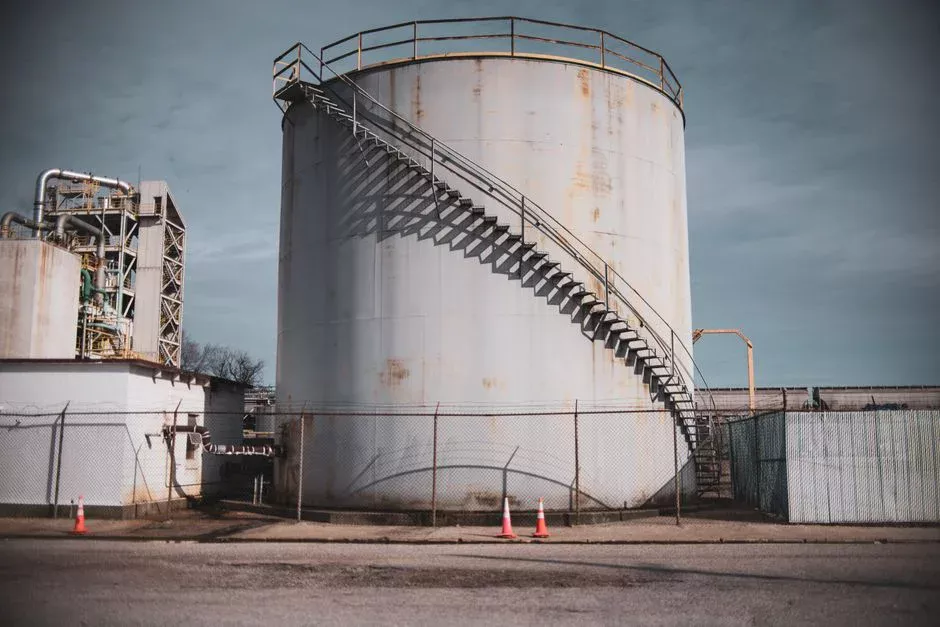
Both routes start the same way. The stream is equalized, its pH is raised so that copper and zinc form hydroxide solids, and a coagulant and polymer gather those solids into floc. The choice comes next: float the floc to the surface with micro-bubbles, or let it settle onto inclined plates.
A dissolved air flotation system suits paint-shop water because that water contains paint solids, oils and surfactants, all of which attach readily to bubbles. HydropureWater DAF units produce bubbles of 20–60 μm and come in thirteen models from 4 to 300 m³/h, so a plant can run several in parallel and take one offline for maintenance. Flotation also lifts light paint floc that would settle slowly by gravity, and the recycle flow on a 90–100 m³/h unit is about 30–35 m³/h.
A lamella clarifier suits larger flows with dense, settleable floc. Inclined plates at 60° give a surface loading rate of 20–40 m/h, and sludge recirculation cuts coagulant use by 10–30%. Each unit covers 50–50,000 m³/day and delivers thickened sludge that can go straight to dewatering. For metal hydroxide floc, design near the lower end of the loading range.
| Criterion | Dissolved air flotation | Lamella clarifier |
|---|---|---|
| Best fit | Paint solids, oils, surfactants, light floc | Dense metal floc, steady high flow |
| Capacity per unit | 4–300 m³/h | 50–50,000 m³/day |
| Batch dumps | Good with equalization; quick start-up | Good; sludge blanket absorbs shock loads |
| Sludge | Float layer, thickened before pressing | Thickened underflow, 30–550 g/L |
| Watch item | Foaming from surfactants; recycle pump power | Design loading; plate cleaning |
What the membrane bioreactor does and does not remove
The North Bryan plant's membrane bioreactor, or MBR, combines activated sludge biology with submerged membrane filtration. The biology degrades organic compounds from paints and cleaners, and the membranes retain suspended solids and biomass, so the effluent is clear and low in turbidity. Ogeechee Riverkeeper, whose executive director Damon Mullis has monitored the river during the changeover, described the standard that discharge should meet in The Current: no measurable effect.
An MBR is not a barrier to dissolved metals, however. A membrane pore of 0.1–0.4 μm stops particles and bacteria, not copper or zinc ions in solution. That is why the receiving plant's permit keeps metals limits on its industrial users, and why a factory cannot depend on the county plant to solve a paint-shop metals problem. An MBR package from 10 to 2,000 m³/day makes sense inside the factory only when the goal is reuse of biologically treated water, for example flushing or cooling make-up after polishing, and after metals have been removed upstream.
Sizing and budget logic for a supplier quotation
A supplier cannot price a pretreatment system from a daily flow. Four inputs fix the duty: the average and peak hourly flow after equalization, the concentration of each regulated pollutant, the limit each must reach, and the volume and class of sludge the plant can store and dispose of. The worked example below uses the scale implied by the Ellabell news and is illustrative only.
Take a production-hour average of 120 m³/h and a batch-dump peak of 2.5 times that, or 300 m³/h. Four hours of equalization at the average flow means about 480 m³ of storage. A one-hour dump at 300 m³/h can then be released over two hours at about 150 m³/h, which uses 150 m³ of that volume. At 150 m³/h, one DAF unit rated 125–150 m³/h, or two 90–100 m³/h units for redundancy, covers the duty, and the lamella option needs about 7.5 m² of plate area at 20 m/h. Equalization has turned a 300 m³/h problem into a 150 m³/h one, and that reduction usually costs less in concrete than it would in equipment.
Budgets then split into lines that behave differently as the project grows:
- Civil works and equalization. Scale with tank volume and with whether the site is a retrofit with limited footprint.
- Process equipment. Reaction tanks, mixers, the DAF or lamella units and sludge pumps scale with peak hourly flow.
- Chemical systems. Dosing skids for alkali, acid, coagulant and polymer scale with dose rates, which follow the dissolved-metal fraction more than the flow.
- Sludge handling. A thickening tank and filter press scale with dry solids produced; plate and frame presses from 1 to 500 m² of filtration area cover most plant sizes.
- Controls and compliance. Continuous pH and flow measurement, sampling stations and reporting software are a small share of capital but a large share of audit risk if under-specified.
Operating cost concentrates in chemicals and sludge disposal. Every extra kilogram of coagulant or lime creates more wet sludge, so a design that captures dissolved metals with the correct precipitant, rather than by overdosing, lowers both lines at once. Power, labor and compliance testing make up most of the remainder. Materials also matter: a stream with low pH or elevated chloride may justify stainless steel or lined equipment in place of carbon steel.
| Tier | Typical peak flow | Usual configuration | Budget emphasis |
|---|---|---|---|
| Small | Up to 50 m³/h | One or two package DAF units, batch treatment | Equipment and sludge removal |
| Medium | 50–150 m³/h | Equalization, parallel DAF units or one lamella clarifier | Civil works and chemicals |
| Large | Above 150 m³/h | Multi-train lamella clarification, on-site dewatering, full SCADA | Civil works, redundancy, sludge route |
To turn this into a firm price, send four items: the permit's limits table, a stream-by-stream lab analysis with total and dissolved metals, a 24-hour flow profile that captures batch dumps, and the sludge disposal route available at the site. With flow, water quality and targets in hand, request a quotation through /request-quote.html and each line of the budget can be sized to the duty rather than to a daily average. More wastewater projects from across the country are collected on our United States location page.
Frequently Asked Questions
What does Hyundai's permit expansion mean for another auto plant's wastewater budget?
It shows that production increases and permitted discharge move together in Georgia. A plant planning a second shift should ask its treatment utility early whether the current flow limit covers the added volume, because a limit increase requires monitoring data and, where metals have been a problem, a demonstrated pretreatment performance. Budgeting for that review before the shift starts avoids the cost of emergency trucking.
Should an auto plant use DAF or a lamella clarifier for paint-shop wastewater?
Choose DAF when the stream carries paint solids, oils or surfactants or when loads arrive in batches, and choose a lamella clarifier when the flow is large and steady and the floc settles well. Plants with both conditions often equalize first and use DAF on the paint-shop streams while keeping non-process water out of the train. Jar testing on the actual stream settles the question.
Does an MBR remove copper and zinc from auto plant wastewater?
Not reliably. MBR membranes stop suspended solids and biomass, so they retain metals that have already been precipitated, but dissolved copper and zinc pass through. Metals must be precipitated and separated upstream, which is why publicly owned treatment plants place metals limits on industrial users even when they run membrane bioreactors.
What should a plant send to get a firm pretreatment system quotation?
Send the pretreatment permit with its local limits, lab results for each stream including total and dissolved metals, a flow profile that shows peak hours, and the available footprint, power and sludge route. A supplier needs those inputs to size equalization, select DAF or lamella separation, and estimate chemical and sludge quantities with confidence.