Define the Belarusian project route before selecting equipment
For a sewage treatment project in Belarus, choose an underground A/O package plant when a compact buried installation and conventional biological treatment suit the site, and consider an MBR system when effluent quality, reuse, or footprint constraints dominate the decision. Baranovichi demonstrates the potential value of biogas recovery: the EBRD reports that its wastewater treatment plant became 70 percent self-sufficient in operating energy after biogas recovery. That project-specific result does not prescribe equipment for other sites. Final selection requires design and peak flow, wastewater analysis, discharge route, footprint, utilities, and reuse requirements.
Identify the application: a residence, hotel, hospital, factory, rural community, or municipal catchment. Each has a different flow pattern, wastewater composition, operating responsibility, and method for establishing capacity. Record the current and planned occupancy, design flow, peak-hour flow, and any expansion allowance before comparing equipment quotations.
Identify the discharge route and governing requirements. Request the applicable local permit conditions, receiving-water category, and any client-specified EU or local standards. The available Belarus evidence does not establish a universal Belarusian effluent limit, so neither an A/O package plant nor an MBR should be described as compliant without a site-specific permit basis.
Available land, soil and groundwater conditions, groundwater level, frost depth, electricity availability, backup-power expectations, and operator skill levels also affect feasibility. A buried package plant may simplify surface use, but excavation, access, aeration, odor control, and buried-system maintenance remain part of the engineering scope.
The Baranovichi facility is evidence that energy recovery can be relevant in Belarus, not proof that every project should include biogas equipment. Its treatment train, organic load, gas production, local heat demand, and operational arrangements would need separate evaluation. For broader context on treatment routes, use the comparison of sewer, A/O, and MBR sewage options.
Compare the treatment options against project conditions
Base the route on project constraints, not on equipment type alone. An underground A/O package sewage treatment plant is a candidate where the project needs a compact installed treatment train and the wastewater can be handled by a biological process without more demanding solids separation or polishing. An MBR membrane bioreactor wastewater system becomes more relevant when the specified effluent or reuse condition requires membrane separation, or when available footprint constrains the biological and solids-handling stages.
| Discharge route or influent problem | Governing rule or process option | What data settles it |
|---|---|---|
| Buried installation for a residence, hotel, or small decentralized development | Evaluate an underground A/O package plant as the compact biological route, subject to site and permit verification | Design and peak flow, available footprint, excavation conditions, groundwater level, frost depth, effluent targets, and operator access requirements |
| Constrained footprint or a client-specified reuse quality | Evaluate an MBR system and define the required membrane separation and polishing scope | Influent COD, BOD, TSS, nutrients, pH, oil and grease, temperature, receiving-water category, reuse destination, and applicable permit conditions |
| Industrial wastewater containing rags, plastics, fibrous debris, or high suspended-solids loads | Protect the selected biological system with appropriate pretreatment rather than assuming the core treatment plant will accept the full load | Representative influent analysis, screening and solids inventory, operating pattern, waste destinations, and maintenance access |
| Energy use is material to the project | Ask whether energy recovery or biogas generation is technically justified; do not infer it from a general A/O or MBR selection | Organic load, electricity and heat demand, gas potential, safety requirements, local infrastructure, ownership, and operating responsibility |
The EBRD reports that Baranovichi achieved 70 percent operating-energy self-sufficiency through biogas recovery. Use that finding to frame a project question: Is energy recovery a required objective? It does not establish whether A/O or MBR is the correct core equipment for a new Belarusian site.
Build the treatment train around the wastewater analysis
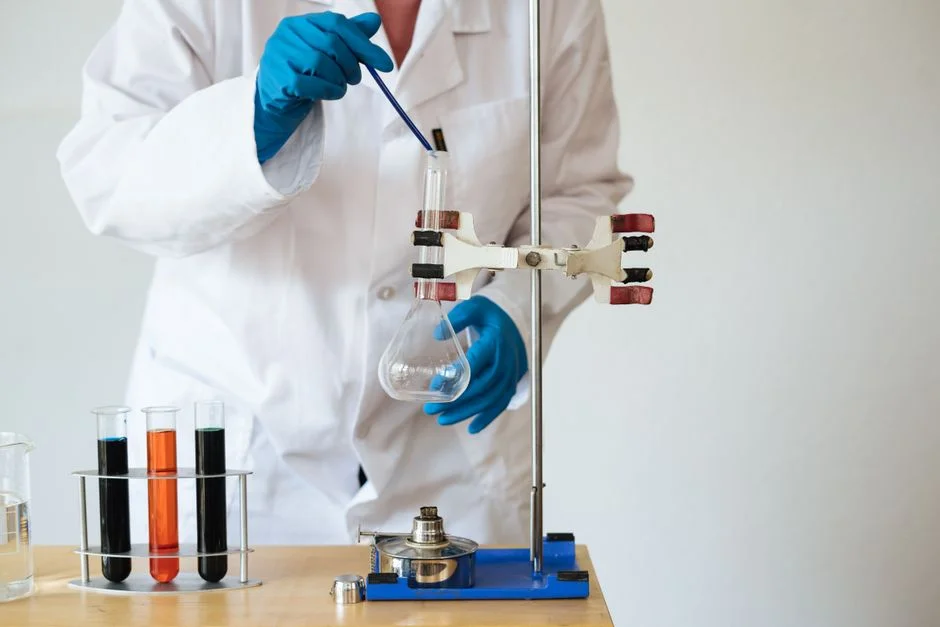
Do not confirm a biological process until the bidder has reviewed representative wastewater data. Request COD, BOD, TSS, suspended solids, nutrients, pH, oil and grease, temperature, and contaminant analysis relevant to industrial inputs. Require the bidder to state which parameter governs each equipment duty and which characteristic could cause the proposed process to fail.
For wastewater containing rags, plastics, fibrous debris, or high suspended-solids loads, add protected headworks to the scope. The GX rotary mechanical bar screen is continuous-duty equipment for municipal and industrial headworks, making it relevant for comparison where such debris is present. Require the bidder to define screen aperture, duty basis, extracted-material handling, and whether pretreatment is outside the main package.
Confirm disinfection against the effluent specification and receiving-water requirements. The treatment technology alone does not establish the compliance outcome; the quotation should identify the disinfection route, controls, chemical or physical requirements, and performance test.
Define sludge handling before comparing complete systems. Request expected quantity, characteristics, dewatering acceptance criteria, selected separation method, destination, and responsible operator. A plate-frame filter press may be quoted as an option, but it should not be treated as a universal default. Research on a Minsk plant treats sewage sludge as a circular-economy raw material while identifying storage as the dominant local technology; that supports asking about beneficial-use routes rather than assuming storage is the only option.
Turn the selected route into a comparable quotation
Issue one structured RFQ that requires every bidder to populate the same design basis, inclusions, exclusions, and acceptance terms. Require design flow, peak flow, influent design loads, effluent targets, treatment stages, included duty, utilities, and operating assumptions in the same format. The prefabricated wastewater plant specifications can support the technical review, but the issued RFQ—not a generic guide—must define the buyer’s project basis.
| Quote line item | Technical scope to specify | Red flags to check before signing |
|---|---|---|
| Core treatment equipment | Design and peak flow, influent loads, effluent targets, treatment stages, selected A/O or MBR route, included duty, and process drawings | Unstated flow basis, omitted peak condition, generic “standard package” wording, or performance claims without a defined test |
| Civil works and installation | Excavation, foundations, backfill, access, lifting, pipework connections, and site restoration | Equipment price presented as an installed price without defining the civil boundary |
| Electrical, controls, and utilities | Pumps, aeration, disinfection, controls, alarms, chemical dosing, power supply, backup-power interfaces, and remote monitoring | Exclusion of local electrical works, site cables, power supply upgrades, or PLC and alarm functions |
| Sludge handling | Screenings, excess sludge, thickening, separation method, dewatering criteria, containers or removal, destination, and cleaning cycle | No route for screenings or sludge, or an undefined assumption that the owner will dispose of the residual stream |
| Commissioning and obligations | Factory tests, delivery, installation checks, start-up, biological acclimation, training, documents, approvals support, spares, and maintenance | Commissioning excluded from price, biological start-up charged as an extra, or permits assigned to the buyer without coordination |
| Energy and recovered-gas scope | Specific energy consumption, aeration and pumping assumptions, monitoring, and feasibility of biogas or energy recovery | Energy guarantees made without load data, or an assumed energy benefit based on another project |
Separate the equipment price from civil works, electrical work, installation, commissioning, training, remote monitoring, sludge removal, chemicals, utilities, spares, and maintenance. Also define the boundary for membranes, screens, dosing equipment, pumps, aeration, disinfection, controls, local approvals, and performance guarantees. Ask for energy-use information and recovered-gas feasibility; the EBRD’s Baranovichi loan and grant figures are project financing facts, not Belarusian equipment-price benchmarks.
Define acceptance, commissioning, and supplier responsibilities
Make acceptance a sequence, not a general warranty sentence: factory tests, delivery inspection, site installation checks, hydraulic commissioning, biological start-up, and performance testing. Require proposed test protocols and pass/fail criteria for design flow, peak operation, treated-water quality, automatic controls, alarms, and system availability.
Assign every deliverable. State who provides wastewater analysis, site utilities, civil foundations, electrical connections, permits and approvals support, operator training, remote monitoring, first-year spare parts, consumables, and routine maintenance. Include the test method, sample point, operating condition, correction for sampling or analysis uncertainty, and remedy for failure. Without those details, bidders may offer incompatible interpretations of “acceptance.”
For an MBR system, allocate membrane cleaning, replacement, membrane integrity or performance-restoration checks, and responsibility for damage or fouling outside the agreed operating envelope. For an A/O package plant, address access for maintenance, aeration performance, odor control, buried-installation maintenance, and site restoration. Require operating manuals, as-built drawings, control narratives, approved spare-parts lists, and training records before final acceptance.
Further Reading
Frequently Asked Questions
How much does a sewage treatment plant in Belarus cost?
Request itemized quotations against one defined RFQ rather than compare headline prices. Require separate prices for the selected A/O package plant or MBR system, civil works, installation, electrical connections, commissioning, biological start-up, training, remote monitoring, sludge handling, consumables, spares, maintenance, and local support. Ask each bidder to state currency, validity, payment milestones, exclusions, and optional alternatives. No supported Belarus market price was identified, so a defensible budget cannot be stated without project-specific quotations.
How should a supplier be selected for an A/O package plant or MBR system?
Evaluate suppliers against the same evidence package: design-basis compliance, proposed process, included duty, factory and site test protocols, guarantee method, membrane or A/O maintenance responsibilities, local commissioning support, documentation, spare-parts availability, and references for comparable wastewater conditions. Request the wastewater analysis and site constraints that support each reference. Do not treat a generic installation list as proof that the supplier can meet the project’s effluent or reuse requirements.
Which wastewater parameters should be supplied before choosing A/O or MBR?
Provide representative COD, BOD, TSS, suspended solids, nutrients, pH, oil and grease, temperature, and industrial contaminant results together with design flow, peak-hour flow, occupancy, and the wastewater operating pattern. Also state the discharge route and permit or reuse targets. Ask each bidder to map the data to equipment duties and identify any pretreatment, disinfection, or solids-handling measures required before core biological treatment.
What should be accepted before the treatment plant is handed over?
Require documented factory tests, installation inspection, hydraulic commissioning, biological start-up, and a performance test under the agreed flow and wastewater conditions. The acceptance schedule should define sampling points and methods for flow and treated-water quality, automatic-control and alarm checks, peak-operation behavior, and any availability criterion. Do not sign final acceptance until agreed documentation, operator training, spares, permits support, and maintenance responsibilities are complete.