

Establish the discharge route and compliance boundary
The correct choice for a Bahamian industrial project is an effluent treatment train tied to a confirmed discharge route, rather than a standalone DAF machine. DAF is relevant where wastewater contains suspended solids, oil and grease, FOG, or colloidal material; screens, equalization, pH control, coagulation, and biological treatment may also be required. Final design requires the applicable Bahamian permit conditions, wastewater analysis, peak flow, and sludge-disposal data, as no Bahamas-specific discharge limit can be assumed from available evidence.
Begin by recording the exact discharge point: direct discharge to a receiving water, discharge to a sewer, permitted reuse, or a combination. The owner should provide the discharge consent, applicable permit, receiving-water or sewer information, required effluent quality, and the identity of the responsible authority. The wider Caribbean principle is that each Contracting Party should adopt effluent and water-quality standards adapted to national circumstances; this does not establish a Bahamas-specific numerical limit.
Divide responsibilities explicitly. The equipment supplier should design the offered process against agreed wastewater and flow data. The facility owner must supply the flow record, representative wastewater analysis, permit information, and receiving-water data. Use the best DAF unit selection framework as a commercial comparison reference, not as a substitute for the permit.
Create a compliance evidence register before quotation. For each requirement, record the permit or consent, applicable parameter, laboratory method, sampling point, required frequency, responsible party, and evidence location. A permit condition should be treated as a design input only after its scope, authority, and effective status have been verified.
Match the wastewater problem to the required treatment function
Treatment functions should be selected based on specific influent characteristics before choosing a DAF model. While suspended solids, oil and grease, FOG, and colloidal material may justify flotation, soluble or biodegradable organic load generally requires biological treatment or other downstream processes. The DAF system engineering specifications provide a basis for comparing removal duties with the treatment objective.
| Discharge route or influent problem | Governing rule or process option | What data settles it |
|---|---|---|
| Direct discharge or permitted reuse | Define the final treatment duty from the applicable Bahamian permit or reuse specification before selecting final equipment. | Permit or consent, receiving-water data, required effluent quality, sampling method and reuse criteria. |
| High suspended solids or colloidal material | Consider screening, equalization and DAF, with coagulant and flocculant dosing where required by the wastewater. | Representative TSS, turbidity, particle characteristics, flow record and jar-test results. |
| Oil and grease or FOG | Include appropriate oil and grease removal, FOG interception and solids protection before downstream treatment. | Oil and grease analysis, free versus emulsified oil observations, FOG source and separation test results. |
| High COD or BOD5 load | Do not assume DAF alone provides final compliance; evaluate biological treatment and the required downstream separation. | COD, BOD5, temperature, nutrient data, biodegradability information and treatment objective. |
| High pH, TDS or variable industrial streams | Consider pH adjustment and controls; TDS may require a different downstream process and cannot be established from DAF performance alone. | pH, TDS, conductivity, stream segregation data and chemical-use records. |
Dairy sector guidance describes screening, equalization, grease and solids separation, pH adjustment, chemical dosing, DAF, and downstream biological treatment. That sequence is relevant only where the Bahamian facility has comparable contaminants and loadings. The same source reports dairy water use of 1.3–3.2 litres per kilogram of received milk, reaching as high as 10 litres per kilogram, and states that 80–95% of consumed water generally becomes final effluent. These are dairy-sector observations from CondorChem, not Bahamas design criteria.
Request representative results for COD, BOD5, TSS, oil and grease, pH, turbidity, and TDS, together with peak and shock-load observations. A single clean sample does not define the duty. Where chemical dosing is proposed, include an automatic chemical dosing system in the review only after the required coagulant, flocculant, dosage range, and control response have been established from testing.
Size the DAF system around peak flow and operating loads

Sizing must be based on the governing flow event rather than the daily average. Ask the owner or process engineer for average flow, peak flow, peak duration, operating schedule, batch discharges, future expansion criteria, and the return period to be used for design. Ask each bidder to state whether its quoted capacity applies to the selected hydraulic peak, a nominated design flow, or an operating envelope.
Require the equipment scope to address influent variability, shock loads, and time lags in the control philosophy. A Research Square preprint on an industrial DAF plant used COD, pH, turbidity, and TDS from equalization-tank effluent as model inputs and found that static and dynamic models behaved differently under shock loads; because this is an unreviewed preprint, it should guide monitoring questions rather than serve as a performance guarantee.
Do not infer Bahamian flow requirements from dairy-sector figures or broader regional wastewater material. The defensible sizing basis is the site’s own flow record, verified process assumptions, and the treatment objective. Use the DAF operating-cost breakdown to frame the operating-cost question only after suppliers provide the design basis, chemical assumptions, power demand, and sludge-handling scope.
Build a comparable RFQ and acceptance plan
Every supplier must quote against the same wastewater basis and design flow to ensure parity. The technical schedule should state the treatment objective, process diagram, equipment list, materials, controls, utility demand, and battery limits. Include the industrial dissolved air flotation system only as one defined element of the complete effluent treatment train.
| Quote line item | Technical scope to specify | Red flags to check before signing |
|---|---|---|
| Design basis and process performance | Design flow, wastewater analysis, operating schedule, treatment objective, process diagram and performance test method. | No wastewater analysis, nominal flow without peak basis, or an unspecified removal percentage. |
| DAF, pretreatment and downstream equipment | Screens, equalization tank, oil and grease removal, FOG interception, DAF, chemical dosing, biological treatment or tertiary filtration where justified. | DAF offered as the final treatment step without demonstrating that it meets the agreed duty. |
| Civil interfaces and installation | Excavation, foundations, tank interfaces, piping, valves, access, drainage, coatings and connections to existing services. | Exclusions leave the supplier’s scope disconnected from the owner’s works or site utilities. |
| Electrical and controls | Power supply, panels, instruments, alarms, interlocks, data logging and emergency bypass responsibility. | No controls narrative, unclear electrical boundary or no defined response to high level, pump failure or power loss. |
| Chemical storage and dosing | Reagents, tanks, containment, bunding, metering, duty/standby arrangement and operator controls. | No chemical consumption basis, storage detail or controls for changing wastewater conditions. |
| Commissioning and acceptance | Startup chemicals, operator training, calibration, FAT/SAT protocol, sampling, laboratory methods and stable-operation demonstration. | Commissioning ends at startup without documented flow, analyses, skimming, controls and alarms. |
| Sludge and residuals | Skimmings and sludge characteristics, collection, storage, removal, destination and frequency. | No solids balance, no disposal route, or responsibility for residuals left with the owner. |
| Warranty and spares | Coverage boundaries, response obligations, critical spares, consumables and recommended maintenance schedule. | Warranty excludes site conditions, chemicals, electrical work or commissioning without stating those exclusions. |
Acceptance should be demonstrated through documented flow, treated-water analyses, skimming performance, control response, alarms, and stable operation under the agreed test conditions. Define sample points, analytical methods, and acceptance calculations before signature. A supplier that omits the wastewater basis, solids balance, duty test, drawings, FAT/SAT protocol, warranty boundary, or local commissioning responsibility has not supplied a comparable offer.
Plan commissioning, monitoring and sludge handling
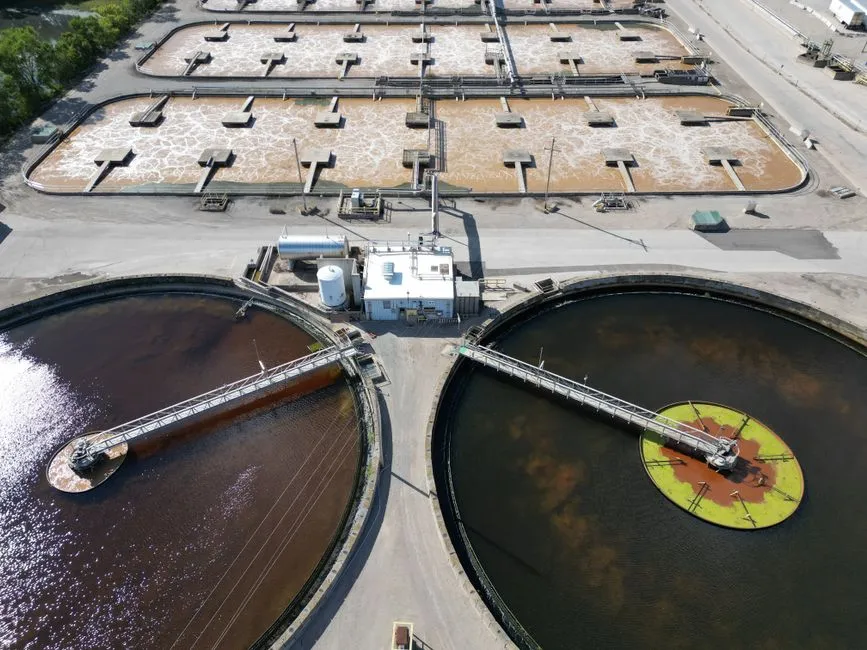
The verification sequence must be agreed upon before contract signature: confirm installation against approved drawings; verify instrument calibration; establish baseline samples; run the agreed duty test; sample at defined points using agreed methods; reconcile flow and solids; and demonstrate controls, alarms, and stable operation. Assign the owner, supplier, and laboratory responsibilities in writing.
For monitoring-sensitive duties, include COD, pH, turbidity, and TDS where relevant, while recognizing that the cited DAF modeling study is a preprint and not proof of site performance. Configure data logging sufficiently to identify time lags, chemical-dose changes, and responses to shock loads.
Include startup chemicals, operator training, maintenance schedules, critical spares, emergency bypass controls, and the route for separated sludge in the plan. For a DAF-centered train, the operator must understand how recovered oil, FOG, float, and bottom solids are collected, stored, and removed. The industrial DAF troubleshooting guidance can inform the preventive-maintenance checklist, but site acceptance remains the governing test.
Further Reading
Frequently Asked Questions
What information is needed before choosing the size of a DAF system?
Request a representative wastewater analysis and a flow record covering average flow, peak flow, peak duration, operating schedule, and future expansion criteria. Also obtain COD, BOD5, TSS, oil and grease, pH, turbidity, and TDS results, plus observations of shock loads. Without these inputs, a DAF model cannot be sized or compared reliably.
When should DAF be followed by biological treatment or tertiary filtration?
DAF should not automatically be the final step. Require further biological treatment when the objective includes removal of biodegradable organic load and the wastewater analysis shows that floatation alone will not achieve the agreed result. Require tertiary filtration when the specified effluent or reuse target requires solids removal beyond the verified DAF duty. The permit, reuse requirement, and wastewater analysis determine which option is needed.
What should a complete industrial effluent plant quotation include?
Ask each supplier to price the agreed wastewater basis, DAF and all required pretreatment, biological or tertiary stages, civil interfaces, installation, electrical work, controls, chemical storage and dosing, commissioning, training, spares, sludge removal, and warranty as separate lines. Also request a complete DAF operating-cost breakdown based on stated assumptions. No reliable price can be given until the design flow, wastewater analysis, treatment objective, utilities, and site interfaces are defined.
How should Bahamian discharge compliance be verified?
Identify the exact discharge route and responsible authority, then obtain the applicable permit, discharge consent, required parameters, sampling methods, and monitoring frequency. Confirm who supplies laboratory and flow evidence. Do not substitute a sewer-discharge assumption for a direct-discharge permit or treat a regional principle as a Bahamas-specific numerical limit; compliance is demonstrated through the permit route and documented site results.