What Capacity Is Actually Known for CATL in Germany?
No verified ZLD capacity is publicly established for CATL’s German battery gigafactory. The only specific flow in the supplied evidence is 3.0 m³/h from a 2025 study that modeled a separate four-line German battery plant with very intermittent cleaning wastewater; it is not CATL operating data and should not be used as a transfer flow. CATL Arnstadt’s verified project disclosure confirms waste-heat recovery and water recycling, but gives no wastewater flow, NMP load, or ZLD configuration. Capacity must therefore be sized from CATL-specific peak-batch flows, stream chemistry, NMP recovery, water-reuse targets, pretreatment limits, concentrate mass, and residue requirements.
The available evidence has three distinct classes, and they should not be merged into one capacity statement.
| Evidence class | What the supplied research establishes | Permitted engineering use |
|---|---|---|
| Verified CATL facility facts | Exyte reported that CATL Arnstadt began first test production in December 2022 and completed subsequent production tests by the end of 2024. The design incorporated waste-heat recovery and water recycling. | Confirms project history and design features; does not establish a wastewater treatment flow. |
| Modeled reference-plant values | A 2025 Communications Earth & Environment study modeled a four-line German battery factory with 3.0 m³/h of very intermittent cleaning wastewater and 25% NMP in vacuum-drying cold-trap wastewater. | Supports feasibility and stream-segregation principles; the flow cannot be transferred to CATL without source-specific measurements. |
| Required CATL design inputs | Source flows, batch volumes, cleaning schedules, chemistry, production ramp, planned dry-room processes, water-reuse targets, recovery performance and residue requirements remain unresolved. | These records form the mass balance, equipment duty definitions, procurement basis and permit-change assessment. |
The Exyte disclosure does not establish future expansion wastewater flow, NMP load or treatment configuration. Water recycling confirms that reuse was part of the design intent, not its hydraulic capacity. For a defensible expansion brief, the CATL German expansion wastewater due-diligence guide should keep source evidence, reference-plant assumptions and proposed design inputs in separate documents.
Why the 3.0 m³/h Reference Flow Cannot Size CATL’s ZLD Unit
The 3.0 m³/h flow demonstrates that very low-volume ZLD may be technically feasible, but it does not define the receiving, treatment, evaporation or crystallization capacity required at CATL. A plant flow is not a ZLD design flow unless it describes the stream entering the specified treatment boundary at its actual peak and composition.
In the 2025 Communications Earth & Environment model, the 3.0 m³/h wastewater flow applied to four production lines and occurred very intermittently because of cleaning. The modeled production context was 136 prismatic cells per minute, approximately 32 GWh/a for NMC811 and approximately 28 GWh/a for LFP. Those production and flow values belong to the modeled reference plant; they are not measurements from CATL Arnstadt and do not define its future expansion.
ZLD feasibility depends on two questions that a single flow cannot answer: how much water can the plant receive, and how much dissolved and undissolved mass remains after source control, recovery, segregation and pretreatment. A batch containing little water but a substantial solvent or salt load can impose a larger recovery or residue duty than its hydraulic volume suggests. Conversely, a larger dilute flow can have a lower thermal duty after effective membrane recovery.
The CATL design file must therefore include:
- maximum-hour flow and annual wastewater generation;
- cleaning-event volumes, frequency, duration and sequencing;
- chemistry for each source, including NMP, COD, TOC, conductivity, metals, fluoride, suspended solids, oils and pH;
- production ramp and the number and type of future lines;
- planned dry-room processes and water-reuse targets; and
- normal, startup, shutdown and abnormal-operation scenarios.
Intermittent service also affects equipment selection. A fixed-flow biological or membrane train may experience long idle periods followed by cleaning peaks or slug loads. Specify automatic level control, batch recognition, diversion, slug-loading response and high-low alarms as functional requirements. The treatment system should be able to receive a credible batch without starving downstream processes or applying a shock load directly to membranes.
Build the CATL ZLD Mass Balance Stream by Stream
A defensible CATL mass balance begins with segregation because commingling can erase the information needed to size recovery, membrane, evaporation and residue equipment. The process sequence is:
- Source segregation and water minimization.
- Equalization and batch recognition.
- Solids, oil and FOG removal where sampling justifies it.
- pH and chemical control.
- Biological treatment where biodegradability and reuse criteria support it.
- Reuse polishing.
- RO pre-concentration.
- Thermal concentration.
- Crystallization.
- Dewatering and residue handling.
Vacuum-drying cold-trap wastewater should remain separate. The 2025 Communications Earth & Environment study reports 25% NMP in its modeled cold-trap wastewater. That is a concentrated process stream: the design must decide whether NMP will be recovered or treated in a dedicated route before any commingling. NMP-bearing cleaning wastewater should also be separated by solvent concentration and reuse potential. Sanitary wastewater, cooling and process-water blowdown, contaminated drainage and variable-chemistry wash streams should not be assumed compatible.
The supplied 2026 battery-wastewater treatment context offers a useful, explicitly non-CATL design example. It places MBR permeate before RO and identifies three feed-quality limits: SDI below 3, free chlorine below 0.1 mg/L and iron below 0.05 mg/L. It also uses 70–80% RO recovery, leaving 20–30% of feed volume as concentrate for the ZLD branch. These are design guidance from HydropureWater’s 2026 article, not verified CATL permit limits or operating data. An MBR membrane bioreactor for battery wastewater pretreatment and an industrial RO pre-concentration system for ZLD must therefore be selected against CATL sampling and reuse requirements, not this example alone.
| Mass-balance node | Required basis | Output to define |
|---|---|---|
| Segregated sources | Stream flow, batch profile, chemistry and incompatibility | Admitted flow and contaminant mass entering each treatment branch |
| Equalization | Peak batch, operating hours, minimum flow and slug loads | Stable feed rate and concentration to downstream units |
| Pretreatment | NMP recovery, pH, solids, oils, FOG and scaling constituents | Water-reuse stream and segregated concentrate streams |
| RO pre-concentration | Permeate target, salt profile, pretreatment limits and recovery assumption | Recovered water, RO concentrate and brine mass |
| Thermal and crystallization | Remaining brine mass, salt profile and required product quality | Distillate, crystals, mother liquor and final residue |
Size Each Capacity Instead of Quoting One ZLD Number?
Procurement comparisons should separate five duties because hydraulic treatment capacity, evaporation duty, crystallization duty and utility demand can change independently.
| Capacity or duty | Definition | Evidence needed before a number is fixed |
|---|---|---|
| Hydraulic reception | The maximum credible cleaning batch plus other admitted streams, with operating margin established by the owner’s design rules. | Source-by-source batch records, maximum-hour flow and diversion strategy. |
| Equalization and biological treatment | Capacity to absorb peak batches, ramp-up, minimum flow and slug loads without process upset. | Peak batch, operating hours, biodegradability, reuse criteria and abnormal-event controls. |
| RO feed and concentrate | Feed flow, permeate recovery and concentrate flow derived from the water-reuse target and salt profile. | Water balance, conductivity, scaling analysis, pretreatment limits and membrane-recovery assumption. |
| Evaporation | Water-removal duty after source control, recovery and membrane pre-concentration. | Verified mass balance, MVR feed condition, utility availability and recovery test basis. |
| Crystallization and residues | Solid production, slurry handling, dewatering, storage and final disposition. | Concentrate chemistry, salt or waste classification, dewatering performance and regulatory route. |
The 2026 HydropureWater battery-wastewater article uses 8–24 hours of hydraulic retention as an equalization design context, not CATL data. Likewise, generic ZLD guidance cited in the supplied research states that staged membrane recovery can reach 75–90% overall before thermal concentration, leaving approximately 10–25% of feed volume for thermal treatment. Those percentages are assumptions to validate against CATL water-reuse targets, feed chemistry, membrane fouling and concentrate management.
Utility comparison should use the HydropureWater 2026 field-data figure of 20–35 kWh per m³ of MVR distillate. This is not a CATL guarantee. The bidder must state whether the value is net electrical demand, how it was measured, what feed condition it represents and which recovery rate it assumes.
Crystallizer capacity must follow the concentrate chemistry, not precede it. Evaluate salt purity, mother liquor, dewatering, storage, transport and classification. Require every bidder to disclose the incoming salt profile, pretreatment limits, concentrate route, chemical demand, utility demand, cleaning sequence, standby configuration, performance guarantees and exclusions. This keeps automatic dosing, solids handling and final residue responsibility inside the comparison rather than leaving them as owner-side assumptions.
Choose a ZLD Train That Fits Intermittent Battery Wastewater?
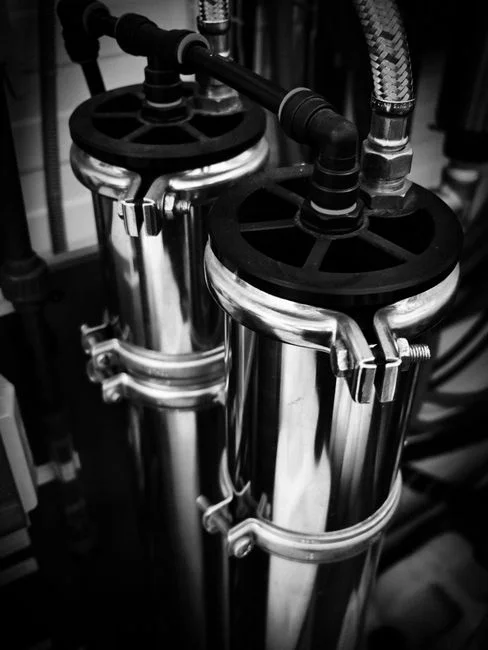
Treatment selection should follow measured stream variability, required water quality, footprint and pretreatment needs rather than the “battery wastewater” label. A low average flow does not remove the need to receive a cleaning batch, control chemistry or manage downstream concentrate.
| Technology | Suitable role | Key limitation |
|---|---|---|
| Conventional biological treatment | Biodegradable, lower-strength streams where footprint and reuse criteria support the process. | Intermittent feeding, variable chemistry and soluble NMP require separate evaluation and control. |
| MBR | Biological treatment and solids-retaining polishing where intermittent operation and reuse quality justify the system. | It does not replace dedicated NMP recovery or treatment. |
| UF | Removal of colloids and suspended solids before sensitive downstream equipment. | It cannot by itself remove dissolved NMP or complete a ZLD train. |
| RO | Pre-concentration and water recovery before thermal treatment. | Recovery, scaling, fouling and concentrate disposal must be established from feed chemistry. |
| Thermal concentration and crystallization | Completion of the zero-liquid-discharge boundary through distillate recovery and salt or residue production. | Energy demand, crystallization behavior and residue route depend on the final brine chemistry. |
UF can protect an RO system from colloids and suspended solids, but it does not remove dissolved NMP. MBR is appropriate where biodegradability, intermittent operation and reuse criteria support biological treatment; it is not a substitute for dedicated solvent control. RO reduces the volume sent to the thermal stage, while evaporation and crystallization complete the liquid-discharge boundary.
Specify cleaning-in-place, membrane-fouling control, standby strategy and staged commissioning. The operating philosophy should address long idle periods, batch reception and return to service. Crystallized salt may become a reusable product only when the brine is sufficiently segregated and clean. A mixed brine containing organics or metals remains part of the waste-residue plan.
What to Request Before Ordering CATL ZLD Equipment?
The purchase order should not be issued against a model-derived flow or a generic treatment flow diagram. The owner must issue one controlled design basis and require every bidder to mark each value as CATL source data, a stated assumption or a transferable reference value.
Request approved process drawings and source-flow records by stream, including batch volumes, cleaning schedules, production ramp and future line count. Obtain chemical inventories and representative analytical data for pH, COD, TOC, NMP, metals, fluoride, suspended solids, oils, conductivity and chemical compatibility. Samples should cover routine cleaning, startup, shutdown, production changes and abnormal events, with the collection vessel and any dilution or commingling identified.
Also request the intended reuse-water quality, receiving process, future water-reuse target, planned dry-room processes and expansion assumptions. For each residual stream, require evidence of NMP recovery or dedicated treatment, RO concentrate handling, final residue classification, and the destination for disposal or reuse.
The commercial schedule should disclose civil works, chemicals, sludge, concentrate, final residue, utilities, services, replacement items, maintenance, training and exclusions. Controls must cover tank levels, batch reception, diversion, abnormal loading, high-low alarms, slug response, leak containment and safe maintenance access. Redundancy should address identified failure consequences rather than appear as a generic line item.
Commissioning must reproduce representative cleaning peaks, solvent upsets, startup, shutdown, power interruption and return to service. Clean-water demonstration is insufficient. The performance guarantee should define acceptance criteria, test duration, sampling frequency, analytical methods, calculation methods and remedies for non-compliance. The CATL German expansion wastewater due-diligence guide provides the relevant evidence framework, including the distinction between facility disclosures and sizing data.
Frequently Asked Questions
What ZLD capacity is required for CATL’s new battery gigafactory in Germany?
No verified CATL capacity can be stated from the public evidence supplied. The 3.0 m³/h value is a 2025 model of a different four-line plant, not CATL operating data. A defensible answer requires CATL’s maximum-hour flow, cleaning-batch profiles, source chemistry, NMP recovery, reuse targets, pretreatment limits, RO assumptions, concentrate mass and residue route.
Can the 3.0 m³/h reference flow be used to estimate the cost of CATL ZLD equipment?
No. No CATL-specific ZLD cost can be calculated from 3.0 m³/h alone. Capital and operating cost depend on the verified mass balance, utility profile, recovery target, concentrate route and residue handling. Request a priced mass and energy balance based on CATL records, with utilities, chemicals, membrane replacement, evaporation duty, dewatering, transport and final residue included.
How should a ZLD supplier be selected for intermittent battery-manufacturing wastewater?
Give every bidder the same design basis and require disclosure of assumptions. Compare interruption handling, batch reception, NMP control, membrane recovery, evaporation duty, controls, commissioning, utilities, maintenance, redundancy and residue responsibility. A performance guarantee should be testable during representative cleaning, startup, shutdown and abnormal operation, not only under clean-water testing.
What compliance evidence is needed before the CATL ZLD configuration is approved?
Keep five workstreams separate: source evidence, permit evidence, monitoring, residue classification and public communication. Verify the applicable industrial wastewater and water approvals, discharge points, conditions, monitoring plan and any expansion modification. The supplied research establishes no universal German discharge limit, so permits and qualified German environmental counsel must determine the controlling requirements. The CATL battery wastewater treatment process should be read as technical context, not permit evidence.