Package wastewater treatment plants in Victoria, Australia serve estates, wineries, mining camps, and subdivisions beyond reticulated sewer, targeting Class C medians of BOD <20 mg/L and TSS <30 mg/L at $80,000–$1.2 million capital cost (2025 benchmarks).
package wastewater treatment plants victoria australia
Victorian package plants are modular units that screen, treat, clarify, and disinfect sewage to EPA recycled-water class targets before discharge or reuse. Most installs aim for Class C medians of BOD <20 mg/L and TSS <30 mg/L. Capital cost for 10–500 PE typically spans $80,000 to $1.2 million (2025 benchmarks).
Capacities commonly span 1–1,000 PE. Bushfire overlays, council permits, and reuse end-use drive design more than brand choice. Most plants we size for house lots stop at Class C, because toilet flushing and raw-food irrigation are uncommon duties on those sites. Blower duty and tank volume change with PE while the train stays familiar. Sludge haul and service distance cause more call-outs than the name on the tank.
Why Victoria needs decentralized package plants: five site types
Decentralized package plants fill sewer gaps across Victoria. Earlier EPA Victoria estimates cited in project work put about 300 packaged systems in service by 2025 for remote communities and industrial sites. Urban fringe growth and seasonal industrial loads keep demand rising outside metropolitan trunk sewers. For large centralized networks and long-term sewer strategy, compare against Municipal Sewage Treatment Plants in Victoria, Australia: Systems, Processes, Future.
Engineers still call these package plants for wastewater when the lot has no reticulated sewer. A water-corporation connection, when it exists, usually beats a package plant on lifecycle risk. Most estates we size still lose that option on distance or capital timing. The package route then has to carry the EPA class, not a temporary septic waiver.
Remote housing estates: A 200-PE subdivision in Gippsland replaced failing septics with an Underground Package Sewage Treatment Plant (WSZ Series). Field tracking for that upgrade showed about a 70% reduction in EPA fine exposure tied to effluent non-compliance and groundwater risk by 2024 (HydropureWater field data, 2024).
Mining camps: Temporary camps near Bendigo often use mobile 50-PE units. Temporary discharge pathways still need EPA Victoria permission lead time on the order of about three months plus monitoring (HydropureWater project data, 2024).
victorian winery wastewater treatment package plant
A Victorian winery or food-processing package plant has to accept sharp vintage peaks and still make irrigation-grade water. Yarra Valley and other Victorian wineries face BOD often 500–1,500 mg/L. One winery package plant reached Class C quality suitable for vineyard irrigation and cut potable water use by about 40% (HydropureWater case study, 2023). Class C is the usual irrigation grade for cooked or processed crops such as wine grapes.
| Parameter | Winery Influent (Typical) | Class C Effluent Target | Winery Effluent Achieved (Post-Treatment) |
|---|---|---|---|
| BOD (mg/L) | 500 - 1500 | <20 | <15 |
| TSS (mg/L) | 200 - 600 | <30 | <20 |
| pH | 3.5 - 9.0 | 6.5 - 8.5 | 7.2 |
| Fecal Coliform (CFU/100mL) | >10,000 | <1000 | <500 |
Equalization, not a larger nameplate, is what carries the crush week. Most winery plants we size hold at least one day of peak flow ahead of biology. The table above is the acceptance test: influent BOD of 500 - 1500 mg/L has to leave at <20 mg/L, and the worked example reached <15 mg/L. Contract the achieved column, not a brochure percentage.
bushfire resilient package wastewater plant victoria
Bushfire-prone Victorian lots need a buried or fire-rated package plant, not a standard above-ground container. Sites inside a Bushfire Management Overlay (BMO) need buried tanks or fire-resistant GRP shells and backup power for aeration. Most plants we size for BMO lots run buried or partially buried to limit radiant-heat exposure, consistent with CFA expectations for essential services.
Backup power has to cover the blowers, not only the control panel. A dead aerator during a fire-weather outage is an untreated-discharge event. Ask for the BMO drawing set before you compare PE ranges. Above-ground containers without a fire strategy should leave the shortlist.
small subdivision package sewage treatment plant victoria
A small subdivision on the Melbourne fringe can use a 30-PE plant when a sewer extension is the slower path. Where Melbourne fringe lots lack sewer, a 30-PE plant can unlock a small subdivision faster than a long sewer extension. Comparative work put complex trenching and pumping near $500,000 or more in some cases (HydropureWater comparative analysis, 2025).
Size that 30-PE unit on measured peak flow, not on lot count alone. A weekend occupancy spike can double the daily volume the average PE suggests. Most subdivision plants we review are built for Class C irrigation, not dual-pipe toilet flushing. Put the reuse map in the planning set so the class is fixed before the tank order.
How modular package plants work: process flow and components
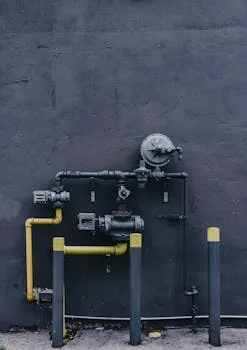
Modular Victorian package systems combine screening, settling, biological treatment, clarification, and disinfection. The compact footprint is sized for Class C or higher reuse classes. Most plants we commission for 20–100 PE sites keep the same process train and only change tank volume and blower duty.
Influent screening removes rags and grit. Primary sedimentation drops settleable solids. Biological reactors then remove organics under anoxic and aerobic conditions. Secondary clarification separates biomass. Disinfection finishes the train before discharge or irrigation storage.
Key components and Victoria site notes:
- Primary sedimentation: Lamella packs shrink footprint on tight urban-infill pads compared with conventional clarifiers.
- Biological treatment:
- Activated Sludge (A/O): Stable nitrification/denitrification for steady domestic loads.
- Membrane Bioreactor (MBR): An MBR packaged plant for Victorian wineries and food processors supports Class A/B quality where pathogen and solids limits are tighter.
- Sequencing Batch Reactor (SBR): Flexible cycle control for vintage peaks and weekend tourism swings.
| Biological Treatment Type | BOD Removal Efficiency | TSS Removal Efficiency | TN Removal Efficiency (Typical) | TP Removal Efficiency (Typical) |
|---|---|---|---|---|
| Activated Sludge (A/O) | 85-95% | 85-95% | 50-70% | 30-50% |
| Membrane Bioreactor (MBR) | >98% | >99% | 70-90% | 50-70% |
| Sequencing Batch Reactor (SBR) | 90-97% | 90-97% | 60-80% | 40-60% |
Use the efficiency bands as a selection screen at the stated domestic-type loads. Activated sludge at 85-95% BOD removal fits steady estates. An MBR at >98% BOD removal and >99% TSS removal is the usual step up when solids limits tighten. An SBR at 90-97% BOD removal is what we specify when vintage or weekend peaks dominate the week.
- Disinfection: UV is common for reuse trains with low chemical residual. on-site chlorine dioxide disinfection for Victorian packaged plants remains useful for high-flow or variable influent.
- Sludge management: Screw or filter presses cut haulage volume. Disposal must follow EPA Victoria biosolids guidance used on the project (original article referenced Biosolids Management Guidelines 2023).
- Automation: SCADA with remote alarms supports compliance sampling and faster fault response on unmanned sites.
EPA Victoria compliance: effluent classes, permissions, and pitfalls
EPA Victoria recycled-water compliance for package plants now sits under the Environment Protection Act framework and the Victorian guideline for water recycling (publication 1910.2), not only the older SEPP (Waters) 2018 narrative used in earlier buyer guides. Non-compliance still risks notices, fines, and reuse shut-offs.
Effluent standards table retained from earlier SEPP-era summaries:
| Parameter | Class C Effluent | Class B Effluent | Class A Effluent |
|---|---|---|---|
| BOD (mg/L) | <20 | <10 | <5 |
| TSS (mg/L) | <30 | <10 | <5 |
| pH | 6.5 - 8.5 | 6.5 - 8.5 | 6.5 - 8.5 |
| Fecal Coliform (CFU/100mL) | <1,000 | <100 | <10 |
| Total Nitrogen (TN) (mg/L) | <30 (where applicable) | <15 | <10 |
| Total Phosphorus (TP) (mg/L) | <10 (where applicable) | <5 | <1 |
| E. coli (CFU/100mL) | <1,000 | <100 | <10 |
Earlier guidance tables often listed Class B BOD/TSS near <10/<10 mg/L and Class A near <5/<5 mg/L. According to EPA Victoria publication 1910.2 (Table 1, medians), Class B and Class C both use <20 mg/L BOD and <30 mg/L SS. Class A uses <10/<5 mg/L BOD/SS, turbidity <2 NTU, and validated pathogen log-reduction targets. Class B and Class C also use E. coli medians of <100 and <1,000 org/100 mL. pH is typically 6–9 as a 90th percentile.
According to EPA Victoria’s recycled water guidance (updated 7 October 2025), Class A is the only grade suitable for non-potable residential use, including toilet flushing and clothes washing. Class C on that page covers agricultural use for human food crops that are cooked or processed, such as wine grapes and olives, plus livestock grazing and fodder where safeguards are met. That guidance is written for large-scale recycled water schemes of more than 5,000 litres per day. Earlier summaries that placed toilet flushing under Class C should be read against that class map.
Permissions: Many sewage treatment activities need an A03 sewage treatment licence. Reclaimed wastewater supply or use may need an A14 permit. The general environmental duty still applies to producers, suppliers, and users. Application timelines of about 3–12 months and fees around $1,200–$5,000 remain useful planning envelopes from prior Victorian package projects.
According to EPA Victoria’s A03 page (updated 14 May 2025), both a development licence and an operating licence are required to treat, discharge, or deposit sewage at a design or actual flow rate exceeding 5,000 litres per day. An exemption under regulation 38(a) can apply when waste goes solely to land at a design capacity of 100,000 litres per day or less and the site holds an A14 or A15 permit. Operating licences issued before 1 July 2021 have no expiry date; licences issued after 1 July 2021 can run up to 20 years, apart from landfill cases. The A03 page does not print the $1,200–$5,000 fee band, so treat that as a budget placeholder until the EPA fees schedule is checked.
According to EPA Victoria’s A14 transition page, existing EIPs and REIPs must be updated to a HEMP by 30 June 2026, and the permit section of that page states amended A14 permits expire on 30 June 2026 while the opening summary states 30 July 2026 — confirm the operative date with EPA before planning a renewal. A permit can be renewed if the application lands at least 15 business days before expiry. You can surrender an existing A14 permit if you hold an exemption covering less than one megalitre per day of Class B or C reclaimed wastewater discharged solely to land; EPA cites regulation 40(1)(a)(ii) of the Environment Protection Regulations 2021 for that path. Confirm the permission path before you order tanks.
Council overlays: Yarra Ranges, Ballarat, and similar councils may add noise limits (for example <45 dB at the boundary), odor controls, or screening. Engage council early on BMO and planning overlays.
Common audit failures:
- Sludge pathway gaps: Weak dewatering, storage, or unapproved haulage.
- No redundancy on blowers/pumps: Single-point failures cause untreated bypass risk.
- Thin monitoring: Missed samples or late reports trigger notices.
Audits we sit in fail on the sludge docket more often than on one BOD grab. Missed samples and a single blower are the other two repeats. Fix those three before you argue about tank brand. Specialized streams such as medical wastewater treatment need tighter source controls and monitoring than domestic Class C irrigation schemes.
package sewage treatment plant cost victoria
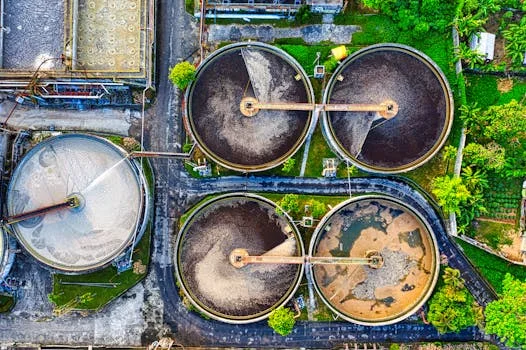
Victorian package-plant capital cost still clusters from about $80,000 at 10 PE to about $1.2 million at 500 PE in 2025 benchmarks, before unusual civil or bushfire extras. Operating cost typically lands near $120–$200 per PE per year under the same benchmark set.
Capital cost table (2025 benchmarks):
| Plant Capacity (PE) | Capital Cost Range (AUD) | Includes |
|---|---|---|
| 10 PE | $80,000 - $150,000 | Plant unit, basic installation, commissioning |
| 50 PE | $250,000 - $450,000 | Plant unit, site prep, installation, commissioning |
| 100 PE | $400,000 - $700,000 | Plant unit, site prep, installation, commissioning, basic automation |
| 250 PE | $700,000 - $1,000,000 | Plant unit, extensive site prep, installation, commissioning, advanced automation |
| 500 PE | $1,000,000 - $1,200,000+ | Larger plant unit, complex civil works, full automation, redundancy |
Quoted ranges usually cover the package unit, slab or burial civil works, power and pipe connections, install, and commissioning. Soft soils, long power runs, and Class A pathogen validation push the upper end.
Operating cost components (2025): Energy $50–$80/PE/year; chemicals $10–$20/PE/year; maintenance $30–$50/PE/year; sludge disposal $30–$50/PE/year.
Energy at $50–$80/PE/year is usually the largest slice of the $120–$200 per PE per year total. Chemicals at $10–$20/PE/year stay small unless phosphorus chemicals are dosed hard. Maintenance and sludge at $30–$50/PE/year each can overtake energy on a remote haul. Most plants we price for regional Victoria land in the lower half of the capital band when the slab is simple and power is close.
How much does upgrading a package sewage plant cost?
Upgrading an existing package sewage plant in Victoria usually costs less than full replacement when tanks remain sound. Budgets still span tens of thousands to several hundred thousand dollars by PE and target class. Typical drivers are new blowers or membranes, UV or chemical disinfection, sludge dewatering, SCADA, and any Class A validation work. A step from septic or undersized Class C irrigation duty toward higher reuse classes often lands closer to the mid-to-upper band of the capital table for that PE.
What drives package treatment plant upgrade costs?
Package treatment plant upgrade costs rise fastest with effluent class jumps, peak-flow equalization, nutrient limits, and BMO bushfire works. Adding buried tanks or fire-rated GRP can add about 10–15% to capital on high-risk sites. Permit and licence fees of roughly $1,200–$5,000 plus council levies sit outside the equipment quote. Solar aeration and remote monitoring can cut energy and labour by roughly 20–30% where loads allow.
Australia-wide national shortlists differ from Victoria-specific service density; for a national shortlist context see top 10 wastewater treatment plants coverage on the sibling Australia guide.
ROI levers: Irrigation reuse cutting potable demand; solar-assisted aeration; SCADA reducing call-outs. Original Victorian financing notes also pointed to occasional EPA Victoria Water Innovation Fund style support for regional innovation projects—confirm current rounds before relying on them.
Supplier comparison for Victorian package plant buyers
Victorian supplier choice should weight local service radius, Class A/B/C evidence, and BMO options ahead of brochure PE ranges. Hydroflux Epco and MAK Water appear often on winery and camp shortlists; smaller firms can suit <50 PE lots if references are real.
Supplier comparison table (Victoria-focused):
| Supplier | Capacity Range (PE) | Primary Technology | Effluent Quality (Typical) | Lead Time (Weeks) | Service Network (Victoria) | Bushfire Resilience Options | Cost per PE (Range) |
|---|---|---|---|---|---|---|---|
| Hydroflux Epco (RoadTrain®) | 10 - 1,000+ | MBR, SBR | Class A/B | 12-20 | Strong (Melbourne, regional partners) | Yes (GRP, buried options) | $1,500 - $2,500 |
| MAK Water (ASBR+) | 10 - 500+ | Activated Sludge, MBR | Class C/B | 10-18 | Good (Melbourne, service agents) | Yes (Containerised, some buried) | $1,200 - $2,200 |
| EnviroConcepts | 5 - 250 | MBR, SBR | Class A/B | 8-16 | Moderate (Melbourne, limited regional) | Yes (Specific BMO designs) | $1,300 - $2,300 |
| Aqwest | 5 - 150 | MBR, Activated Sludge | Class C/B | 10-14 | Moderate (Regional focus) | Limited | $1,100 - $2,000 |
| Local Engineering Firms (Various) | 5 - 50 | SBR, Septic upgrades | Class C | 6-12 | Localised | Variable (site-specific) | $800 - $1,500 |
Lead times in the table run from 6-12 weeks for local firms to 12-20 weeks for the larger MBR and SBR shops. Cost per PE in that table spans about $800 - $1,500 at the small local end and about $1,500 - $2,500 for the widest PE range. Those figures are supplier-range labels, not a quote. Shortlists we issue keep at least one crew that can reach the site inside a normal working day.
Fit notes: Wineries lean MBR or ASBR+ with equalization for Class C irrigation. Mining camps need mobile skids and temporary-permission support. BMO lots need buried or fire-rated options from EnviroConcepts, Hydroflux Epco, or equivalent.
Red flags: No Victorian PE references; vague written Class C limits (ask for BOD <20 mg/L and TSS <30 mg/L in contract language); thin Victorian service coverage. Remote-site service risk mirrors issues discussed in the supplier comparison for remote Australian projects.
Step-by-step procurement checklist for Victorian projects
Victorian package procurement works best as a staged path. Move from load definition through EPA and council approvals to commissioning and operator handover. Skipping load sampling is the fastest way to buy the wrong PE rating. Jobs we see slip usually skipped that sampling week.
1. Pre-procurement:
- Geotech, percolation, and 1-in-100 flood checks.
- PE, average/peak flow, and influent BOD, TSS, TN, TP.
- Reuse demand (irrigation m3/d, dual-pipe, washdown) to set Class A/B/C.
2. Supplier shortlist:
- RFP with effluent class, PE, timeline, and service SLA.
- Ask for three Victorian references at similar PE and a written BMO strategy.
- Review process drawings and duty points; for MBR economics see the detailed cost and compliance guide for MBR systems in Australia.
3. Compliance:
- EPA permission package (design, EMP/HEMP-style risk docs, monitoring plan).
- Council planning/building and overlay conditions.
- Store licences, O&M manuals, and as-built drawings.
4. Install and commission:
- Civil pad or burial, power, and rising mains.
- Supervised plant set and ancillaries.
- Performance tests and any EPA hold points before full load.
5. Operate:
- Operator training aligned with site permission conditions.
- Preventive maintenance for blowers, pumps, membranes, and UV.
- SCADA alarms and scheduled effluent reporting.
Selection checklist (use before signing): (1) measured PE and peak factor; (2) target recycled-water class and end use; (3) written BOD/TSS/E. coli limits; (4) Victorian references; (5) BMO/fire strategy if mapped; (6) sludge pathway and cost; (7) local spares/service hours.
Who this is for / Next step
Plant engineers, EPC leads, and procurement managers use this guide when sizing decentralized package systems for Victorian subdivisions, wineries, camps, and infill lots. Look elsewhere if you already have a firm sewer connection offer from a water corporation and no reuse duty. To match PE, class, and bushfire constraints to a packaged scope, request a Victoria package plant quote with your flow and effluent targets. Send the measured PE, the reuse class, and any BMO map with that request.
Frequently Asked Questions
Does Victoria still pump raw sewage into the ocean?
No, since 2020 Victorian sewage treatment plants, including the Western Treatment Plant, have been required to achieve at least Class C effluent before normal discharge. Raw sewage overflows remain limited to extreme wet-weather contingencies under EPA Victoria wet-weather management arrangements, mainly to avoid uncontrolled sewer backups inland. A package plant still has to meet the class named in its own permission.
How many packaged wastewater treatment plants are there in Victoria?
As of 2025, earlier EPA Victoria estimates used in project planning put about 300 packaged plants in service for remote communities, wineries, and industrial sites. Growth near 8% per year has been cited with urban infill, bushfire resilience upgrades, and decentralized reuse demand. Confirm current counts with EPA or council data before using them in a tender.
What is the best packaged plant for a Victorian winery?
Wineries need equalization plus biology that can take BOD up to about 1,500 mg/L and sharp seasonal peaks. MBR trains or activated-sludge/ASBR+ plants with equalization are the usual shortlist. Class C quality is typically enough for vineyard irrigation of cooked or processed crops such as wine grapes under EPA Victoria’s class map.
Can I install a packaged plant in a bushfire-prone area?
Yes, if the design meets CFA Bushfire Management Overlay expectations for the lot. Buried tanks, fire-resistant GRP, and backup power for aeration during outages are the common mitigations. Ask suppliers for BMO-specific drawings rather than standard above-ground container layouts. Most plants we size for BMO lots are buried or partly buried.
How much does it cost to maintain a 50-PE packaged plant in Victoria?
Annual operating cost for a 50-PE Victorian package plant typically falls between $6,000 and $10,000 (2025 data). That band usually covers energy ($2,500–$4,000), chemicals ($1,000–$2,000), routine maintenance ($1,500–$2,500), and sludge disposal ($1,000–$1,500). Remote monitoring can cut labour call-outs by up to about 30%.