What Is Known About Tesla Malaysia’s ZLD Capacity?
No verified numerical ZLD capacity has been publicly disclosed for Tesla’s proposed Malaysian Gigafactory, so an m³/day rating would be false precision. Capacity must be calculated from a site-approved, stream-by-stream water balance covering average and peak wastewater flows, batch discharges, chemistry, reuse targets and the ZLD boundary. The design should separately rate pretreatment inflow, RO recovery and concentrate flow, MVR evaporation duty, and final crystallized-solids output. Nevada, Shanghai, Berlin and Tesla Texas can inform process architecture, but their flows and recovery rates cannot be transferred to Malaysia without equivalent source data.
The supplied evidence establishes a process architecture, not a Malaysian equipment duty. Gigafactory capacity should be expressed through annual battery energy output, such as GWh/yr, rather than building floor area. The Nevada Tesla–Panasonic venture was sized at about 35 GWh/yr, according to the How Tesla Treats Gigafactory Wastewater process guide, published by HydropureWater in 2026. That historical scale is a reference point, not a production forecast for Malaysia.
Tesla has not disclosed site-specific water intensity in m³/GWh or m³/vehicle for any Gigafactory. The same 2026 guide cites industry literature estimates of 1.5–3.0 m³/kWh for cell-manufacturing water demand and warns that a meaningful fraction becomes wastewater. Those figures are order-of-magnitude bounds, not a disclosed plant flow; converting them into a Malaysia ZLD rating would require production, capture, reuse and treatment assumptions that the evidence does not provide.
The 231,000-gallon-per-day figure reported in April 2026 by KSAT and Inside Climate News belongs to the lithium refinery near Robstown, not Gigafactory Texas or a Malaysian Gigafactory. It is therefore inapplicable to this assessment. The separate Tesla Texas ZLD capacity assessment reaches the same boundary: multi-stage RO, mechanical vapor recompression and salt crystallization can inform train selection, but no Malaysian inlet flow, permeate flow, evaporation duty or crystal output can be stated from that evidence.
| Design fact | Evidence for Malaysia | Procurement consequence |
|---|---|---|
| Numerical ZLD capacity | Not publicly verified in the supplied research | Do not use an assumed m³/day nameplate |
| Production scale | No verified Malaysian GWh/yr or vehicle rate | Do not derive flow from unconfirmed production |
| Wastewater inflow | No approved Malaysia water balance | Obtain stream-level average, peak and batch flows |
| Recovery and evaporation | No verified permeate flow, recovery rate or MVR duty | Rate RO, MVR and solids separately |
| Final solids | No verified crystallizer output | Do not infer salt rate from Texas or other analogues |
Only the treatment architecture and sizing framework are currently defensible. A numerical equipment nameplate must wait for an approved Malaysian water balance, chemistry, reuse requirements and operating scenarios.
Which Gigafactory Data Can—and Cannot—Be Used
Nevada, Shanghai, Berlin and Texas are useful because their permit logic differs; they are not valid sources for a common Malaysian flow. The Gigafactory wastewater process guide describes four recurring treatment stages: screening, clarification with DAF or lamella equipment, biological treatment with MBR or MBBR, and permit-driven polishing that may include UV, RO or ZLD. Permit philosophy determines the depth of the train.
Nevada illustrates a reuse-led system in a high-stress watershed: on-site RO polishing supplies cooling-tower make-up and process rinses. Shanghai follows a pretreatment-led path under the Chinese concentration standards GB 8978-1996 and GB 39728-2020, with polishing filtration and UV before municipal co-treatment. Berlin combines DAF with an MBR configured for nutrient removal, with optional RO where reuse objectives justify it. These are analytical analogues, not Malaysian compliance criteria.
The Berlin envelope cited in HydropureWater’s 2026 process guide is COD ≤125 mg/L, BOD₅ ≤25 mg/L, TSS ≤30 mg/L, hydrocarbons ≤10 mg/L, Ni ≤0.5 mg/L and Co ≤0.5 mg/L. Those values came from the 2026 guide’s discussion of the German drinking-water-protection-zone permit. They can test whether an analogue is suitable for a particular treatment question, but they cannot be entered as Malaysian limits.
Texas provides a different kind of lesson. The April 2026 Streamline information summarized in the Tesla Texas ZLD Capacity: 2026 Guide describes a closed-loop CAM architecture using multi-stage RO, MVR evaporation and salt crystallization, with 100% internal water recovery and zero industrial wastewater discharge to the Colorado River. It establishes unit-operation intent, not hydraulic or thermal loading for Malaysia.
The anti-transfer rules are strict: do not copy another site’s wastewater flow, production rate, recovery percentage, concentrate quality, evaporation duty, salt yield, permit limits or disposal route unless the Malaysian design basis contains equivalent evidence. Malaysian discharge, reuse and water-abstraction requirements must be obtained from the applicable site permit and current authority decisions before equipment selection.
| Analogue | Permit or reuse logic | Reusable design lesson | Non-transferable input |
|---|---|---|---|
| Nevada | On-site reuse and RO polishing | Integrate reuse destinations with the treatment train | Water balance, recovery rate and watershed conditions |
| Shanghai | Municipal co-treatment under Chinese concentration standards | Treatment depth depends on discharge route | GB 8978-1996 and GB 39728-2020 limits |
| Berlin | Drinking-water protection zone; MBR with nutrient removal and optional RO | Permit parameters must drive biological and polishing design | The cited Berlin concentration envelope |
| Texas | Closed-loop RO, MVR and crystallization architecture | Keep inflow, evaporation and solids duties separate | Any flow, duty or recovery value from another facility |
Build a Segmented Wastewater Basis for Malaysia
A Gigafactory-class zero liquid discharge system must be based on segregated streams, because solvent-bearing, electrolyte-bearing, oily, sanitary and utility wastewater have different reuse destinations and treatment constraints. HydropureWater’s 2026 process guide identifies four core wastewater classes: NMP solvent condensate from electrode coating, electrode and deionized-water rinses, paint-shop and assembly wash water, and sanitary sewage. A Malaysia design basis should expand that inventory to cover formation and electrolyte-bearing process water, cooling-water blowdown, cleaning and batch discharges, stormwater, and construction or contractor wastewater where relevant.
NMP recovery should precede biology. The 2026 process guide states that co-mingling NMP condensate with sanitary flow introduces a high-BOD, poorly biodegradable solvent load into MBR or activated-sludge treatment. Segregation therefore affects both process selection and the wastewater inflow presented to the downstream ZLD units.
For every included stream, request average and peak hourly flows, batch-discharge volumes, operating days, production scenarios, temperature, conductivity, TDS, hardness, silica, metals, organics and suspended solids. Also request the reuse destination: process rinse, cooling make-up, another specified service, ZLD feed, or an approved disposal route. These are the inputs that connect the integrated MBR treatment concept to the correct recovery sequence.
The ZLD boundary must be explicit. Identify which liquid streams return to process, which enter pretreatment and RO, which are evaporated, and which leave as sludge, salt or another final solid. Construction wastewater, for example, should not silently become part of the permanent plant rating if it is temporary or outside the owner’s operational boundary.
The owner or EPC designer should issue an approved industrial water balance. Allowing each bidder to select a different peak flow, operating schedule or reuse target creates incompatible equipment bases and makes technical comparison meaningless.
| Wastewater segment | Required operating data | Primary design effect |
|---|---|---|
| NMP solvent condensate | Average and peak flow, batch schedule, solvent concentration, temperature | Solvent recovery before biology; final concentrate and energy load |
| Electrode and deionized-water rinses | Flow profile, conductivity, metals, organics and reuse destination | RO feed quality, membrane protection and permeate demand |
| Formation and electrolyte-bearing water | Batch volume, chemistry, production scenario and disposal route | Equalization, salt load and crystallizer output |
| Paint-shop and assembly wash water | Oil, FOG, surfactants, fillers and suspended-solids data | Clarification and sludge removal before RO |
| Sanitary sewage | Average and peak flow, conventional wastewater chemistry | Independent biological treatment and reuse polishing |
| Stormwater and cooling-water blowdown | Event frequency, chemistry, segregation and reuse status | Peak hydraulic treatment and boundary definition |
| Cleaning and batch discharges | Volume, duration, chemistry and upset conditions | Peak capacity, equalization and upset-operation cases |
| Construction or contractor wastewater | Duration, chemistry, ownership and disposal route | Separation of temporary load from permanent equipment sizing |
Size Pretreatment, RO and Evaporation as Separate Duties
The calculation sequence is wastewater inflow → segregation and equalization → pretreatment → RO permeate and concentrate → MVR feed and evaporation → crystallizer feed and final solids. Each arrow requires a reconciled flow, concentration and operating scenario; otherwise, one equipment rating will conceal gaps elsewhere in the train.
For oil-, FOG- and solids-bearing streams, an industrial DAF pretreatment system may be evaluated. HydropureWater’s 2026 Gigafactory process guide gives typical DAF hydraulic retention times of 20–40 minutes and surface loading rates of 10–25 m³/m²·h. These are typical comparison ranges, not Malaysia design values. The selected duty must follow the approved flow, hydraulic characteristics and contaminant load.
RO should be sized as a recovery stage only after pretreatment and scaling analysis. HydropureWater’s industrial reverse-osmosis product information states permeate recovery of up to 95%; this is an equipment-capability benchmark, not the Malaysian plant recovery rate. An industrial RO recovery system must reconcile feed flow, concentrate flow, permeate quality and the approved reuse objective.
Solids removal before RO protects membranes and reduces downstream evaporator and crystallizer loading. A plate-and-frame filter press is appropriate only where a filterable sludge stream exists and the required cake properties are defined. HydropureWater’s published filter-press range of 1–500 m² is a catalog range, not a selected Malaysia duty.
MVR duty must be calculated from the concentrate entering the evaporator, including the selected recovery outcome and operating scenario. Crystallizer output must then follow the concentrate chemistry and final solids route. Salt crystallization should not be inferred from generic electrical load or a headline plant flow.
- Establish average and peak wastewater inflow from the approved water balance.
- Allocate each stream to segregation, equalization, pretreatment, RO, MVR, solids handling or an approved non-ZLD route.
- Calculate RO permeate and concentrate from the project recovery basis and confirmed feed chemistry.
- Determine MVR feed flow and vapor-generation duty from the resulting concentrate.
- Calculate crystallized-solids output and disposal or product requirements from concentrate chemistry.
- Check normal production, peak discharge, upset, shutdown, startup and required-availability cases.
| Separate procurement rating | Design condition | Scenario check |
|---|---|---|
| Wastewater feed capacity | Maximum included liquid flow after segregation and equalization | Normal production, batch discharge, cleaning and upset |
| MVR feed and vapor-generation duty | RO concentrate flow and required evaporation | Peak concentrate, startup, shutdown and availability |
| Crystallized-solids production | Concentrate chemistry and selected final concentration | Product or disposal route, batch inventory and solids handling |
Choose Treatment Equipment Against the Design Basis
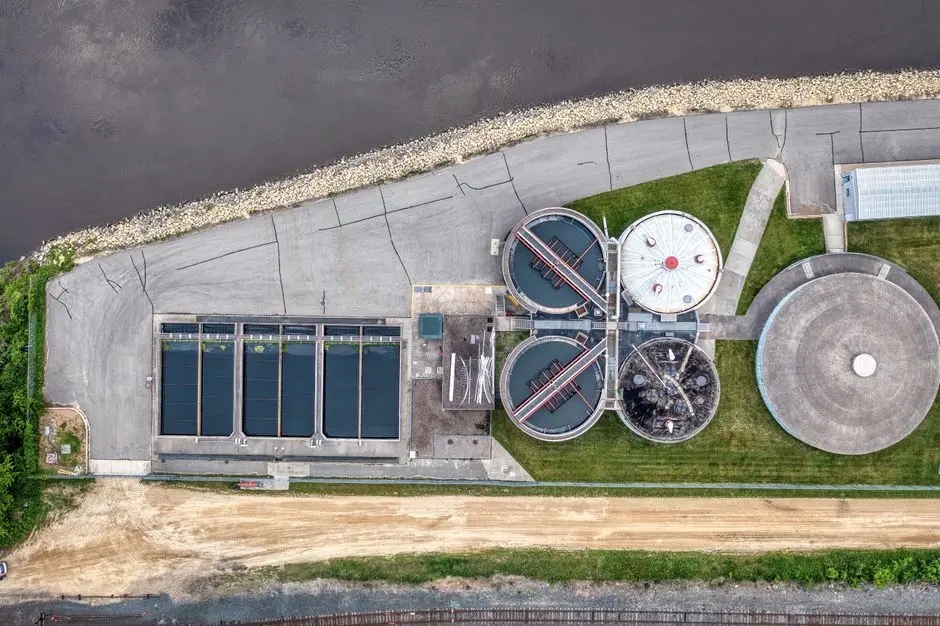
DAF is a candidate pretreatment unit when oil, FOG and solids loads are confirmed, not a complete ZLD train. MBR is appropriate for segregated sanitary and low-solvent process water where biological treatment, low suspended solids and reuse-quality polishing are required. HydropureWater’s 2026 MBR product information lists a catalog range of 10–2,000 m³/day; that range is not a verified Malaysia flow.
Industrial RO belongs after pretreatment and must follow scaling analysis, membrane selection and an approved recovery target. The filter press belongs where sludge is filterable and dewatering is required. MVR, salt crystallization and the balancing of liquid and solids streams require an integrated ZLD OEM or EPC partner rather than isolated catalog selection.
Bidder disclosures should state chemistry-specific pretreatment, the recovery basis, membrane protection, MVR operating conditions, salt management, redundancy, upset operation and compliance responsibility. The Tesla Mexico ZLD capacity framework applies the same procurement discipline: the owner’s approved source data must control the bid.
| Buyer condition | Equipment implication | Evidence required from bidder |
|---|---|---|
| Confirmed oil, FOG or solids load | Evaluate DAF or other clarification | Stream chemistry, hydraulic basis and sludge yield |
| Segregated biodegradable water and reuse polishing | Evaluate MBR | Influent basis, membrane configuration and permeate quality |
| Approved permeate recovery target | Size industrial RO | Feed analysis, recovery calculation, scaling control and concentrate balance |
| Filterable sludge stream | Evaluate filter-press dewatering | Solids characterization, cake target and disposal route |
| Integrated liquid and solids treatment | Use a ZLD OEM or EPC scope | MVR duty, crystallizer output, utilities, controls and redundancy |
Procurement Decision Framework for a Defensible Bid
A defensible bid is a reconciled engineering document, not a quotation attached to an assumed inlet flow. Require every bidder to submit one mass-and-energy balance covering every included stream, recovered permeate, RO concentrate, MVR vapor, sludge and final solids. Water inputs must reconcile with liquid and solid outputs without double-counting reused water.
Each offer should identify its stream boundary, average and peak feed, batch-discharge assumptions, recovery percentage, concentrate quality, evaporation duty, salt yield and final disposal route. It should also demonstrate chemistry-specific pretreatment, membrane protection, MVR operating basis, salt management, redundancy and performance during upset, shutdown and startup.
Evaluate availability explicitly because three independently rated duties can have different failure and maintenance consequences. A low quotation based on an assumed inflow should not outrank a technically reconciled offer. Scope clarity is equally important: confirm whether pretreatment, membranes, controls, sludge handling, crystallization, utilities, commissioning and local compliance support are included or excluded.
| Evaluation gate | Pass criterion | Commercial consequence |
|---|---|---|
| Source data | Approved water balance, chemistry and ZLD boundary | Without this gate, no numerical rating is comparable |
| Technical reconciliation | Mass-and-energy balance closes for all included streams | Reject unresolved flow, concentrate or solids gaps |
| Equipment suitability | Unit selection follows confirmed chemistry and operating scenarios | Compare like-for-like performance duties |
| Resilience | Peak, upset, shutdown, startup and availability cases stated | Review redundancy and installed-capacity assumptions |
| Scope | Equipment, utilities, solids route, controls, commissioning and compliance duties listed | Normalize exclusions before price comparison |
Frequently Asked Questions
Has Tesla publicly confirmed a numerical ZLD capacity for its proposed Malaysian Gigafactory?
No verified numerical rating appears in the supplied research. There is also no public Malaysian water balance, permeate flow, evaporation duty or crystal output in that evidence. Any proposed m³/day value should therefore remain an engineering estimate with its assumptions visible, not be presented as Tesla’s confirmed capacity.
How much should a buyer budget for the Malaysian Gigafactory ZLD system?
The supplied evidence provides no defensible Malaysia ZLD cost because it provides no approved Malaysian flow, chemistry, recovery basis or equipment scope. Before requesting budgetary pricing, require the owner or EPC designer to issue the industrial water balance, treatment boundary, recovery objective, concentrate chemistry, final-solids route and operating scenarios. A price based only on an assumed headline flow is not comparable.
Which supplier qualifications matter most for the Malaysia ZLD package?
Check demonstrated experience with the relevant Gigafactory wastewater chemistry and require a reconciled mass-and-energy balance. The offer should also show validated pretreatment and membrane selection, a clear MVR and salt-management scope, transparent redundancy assumptions and defined compliance responsibilities. Factory capacity or catalogue range alone is not evidence of suitability.
Can Nevada, Shanghai, Berlin or Texas capacities be used for Malaysia?
Use those sites to understand process architecture and permit logic, not to transfer numerical duties. Flows, recovery rates, concentration limits, evaporation duty and solids output require equivalent Malaysian source data. In particular, the Robstown lithium-refinery discharge reported in April 2026 is unrelated to both Gigafactory Texas and the proposed Malaysian facility.
What documents should be requested before a supplier sizes the equipment?
Request average and peak flows, batch-discharge data, full chemistry, production scenarios, reuse criteria, the defined ZLD boundary, recovery basis, concentrate quality, evaporation duty, crystal output, disposal route, operating cases and required availability. These documents should be issued by the owner or EPC designer as one controlled design basis so bidders do not solve different problems.
Related Equipment
- industrial DAF pretreatment — specifications, capacity range, and technical data