Start with the cooling configuration and discharge route
A data center in Lodz needs wastewater and cooling blowdown treatment matched to its cooling design, chemistry and legally available outlet, not a single generic system. Evaporative cooling normally discharges concentrated blowdown; closed-loop systems return more water but in smaller, intermittent flows. Separate these streams from sanitary sewage, process wastewater and direct liquid- or immersion-cooling leaks, then identify whether each will enter the municipal sewer, receive direct discharge treatment, be reused on site or leave through another approved route. This segregation determines the treatment train before equipment is selected.
Evaporative systems typically lose 70–80% of withdrawn water through evaporation and discharge 20–30% as liquid wastewater, while a closed-loop system may consume about 5–10% and return approximately 90–95%, according to KETOS, “Myths vs. Reality: Data Centers and Water Usage.” The return does not mean the water is reusable: its temperature, dissolved-solids concentration and treatment-chemical content still require definition.
Request the cooling P&IDs, technology, evaporation rate, cycles of concentration, chemical programme, continuous and intermittent flow records, temperature range and backup-water arrangement. The complete data center cooling blowdown treatment framework then becomes a site-specific engineering basis rather than a generic equipment selection.
| Stream to isolate | Decision required before design | Information to obtain |
|---|---|---|
| Evaporative cooling blowdown | Municipal sewer, direct discharge, on-site reuse or another approved destination | Cooling configuration, evaporation, cycles of concentration, flow history and chemical inventory |
| Closed-loop cooling discharge | Intermittent segregation and reuse versus authorized discharge | Event frequency, discharge volume, temperature and chemical composition |
| Sanitary sewage | Separate biological treatment or licensed collection route | Peak flow, wastewater characteristics and operator access |
| Process wastewater | Contaminant-specific treatment and receiving route | Source chemistry, batch dumps and variability |
| Direct liquid- or immersion-cooling leakage | Specialized containment rather than routine blowdown treatment | Coolant identity, refrigerants, PFAS status and incident response procedure |
A US discharge model cannot replace the applicable Polish water permit or the municipal sewer requirements applicable in Lodz. No verified project-specific Polish limit or Lodz sewer condition is available in the supplied research, so the responsible route must be confirmed in writing before the final effluent target or equipment capacity is fixed.
Characterize blowdown before selecting a treatment process
Blowdown treatment cannot be specified from conductivity alone because the chemicals dosed into the cooling loop determine the removal duties. Establish the design envelope from measured flow, conductivity or TDS, pH, suspended solids, temperature, hardness, alkalinity, chlorides, metals and every biocide, corrosion inhibitor, anti-scalant and dispersant used at the facility. Commercial Water Lab, “What’s Actually in Data Center Water Discharge,” lists salts, minerals, biocides, corrosion inhibitors and heavy metals among possible constituents. The Lodz design must identify which of those constituents are actually present and in what concentrations.
Cycles of concentration provide an initial blowdown-volume screen, not a substitute for measurement. Genesis Water Technologies, “Why Cooling Tower Blowdown Is Your Hidden Opportunity,” calculates blowdown as 1/(CoC−1): at 4 CoC it is 25% of makeup-water volume and at 6 CoC it is 20%. Moving from 4 to 6 CoC therefore reduces blowdown by five percentage points, equivalent to 20% of the original blowdown volume—not 50%.
The same source reports that actual blowdown may exceed theoretical calculations by 15–30% because of unmeasured losses and emergency dumps. Design equalization and treatment capacity around recorded operations, not only the theoretical balance. A representative sampling programme across different cooling and operating conditions should establish the chemical-removal and membrane duties; an 8–12 week programme is a design recommendation, not a regulatory standard.
| Design input | Why it affects treatment selection | Acceptable evidence for tender design |
|---|---|---|
| Conductivity or TDS | Indicates dissolved-solids concentration and reuse constraints | Continuous trend plus laboratory samples by operating condition |
| pH, hardness and alkalinity | Controls precipitation, scaling and chemical compatibility | Samples covering the cooling operating regime |
| Suspended solids and colloids | Determines the need for physical separation or UF | TSS measurements and particle-characterisation data |
| Cooling chemicals | Defines contaminant-specific removal and membrane compatibility | Complete inventory with maximum expected concentrations |
| Flow and temperature | Controls equalization, hydraulic load and discharge constraints | Continuous and event records, including emergency dumps |
For a traceable site-specific method, compare the sampling and characterization approach used in cooling blowdown treatment for data centers in Suwon, then require results in the same analytical structure for Lodz.
Build the treatment train around the reuse endpoint
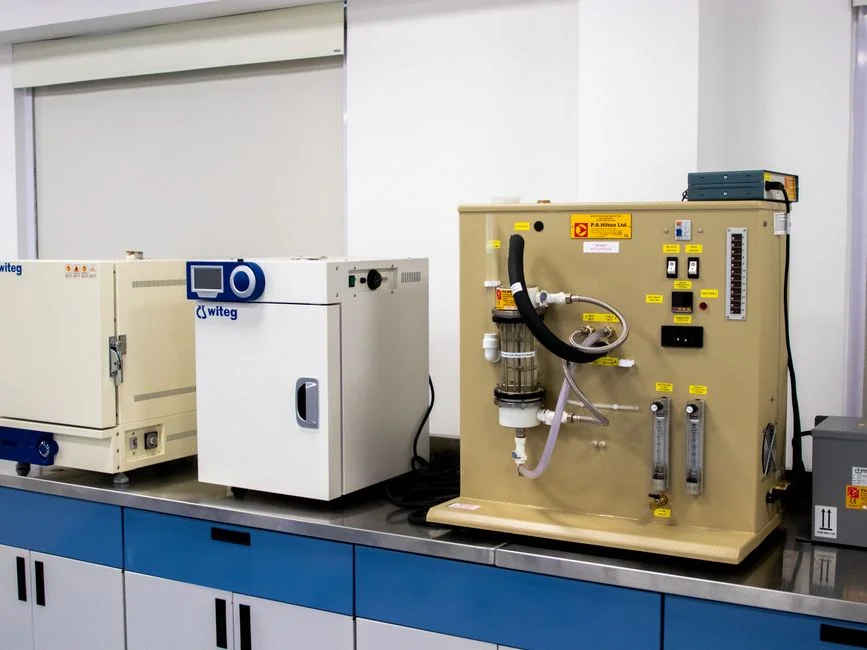
The required train should remove the contaminant that determines reuse or discharge acceptance; adding a more advanced unit without identifying its purpose increases capital cost and operating burden. A practical sequence is segregation, equalization, physical or membrane pretreatment, contaminant-specific treatment, disinfection where required, and storage or authorized discharge. The appropriate endpoint must be established before the tender.
For oil, grease, suspended solids or colloidal matter, consider a DAF system for cooling blowdown pretreatment. The supplied DAF portfolio covers 4–300 m³/h across 13 standard models. For low-turbidity polishing and membrane pretreatment, an ultrafiltration for fine solids and membrane pretreatment uses hollow-fiber PVDF membranes in the stated range of 2,000–40,000 L/h, with a 0.03 μm membrane intended to remove bacteria, colloids and suspended solids.
For biodegradable sanitary or process wastewater where compact biological treatment and high-quality filtration are priorities, an MBR system for biological wastewater treatment and reuse is relevant. The stated MBR range is 10–2,000 m³/day, with filtration below 1 μm and near-reuse-quality effluent. These equipment ranges are selection boundaries, not the required Lodz duty.
RO should enter the train only when dissolved salts, conductivity or specific ions prevent the required reuse, and only after suitable pretreatment and chemical control. The supplied industrial RO information states recovery rates up to 95%. Chlorine dioxide or UV disinfection should follow only where microbial control is a verified reuse or discharge requirement; the stated chlorine-dioxide range extends to fully automated industrial configurations of 20,000 g/h, while UV provides chemical-free UV-C disinfection.
| Reuse or discharge objective | Process to evaluate | Key design question |
|---|---|---|
| Remove oil, solids or colloids before further treatment | DAF or clarification followed by filtration as required | What are the measured oil, TSS and colloid loads? |
| Produce low-turbidity water or protect membranes | UF | Is the required particle, bacteria and fouling control demonstrated by site data? |
| Treat biodegradable sanitary or process flow | MBR | Does the stream’s biodegradability and flow profile support biological treatment? |
| Control dissolved salts or selected ions | RO after pretreatment | Can concentrate handling, scaling control and recovery meet the reuse endpoint? |
| Control microorganisms | Chlorine dioxide or UV | Is disinfection an accepted requirement, and what residual or dose control is needed? |
Genesis Water Technologies reports that blowdown treatment can reduce makeup-water demand by 15–25%; treat that as a comparative vendor claim requiring verification, not a guaranteed Lodz outcome. The broader data center wastewater treatment in Hwaseong-si process framework also supports matching the endpoint before selecting equipment.
Compare treatment options without oversizing the plant
DAF, UF, MBR and RO solve different problems, so their role must be compared by contaminant, treatment stage, operating burden and pretreatment needs. The supplied research does not establish a verified Lodz flow, TDS concentration, sewer limit or required effluent quality; those remain mandatory engineering inputs and must not be replaced by generic assumptions or a portfolio’s largest unit.
| Option | Target contaminant or function | Role in the train | Principal operating burden | Required pretreatment |
|---|---|---|---|---|
| DAF | Oil and grease, suspended solids, colloidal matter | Physical separation | Sludge removal, chemical conditioning and flotation control | Equalization and characterization of solids or oil |
| UF | Fine solids, colloids and bacteria | Polishing or membrane pretreatment | Cleaning, integrity checks and membrane replacement | Removal of material likely to foul or damage membranes |
| MBR | Biodegradable organic matter | Biological treatment with filtration | Bioreactor control, aeration, membrane cleaning and sludge handling | Appropriate screening and flow equalization |
| RO | Dissolved salts and specific ions | Dissolved-solids removal | Energy demand, scaling control, membrane cleaning and concentrate disposal | Treatment matched to the measured blowdown chemistry |
Apply the decision sequence directly. Consider DAF when measured oil, solids or colloids threaten downstream equipment. Consider UF when fine-particle, bacterial control or membrane protection is required. Consider MBR for a suitable biodegradable stream when compact biological treatment and integrated filtration are priorities. Consider RO when dissolved solids—not solids carryover—set the endpoint. This logic also provides a cleaner comparison than the general approach outlined in what wastewater treatment a new data center needs.
Do not combine all flows merely because they pass through one building. Size clean cooling drains, sanitary sewage, process wastewater and contaminated leak streams separately, then combine only where their chemistry, flow variation and destination are compatible.
Control operating risks from chemistry to reuse
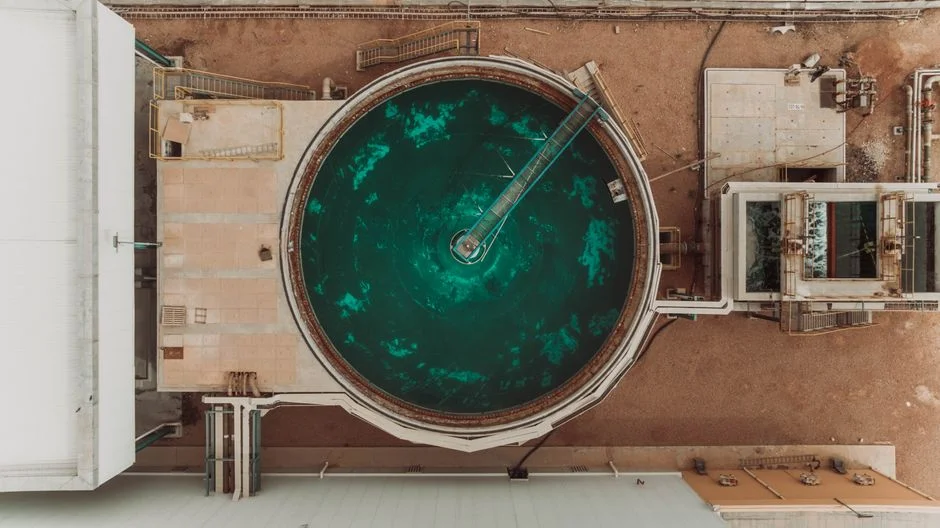
Treatment performance depends on the cooling loop’s operating envelope, not just the inlet analysis. Tie the cycles-of-concentration strategy to conductivity, scaling, microbiological activity, temperature and the chemical inventory. Genesis Water Technologies, “Why Cooling Tower Blowdown Is Your Hidden Opportunity,” warns that biological and scaling risks increase materially above 5–6 CoC without advanced treatment. Higher cycles therefore cannot substitute for chemical control, pretreatment and a complete risk assessment.
Specify continuous or frequent monitoring of conductivity, pH, flow, temperature, suspended solids and residual biocide. The control logic should segregate or divert water when quality moves outside the agreed reuse envelope. Equalization should cover normal variability and documented events; treating only the average flow risks loss of containment during emergency dumps or peak operations.
Warm discharge is a separate environmental constraint. Commercial Water Lab reports that elevated discharge temperature reduces dissolved oxygen, stresses aquatic organisms and can promote algal blooms. Direct discharge to surface water therefore requires thermal assessment in addition to chemical treatment; the supplied research provides no Polish or Lodz thermal limit.
Direct liquid- and immersion-cooling incidents require a separate response because Commercial Water Lab reports that coolant fluids may contain refrigerants or PFAS compounds requiring specialized handling. Keep such leakage out of routine cooling blowdown equalization unless the engineer has established compatibility, containment, analysis and disposal arrangements.
Non-potable cooling water reuse also needs an operational control loop: define the permissible conductivity, temperature, biological risk and chemical concentration for the intended cooling service, then validate those limits against the actual system rather than treating “reuse” as a single endpoint.
Define the permit and procurement package
The supplied research does not provide a verified Polish national discharge limit, a Lodz sewer permit condition or a project-specific effluent specification, so no numerical limit should be inserted into the tender without formal confirmation. The project must identify the applicable Polish environmental permit, any water-abstraction conditions, the municipal sewer’s pretreatment requirements and the receiving authority’s written acceptance of the proposed discharge or reuse route.
Issue a performance-based tender covering design flow, hourly and daily variability, analysis results, required effluent or reuse parameters, automation, alarms, redundancy, operator training and long-term consumables. Ask each bidder to state the guaranteed duty in m³/h, media or membrane life, replacement criteria, chemical consumption, power demand, sludge or concentrate handling, commissioning tests and validation samples.
| Tender package | Minimum information required | Supplier commitment to request |
|---|---|---|
| Design basis | Verified stream flows, temperatures, analyses, cycles of concentration and destination | Selected process, guaranteed capacity and design margins |
| Permit interface | Permit references and written sewer or receiving-water conditions | Compliance responsibility, required sampling and reporting support |
| Operations | Operating envelope, automation philosophy and staff capability | Alarms, diversion logic, training, maintenance plan and spares |
| Whole-life performance | Media and membrane criteria, chemical and power requirements | Replacement criteria, consumable costs, sludge or concentrate route and validation protocol |
Genesis Water Technologies cites a modular 100–300 GPM blowdown-treatment range as a market reference. Use that only to test whether bidders can offer modular capacity; require each bidder to size the actual Lodz flows rather than adopting the range by default. The data center cooling blowdown treatment framework provides a useful structure for separating the treatment decision from the permit decision.
Frequently Asked Questions
What information is required to size treatment for a data center in Lodz?
Request separated flow records for each wastewater stream, including continuous makeup, blowdown, blowdown events and wastewater batch dumps. Include the cooling P&ID, cycles of concentration, evaporation rate, chemical inventory, temperature, conductivity or TDS, pH, suspended solids, and the confirmed discharge or reuse endpoint. The supplied research contains no verified Lodz design flow, so equipment capacity cannot be selected until those measurements are available.
When should DAF, UF, MBR or RO enter the proposed treatment train?
Consider DAF when oil, grease, solids or colloids require physical separation; UF when fine solids, bacteria or membrane protection is required; MBR for suitable biodegradable sanitary or process wastewater; and RO when dissolved salts or specific ions prevent the required reuse. Confirm these entries with representative analysis rather than treating the technology names as a process sequence.
What are the main cost drivers, and what should a buyer request for a price?
The principal cost drivers are the selected process, verified design flow, pretreatment requirements, membrane or media area, chemical consumption, energy demand, sludge or concentrate disposal, automation and building works. Request a supplier quotation against the complete design basis, including guaranteed duty, replacements, power, chemicals, residuals, commissioning, training and long-term consumables. The research provides no defensible equipment price for a Lodz project, so a generic budget figure would be misleading.
How should a buyer compare a local integrated supplier with a specialist equipment manufacturer?
Give both parties the same design basis and test their offers for guaranteed performance, local service capability, operator competence, spare-parts access and permit support. Also request the specialist’s process guarantee and references for comparable blowdown duties; an integrated supplier may add stronger site integration, but neither organizational model replaces verified chemistry, flow data or written acceptance from the relevant authority.
Which environmental and sewer checks must be completed before ordering?
Confirm the applicable Polish environmental permit, water-abstraction conditions, municipal sewer pretreatment requirements and the authority’s written acceptance of the intended route. For direct surface-water discharge, separately assess thermal effects. For direct liquid- or immersion-cooling incidents, establish specialized containment and analysis. Do not release the order against assumed limits because the supplied research contains no verified national limit or Lodz sewer condition for this project.