What Rules Control a Food Plant's Sewer Discharge
Food and beverage plants near Bells meet sewer pretreatment limits by applying the governing federal category, the receiving POTW’s local limits, and site-specific monitoring conditions, then designing treatment around measured batch loads. The relevant federal subpart depends on the production category: 40 CFR 405 for Dairy Products, 406 for Grain Mills, 407 for Canned and Preserved Fruits and Vegetables, 408 for Canned and Preserved Seafood, and 409 for Meat Products.
EPA identifies the POTW with an approved pretreatment program—or the approval authority where no approved program exists—as the control authority responsible for determining applicable standards and applying the most stringent applicable requirements. Treatment should therefore follow the permit: screening and equalization, DAF for FOG and suspended solids, biological treatment for biodegradable organics, chemical control for pH or phosphorus, and solids separation or polishing where required. Exact limits and monitoring obligations must be confirmed from the plant’s permit and the receiving authority’s current requirements.
Begin the legal review with the regional food and beverage pretreatment requirements, then use the receiving POTW as the authority for the plant-specific determination. Under the EPA pretreatment framework, three layers can apply: general and specific prohibitions, categorical pretreatment standards, and local requirements that may depend on the POTW ordinance and permit.
| Legal layer | What it controls | Engineering use |
|---|---|---|
| General and specific prohibitions | Discharges that may interfere with POTW operation or pass through the treatment works | Screen the permit and process design for prohibited or incompatible discharges |
| Federal categorical standards | Requirements applicable to the plant’s production category | Map the plant to 40 CFR 405, 406, 407, 408 or 409 and identify applicable pollutant limits |
| POTW requirements | Local limits, monitoring, reporting and other permit conditions | Use the more stringent applicable requirement as the design basis |
A significant industrial user is not determined by flow alone. EPA’s definition includes categorical industrial users subject to national pretreatment standards, except those designated as non-significant categorical industrial users, and other industrial users that discharge an average of 25,000 gallons per day or more of process wastewater, contribute a process wastestream equal to at least 5 percent of the POTW’s average dry-weather hydraulic or organic capacity, or are designated because of a reasonable potential to harm the POTW or violate a pretreatment requirement (US EPA, “Pretreatment Standards and Requirements—Applicability,” current 2026). The comparison excludes sanitary, noncontact cooling and boiler blowdown wastewater.
Before selecting equipment, obtain the receiving authority’s pretreatment manual, individual permit, local limits, monitoring frequency, flow and pH requirements, resampling rules, discharge-reporting procedure and applicable enforcement provisions. For a plant near Bells, those documents—not a generic national treatment table—determine whether a proposed train is sufficient.
Characterize the Waste Before Choosing Treatment Equipment
Food processing wastewater must be characterized by stream and operating condition because production discharge, clean-in-place chemical dumps and cooling or wash flows can produce different compliance risks at the same plant. ALAR’s food and beverage treatment guide identifies BOD, TSS, pH and nutrients as common regulatory variables and notes that FOG, sugars, starches, proteins, pulp, seeds, grains and cleaning chemicals create different treatment requirements (ALAR, “Food & Beverage Wastewater Treatment,” current 2026). A design based only on average daily flow will miss concentrated loads and hydraulic peaks.
Separate production wastewater, CIP and sanitation wastewater, cooling or wash water, floor washing, stormwater and sanitary flows before calculating the industrial design flow. Identify which streams enter the permitted discharge, which are excluded, and whether any stream should be segregated for treatment or disposal. Obtain the cleaning-chemical inventory because detergents and disinfectants can change pH and inhibit downstream biology (ALAR, current 2026).
| Stream | Potential design issue | Data to request |
|---|---|---|
| Production wastewater | Organic, FOG or solids load excursions | Flow, BOD or COD, TSS, FOG, pH and temperature by production state |
| CIP and sanitation wastewater | pH shock, chemical toxicity and batch flow peaks | Chemical inventory, cleanout volume, discharge timing, pH and flow |
| Cooling and wash water | Hydraulic dilution or discharge eligibility | Source, temperature, flow regime and permit designation |
| Floor washing and stormwater | Solids, grit and unauthorized entry into the sewer | Drain routing, contamination assessment and representative solids data |
| Sanitary flow | May affect capacity but is excluded from the SIU flow test | Separate flow accounting and meter records |
Use the dairy and meat investigation benchmarks of 1,000–10,000 mg/L BOD and several-thousand-mg/L FOG in fryer, rendering and stickwater streams only to plan sampling and equipment investigation (HydropureWater, “How US Food & Beverage Plants Meet Pretreatment Limits Before Sewer Discharge,” 2026). They are not substitutes for site data or Bells permit limits.
Request at least one complete production cycle, samples across operating states and historical discharge records required by the control authority. For variable plants, this sampling should test the food-processing wastewater design context and beverage treatment-train selection principles, then add plant-specific peak and batch information.
Build a Treatment Train That Targets Each Permit Risk
The defensible treatment train assigns a defined removal mechanism to every permitted pollutant rather than placing one generic unit between the plant and sewer. The practical sequence is source segregation and screening, equalization, DAF, biological treatment, chemical dosing or precipitation where needed, final clarification or membrane polishing, and monitored discharge. Each stage needs a design load, control response and evidence that its output will not impair the next stage.
Screening protects pumps, biological systems and membranes from rags, plastics and fibrous debris. Food preparation and packaging streams may carry pulp, seeds and grains that require clarification or solids removal (ALAR, current 2026). Equalization then buffers batch discharges and concentrations, but it is not a substitute for pollutant removal.
| Dominant risk or waste stream | Primary treatment stage | Design focus |
|---|---|---|
| FOG, oil and fine solids | DAF with conditioning and automatic skimming | Remove recoverable float before biological treatment |
| Soluble biodegradable organics | Activated sludge, MBBR, IFAS or MBR | Provide the required biomass retention, aeration and solids separation |
| Suspended solids | Screening, clarification, DAF or solids separation | Remove material that could carry over or disrupt biology |
| pH excursion | Equalization and automatic trim control | Mix concentrated chemical streams and fail safely outside the operating range |
| Total phosphorus | Chemical precipitation and final solids removal | Control chemical dose, mixing and sludge withdrawal |
| Concentrated sludge | Stabilization, dewatering and authorized disposal | Document the solids mass and destination |
An industrial DAF system for FOG removal should be conditioned, skinned automatically and checked against the FOG, TSS and hydraulic loading measured at the plant. Biological systems such as MBBR, IFAS and MBR address biodegradable organics; an MBR membrane bioreactor for biological treatment combines biological treatment with membrane solids separation, while conventional activated sludge requires separate clarification. ALAR identifies MBBR and IFAS as biological methods for reducing BOD and nutrient loads (ALAR, current 2026).
PLC-controlled chemical dosing belongs where coagulant, flocculant or pH adjustment is required. Flow-proportional feed should be trimmed by influent condition; equalization and trim control must not be represented as treatment performance. The research benchmarks report a common BOD limit of 250–500 mg/L with local variation, achievable biological BOD of 25–50 mg/L and phosphorus polishing to 0.5–1 mg/L; these are benchmarks from HydropureWater’s 2026 pretreatment article, not Bells permit limits or guaranteed project results.
DAF skimmings and biological waste require stabilization, dewatering and a documented disposal route. The complete technology comparison for high-strength food-processing wastewater is useful for comparing integrated stages, but each proposed unit still needs a site-specific basis.
Select Equipment by Waste Stream and Operating Risk
Equipment selection should begin with the dominant stream and the permit parameter that creates failure risk, then verify that downstream units can accept the residual load. FOG-dominated rendering, frying or stickwater calls for equalization and DAF before biological treatment. Sugar- and starch-dominated beverage or grain waste requires a biological process selected for the expected biodegradable load and control demands. High-solids food preparation streams need solids removal before biological treatment because pulp, seeds and grains can interfere with downstream processes (ALAR, current 2026).
Variable production and CIP discharges require equalization and automatic pH adjustment with defined operating limits, fail-safe controls and operator indication. Chemical storage and metering should match the maximum credible demand while supporting flow-paced control. The MBR and conventional activated-sludge comparison provides the evaluation structure, but use the exact supplied URL supplied for this article: compare footprint, solids separation, effluent basis, operator attention and reuse potential against the plant’s permit and land constraints.
| Selection | Choose when | Key check before purchase |
|---|---|---|
| DAF-led train | FOG and fine solids are dominant | Measured FOG, TSS, flow, skimming duty and downstream hydraulic capacity |
| Biological-led train | Biodegradable organics are dominant | Load, temperature, pH toxicity, solids separation and effluent basis |
| Combined solids removal | Pulp, seeds, grains or rendering solids are present | Solids capture, grit removal, sludge withdrawal and disposal route |
| Automatic pH system | Production or CIP discharges cause pH variation | Mixing time, probe location, trim capacity, fail-safe response and calibration access |
| MBR instead of conventional treatment | Site conditions support a compact, membrane-based solids-separation train | Filtration specification, membrane maintenance, cleaning, replacement strategy and reuse requirement |
HydropureWater’s current product specification gives an MBR range of 10–2,000 m³/day and filtration below 1 μm; its DAF specification covers 4–300 m³/h across 13 standard models. These are preliminary catalog ranges, not a selected capacity. The DAF basis must be reconciled with site flow, FOG, TSS, hydraulic loading and peak demand, using the DAF sizing methodology for industrial wastewater.
If hauled or disposed sludge volume is material, evaluate plate-and-frame dewatering. HydropureWater’s catalog covers 1–500 m² filtration areas. Compare equipment footprint, labor, wash-water generation, cake handling and authorized disposal with the solids balance produced by DAF and biological treatment.
Size the System for Peaks, Not Just the Daily Average
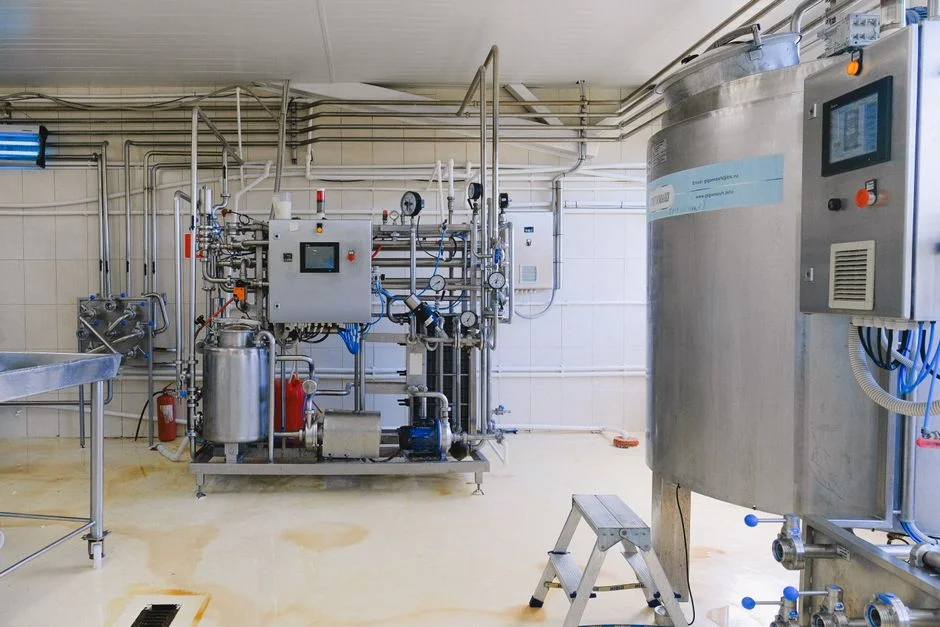
Equipment sizing begins with forward flow, peak-to-average ratio, raw BOD, raw FOG and the timing of production and CIP discharges. These inputs establish the hydraulic and contaminant peaks that equalization and each treatment unit must handle. An average daily flow cannot define the required equalization volume or demonstrate that DAF and biological systems will remain in their operating range during a concentrated batch.
| Sizing input | Why it matters | Required evidence |
|---|---|---|
| Forward and peak flow | Defines transfer, equalization and treatment capacity | Continuous flow history and metered production and CIP events |
| Raw BOD or COD | Controls biological oxygen and substrate demand | Representative composite samples by operating state |
| Raw FOG and TSS | Controls DAF and solids-removal loading | Representative measurements and batch-event sampling |
| Total phosphorus and pH | Controls chemical demand and permitted excursions | Influent data, chemical inventory and mixed-stream analysis |
| Temperature | Affects biological treatment performance | Temperature profile during production and cleaning |
Equalization should buffer batch discharges and prevent hydraulic overload from carrying FOG or solids through the train. For DAF, HydropureWater’s 2026 article cites 4–25 m/h surface loading, 0.005–0.02 air-to-solids ratio and 20–40% recycle as typical food-and-beverage design ranges. Verify those values against the selected equipment and pilot or vendor design rather than treating them as universal settings.
For biological systems, the same 2026 source gives conventional activated-sludge HRT of 8–24 hours and MBR HRT of 4–10 hours, with respective MLSS ranges of 3,000–5,000 mg/L and 8,000–12,000 mg/L. It also identifies a 1.5–2.5 mg/L dissolved-oxygen setpoint where nitrification is required and notes that temperatures above 40 °C can affect nitrification biology. These figures are design benchmarks, not Bells requirements.
Size chemical storage and metering for maximum credible dosing demand, including flow-proportional control and operator intervention. Where biological instability or settling problems recur, use the settling-problem troubleshooting guide with the exact supplied URL supplied for this article: /blog/58-activated-sludge-settling-problems-causes-solutions-expert-fixes.html.
Turn the Treatment Train into a Compliance Monitoring System
A compliant sample is only one part of the compliance record; operating controls must explain what happened before and after collection. Create a cause-and-effect diagram from production activity to flow, pH, BOD, TSS, FOG and phosphorus. Every permitted parameter needs an alarm or operating limit, a defined response and a retained record. If a production batch coincides with a load increase or chemical discharge, the log should preserve that context.
HydropureWater’s 2026 pretreatment article states that many food-and-beverage categorical permits require 24-hour composite sampling for BOD, TSS, FOG and total phosphorus at monthly to quarterly frequencies, with continuous pH and flow monitoring for significant industrial users. Treat that statement as a verification checklist, not a universal Bells requirement. The plant’s permit and receiving POTW must establish the actual monitoring regime.
| Control point | Record or action |
|---|---|
| Screening | Screen blinding condition, removal and maintenance response |
| DAF | Conditioning, skimming, recycle and equipment status |
| Biological process | Dissolved oxygen, temperature, biomass indication and process trend |
| Solids handling | Sludge level, withdrawal, dewatering and disposal destination |
| Chemical system | Inventory, delivery, calibration and dose-adjustment log |
| Permit monitoring | Sample time, result, flow, pH, production state and resampling |
Log production changes, CIP discharges, bypasses, high-level alarms, spills, power interruptions and resampling events. Locate sampling points so they comply with the permit’s definitions, preserve chain-of-custody records and retain calibration and laboratory-quality documentation. The pretreatment compliance-system reference is useful for the monitoring logic, but the Bells permit determines the required records.
Diagnose the Four Most Common Compliance Failures
A failed permit parameter is a symptom with several possible process causes, so troubleshooting should begin upstream and check both equipment condition and the event that produced the sample. Increasing downstream capacity without correcting the cause can increase capital cost without restoring compliance.
| Failure | Check first | Corrective action |
|---|---|---|
| FOG breakthrough | DAF conditioning, coagulant dose, recycle, skimming and hydraulic loading | Restore DAF performance and verify sludge removal before adding biological capacity |
| pH excursion | Equalization volume, trim pump, chemical delivery, probe calibration and possible CIP bypass | Restore mixing and fail-safe trim control, then verify the discharge route |
| Hydraulic overload during CIP | Available equalization volume, transfer-pump capacity and flow-paced controls | Contain the batch and correct pump or control capacity before discharging |
| TSS or phosphorus solids carryover | Flocculation, chemical dose, mixing, sludge withdrawal and clarification or membrane condition | Restore solids capture and confirm that the removed solids are withdrawn |
For persistent biological instability, check temperature, pH, cleaning-chemical toxicity, dissolved oxygen, nutrient balance and hydraulic shock together. A single effluent result cannot distinguish these mechanisms. For settling behavior, review the activated-sludge settling troubleshooting reference and verify the process conditions behind the observed solids carryover.
Build the Information Request for an Equipment Proposal
A comparable equipment proposal starts with the same legal and operating information at every bidder. Request the permit, POTW pretreatment manual, process-flow diagram, production and cleaning schedule, current wastewater characterization and three years of compliance history where available. State whether information is missing rather than allowing each vendor to assume a different permit basis.
Require each proposal to state design flow, peak flow, equalization requirement, FOG and solids loading, treatment-stage capacities, expected effluent basis, chemical consumption, sludge yield and monitoring interface. The proposal should also describe alarms, fail-safe pH control, flow-proportional dosing, data retention and remote or local trending.
Request pilot testing when wastewater variability makes scale-up uncertain. ALAR’s current food and beverage treatment article identifies pilot testing as a method for validating performance before full-scale installation (ALAR, 2026). Use the MBR and conventional biological-treatment comparison reference with the exact supplied URL supplied for this article: /blog/14347-mbr-vs-conventional-activated-sludge-for-mining-metals-wastewater-in-6.html.
Compare bids on guaranteed permit parameters, operating labor, chemical and sludge costs, footprint, maintainability and contingency response—not purchase price alone. A lower equipment bid can produce a higher total cost if it omits equalization, controls, replacement media or membranes, sludge transport, laboratory sampling or operator coverage.
Frequently Asked Questions
Who sets the discharge limit for a food plant near Bells?
The receiving control authority applies the governing federal, state and local requirements and determines which provisions apply. EPA identifies the POTW with an approved pretreatment program—or the approval authority where none exists—as responsible for identifying applicable standards and applying the most stringent requirements where multiple provisions apply (US EPA, “Pretreatment Standards and Requirements—Applicability,” current 2026). Ask the authority for the plant’s individual permit, local limits and applicable categorical subpart.
Does a food plant need a POTW permit, and is it a significant industrial user?
Confirm the permit requirement with the receiving authority. EPA’s significant-industrial-user tests include categorical status, average process-wastewater discharge of 25,000 gallons per day or more, a process wastestream contributing at least 5 percent of the POTW’s average dry-weather hydraulic or organic capacity, or designation because of reasonable potential to harm the POTW or violate a pretreatment requirement (US EPA, current 2026). Request a written status determination rather than inferring it from production volume.
What information is needed to size treatment equipment near Bells?
Provide forward and peak flow, BOD or COD, FOG, TSS, phosphorus, pH, temperature and the timing of production and CIP discharges. Include production and cleaning schedules, metered flow history and representative samples. Those inputs determine equalization, DAF, biological and chemical-control requirements; no universal flow rule is defensible for a batch-variable food plant.
How should buyers compare treatment suppliers and costs?
Require every bidder to use the same permit basis, influent data, sizing assumptions, stage capacities, expected effluent basis, controls, sludge balance and operating-cost model. Compare capital equipment, equalization, chemical use, biological media or membrane replacement, sludge hauling, sampling, labor and contingency. The food-processing treatment technology comparison is useful for structuring that review, but a defensible price requires current vendor quotations against site-specific inputs.
Related Equipment
- industrial DAF system for FOG removal — specifications, capacity range, and technical data