What Lusaka Housing Projects Must Establish Before Choosing a Plant
The most suitable packaged sewage treatment plant for a Lusaka housing development depends on wastewater flow, sewer coverage, soil and groundwater conditions, available footprint and irrigation-reuse requirements. A buried A/O package plant is generally the simpler candidate where gravity sewerage, standard domestic sewage and land available above the buried unit are priorities. An MBR is more appropriate where the developer needs higher-quality effluent, a smaller footprint or irrigation reuse. WEC Water assessed a Lusaka residential project where a trickle-filter plant handling up to 85 m³/day treated black water to irrigation-water standards using chlorine-based disinfection. That figure is a project precedent, not a universal sizing rule; final selection requires verified peak flow, wastewater analysis, site investigation and applicable discharge approvals.
WEC Water’s assessment covered a residential development with four apartment blocks, standalone houses, a clubhouse, gardens and recreational facilities. Its assessed trickle-filter plant could process up to 85 m³ of sewage per day. This establishes the capacity of that particular proposal, not a general Lusaka rule for every housing estate.
The developer should therefore resolve the design basis before requesting equipment prices. Confirm the population served, housing mix, daily water demand, average wastewater flow and peak factors. Identify which areas are sewered, which use septic systems, and whether groundwater enters the sewers. Clubhouse, commercial, central-service and landscaped-area inflows must also be identified rather than hidden inside a domestic per-capita assumption.
The 2022 TNO baseline assessment linked rapid urbanisation with increased demand for natural resources and strain on Zambia’s water and waste-management infrastructure. Selection based only on the number of housing units would therefore overlook both changing service demand and the resilience of the receiving infrastructure.
Before selecting a process, obtain written confirmation of the applicable Lusaka sewer-connection conditions, environmental approval route and requirements for the proposed effluent destination from the responsible authorities. The supplied research provides no current numerical discharge limits, so neither an A/O nor an MBR specification can substitute for that confirmation.
Lusaka Project Evidence and Design Implications
The Millennium Challenge Corporation Zambia Compact, which ran from 2013–2018, included the Lusaka Water Supply, Sanitation and Drainage project and combined infrastructure investment with institutional strengthening. Its relevance to a housing buyer is contextual: a package plant may complement a sewerage system, but it cannot be evaluated independently of the receiving network and the authority responsible for it.
SMEC’s Lusaka scope included rehabilitation of sewer treatment ponds and expansion of the existing sewerage system. A private development must establish whether connection to available infrastructure is technically and legally feasible or whether it needs a self-contained treatment arrangement. The same source reports construction in crowded markets and dense, growing informal residential neighbourhoods. It identifies heavy-equipment access, community engagement, safety, and management of vehicle and pedestrian traffic as project conditions requiring explicit attention.
WEC Water’s assessment also shows that reuse can influence process and disinfection requirements: the assessed Lusaka plant treated part of the development’s black-water effluent to irrigation-water standards using chlorine-based disinfection. That is evidence for defining the reuse objective early, not proof that the same treatment architecture or disinfection arrangement is appropriate for another site.
| Documented Lusaka evidence | Procurement implication | Design assumption still required |
|---|---|---|
| SMEC’s LWSSD scope included sewer treatment pond rehabilitation and sewerage-system expansion under the 2013–2018 Zambia Compact. | Determine whether the development can discharge to public infrastructure or requires a self-contained package. | Current connection availability, receiving-system capacity and authority approval. |
| SMEC worked in crowded markets and dense, growing informal neighbourhoods. | Make access, traffic management, pedestrian safety and community engagement contractual installation requirements. | Site-specific route, crane position, laydown area and traffic plan. |
| WEC Water assessed a Lusaka residential project with an up-to-85 m³/day trickle-filter plant for part of the black-water stream, using chlorine-based disinfection for irrigation-water standards. | Define whether the package covers black water only or all wastewater, and whether reuse drives disinfection selection. | Wastewater flow profile, grey-water route, reuse threshold, crop and governing approval. |
No supplied source establishes a Lusaka foul-water loading rate, groundwater level, soil-permeability requirement, irrigation threshold or current numerical discharge limit. Each remains an input to be established through project-specific analysis, site investigation and authority review.
Buried A/O Package Plant or MBR for a Housing Development
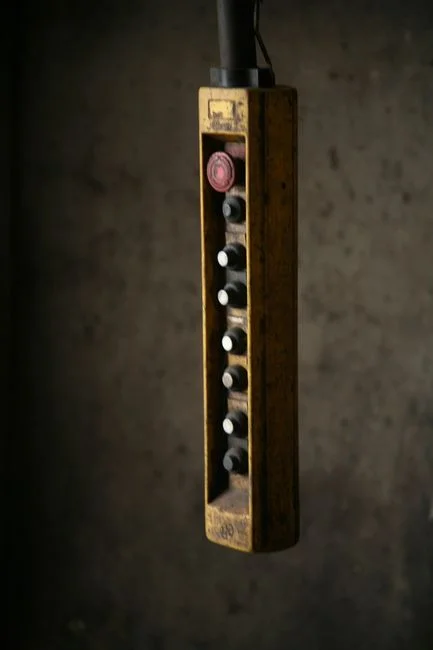
The practical distinction is process integration: the supplied WSZ architecture combines anoxic and aerobic contact oxidation, sedimentation and disinfection in one buried package, while the supplied MBR architecture combines activated sludge with submerged membrane filtration.
| Screening criterion | Buried A/O package | MBR system |
|---|---|---|
| Process architecture | Anoxic/aerobic contact oxidation, sedimentation and disinfection in a single buried unit. | Activated sludge combined with submerged PVDF membrane filtration. |
| Catalog capacity | 1–80 m³/h. | 10–2,000 m³/day. |
| Installation | Below grade, with landscaping above; the catalog also identifies trailer mounting for mobile deployment. | Presented as occupying 60% less footprint than conventional systems. |
| Filtration | Clarification and disinfection are integrated into the package process. | Submerged filtration below 1 μm. |
| Operation | Automatic operation without a permanent operator being required. | Automation and membrane operation must be included in the supplier’s scope and handover requirements. |
| Initial screening position | Strong candidate for a compact, buried domestic-sewage package with integrated clarification and disinfection. | More compelling where reuse quality, footprint reduction or separation of biological and membrane stages has greater value than process simplicity. |
The buried A/O package sewage treatment plant should be screened where gravity sewerage, standard domestic wastewater and space above the buried installation are the governing conditions. Its below-grade arrangement may protect the treatment process from visual intrusion and allow the surface to remain in use, subject to cover, groundwater, ventilation, access and lifting requirements.
The MBR sewage treatment system becomes more compelling where the reuse destination requires a more refined separation step, the available footprint is tighter, or the developer wants biological treatment and membrane filtration separated. Its larger catalog range also provides a basis for screening, not a demonstrated fit: the selected duty must still be based on verified project flows.
Neither option can be called lower-cost from the supplied evidence. There are no comparable Lusaka capital-cost, operating-cost, sludge-disposal or maintenance-cost data. A bidder should instead state what is included in the base offer: equalisation, screening, grease control, pumping, disinfection, odour control, sludge storage and removal, electrical supply, controls, alarms and routine maintenance access.
Ask each supplier to demonstrate how the proposed process handles the verified wastewater profile. The response should show the flow path, hydraulic assumptions, expected treatment stages, duty allocation between units, peak-flow behaviour and consequences of sludge accumulation. A catalog capacity alone does not demonstrate that the package can meet the development’s peak demand or operating conditions.
Match Treatment Architecture to the Development Site
Site conditions determine whether the process comparison is meaningful. A gravity-fed buried A/O package is the first scenario to investigate where the site has adequate cover, suitable excavation conditions and accessible installation space. Confirm the design peak flow, sewer invert levels, groundwater conditions, excavation access, electrical supply, sludge-removal route, odour boundary, storm-water separation and final effluent destination before treating it as viable.
An MBR becomes the stronger scenario where footprint is scarce, clarified effluent has a defined value, or the reuse objective cannot be reconciled with the selected A/O treatment and disinfection train. Its smaller-footprint claim still needs verification against the complete civil works, tankage, membrane maintenance access, electrical requirements, odour controls and sludge handling. A catalogue comparison of vessel area alone is not an installation-area comparison.
A phased or mobile arrangement is the third scenario. Trailer mounting is identified for the WSZ architecture, but phased deployment still requires a master plan showing temporary and future flows, connection points, equalization, redundant power, sludge routes and commissioning boundaries. The supplier should state whether later units can be added without replacing the initial process equipment or repeating significant civil work.
SMEC’s experience in constrained Lusaka sites makes delivery design part of the procurement scope. Require the bidder to state its assumptions for access, excavation, crane or lifting operations, laydown space, heavy-vehicle movements, pedestrian routes, temporary drainage and community engagement. Installation methods should be reviewed against actual site constraints before the equipment order is released.
The wastewater boundary also needs clarification. WEC Water’s assessed plant treated only part of the development’s black-water effluent. The buyer must decide where grey water goes, whether roof or surface runoff enters the sewer, and whether the package covers all wastewater or only a designated stream. These decisions affect flow, treatment duty, equalization and the validity of any performance guarantee.
Keep reuse conditional until requirements are confirmed. The Lusaka precedent used chlorine-based disinfection to reach irrigation-water standards, but suitability still depends on the crop, irrigation method, application pattern and governing approval. Treatment performance is an engineering matter; permission to apply the effluent is an authority decision.
Build a Supplier-Ready Sizing and Compliance Brief
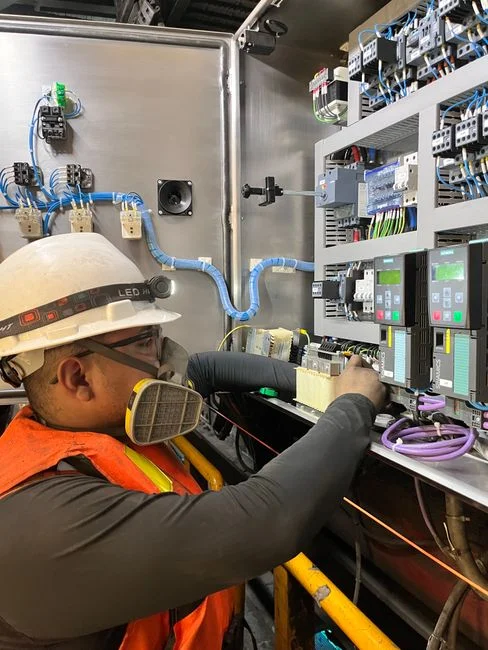
A comparable quotation starts with a common, project-specific basis of design. The supplier should size the package against verified flows and wastewater conditions, not against the number of homes in a marketing case study.
- Define the service population, housing mix, water-supply basis, average wastewater flow and peak demand. Require the designer to state the calculation and distinguish average from peak duty.
- Define the influent through sampling or a defensible wastewater profile. Address domestic characteristics, groundwater infiltration, commercial or clubhouse contributions and the proposed treatment boundary.
- Define the required outcome: sanitary sewer discharge, irrigation reuse or another specified use. Obtain the applicable approval criteria from the relevant Lusaka authority because the research contains no numerical effluent limits.
- Issue a common datasheet request covering process flow, guaranteed flow basis, footprint, burial depth, electrical load, automation, noise, odour, sludge removal, disinfection, commissioning tests, spare parts and local support.
- Require each bidder to explain how its package addresses access, installation, waste handling, commissioning and future expansion.
| Brief item | Supplier response required | Buyer check |
|---|---|---|
| Flow basis | Average and peak duty, calculation method and unit arrangement. | Does the duty reflect verified project flows and the wastewater boundary? |
| Influent basis | Wastewater profile, sampling assumptions and treatment-stage design basis. | Are infiltration and non-domestic inflows explicit? |
| Site installation | Footprint, burial depth, excavation, lifting, access, electrical supply and drainage. | Does the method work within the actual site? |
| Outcomes | Treatment claim, disinfection, test method and stated performance conditions. | Is the claim linked to the agreed influent, duty and reuse objective? |
| Operations | Sludge removal, odour control, maintenance access, spares, training and support. | Can the operating organisation actually maintain and access the plant? |
Catalog ranges are screening references, not Lusaka design approvals. The WSZ range is 1–80 m³/h, while the MBR range is 10–2,000 m³/day. These ranges must be converted into a project-specific configuration only after flow, site, reuse and approval inputs have been established.
Choose, Procure and Commission with Lower Risk
Shortlist the A/O and MBR architectures only after the design brief and site constraints are agreed. Request one priced base scope from each bidder and clearly price alternatives, such as added equalization, pumping, odour control, reuse disinfection or staged expansion. Comparable scopes make technical and commercial differences visible.
Require guarantees tied to the agreed influent and effluent basis, including the tested flow condition. Factory and site commissioning evidence should be defined in the contract: what is tested, who witnesses it, what samples are taken, which instruments are used and what constitutes acceptance. Generic statements that a package is “fully automatic” do not establish operability or performance.
Include operator training, maintenance access, spare-parts strategy, sludge-handling instructions, remote-control requirements and an escalation plan for local support. Identify who holds operating responsibility after handover and where critical spares can be obtained.
Installation logistics must be contractual rather than assumed after equipment selection. SMEC’s Lusaka experience supports requiring an access and safety method for constrained sites, together with traffic management and community engagement where heavy vehicles or works affect the surrounding area.
Do not issue a final equipment order until a Lusaka civil engineer and the relevant authority have reviewed the design inputs, site constraints, approvals and reuse conditions. The technology may be proven in the catalogue; suitability still has to be demonstrated on the development site.
Frequently Asked Questions
What capacity of packaged sewage treatment plant is suitable for a Lusaka housing development?
No single capacity can be selected from the number of homes. The WSZ catalog covers 1–80 m³/h and the MBR catalog covers 10–2,000 m³/day, but the buyer must establish average and peak project flows, the wastewater boundary and the required performance before choosing a configuration. The documented up-to-85 m³/day figure belongs to WEC Water’s particular Lusaka residential assessment and is not a universal rule.
How should a buyer compare a buried A/O package with an MBR system?
Compare them against the same project inputs: peak flow, wastewater profile, available footprint, groundwater and excavation conditions, reuse objective, installation access, sludge removal, maintenance capability and the required commissioning evidence. Ask each bidder to demonstrate the proposed process against those inputs. The supplied research contains no comparable Lusaka lifecycle-cost evidence, so a lower-cost claim should not be accepted without a like-for-like priced scope.
What additional evidence should be requested after reviewing the documented Lusaka case?
The strongest comparable precedent in the supplied research is WEC Water’s Lusaka residential assessment, supported by SMEC’s experience with sewer infrastructure and constrained urban sites. Request the supplier’s process design basis, hydraulic calculation, wastewater assumptions, installation method, guarantees, commissioning protocol, sludge plan, training, spares and local-support arrangement. Those documents must be adapted to the proposed development rather than copied from the precedent.
Does irrigation-water treatment performance prove that reuse is approved?
No. WEC Water reported that chlorine-based disinfection was used to treat part of the black-water stream to irrigation-water standards, but treatment capability does not establish regulatory permission. Confirm the current discharge and reuse criteria with the relevant Lusaka authority and define the crop, application method and water-quality basis before specifying disinfection.
How should installation risk be managed on a constrained Lusaka site?
Make access, lifting, laydown, traffic management, pedestrian safety and community engagement part of the supplier’s installation scope. SMEC’s Lusaka project experience identifies crowded markets and dense neighbourhoods as conditions requiring additional control around heavy equipment and pedestrian traffic. Require the bidder to submit a site-specific delivery and safety plan rather than accepting a generic installation method.