What EV Wastewater Changes About the MBR Decision
For EV and automotive wastewater, MBR is generally the stronger choice when a plant needs compact equipment, high-quality effluent, retained biomass and reliable solids separation. Conventional activated sludge remains attractive when capital and operating cost dominate the project and the wastewater is stable, readily treatable and not subject to tight discharge or reuse requirements. The key distinction is separation: CAS uses floc aggregation and secondary settling, while MBR uses a physical membrane. For Lucid Air or Lucid Gravity facilities, the final choice should follow wastewater characterization, pretreatment, pilot testing and reuse requirements.
An EV assembly plant cannot be evaluated from a single “automotive wastewater” profile. Process wastewater, sanitary wastewater and stormwater have different flow patterns, contaminant profiles and reuse or discharge routes, so each stream must be characterized separately. A process-water inventory should identify coating and cleaning chemicals, oils and grease, suspended solids, metals, pH, temperature and production-batch discharges. Production changes, wash cycles and variable flows also make equalization and hydraulic buffering part of the technology decision.
The governing criteria are broader than chemical oxygen demand. Floor space, discharge consistency, reuse potential, pretreatment burden, operator capability and the consequences of a process upset can determine whether MBR or CAS is more defensible. Where discharge rules are stricter or the receiving environment is sensitive, high-quality, hygienically reliable effluent has greater value. A 2020 study by the Agence Bibliographique de l’Enseignement Supérieur describes membrane bioreactors as a way to improve effluent hygiene at sensitive sites or for reuse, and notes the physical membrane barrier used to reduce pathogens in treated water.
This article applies those principles to automotive and EV manufacturing contexts associated with Lucid Air and Lucid Gravity; it does not claim that either vehicle program has a publicly specified wastewater process. Planners should use the automotive gigafactory wastewater planning framework to define streams, treatment objectives and reuse boundaries before comparing equipment.
How Conventional Activated Sludge and MBR Separate Solids
CAS and MBR both rely on biological treatment, but their solids-separation mechanisms create different equipment, operating and fouling requirements.
In conventional activated sludge, bacteria and protozoa degrade pollutants in an aerated mixed-liquor reactor. Flocs then aggregate and separate from the treated liquid in a secondary settling tank. Sludge withdrawal, wasting and return flows complete the process. Performance therefore depends on biological treatment, floc formation and successful settling.
An MBR retains the biological reactor but replaces the settling tank as the primary solid–liquid separation step. Permeate passes through a physical membrane while biomass and other retained solids remain in the reactor. The membrane system therefore controls the separation boundary directly rather than relying on settling.
| Design element | Conventional activated sludge | Membrane bioreactor |
|---|---|---|
| Primary separation mechanism | Floc aggregation followed by secondary clarification | Physical membrane filtration |
| Biological treatment | Central component | Central component |
| Bioreactor configuration | Aeration, mixed liquor, settling and sludge handling | Bioreactor coupled to membrane modules, permeate withdrawal and solids retention |
| Solids inventory | Depends on settling and sludge-control operation | Can operate at higher sludge retention time than CAS |
| Principal separation concern | Floc quality and settling performance | Membrane fouling, permeability and transmembrane pressure |
The academic comparison by Water Research identifies four MBR features: higher sludge retention time than CAS, low cell yield and lower sludge production, very high effluent quality through physical separation, and significant footprint reduction because the solid–liquid separation units are smaller. Those are general engineering relationships, not guarantees for every wastewater or configuration.
Membrane filtration cannot replace adequate biological treatment or upstream removal of fouling constituents. Industrial wastewater pretreatment should control oil and grease, suspended solids, solvents, soluble organics and other compounds that may attach to membrane surfaces or interfere with biological treatment. An integrated submerged-PVDF MBR system can then be evaluated against those confirmed feed characteristics.
Side-by-Side Performance for Automotive Treatment
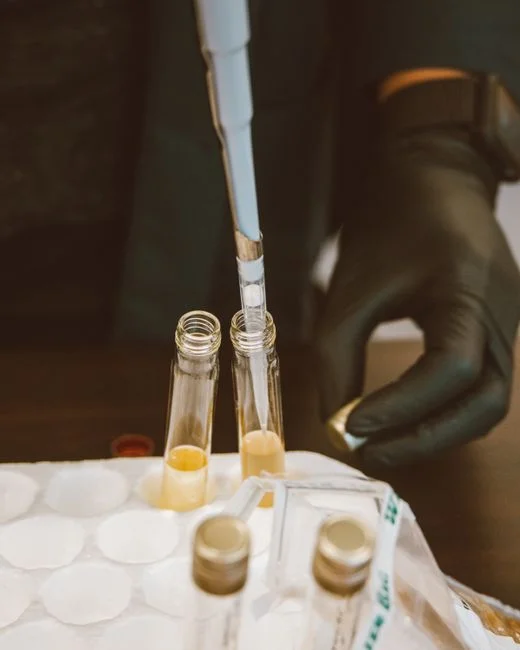
MBR offers more consistent solids separation and a smaller treatment footprint, while CAS generally presents a simpler train with lower energy demand.
Effluent consistency is the clearest architectural difference. MBR uses a physical barrier to retain solids, and the Water Research comparison associates it with very high effluent quality. CAS effluent quality depends on successful floc formation and secondary settling. That difference can matter where suspended solids must remain controlled under variable hydraulic conditions or where treated water is destined for reuse.
Footprint is an MBR advantage where space is constrained. The comparison identifies significant footprint reduction, although the extent depends on the complete plant configuration. A product-specific catalog claim should be handled separately: HydropureWater’s verified 2026 product catalog states that its integrated MBR provides a 60% smaller footprint than conventional systems. That claim applies to the cataloged product and must not be presented as a market-wide MBR ratio.
| Criterion | Conventional activated sludge | Membrane bioreactor |
|---|---|---|
| Effluent consistency | Dependent on floc formation and settling | Physical membrane barrier supports consistent solids separation |
| Footprint | Larger secondary-separation installation | Significantly smaller solid–liquid units; product claims require separate verification |
| Sludge behavior | Sludge production and wasting depend on process operation | Higher SRT can support degradation of recalcitrant pollutants; low cell yield reduces sludge production |
| Operating burden | Lower energy demand in the cited comparison | Fouling controls require cleaning, aeration, labor and membrane-life management |
| Microplastics evidence | 1 MP/L in one cited study | 0.4 MP/L in one cited study |
| Direct GHG scenario | 0.85 kgCO2eq/m³ | 0.91 kgCO2eq/m³ |
The microplastic values are results reported by Lares and colleagues in the Water Research comparison: 0.4 MP/L for MBR and 1 MP/L for CAS. They describe one cited study, not a universal performance ratio or a guarantee for automotive effluent.
The same comparison reports a modeled benchmark scenario with direct greenhouse-gas emissions of 0.85 kgCO2eq/m³ for CAS and 0.91 kgCO2eq/m³ for MBR. These are scenario outputs, not measured site performance or an automatic MBR climate penalty; configuration, aeration and operating conditions remain relevant.
Economics are also context-dependent. The comparison cites Karim and Mark’s long-term model, in which MBR became the better option after 67 years of operation because its effluent quality compensated for higher initial investment. That is a modeled threshold, not a procurement rule for an EV plant. Buyers should use the MBR wastewater treatment costs explained to define the supplier inputs required for an EV-specific lifecycle estimate.
Where Each Treatment Train Performs Better
The defensible choice follows the wastewater and reuse constraints: MBR fits space-constrained, quality-critical applications, while CAS remains credible for stable, readily treatable flows with available land.
MBR is generally preferable when floor space is constrained, effluent quality is critical, reuse quality must be maximized, reliable suspended-solids separation is required under variable hydraulic conditions, or stringent discharge limits apply. Its physical separation barrier can also improve operational consistency when secondary settling is less reliable.
CAS is generally preferable when wastewater is stable and biodegradable, sufficient land is available, minimum lifecycle operating cost is the priority, and preliminary treatment can remove substances that would foul an MBR. The treatment objective must be specific: adequate disinfection and solids removal for a defined discharge may justify a simpler train, whereas direct reuse may justify a different configuration or additional polishing.
| Project condition | Initial technology position | Mandatory engineering check |
|---|---|---|
| Stable, biodegradable wastewater with available land | CAS merits a full comparison | Confirm secondary clarification and sludge handling |
| Constrained footprint or quality-critical effluent | MBR merits a full comparison | Verify pretreatment, redundancy and membrane maintenance |
| Variable production flows | Neither technology can be selected from flow alone | Assess equalization and hydraulic buffering using plant data |
| Defined water-reuse application | MBR may provide a stronger biological treatment platform | Apply the end-use specification; determine whether RO or other polishing is required |
| Coating, cleaning, oil, grease or solvent exposure | Pretreatment is decisive | Characterize the constituent and its membrane or biological impact |
Pretreatment review must cover oil and grease, suspended solids, soluble organics, pH, temperature, metals and automotive coating or cleaning chemicals. Neither technology should be selected from a generic COD value. Request production-linked sampling, including startup, shutdown, wash cycles and normal operation, then establish how each stream will be segregated or combined.
Equalization must also be assessed against production variability; no design flow or equalization volume can be inferred without plant data. For reuse, MBR effluent does not automatically satisfy reverse osmosis or another polishing requirement. Define the end use, required quality and operating reliability before selecting a train.
Chemical wastewater comparisons offer relevant pretreatment logic but are not evidence of EV-project economics. The MBBR versus activated sludge for chemical wastewater article is useful for identifying constituent risks, while any food-wastewater analogy must remain separate from the actual automotive wastewater inventory.
Fouling, Reliability and Operating Controls
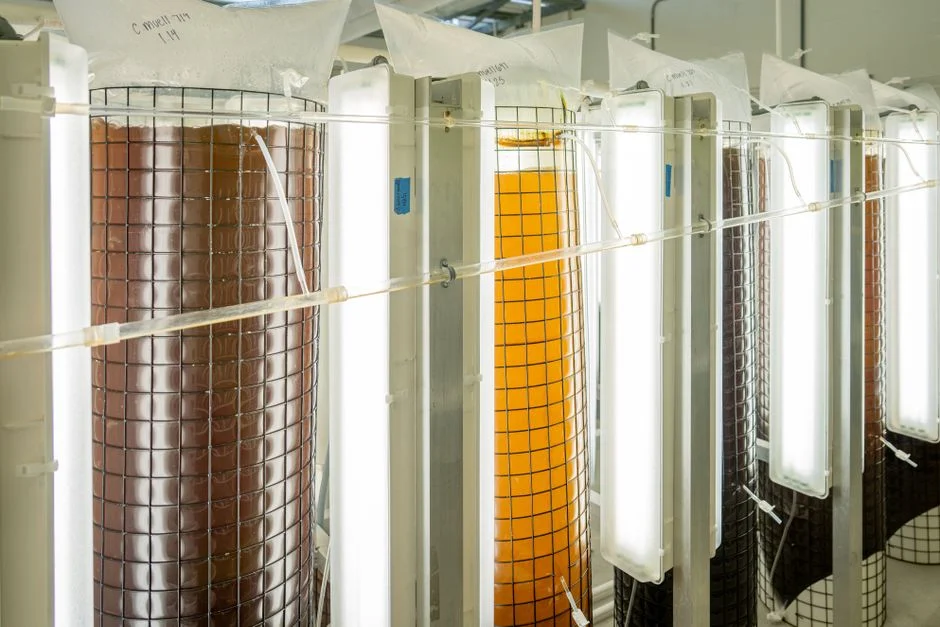
MBR fouling directly reduces hydraulic performance: it lowers permeate flow and raises transmembrane pressure.
Those two consequences come from the 2020 Water Research plant-wide modelling comparison. The same source identifies chemical cleaning, physical cleaning and aeration as fouling-mitigation measures. These measures add energy demand and operating cost relative to CAS, so membrane performance must be evaluated together with recovery and maintenance rather than as a simple effluent-quality claim.
Procurement specifications should require suppliers to define normalized permeability or transmembrane-pressure monitoring, cleaning triggers, recovery steps and membrane replacement provisions. Alarm values should come from the selected equipment, feed envelope and operating strategy; they should not be invented at the concept stage.
- Performance monitoring: Identify how flux or normalized permeability, transmembrane pressure, turbidity and relevant water-quality parameters will be recorded.
- Cleaning strategy: Define the proposed chemical and physical cleaning sequence, expected recovery method and operational labor.
- Reliability: Establish module redundancy, isolation capability, spare-module strategy and the treatment response to an extended discharge interruption.
- Maintenance: Identify accessible components, inspection points, replacement provisions and membrane-life assumptions.
- Controls: Require automatic operating logic with manual fallback, event logging and a documented upset response.
These controls matter more at an automotive plant where a treatment interruption can affect production continuity or discharge compliance. A single-unit MBR with no effective redundancy should not receive the same reliability credit as a train designed for continued operation during module maintenance.
HydropureWater’s verified 2026 catalog provides a product-specific reference for submerged PVDF membrane filtration and a claimed 60% footprint reduction. The DF Series flat-sheet MBR modules can therefore be assessed by module design, materials, maintenance provisions and supplier guarantees—not by treating the footprint claim as a generic MBR characteristic.
Build the Decision Around Total Lifecycle Requirements
A defensible tender compares complete treatment trains under the same wastewater, reuse and reliability requirements.
- Characterize the streams. Separate process wastewater, sanitary wastewater and stormwater; collect production-linked flow, COD, nutrients, solids, oil and grease, metals, pH, temperature and relevant chemical data.
- Define the receiving requirement. Establish the applicable discharge permit or end-use reuse specification before selecting equipment.
- Establish pretreatment. Identify constituent-specific removal requirements and test compatibility with the proposed biological and membrane systems.
- Compare treatment trains. Assess CAS and MBR against the same flow envelope, effluent criteria, footprint, redundancy and operating assumptions.
- Pilot-test uncertainty. Use representative automotive wastewater variability to observe fouling, effluent response, cleaning demand and operator workload.
- Validate lifecycle assumptions. Review energy, chemicals, labor, replacement, sludge handling and downtime consequences using supplier data.
- Tender with performance obligations. Define test methods, guarantees, replacement provisions, controls, documentation and operating support.
Supplier data should include the design flow range, feed-characteristic envelope, treatment objectives, membrane area and configuration, cleaning frequency, energy use, redundancy, controls, maintenance access, replacement intervals and residual handling. These are required inputs for a like-for-like commercial comparison.
| Procurement package | Information required from bidder | Evaluation purpose |
|---|---|---|
| Process basis | Flow range, wastewater characterization envelope and operating hours | Confirms that the train fits actual production variation |
| Equipment scope | Treatment configuration, membrane area, pretreatment, equalization, sludge handling and reuse polishing | Prevents omitted scope from distorting comparison |
| Performance | Effluent guarantees, test methods, operating envelope and performance tests | Connects equipment to permit or reuse requirements |
| Operations | Energy, chemicals, cleaning cycle, labor, controls, alarms and maintenance access | Tests operability and lifecycle assumptions |
| Reliability | Redundancy, isolation, spare strategy, replacement and upset-response plan | Addresses consequences of treatment interruption |
| Commercials | Capital, installation, commissioning, training, consumables, replacement and support terms | Supports total-cost-of-ownership comparison |
HydropureWater’s verified 2026 catalog lists a capacity range of 10 to 2,000 m³/day for its integrated MBR. This is a screening reference for that product, not a general market range or an EV plant design flow. Final sizing requires measured wastewater characteristics, hydraulic data and treatment objectives.
A pilot should compare the candidate trains under representative automotive wastewater variability. Measure membrane-fouling observations, effluent response, cleaning demand and operator workload. If reuse is required, include any downstream polishing in the pilot objective and lifecycle boundary. The automotive factory wastewater planning approach can be used to align that scope with facility continuity.
Frequently Asked Questions
How much does MBR cost compared with conventional activated sludge for an EV plant?
MBR generally has higher energy demand and operating cost because fouling controls include chemical cleaning, physical cleaning and aeration, as the Water Research comparison reports. The source does not provide an EV-specific cost per cubic metre. Ask bidders for capital equipment, installation, aeration, chemicals, cleaning labor, membrane replacement, sludge handling and downtime consequences using the same design basis for both trains.
What size MBR is required for an EV or automotive wastewater plant?
HydropureWater’s verified 2026 catalog lists 10 to 2,000 m³/day for its integrated MBR, but that range is product-specific. Final sizing requires stream-by-stream flow data, production variability, feed characterization, equalization requirements and discharge or reuse criteria. A capacity selected from average flow alone may not represent the required hydraulic envelope.
Does MBR effluent automatically satisfy discharge limits or water-reuse requirements?
No. The physical membrane barrier can support very high effluent quality, but permit compliance depends on every applicable parameter and the treatment train as commissioned. For reuse, the MBR is only one process step: define the end-use specification and determine whether RO, filtration, disinfection or other polishing is required.
Are Lucid Air or Lucid Gravity facilities known to use MBR or conventional activated sludge?
The supplied research does not establish a public wastewater process for either Lucid vehicle program. Apply the same source-disciplined framework to an EV facility: characterize each wastewater stream, establish discharge or reuse criteria, review pretreatment, pilot-test the candidate train and tender lifecycle and performance obligations. This supports a defensible choice without claiming access to proprietary designs.