What changes when Meta acquires a Malaysian plant?
Meta’s acquisition of a Malaysian plant does not by itself create a new wastewater category, transfer a permit or trigger a universal change-of-control filing. The buyer must verify the approval holder, licensed operator, discharge route, approved flow and effluent conditions against the plant’s current written instruments. The Environmental Quality Act 1974 and relevant 2009 industrial-effluent and sewage regulations form the framework, but the Department of Environment and the actual sewer or receiving authority must confirm site-specific requirements. Treatment selection must follow measured, segregated streams and the required discharge or reuse outcome—not the identity of the new owner.
No supplied evidence establishes automatic transfer or amendment of an existing approval after Meta acquires the plant. The transaction team must run two independent workstreams:
- Regulatory standing: determine whether discharge remains lawful after the change in owner or operator, and whether the Department of Environment or receiving authority requires notification, transfer, amendment, replacement or a new approval.
- Commercial liability: determine who funds treatment capital, monitoring, remediation, closure costs and delays arising from non-compliance or approval conditions.
The buyer’s identity does not answer the site-specific questions. The transaction file must establish the approval holder, licensed operator, responsible legal entity, proposed production configuration, stream flows and chemistry, discharge point, sewer status and reuse arrangement. Each fact must be checked against the complete approval register and the proposed post-closing operation.
An application for approval, transfer or amendment is not the same as approval being granted. This distinction must be carried into the transaction documents rather than resolved through an assumption in the purchase agreement. The plant-acquisition wastewater due-diligence framework provides a parallel for separating regulatory status from commercial exposure.
Map the Malaysian approval framework to the site's actual discharge route
The Environmental Quality Act 1974 is the cornerstone framework, while the Environmental Quality (Industrial Effluent) Regulations 2009 and Environmental Quality (Sewage) Regulations 2009 are identified as relevant instruments in the January 2023 paper Wastewater Production, Treatment, and Use in Malaysia. That paper identifies SPAN as the regulator under the Water Services Industry Act 2006, Act 655, and IWK as Malaysia’s national sewerage company. Neither fact determines which authority controls the acquired site. To identify the correct regulatory path, the buyer must match the physical discharge configuration to the specific licensing requirements of the local authority.
| Discharge route | Written instruments to obtain | Confirmation required |
|---|---|---|
| Direct surface-water discharge | DOE consent, supporting assessment and applicable monitoring conditions | Confirm the authorized stream, outfall, approved flow, effluent conditions, sampling and reporting points, and whether the consent remains valid after the ownership or operating change. |
| Municipal or centralized industrial sewer | Trade-waste discharge consent, trade waste pretreatment agreement, connection approval and applicable sewer schedule | Confirm every non-domestic stream, proposed flow and chemistry, prohibited uses, monitoring duties, surcharge triggers, reserved capacity and pretreatment performance. Confirm whether IWK or another authority receives the discharge. |
| On-site treatment followed by reuse | Written approval route, reuse specification, risk assessment and receiving-party acceptance | Confirm the authorized end use, water-quality requirements, treatment basis, monitoring plan, responsible operator and whether reuse displaces another applicable discharge control. |
A physical sewer connection or outlet is not proof of authorization. Each stream, outfall, flow and chemical condition must be covered by a current written instrument. The approval register should identify the legal permit holder, licensed operator, authorized stream, outfall, approved flow, effluent conditions, monitoring locations, reporting points and any amendment or submission history.
The January 2023 paper estimated municipal and industrial wastewater generation at 2.97 billion cubic metres per year. That figure is historical national context, not a design input for this plant and not evidence of its permitted capacity.
Build the wastewater baseline stream by stream
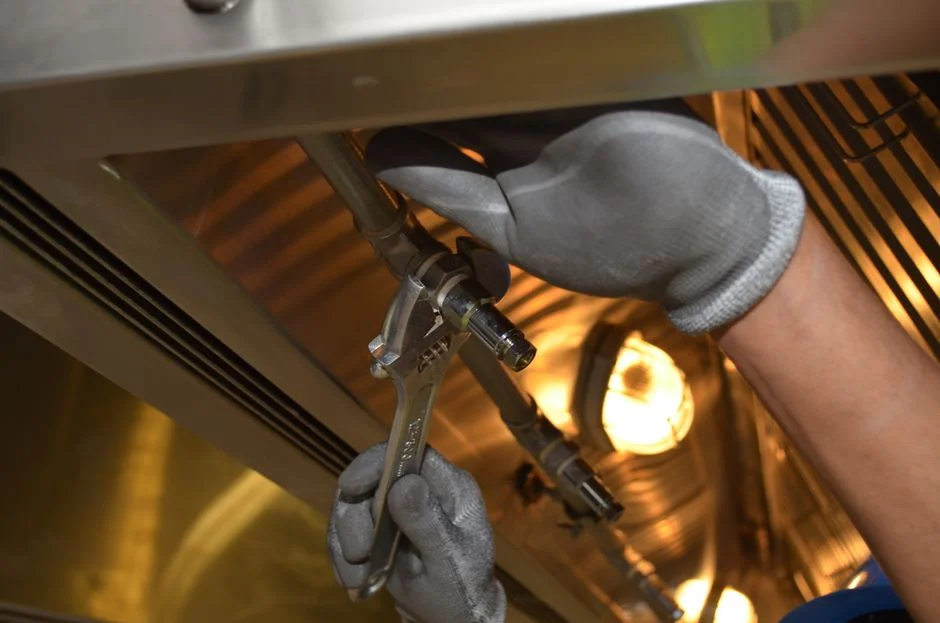
A plant-wide wastewater average can conceal intermittent high-flow streams and incompatible chemistry. The baseline must separate process rinse and wash water, equipment-cleaning wastewater, laboratory drains, cooling-tower blowdown, non-contact cooling water, domestic sewage and stormwater.
| Evidence item | Required transaction record |
|---|---|
| Stream register | Origin, segregation, average and peak flow, destination, treatment train, monitoring point, approval holder, responsible operator and current consent. |
| Characterization data | Current wastewater analyses, historical flow and laboratory records, sampling methods, laboratory details and chain-of-custody information for each segregated stream. |
| Initial analytical screen | pH, temperature, suspended solids, COD, TOC, fluoride, arsenic, copper, lead, zinc, silica, oils and greases, toxicity indicators and process-specific pollutants, adapted to actual operations. |
| Compliance history | Monitoring reports, deviations, exceedances, enforcement notices, bypass records, sludge and hazardous-waste manifests, calibration files, current drawings and receiving-authority correspondence. |
Historical data must represent the proposed production configuration. Otherwise, it provides context rather than a defensible design basis. The semiconductor arsenic wastewater treatment guide supplies an initial analytical screen, but the acquired plant’s processes may generate different streams or contaminants. A concentrated, intermittently discharged stream must be evaluated on its own flow and chemistry rather than diluted into a site total.
The evidence file should also reconstruct who controlled each stream, what was discharged, how measurements were produced and which operator was responsible. Compliance data must be matched to the production configuration and operating period that existed when each sample or record was generated.
Choose treatment from measured objectives, not the acquirer's identity
No treatment technology is a default. Selection must follow the measured contaminant problem, required discharge or reuse outcome, verified flow, existing treatment train and residue-disposal route. The comparison below defines when each process deserves engineering review.
| Measured objective | Process to evaluate | Evidence required before selection |
|---|---|---|
| Measured suspended solids, oil and grease, colloids and a physical-separation objective | Industrial DAF system | Hydraulic and contaminant loading, recovered-solids properties, chemical demand and downstream treatment. The supplied HydropureWater catalog range is 4–300 m³/h across 13 standard models; these are product boundaries, not acquisition-specific design values. |
| Defined biological treatment, solids separation or reuse-grade polishing objective | MBR wastewater treatment system | Feed biodegradability, membrane compatibility, fouling potential, required effluent quality and integration with the existing train. The supplied catalog range is 10–2,000 m³/day. |
| Solids, colloid or microbial barrier duty supported by the required outcome | Ultrafiltration | Feed compatibility and a defined separation result. The supplied UF range is 2,000–40,000 L/h with 0.03 micron PVDF membranes. |
| Measured acidity, fluoride, metals or precipitation chemistry | Controlled chemical dosing | Chemical demand, dosing control, containment, reaction kinetics and treatment of generated solids. |
| Measured biodegradable organic load and compatible biological chemistry | Biological treatment | COD, TOC, TMAH, toxicity and biodegradability, plus sludge generation, storage, dewatering, classification, disposal and downstream acceptance. |
Biological routes remain conditional, not automatic. A comparison of MBR with conventional activated sludge for semiconductor wastewater depends on measured feed chemistry and the specified treatment outcome. Equipment capacity alone does not demonstrate compliance: the selected process must meet a measurable consent, sewer or reuse condition, including the fate of generated solids and residues.
Convert permit risk into transaction protections
Each approval or agreement needs a dated transaction consequence: signing condition, closing condition, post-closing milestone or condition to operating at the planned production level. The purchase agreement should not assume that filing an application guarantees authorization. Clear contractual language is required to manage the gap between submitting an application and receiving regulatory approval.
Targeted purchase-price adjustments, holdbacks, indemnities and seller covenants should address identified risks associated with approval transfer or replacement, sewer rejection, surcharges, capacity constraints, treatment-capital funding, legacy contamination, closure obligations and production-ramp restrictions. Capital funding and inherited liability should remain separate from the regulator’s decision on lawful discharge.
The disclosure schedule should include every environmental notice, inspection, exceedance, monitoring gap, permit breach and pending agency or receiving-authority matter, including matters that did not result in a fine. Enforcement history alone does not measure environmental risk.
Maintain a clear closing-date record boundary using laboratory results, flow records, calibration files, bypass logs, notices, correspondence and waste-disposal documents. Pre-closing exceedances, contamination, penalties, remediation and waste liabilities should be allocated to the seller, while the agreement defines the buyer’s post-closing operating and monitoring duties.
Obtain written positions from the Department of Environment and the applicable receiving authority before closing. If approval is delayed or conditioned, the transaction documents need an interim-disposal plan, production restriction, funding mechanism and clear responsibility for regulatory delay.
Issue a supplier-ready design and pricing package
Pricing should begin only after the discharge route, verified design flows, segregated-stream analyses, treatment objectives, current consent conditions, site constraints, existing drawings, installation boundary, future production plan and sludge route are defined. Without that package, suppliers will price assumptions rather than a compliance solution.
Require every bidder to state its sizing inputs, performance basis, compliance role, installation scope, commissioning evidence, O&M assumptions, monitoring support and exclusions. The DAF equipment-selection guide can help structure those questions, but it cannot replace verified site data. By standardizing the information provided to vendors, the buyer ensures that all quotes are based on the same technical requirements.
Request a priced bill of quantities separating equipment sizing, civil works, controls, commissioning, validation, O&M and exclusions. This makes differences in scope and compliance responsibility visible. No supplied source supports a defensible acquisition-specific equipment price for a Meta Malaysia plant; a quotation is premature until the required design and compliance inputs are available.
Frequently Asked Questions
Does Meta’s acquisition automatically transfer the site’s wastewater permit?
No supplied evidence establishes automatic transfer, amendment, replacement or a universal change-of-control filing after Meta acquires the plant. The transaction team should obtain the current consent or sewer agreement, approval register, licensed-operator records and agency correspondence, then request written confirmation from the Department of Environment and the actual receiving authority. The proposed production flow, chemistry and discharge route must be included.
What treatment equipment can be selected at the acquisition stage?
Only a preliminary process screen can be prepared before full characterization. Final selection requires verified segregated flows, measured chemistry, the applicable consent conditions and the required discharge or reuse outcome. Size from each stream’s measured average and peak conditions rather than a plant-wide average or equipment nameplate capacity.
How should Meta compare wastewater-treatment supplier quotations?
Require bidders to use the same verified sizing inputs and to identify their performance basis, installation scope, commissioning evidence, O&M assumptions, monitoring support and itemized exclusions. A comparable schedule should separate equipment, civil works, controls, commissioning, validation, O&M and price exclusions; otherwise, apparent price differences may reflect different scopes.
Who should bear legacy contamination and pre-closing exceedances?
Allocate identified pre-closing contamination, exceedances, penalties, remediation and waste liabilities to the seller through targeted price adjustments, indemnities, seller covenants or holdbacks. Define the buyer’s post-closing operating and monitoring duties separately. The allocation should follow the closing-date evidence, notices, laboratory records and waste-disposal documents rather than a general statement about environmental liability.