Which packaged sewage plant should an Atlanta housing development shortlist?
The best packaged sewage treatment plant for an Atlanta housing development depends on verified flow, discharge route, land availability, phasing, and permit conditions. A buried A/O package serves as a practical starting point for a compact residential installation; the buried WSZ sewage treatment package covers 1–80 m³/h and combines contact oxidation, sedimentation, disinfection, automatic operation, and buried or trailer-mounted installation options. An MBR is more compelling where finer solids separation or water reuse is required; the integrated MBR wastewater treatment system covers 10–2,000 m³/day and combines activated sludge treatment with submerged PVDF membrane filtration. Modular treatment is a priority when the build-out occurs in phases.
This is a screening decision, not a selection. Atlanta-area buyers must evaluate the discharge destination, available footprint, development schedule, odor and noise constraints, and the requirements of the authority having jurisdiction. A package that is technically capable may still be unsuitable if its outlet, installation method, or operating arrangement conflicts with site or regulatory conditions.
The wider planning context supports scalable infrastructure decisions. MDPI reports that diffuse suburban populations place substantial strain on infrastructure and local municipal budgets, making phased deployment relevant to Atlanta-area housing procurement (MDPI eBooks, Unsustainable Development: A Case Study of Urban Planning History and Pandemic Trends in the United States). That source provides planning context, not equipment-selection criteria or Georgia discharge limits.
The shortlist should retain three conditional options: buried A/O where footprint and residential application lead; MBR where separation quality or reuse is central; and modular treatment where sequencing reduces upfront deployment or allows expansion as occupancy grows. Each option should advance to the same design and permitting checks rather than being selected from catalog capacity alone.
Compare A/O, MBR, and modular treatment routes
Buried A/O, MBR, and modular systems differ in biological process, solids separation, installation form, and expansion strategy. The following comparison uses only the documented scopes in the supplied research; reuse remains a project-specific objective rather than an automatic compliance claim.
| Route | Biological approach | Solids separation | Documented capacity | Installation and expansion | Buyer verification |
|---|---|---|---|---|---|
| Buried WSZ A/O | Contact oxidation, sedimentation, and disinfection | Package documentation identifies sedimentation as part of the treatment train | 1–80 m³/h; residential-community scope | Automatic operation; buried or trailer-mounted installation | Confirm hydraulic response, residuals handling, access requirements, and suitability for the proposed outlet |
| Integrated MBR | Activated sludge treatment with submerged PVDF membrane filtration | Membrane filtration below 1 μm | 10–2,000 m³/day | Stated 60% footprint reduction versus conventional systems | Verify membrane configuration, pretreatment, cleaning, redundancy, reuse pretreatment, and project-specific effluent suitability |
| Modular treatment | Manufacturer-specific process, including the CommunitySewer MBBR example | Manufacturer-specific | Not stated in the supplied research | Factory-built modular equipment permits phased development | Require the process train, phase capacities, utilities, installation sequence, and expansion method |
The MBR option offers a distinct separation advantage, but “near-reuse-quality effluent” does not establish permission for the intended reuse. Buyers should define whether the objective is irrigation, toilet flushing, groundwater recharge, or another discharge pathway, then ask the designer and authority having jurisdiction what pretreatment and monitoring apply. The DF flat-sheet MBR module provides one configuration reference: its documented pore size is 0.1 μm, listed module capacity is 32–135 m³/day, aeration is integrated, and stated energy consumption is 10–20× lower than external cross-flow systems.
CommunitySewer describes factory-built equipment and phased development for residential projects. Its AISI 304 construction specification and twelve-week follow-up belong to that supplier’s offer, not to every modular system. Procurement should preserve the useful scheduling principle while requiring each bidder to document its own materials and evidence.
Size the system from the development's actual wastewater duty
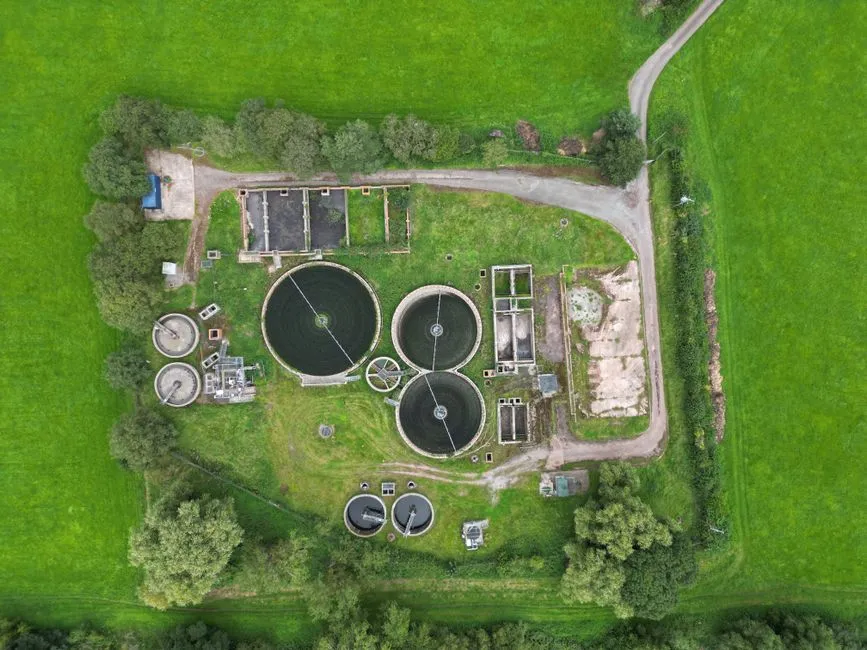
A catalog capacity range cannot establish the correct package size for a housing development. The sizing basis must connect residential occupancy and construction phases to verified average and peak wastewater flows, including infiltration, inflow, and groundwater contributions.
- Document the unit mix, occupancy assumptions, average wastewater flow, and expected diurnal and peak factors.
- Quantify infiltration and inflow and assess groundwater influence at the proposed treatment and discharge locations.
- Separate current-phase demand from ultimate-build demand.
- Identify peak-flow behavior, hydraulic loading, redundancy, controls, alarms, and required auxiliary power.
- Confirm the treatment train, discharge route, and any reuse or polishing requirements.
| Sizing input | Evidence required by the buyer | Why it changes equipment selection |
|---|---|---|
| Residential demand | Unit count, occupancy assumptions, average flow, and peak factor supported by the design basis | Establishes biological and hydraulic loading rather than package count alone |
| Groundwater and infiltration | Site-specific contribution estimates and the basis for those estimates | Can alter hydraulic duty, equalization needs, and treatment performance |
| Development phases | Current and ultimate flows, anticipated occupancy schedule, and expansion sequence | Determines whether modular capacity, reserve capacity, or staged installation is justified |
| Effluent destination | Discharge point, receiving constraints, reuse objective, and written permit pathway | May add pumping, disinfection, storage, equalization, polishing, or pretreatment |
| Process reliability | Peak-flow response, hydraulic loading, redundancy, controls, alarms, power, and proposed influent and effluent conditions | Tests whether the package can operate reliably across the agreed duty |
The MBR range of 10–2,000 m³/day and WSZ range of 1–80 m³/h are screening bounds, not selection criteria. A vendor must demonstrate how the proposed unit fits the development’s calculated demand. The treatment train should show the biological reactor followed by the required clarification or membrane separation, disinfection, pumping, flow equalization, and reuse or polishing steps. The related comparison of A/O, MBR, and MBR-UF housing package plants and buried A/O, MBR, and biofilm package-plant comparison provide useful technical framing, but the Atlanta project still requires its own flow analysis and site-specific basis.
Match the package plant to Atlanta site and permit constraints
Atlanta procurement begins by identifying the authority with jurisdiction and obtaining written confirmation of the proposed sewer discharge, on-site land application, reuse, or other permitted route. A residential-use statement from a manufacturer does not establish that a particular discharge or reuse pathway is acceptable.
Buried systems require a site-specific geotechnical and groundwater assessment. These conditions affect excavation, access, buoyancy, construction methods, and performance. Above-ground systems require a different review of visual impact, noise, odor, maintenance access, and utilities. In either case, the design team should resolve floodplain and drainage constraints, setbacks, easements, landscaping, odor and noise exposure, vehicle access, electrical supply, and future construction constraints.
| Constraint | Question for the design team | Evidence to retain |
|---|---|---|
| Regulatory route | Which authority has jurisdiction, and is the intended discharge or reuse route permitted? | Written pathway confirmation and a permit-compliance responsibility matrix |
| Groundwater and soils | What will excavation, access, buoyancy control, and construction require? | Geotechnical report, groundwater investigation, and installation recommendation |
| Floodplain and drainage | Can the plant, access route, storage, and discharge works be built and maintained safely? | Site constraints plan and floodplain review |
| Community impacts | How will odor, noise, lighting, traffic, and landscape impacts be addressed? | Design narrative, controls specification, and operational monitoring plan |
| Compliance operation | Where and how will samples be taken, and who owns monitoring and corrective action? | Sampling plan, monitoring schedule, permit conditions, and residual-handling procedure |
The permit team should define sampling points, monitoring frequency, residual handling, reporting responsibilities, and corrective-action duties before equipment procurement. The IntechOpen source on microalgae-based sewage treatment identifies BOD reduction, coliform inhibition, and nutrient removal as relevant treatment functions; it supports monitoring objectives but does not establish Georgia permit limits for this project (IntechOpen, Phyco-Remediation of Sewage Wastewater by Microalgae).
The Atlanta infrastructure trend should be treated only as market context. BizJournals described scalable utilities being built to match Georgia housing demand in 2025-11, but the supplied excerpt contains no package specifications or permit requirements. Buyers should not substitute that development trend for a site-specific regulatory review.
Plan installation, commissioning, and performance assurance
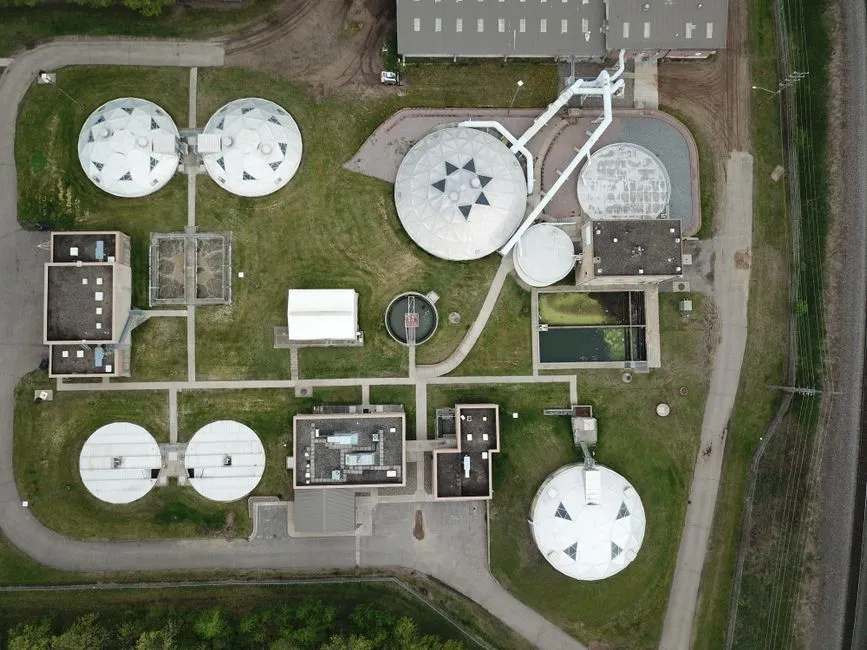
Performance assurance begins with a defined process-flow sequence: incoming sewer or pumping station, treatment, disinfection, effluent storage or conveyance, and residuals management. Each proposal must separate factory testing, delivery, civil works, mechanical installation, electrical and controls work, commissioning, and operator or owner training.
CommunitySewer states that it returns twelve weeks after startup to confirm treatment levels and remediate any insufficiencies (CommunitySewer, Wastewater Treatment for Residential Development, 2026). That is a useful benchmark for procurement: require every bidder to define when performance will be checked, what sampling will occur, how results will be compared with the agreed criteria, and who must correct deficiencies. The period alone does not replace a complete acceptance protocol.
Vendor schedules should identify delivery assumptions, site-access requirements, lifting needs, utility interfaces, civil-work boundaries, warranty coverage, spare parts, remote-control arrangements, and ongoing service availability. Ask for acceptance criteria, reference projects, corrective-action duties, and defined remote or on-site response arrangements. Require the buried WSZ sewage treatment package bidder to explain how installation and service access are maintained without assuming that buried configuration eliminates maintenance responsibilities.
Material selection should remain bidder-specific. CommunitySewer’s AISI 304 MBBR construction is evidence for that supplier’s system, not a universal material requirement. Each proposal should identify exposed and submerged components, corrosion assumptions, access strategy, and the basis for material selection. Procurement should also distinguish equipment warranties from civil, installation, workmanship, and long-term performance obligations.
Issue a vendor request that produces comparable proposals
A common basis of design prevents vendors from quoting different problems. Issue one request for proposal covering verified wastewater flow and analysis, discharge point, land constraints, development phases, reuse objective, regulatory pathway, and required documentation.
| Proposal area | Required response | Comparable evidence |
|---|---|---|
| Treatment basis | Technology, unit count, rated flow, process stages, hydraulic basis, and redundancy | Design narrative and calculations tied to the common development duty |
| Physical configuration | Materials, controls, footprint, installation method, utilities, and access | General arrangement, site plan, and utility requirements |
| Delivery and commissioning | Milestones, lead-time assumptions, factory testing, site work, startup, and training | Defined responsibility matrix and acceptance protocol |
| Commercial scope | Itemized CAPEX and OPEX using the same scope | Separate equipment, civil work, utilities, residuals handling, monitoring, maintenance, and service costs |
| Performance and support | Warranty, guarantees, monitoring, corrective action, spare parts, and service availability | Measurable criteria and enforceable responsibilities |
| Compliance support | Permit-document assistance and process-performance evidence | Written scope; no unsupported promise that the package alone satisfies every condition |
Costs should remain bidder-quoted because the supplied research contains no Atlanta-specific package-plant prices. Require a common scope covering equipment, installation, utilities, sludge or residual handling, monitoring, maintenance, and lifecycle operating costs. The package wastewater treatment capacity, cost, and compliance guide may support the request structure, but its figures are not evidence for Atlanta pricing.
Score the shortlist against treatment fit, footprint, automation, phasing, lifecycle burden, performance evidence, and vendor support. Use the same weighting for every bidder. Keep compliance with the authority having jurisdiction as a gating requirement rather than allowing it to be offset by a favorable price.
Frequently Asked Questions
Should an Atlanta housing development start with a buried A/O package or
Frequently Asked Questions
What size packaged sewage treatment plant does a housing development in Atlanta need?
Sizing is determined by the Georgia Environmental Protection Division (EPD) design flow standards, typically calculated at 100 to 150 gallons per day (GPD) per bedroom for residential developments. A standard 50-home subdivision will generally require a plant capacity ranging from 15,000 to 22,500 GPD to account for peak diurnal flows and safety factors.
Is a buried A/O package plant or an MBR better for an Atlanta residential community?
Membrane Bioreactor (MBR) systems are generally preferred for modern Atlanta residential projects due to their superior effluent quality, which consistently meets stringent Georgia EPD reuse standards (BOD < 5 mg/L, TSS < 1 mg/L). While buried Anoxic/Oxic (A/O) plants have lower capital costs, they require larger footprints for secondary clarifiers and struggle to meet the advanced nutrient removal requirements increasingly mandated for Georgia watersheds.
What should I ask a packaged wastewater treatment supplier before requesting a quote?
Request specific documentation on their equipment's compliance with Georgia EPD Chapter 391-3-6 regulations, including the availability of a state-certified professional engineer (PE) to stamp the design. You must also ask for the system’s expected sludge production rate, the specific power consumption in kWh/day, and a comprehensive list of required annual maintenance tasks, such as membrane cleaning frequency or blower service intervals.
How much does a packaged sewage treatment plant cost for a housing development in Georgia?
Capital costs for a fully commissioned packaged system typically range from $15 to $30 per gallon of daily capacity, excluding site-specific civil works, piping, and electrical integration. For a mid-sized 20,000 GPD system, initial equipment and installation budgets should account for $300,000 to $600,000, not including land acquisition, permitting fees, or the mandatory multi-year operations and maintenance (O&M) contract required by the state.
Can a packaged sewage treatment plant be permitted for sewer discharge or effluent reuse in Atlanta?
Yes, both options are permitted under Georgia EPD rules, but they fall under different regulatory tracks. Sewer discharge requires a National Pollutant Discharge Elimination System (NPDES) permit, which involves rigorous monitoring of effluent limits into local water bodies, while effluent reuse requires a Land Application System (LAS) permit, which mandates strict nitrogen loading rates and buffer zone requirements based on the specific soil characteristics of the Atlanta site.