What Changes When Microsoft Acquires the Vietnamese Plant?
When Microsoft acquires a plant in Vietnam, wastewater requirements are determined by the site’s permits, discharge routes, wastewater composition, treatment performance and receiving-system agreements—not automatically by the acquisition agreement. Before closing, Microsoft should confirm the named permittee and obtain written regulator instructions on whether each approval must continue, be transferred, modified or reissued. It must also reconcile every outlet with monitoring records, sewer terms, residual handling and the post-closing production plan. Equipment replacement is justified only if the installed treatment train cannot meet confirmed permit, sewer or reuse objectives under actual operating conditions.
The ownership change and the operating compliance question must remain separate. Microsoft’s transaction documents may establish who owns the plant, but they do not by themselves establish who may operate it, who holds the discharge approval, which sewer connection remains available or whether the receiving authority will accept post-closing production levels. The legal conclusion depends on the current approvals and the transaction structure; the engineering conclusion depends on stream-by-stream flow, chemistry, residual routes and demonstrated treatment performance.
The closing team should identify four roles separately: the acquiring entity, the post-closing plant operator, the property owner and any industrial sewer or wastewater-service counterparty. Their identities may differ after closing. A permittee that does not match the proposed operating entity requires a documented legal resolution before Microsoft assumes operational control.
No supplied source establishes a universal Vietnamese change-of-control wastewater procedure or confirms that Microsoft has acquired an industrial plant in Vietnam. The Microsoft–GitHub acquisition material is not a wastewater-authority source and should not be used as evidence of such a transaction. The correct sequence is: prove the lawful post-closing discharge basis, verify treatment adequacy against confirmed objectives, then match any verified gap to repair or additional equipment. This sequence follows the outlet-based approach in Vietnam plant-acquisition wastewater diligence.
Build an Outlet-by-Outlet Wastewater Legal Map
Each wastewater outlet must be governed by its own legal and technical evidence file because a facility-wide permit cannot establish authority for every discharge path. Start with a process-by-process map separating industrial process wastewater, cooling or blowdown, rinse and cleaning streams, stormwater, sanitary sewage and any reuse stream. For every stream, identify the final receiving body and physical connection: direct environmental discharge, industrial sewer or central wastewater-treatment system, another authorized treatment route, or internal reuse.
The permittee may be the plant owner, operating company, property owner or another entity. It may not match Microsoft’s post-closing structure. Document the issuing authority, approval number, legal holder, effective dates, approved process and capacity, discharge point, receiving medium, monitoring conditions, reporting deadlines, renewal status and amendment history for each outlet.
Reconcile that identity record with the environmental impact assessment, Vietnam industrial wastewater permit, discharge authorization, industrial sewer or pretreatment agreement, stormwater authorization and reuse documentation. An industrial sewer agreement cannot support a separate direct-discharge claim, and a stormwater authorization cannot be inferred from a process-wastewater permit. A permit application is not evidence that an approval was issued.
| Outlet or receiving route | Evidence to reconcile | Closing question |
|---|---|---|
| Direct environmental discharge | Permittee, discharge point, authorization, limits, monitoring and renewal correspondence | Will the authority transfer, modify, reissue or continue the authorization? |
| Industrial sewer or central treatment system | Approval, sewer agreement, pretreatment conditions, monitoring plan and correspondence | Does the agreement cover the post-closing operator and actual discharge composition? |
| Stormwater outfall | Separate authorization or exemption, outfall details, monitoring and inspection history | Is any sampled or regulated outfall omitted from the legal description? |
| Internal reuse | Source stream, treatment train, quality objective, monitoring and residual management | Is reuse a permitted site objective or only an unverified design assumption? |
Obtain written instructions from the competent authority before closing. The supplied research identifies Vietnam’s Ministry of Environment Administration as the central environmental regulatory body after MONRE merged with MARD on 2025-03-01, according to the HydropureWater analysis published in 2026; however, the team must still confirm the competent provincial authority and route for the specific plant. The outlet-by-outlet structure is also used in semiconductor plant acquisition wastewater review.
Assemble the Close-Ready Compliance File
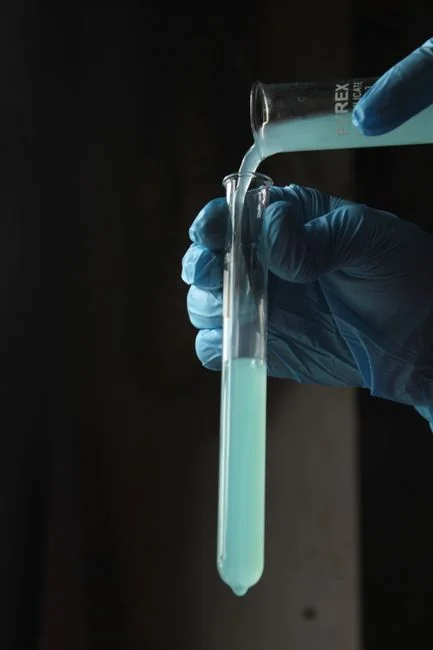
A close-ready file must connect every authorization to physical evidence and operating history. Request current permits and renewals, environmental impact assessment records, sewer-use or pretreatment agreements, monitoring plans, laboratory results with chain of custody, flow and water-use records, violations, corrective actions, treatment drawings, residual records and regulator correspondence. Include bypass and upset reports, chemical inventories, maintenance history and the post-closing production forecast.
Reconcile each document against physical streams, sampling points and receiving routes. A facility-wide certificate or application cannot prove that authorization was issued for every outlet. Review logs, laboratory data and site observations rather than relying on a seller’s statement that the plant is compliant. Historical results without a defensible sampling and quality-assurance record are incomplete.
Test historical performance against actual flow, chemistry, production changes and storm conditions. For each material finding, assign a transaction disposition, accountable owner, deadline and verification test. Appropriate dispositions include a pre-closing condition, escrow, indemnity, corrective action or funded post-closing obligation. The selection should reflect the evidence and legal exposure, not a standard clause copied from another transaction.
Also determine who will hold monitoring and reporting responsibility immediately after closing. The operating file should identify accessible records, responsible personnel and submission calendars without depending on the seller’s email or unarchived systems. If the legal holder, receiving system, capacity allocation or historical compliance remains uncertain, the matter stays on the transaction risk register until the missing evidence is supplied.
Characterize the Wastewater Before Sizing Treatment
Wastewater characterization must be completed stream by stream because a facility-wide average can conceal the concentrated flow controlling treatment performance. Separate rinse, CMP, chemical-recovery, cleaning, cooling, stormwater and sanitary flows. Establish average and peak flow, production-linked variability and storm-flow conditions for each stream, together with pH, temperature and conductivity.
Test metals, fluorides, organics and method-specific PFAS where relevant to the manufacturing process. Agree sampling frequency, analytical methods and quality-control requirements before evaluating treatment claims. The mass balance must include source control, equalization, pretreatment, biological treatment, membrane or reuse stages, final discharge, bypasses and redundancy.
| Required input | Why it affects the decision | Evidence expected |
|---|---|---|
| Average, peak and production-linked flow | Determines equalization, pretreatment and final-treatment capacity | Water-use records and flow data tied to production |
| Stream-by-stream chemistry | Identifies the concentrated stream and contaminant load | Representative sampling plan and laboratory results |
| Post-closing production plan | Tests whether existing capacity and approvals remain fit | Microsoft-approved forecast with operating assumptions |
| Residual generation and route | Prevents an incomplete treatment decision | Sludge, concentrate and chemical-waste quantities, destinations and costs |
| Bypass, upset and storm conditions | Tests resilience beyond routine laboratory results | Operating logs, event reports and site observations |
The supplied Virginia PFAS dataset is a risk-characterization prompt, not a Vietnamese compliance basis. The HydropureWater research reports 20 PFAS compounds, average total PFAS of 1,419 ng/L across 16 quarterly datasets received between 2022 and 2026, average PFOA of 57 ng/L, average PFNA of 32 ng/L and approximately 68% short-chain PFAS. These values do not establish Vietnamese discharge limits or guarantee performance for a Microsoft target plant. Use them to frame sampling questions, not to set permit targets or equipment capacity.
Choose Between Repair, Capacity Expansion and New Equipment

Classify each verified deficiency as a pre-closing repair, a committed capital project or an accepted residual risk. Equipment replacement is warranted only where the existing train cannot meet the confirmed permit, sewer or reuse objective. Evaluate the installed system under actual flow, chemistry, production changes and storm conditions, including restart after maintenance or upset; one acceptable laboratory result does not prove adequacy.
For suspended solids, oil and grease, FOG or colloids requiring removal before biological, membrane or reuse treatment, evaluate an industrial DAF pretreatment system. HydropureWater’s 2026 catalog reference lists 4–300 m³/h across 13 DAF models, but that catalog range does not establish site fit. Feed characteristics, solids handling, chemical demand, peak-flow strategy and bypass design must be verified.
For bacteria, colloids and suspended solids before RO, evaluate UF. The cited reference lists 2,000–40,000 L/h with 0.03 μm PVDF membranes; feed chemistry, recovery, fouling control and the residual route remain site-specific checks. For biological treatment with membrane solids separation, evaluate an integrated MBR wastewater treatment system. Its listed range is 10–2,000 m³/day; organic loading, solids production, cleaning, redundancy and reuse criteria determine suitability.
For advanced purification or semiconductor reuse, evaluate RO. The supplied reference states recovery rates up to 95%. Require verified feed chemistry, a defined recovery objective, an authorized concentrate route and a performance guarantee tied to confirmed operating conditions.
| Verified gap | Technology to evaluate | Site-specific acceptance check |
|---|---|---|
| Oil, grease, FOG or removable solids | DAF pretreatment | Mass balance, hydraulic loading, chemical demand, solids handling and bypass design |
| Bacteria, colloids and suspended solids before RO | UF | Feed chemistry, recovery, fouling control and residual route |
| Biological treatment with membrane solids separation | Integrated MBR | Organic loading, solids production, cleaning, redundancy and reuse criteria |
| Advanced purification or reuse | RO | Feed chemistry, recovery objective, concentrate disposal and conditional guarantee |
Supplier selection should test the treatment objective, mass balance, operating assumptions, residual handling, redundancy, monitoring, commissioning and acceptance criteria. Catalog capacity alone cannot establish suitability.
Price the Compliance and Treatment Work Separately
No defensible acquisition budget or equipment price can be calculated from the supplied research because the target site’s flow, composition, permit limits, residual routes and treatment objectives are absent. Any cost estimate built before those inputs are verified will be an allocation of risk, not a scope estimate.
Request separate quotations for equipment, installation, utilities, chemicals, energy, monitoring, sludge or concentrate disposal, maintenance, bypasses, residual transfer and compliance work. Split permitting and advisory work from immediate remediation, capital expenditure, commissioning, recurring operation, laboratory and local service costs. This structure allows omissions and conflicting assumptions to remain visible.
National infrastructure figures provide market context only. The U.S. Commercial Service’s Vietnam Water and Wastewater Management market intelligence reports a proposed Ho Chi Minh City program involving six new plants and one upgrade with approximately $1.3 billion in projected investment. It also describes a $524 million Thu Duc project intended to treat up to 1.1 million m³/day for approximately 1.8 million residents across eight districts. These figures do not establish the target plant’s upgrade scope, acquisition price or residual cost.
Use the separate quotations to establish a cost basis for escrow, indemnity, capital commitments or funded post-closing obligations. The transaction-focused wastewater budgeting approach applies the same separation without importing another jurisdiction’s requirements.
Set Clear Conditions for Closing

The transaction should not close with unresolved authority to discharge, unbounded historical liability or an untested treatment train. Every material wastewater finding needs a named disposition and verification method. Delay closing, require escrow or provide indemnity where exposure cannot reasonably be bounded.
| Closing finding | Required transaction disposition | Verification |
|---|---|---|
| Permit transfer, modification or reissuance unresolved | Closing condition, escrow or indemnity | Written authority instruction and accepted filing |
| Historical contamination or undocumented discharge | Pre-closing condition, escrow or indemnity | Site assessment, remedial scope, cost basis and contractual allocation |
| Treatment cannot demonstrate required performance | Pre-closing repair or funded capital project | Commissioning and performance test against confirmed objectives |
| Residual route or cost not established | Closing condition or priced post-closing action | Authorized destination, volume basis, responsibility and cost |
| Monitoring or reporting handover incomplete | Condition or funded corrective action | Named personnel, submission calendar, record location and acceptance test |
Where Microsoft accepts a post-closing obligation, specify the corrective action, capital amount, accountable owner, deadline, commissioning test and acceptance criteria. A generic promise to resolve compliance is not adequate. Where treatment gaps affect the post-closing production plan, allocate the decision to pre-closing repair, committed capital or accepted residual risk with supporting cost and performance evidence.
The same closing discipline appears in plant-acquisition wastewater closing framework: legal consent, capacity, historical liabilities and equipment performance are separate gates. For Microsoft’s Vietnam review, those gates must be supported by the site’s own approvals, receiving-system terms and verified treatment data.
Frequently Asked Questions
How should Microsoft structure the wastewater budget for the acquisition?
Request separate quotations for equipment, installation, utilities, chemicals, energy, monitoring, residual disposal, maintenance, bypasses, residual transfer and compliance work. Do not derive the acquisition budget from national infrastructure expenditure. The site’s verified flows, composition, permit conditions, residual routes and treatment objectives are required before a defensible estimate can be prepared.
How should Microsoft select and size treatment equipment?
Start with the verified treatment gap, not a catalog capacity. Require a supplier to present a mass balance based on representative site data, defined treatment objectives, peak-flow strategy, residual handling, redundancy, commissioning and acceptance criteria. For example, DAF, UF, MBR and RO each address different duties; their suitability depends on the stream chemistry, operating conditions and confirmed discharge or reuse objective.
Does an unchanged treatment system allow the plant to discharge after closing?
No such conclusion follows from the equipment remaining in place. Microsoft must match the installed treatment to the named permittee, current authorization, receiving route and post-closing operating plan. Physical continuity proves asset presence, not continuing permission to discharge or adequate treatment performance.
What should happen if permit continuity or treatment performance is unresolved?
Assign the finding a defined transaction disposition. Unresolved permit status may require written authority instructions, an accepted filing and a closing condition, escrow or indemnity. Treatment performance may require a pre-closing repair or funded capital project with commissioning and performance testing. Any accepted post-closing action should state the scope, amount, owner, deadline and acceptance test.