Start with the sewer route, site constraints and discharge destination
The best packaged sewage treatment plant for a housing development in Kampala, Uganda is usually a buried A/O unit where land is limited and effluent must meet NEMA discharge limits; an MBR is preferable when reuse is required or groundwater rules out open ponds. A wastewater stabilization pond may cost less where adequate land and minimal operator intervention dominate. Selection must follow the sewer route, discharge destination, flow balance and operating constraints—not a preferred equipment brand.
First establish whether the estate can connect to the NWSC network, must provide pretreatment before connection, or requires an on-site treatment and discharge route. The step-by-step MBR sizing guide states that a Kampala project connecting to NWSC should be checked against a typical pretreatment cap of 1,000 mg/L COD and approximately 350 mg/L TSS. That is a sewer-acceptance test, not the same as a direct environmental discharge standard.
Municipal coverage is improving but does not remove the need for a site-specific connection review. Bioenergy News reported that 29 km of the Nakivubo and Kinawataka sewers had been rehabilitated and expanded, alongside commissioning of a new 9 million litres-per-day pretreatment plant and pumping stations. Confirm the nearest accessible point, required pretreatment, connection conditions and whether they align with the estate’s phasing.
Next identify where treated water will go. A watercourse, land, reused-water system and municipal sewer each creates a different regulatory and design basis. Collect the land area, usable footprint, groundwater level, receiving-water location, available power, reuse objectives and access for sludge removal. If sewer connection with compliant pretreatment is available and workable, assess it before procurement. Otherwise, compare a buried package plant, MBR and wastewater stabilization pond against land, effluent and operating requirements.
Calculate the sewage plant capacity from occupancy and flow variation
The 200-home example requires 180 m³/day of design flow, not merely the 120 m³/day average, according to HydropureWater’s 2026 Uganda engineering guide.
The supplied 2026 Uganda design basis uses 100 L/person/day and a 1.3–1.5 peaking factor for residential treatment plants. For the worked estate:
| Calculation | Input | Result |
|---|---|---|
| Population | 200 homes × 6 persons/home | 1,200 persons |
| Average dry-weather flow | 1,200 persons × 100 L/person/day | 120 m³/day |
| Design flow | 120 m³/day × 1.5 peak factor | 180 m³/day |
This calculation is a transparent planning basis, not a substitute for a hydraulic design. HydropureWater’s 2026 Uganda guide identifies morning, evening and wet-weather variation as key residential constraints. It also reports that low-flow periods concentrate the load, while wet weather can materially increase inflow. Equalization therefore needs to be included in the civil and mechanical scope rather than treated as an optional accessory.
The same source gives preliminary domestic-wastewater loads of 40–60 g BOD/person/day, 40–55 g TSS/person/day and 8–12 g total nitrogen/person/day. Use these only for an initial load check. The designer should request local wastewater characterization because household fixtures, greywater, cleaning products, infiltration and occupancy patterns affect the actual load and process suitability.
Ask every bidder to state whether its quoted capacity is average, peak daily or peak instantaneous. These terms are not interchangeable. A supplier offering a buried A/O package sewage treatment plant should show the hydraulic calculation tying its proposed modules to the agreed design flow, including equalization and bypass provisions.
Compare buried A/O, MBR and wastewater stabilization ponds
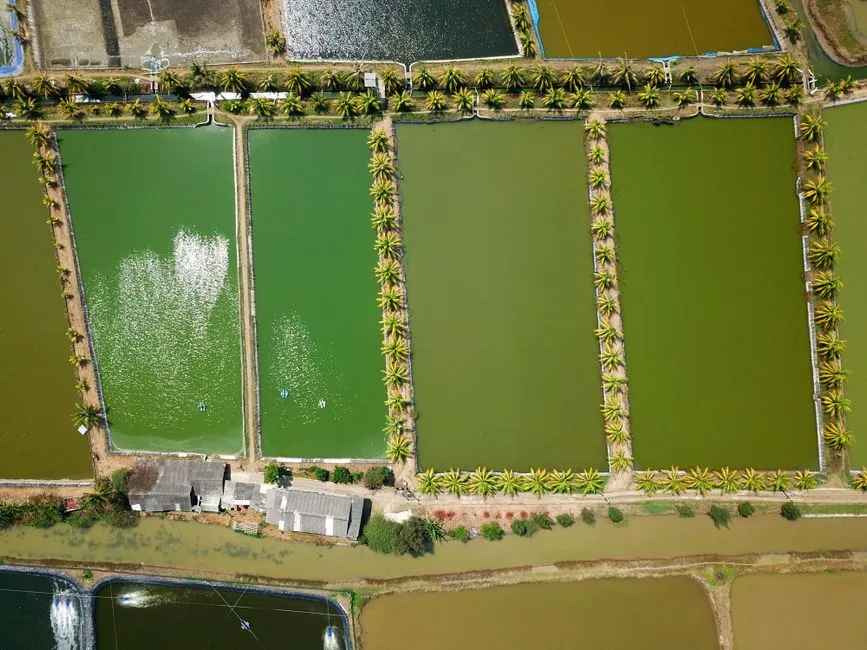
A buried A/O plant is the general urban choice when land is constrained; MBR becomes justified when reuse quality or groundwater conditions control the decision, while a wastewater stabilization pond remains credible where land is ample and power or operator capacity is limited.
| Decision factor | Buried A/O package | MBR package | WSP |
|---|---|---|---|
| Land and layout | Suited to urban and peri-urban sites with limited space | Suited to restricted sites; HydropureWater reports roughly 60% footprint reduction versus conventional activated sludge | Requires 4–8 m² per person, according to HydropureWater’s 2026 guide |
| Process | Anoxic/aerobic biological contact oxidation, sedimentation and disinfection in one buried unit | Integrated membrane bioreactor with membrane solids separation | Facultative and maturation ponds; polishing may be needed |
| Stated effluent performance | BOD ≤30 mg/L and TSS ≤30 mg/L in HydropureWater’s 180 m³/day example | BOD <5 mg/L, TSS <1 mg/L and TN <10 mg/L in the same example | BOD 30–50 mg/L in the example; disinfection or nutrient controls may be necessary |
| Power and operation | Electromechanical; comparatively straightforward biological-process maintenance | Continuous power demand and membrane-cleaning and replacement management | No electromechanical parts; tolerant of intermittent operation |
| Scale and phasing | HydropureWater states a 1–80 m³/h envelope | Can be containerized and phased as demand develops | Civil basins are more difficult to expand in small increments |
| Principal risk | Equalization, aeration, sludge removal and standby power must be resolved | Power interruption, membrane fouling and specialist servicing | Land availability, sealing, odour, desludging and effluent polishing |
HydropureWater’s 2026 guide describes a buried A/O package sewage treatment plant using anoxic/oxic biological contact oxidation, sedimentation and disinfection in one buried unit, with a stated 1–80 m³/h flow range and no full-time operator. Its worked 180 m³/day arrangement uses two 90 m³/day underground units in parallel and an approximately 150 m² footprint including sludge storage. That footprint is only meaningful if the general arrangement also accommodates access, equalization, electrical equipment and maintenance.
For near-reuse applications or a site where open ponds are unsuitable, request an integrated MBR membrane bioreactor. The supplied 2026 example reports BOD <5 mg/L, TSS <1 mg/L and TN <10 mg/L for 180 m³/day. The buyer must still verify the proposed reuse standard; high-quality treatment effluent is not automatically suitable for every public exposure or irrigation purpose.
Biocell Water supports modular installation because residential flow and pollutant concentration vary and estates grow in phases. Its project-selection guidance also emphasizes site restrictions, required effluent quality, budget, alarms, controls and maintenance access. A/O generally demands less specialized membrane management than MBR; WSP depends on pond condition and deslugging. Neither eliminates the need for a named maintenance responsibility.
Design for Kampala discharge, reuse and power conditions
The tender specification should separate direct-discharge limits, sewer-pretreatment limits and reuse requirements because they are different compliance gates.
For discharge to water, HydropureWater’s 2026 Uganda guide cites NEMA S.I. No. 153/2020 limits of BOD 50 mg/L, TSS 100 mg/L, COD 100 mg/L, fecal coliform 10 CFU/100 mL and pH 6.0–8.0. Nutrient caps depend on the receiving water’s assimilative capacity. These figures do not automatically satisfy the use-specific quality needed for landscaping, vehicle washing or toilet flushing; define the reuse application and required water quality before selecting the process.
For an NWSC connection, ask NWSC for written acceptance criteria and distinguish them from NEMA’s direct-discharge envelope. The supplied 2026 guide gives the typical NWSC pretreatment screening values of approximately 1,000 mg/L COD and 350 mg/L TSS. If the discharge route is a watercourse, obtain the applicable permit conditions and receiving-water assessment instead.
Include flow equalization, sludge storage, maintenance access and foul-odour control in the civil and mechanical scope. Where reuse is required, include the relevant UV disinfection system only after the design team confirms that UV is the required or preferred disinfection barrier.
Power resilience is a design input, not an electrical afterthought. HydropureWater’s 2026 guide reports peri-urban outages of 8–12 hours per week and recommends standby power sized at 30–50% of running load for electromechanical treatment plants. Require the supplier to state connected and running loads, backup arrangement, control philosophy, alarm outputs, automatic restart behavior and operator competency. For an MBR, test the power-failure sequence against membrane and biological-process requirements rather than accepting a generator rating alone.
Compare installed cost and whole-life operating burden
The lowest installed price is not necessarily the lowest development cost because land, power resilience, sludge handling and specialist maintenance may fall outside the equipment quote.
| Technology | 2026 installed planning range | 180 m³/day planning CAPEX | 180 m³/day monthly OPEX indication |
|---|---|---|---|
| WSP | USD 25–60 per m³/day | USD 4,500–10,800 | Not stated in the supplied example |
| Package A/O | USD 120–220 per m³/day | USD 21,600–39,600 | Approximately UGX 13–22 million |
| MBR | USD 180–420 per m³/day | USD 32,400–75,600 | Approximately UGX 24–45 million |
These figures come from HydropureWater’s supplied 2026 Uganda planning ranges. The monthly estimates use an exchange rate of about 3,800 UGX/USD and should be treated as preliminary engineering budgets, not quotations. The modular sewage treatment system cost breakdown explains why quoted scope must be normalized before comparison.
Require each bidder to identify whether its price includes civil works, tanks, installation, commissioning, controls, disinfection, sludge handling, standby power, testing, operator training and permits. Land acquisition, drainage diversion and unusual ground conditions may materially change the project total even when the treatment-plant price looks comparable.
The developer’s handover model must also price routine inspections, sludge removal, membrane life, power resilience and operator training. A WSP may have the lowest capital cost but carries a large land and desludging obligation. An MBR may occupy less space and produce more reusable water, but its energy and membrane-management burden needs an identified operator or service contract. Require lifecycle proposals tied to a defined performance guarantee rather than comparing headline purchase prices.
Build the supplier brief and approval checklist
A defensible bid requires one common site-data basis, one performance basis and clear allocation of regulatory and operating responsibilities.
- Provide the plot area, number of homes, expected occupancy, water-use basis, peak factor, wastewater characterization, discharge point, reuse target, soil and groundwater information, power availability and expected expansion.
- Require each bid to include a process flow diagram, hydraulic calculations, general arrangement, civil loading, equipment schedule, power and standby-load schedule, control narrative and O&M manual.
- Put the requested receiving-water or reuse standard into the performance guarantee. Generic “domestic sewage” language does not establish an enforceable effluent duty.
- Require the supplier to state design flow, average flow, process capacity, redundancy, equalization volume, sludge-storage arrangement and commissioning tests.
- Request written permit conditions, NWSC acceptance where relevant, and named responsibility for commissioning, sampling, operator training and maintenance handover.
- Include a 12-month desludging and maintenance plan in the handover package, consistent with HydropureWater’s 2026 Uganda guidance.
HydropureWater’s 2026 Uganda guide states that KCCA or the relevant municipal council may require a sanitation impact statement and maintenance contract for an STP above 50 m³/day. Verify the current requirement for the project rather than treating the guide as a permit. The packaged sewage plant comparison for housing provides a useful technical benchmark for comparing bidder submissions.
For every shortlisted package, request the design basis, exclusions, commissioning protocol, test method, sampling point, guarantee remedy, spare-parts list, maintenance schedule and training plan. The buyer should also establish who owns the sludge, who removes it, how often it is removed and what evidence will demonstrate compliance after handover.
Frequently Asked Questions
What is the best packaged sewage treatment plant for a housing development in Kampala?
A buried A/O plant is the general urban answer when land is constrained and NEMA-compliant discharge is required. An MBR is stronger for reuse, higher-quality effluent or restricted sites, while a WSP can suit land-rich, power-limited projects. The final decision should also confirm sewer availability, discharge route and maintenance capability.
How much does a packaged sewage treatment plant cost for a Kampala housing development?
HydropureWater’s supplied 2026 planning ranges are USD 120–220 per m³/day installed for package A/O and USD 180–420 per m³/day for MBR. Its 180 m³/day example gives approximate CAPEX of USD 21,600–39,600 and USD 32,400–75,600, respectively. Obtain site-specific quotations with an identical scope before using either figure in a development budget.
How do I size a sewage treatment plant for a housing estate?
Apply the supplied 100 L/person/day basis and 1.3–1.5 peak factor, then confirm the result with expected occupancy, water use, infiltration and local wastewater data. For 200 homes at six persons per home, the source calculation is 120 m³/day average and 180 m³/day design flow. Require the designer to define whether proposed capacity is average, peak daily or peak instantaneous.
Should a Kampala housing development connect to the NWSC sewer or install a package plant?
Use connection availability, sewer-pretreatment acceptance, development phasing, land, discharge obligations and operating capability as the decision checks. The supplied NWSC screening values are approximately 1,000 mg/L COD and 350 mg/L TSS, but written acceptance conditions are required before selecting pretreatment equipment or confirming that a connection is viable.
What maintenance does a packaged sewage treatment plant need in Kampala?
The handover package should cover routine inspection, equalization and biological-process checks, sludge removal, disinfection, membrane cleaning where applicable, power and alarm testing, and operator training. HydropureWater’s 2026 guide also calls for a 12-month desludging and maintenance plan. Assign named responsibilities and record frequencies rather than relying on a general equipment warranty.