What determines the requirements after Unilever acquires the plant?
Unilever’s acquisition does not itself create a special wastewater rule; the acquired site’s water source, production streams, discharge outlet, permit conditions and contamination history control the requirements. Tecma identifies NOM 001 SEMARNAT 1996 for qualifying ground or septic discharges under federal jurisdiction and NOM 002 SEMART 1996 for industrial wastewater discharged to a municipal sewer. The buyer should verify permit continuity, annual testing by an accredited and authorized Mexican laboratory, annual reporting and annual renewals while separately assessing treatment performance and inherited contamination. Written direction from the issuing authority is needed before assuming an existing permit survives the transaction.
Start with a route-by-route legal and technical model, not a corporate compliance statement. Map where water enters the plant, which operations generate wastewater, how industrial, domestic and mixed streams combine and where each stream is discharged. A facility-wide average can conceal a concentrated cleaning stream, intermittent sanitary discharge or bypass that is absent from the seller’s files.
Identify the exact legal entity named as permittee. Confirm that the approved facility, discharge points, monitoring locations and operating plan still match the proposed post-closing operation. Tecma states that drawing from a well places the activity under federal jurisdiction, while drawing from a municipal system places it under state jurisdiction; verify that position against actual source records and current authority practice.
This is the starting structure for a Mexico plant-acquisition wastewater due-diligence framework: source evidence, physical routes, controlling authorizations, operating evidence and transaction remedies must connect. Unilever should not infer either regulatory coverage or permit continuity from the plant’s former operator or from its own identity.
Build a source-to-discharge map before evaluating permits
A food-processing plant should be mapped as a set of streams and outlets, not as one wastewater system. Request well records, water-right or concession records, municipal supply agreements, invoices, source drawings and measured withdrawal data. Then connect each production line, cleaning cycle and utility system to its actual receiving point.
For a food-processing operation, the diligence scope may include cleaning and sanitizing wastewater, cooling water, boiler blowdown, stormwater and sanitary flows. Separate industrial, domestic and mixed drains. Identify where streams combine, whether a route can bypass treatment and whether the physical outlet matches the authorization.
| Diligence object | Evidence to request | Decision supported |
|---|---|---|
| Water source | Well and concession records, supply agreements, invoices, source drawings and withdrawal data | Working jurisdiction hypothesis for legal verification |
| Process and sanitary streams | Process descriptions, cleaning cycles, flow records and stream-by-stream sampling | Wastewater characterization and treatment duty |
| Physical discharge routes | Drainage drawings, sewer agreements, meter records, permit discharge points and field walkdown | Confirmation that no outlet is missing or bypassed |
| Controlling authority | Authority register, permit cover page, current correspondence and Mexican counsel’s written analysis | Applicable permits, standards and renewal obligations |
Do not infer jurisdiction solely from ownership of the receiving system. A municipal sewer, private receiving system, river, irrigation route or ground discharge can each create a different authorization pathway. The field walkdown should specifically look for bypasses, temporary outlets and routes not shown in the seller’s records.
Match each discharge route to its legal requirements
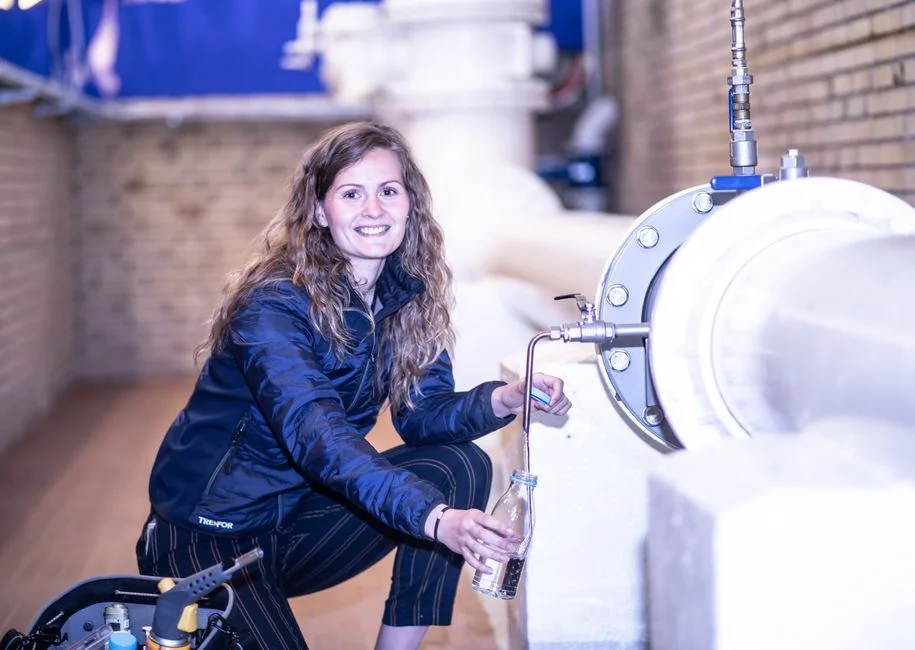
Each discharge route needs its own controlling instrument, evidence package and unresolved-risk record. Tecma identifies NOM 001 SEMARNAT 1996 as the contaminant-limit standard for qualifying ground or septic-system discharges under federal jurisdiction, and NOM 002 SEMART 1996 as the framework for industrial wastewater discharged to a municipal sewer. These route summaries are diligence leads, not substitutes for the current permit, official standard text or written authority direction.
| Discharge route | Controlling documents | Evidence package | Unresolved risk and transaction response |
|---|---|---|---|
| Ground or septic system under federal jurisdiction | Site authorization and NOM 001 SEMARNAT 1996 | Permit, discharge location, monitoring plan, analytical reports, renewal history and authority correspondence | Confirm continuity, approved outlet and current limits; condition closing or require a transfer, modification or reissuance |
| Industrial discharge to a municipal sewer | Site permit, NOM 002 SEMART 1996 and sewer-use or pretreatment conditions | Discharge permit, sewer agreement, receiving-authority requirements, monitoring records and correspondence | Determine whether the sewer authority prohibits or imposes narrower controls on any process stream |
| River or another federally regulated receiving body | Site-specific authorization and applicable standards | Current permit, receiving-body conditions, monitoring plan, reports and enforcement history | Do not extrapolate from a NOM written for another outlet; confirm outlet-specific limits and monitoring points |
Read the current permit, sewer conditions, renewal correspondence and official standard together. The headline standard does not replace site-specific limits, sampling points, treatment obligations or operating conditions. Sewer discharge also requires the receiving authority’s terms; a national contaminant-limit framework alone does not show whether the receiving system will accept the plant’s stream.
Tecma states that annual wastewater testing must be performed by an accredited and authorized Mexican laboratory and that annual reporting is required. It also states that almost all relevant permits and authorizations must be renewed every year. A renewal application is therefore a milestone in the evidence chain, not proof that valid operating authority continues. For broader route-specific review, see the related analysis of municipal sewer limits.
Confirm permit continuity and verify the compliance record
Valid operating authority requires documentary proof, not a seller’s statement that the plant is compliant. Request the current authorization, renewal history, permit conditions, monitoring plan, complete analytical reports, chain-of-custody records, authority receipts and correspondence. Also obtain supporting sewer agreements, relevant supporting approvals and enforcement records.
Reconcile four fields before signing: the named permittee, the approved discharge points, the sampled locations and the renewal status. Check each against the legal entity and operating structure proposed after closing. The supplied research establishes no universal Unilever-specific change-of-control procedure, so obtain written direction from the issuing authority on whether the permit continues, must be transferred, requires modification or must be reissued.
Review violations, exceedances, corrective actions, bypass events, treatment operating logs, missed or late submissions and inspection correspondence. A laboratory result is traceable only when the buyer can establish who sampled, how the sample was handled, which analytical method was used and which limit it was compared against. A spreadsheet entry does not replace the complete report and chain of custody.
Also determine which entity was actually responsible for operations and reporting before closing, and whether any unresolved notice, renewal, sampling or reporting issue affects the proposed permittee. Missing proof of compliance and a documented exceedance are different findings; each needs a distinct closing condition, remediation step or contractual allocation.
Test whether the installed treatment system can perform
A permitted treatment system is not necessarily adequate for the acquired plant’s measured wastewater duty. Establish average and peak flow, flow variability, pH, temperature, oil and grease, suspended solids, FOG, biological demand and other pollutants identified by the permit and stream characterization. Compare measured influent and effluent performance against current permit conditions and applicable official standards.
Map where streams combine, identify intermittent cleaning flows and inspect bypass provisions, hydraulic capacity, chemical use, redundancy and sludge handling. One compliant laboratory result does not demonstrate reliable operation under production-linked variation. Evidence should include equipment condition, operating logs, maintenance history, metering and representative influent and effluent testing.
| Equipment screen | Supplier-listed screening reference | Site evidence still required |
|---|---|---|
| Industrial DAF pretreatment for oil, FOG and solids | HydropureWater lists 13 models with capacities from 4 to 300 m³/h | Measured removal duty, peak flow, chemical demand, solids handling, redundancy and discharge criteria |
| MBR treatment for biological wastewater and reuse | HydropureWater lists capacities from 10 to 2,000 m³/day with filtration below 1 μm | Organic loading, flow variation, reuse objective, membrane condition, excess-sludge route and validation criteria |
| Ultrafiltration for reuse or RO pretreatment | HydropureWater lists capacities from 2,000 to 40,000 L/h with 0.03 μm PVDF membranes | Feed chemistry, fouling potential, cleaning demand, recovery objective and concentrate route |
| Industrial RO | HydropureWater lists recovery up to 95% | Feed chemistry, recovery variability, membrane design, concentrate disposal and bypass conditions |
These are screening references, not proof of suitability. For reuse or RO pretreatment, fouling, recovery and concentrate disposal still require engineering verification. A useful comparison of DAF and clarification duties appears in the DAF-versus-clarifier technical review; the ultrafiltration retrofit and upgrade guide covers pretreatment constraints. Require each bidder to provide a mass balance, performance criteria, residual-management details and a site-specific commercial scope.
Resolve historical contamination before the closing gate
Tecma states that purchasing or acquiring property can make the owner immediately responsible for prior contamination, including contamination identified during later inspections. Legacy contamination environmental liability must therefore be resolved as a transaction issue, not left to routine post-closing integration.
Commission a transaction-specific assessment covering soil, groundwater, residual sludge and chemical storage, together with evidence around current and former discharge points. Give particular attention to former outlets: changed drainage, production patterns or ownership histories can obscure where wastewater was previously discharged. Reconcile historical maps, operational records, disposal records and interviews with the physical walkdown.
Do not treat an environmental certificate as a complete contamination assessment. Preserve the evidence, quantify the verified finding and distinguish known conditions from further assessment needed. Translate the result into pre-closing remediation, an escrow, an indemnity, a purchase-price adjustment or a funded post-closing obligation with a named owner and completion test.
Legal and environmental teams should agree the liability position before closing, including the scope of the indemnity, survival period, control of investigation and remediation, access rights and completion criteria. If responsibility for historic contamination remains uncertain, that uncertainty should have a documented price and contractual treatment rather than an unsupported assumption that the seller retains it.
Use a four-part closing decision
A wastewater issue should be cleared, conditioned or accepted through four separate closing questions: authorization, compliance evidence, treatment performance and inherited contamination. HydroChemix identifies common permit risks including limit exceedance, missed sampling, improper sample handling, late reporting, unauthorized bypasses, incomplete records and permit expiration. Each finding must be mapped to the affected question rather than collapsed into one generic compliance conclusion.
| Closing question | Required decision test | Potential transaction response |
|---|---|---|
| Authorization | Is valid authority in place, and do the permittee, approved outlets and operations match the transaction? | Written authority direction; delay closing, require transfer or modification, or apply a specific condition |
| Compliance evidence | Do traceable monitoring, reports and submissions reconcile with permit conditions and enforcement history? | Pre-closing correction, escrow, indemnity or acceptance backed by enforceable terms |
| Treatment performance | Can the installed train meet the permit or reuse criteria under measured production variability? | Repair, commissioning test or funded capital project with an owner and completion criterion |
| Legacy liability | What contamination exists, and how will responsibility and remediation be allocated? | Pre-closing remediation, escrow, indemnity, price adjustment or funded post-closing work |
A permit gap is not the same as an evidence deficiency, a capacity shortfall or a contamination finding. A permit gap calls for authority action; missing evidence calls for verification; inadequate treatment calls for engineering work; contamination calls for investigation and contractual allocation.
Legal should own authorization and liability interpretation, engineering should own performance and residual pathways, EHS should own the evidence and operating-control record, and procurement should not award treatment equipment until those inputs are stable. The closing memorandum should state, for every material issue, the verified fact, uncertainty, accountable owner, chosen remedy and evidence required to close it.
Transfer the compliance program before operations change
Tecma states that SEMARNAT may inspect facilities without advance notice. Before closing, move permits, renewal evidence, monitoring plans, laboratory reports, chain-of-custody records, submissions, treatment logs, bypass records and corrective-action files into an accessible system independent of the seller.
Assign named owners for daily, monthly and annual reporting, sampling, laboratory coordination, permit renewal, authority correspondence, monitoring and record retention. Test retrieval with legal, EHS and operations personnel rather than accepting that the seller handed over a folder.
Require change control for production chemistry, water source, drainage configuration, reuse objectives and treatment operation. Historical results may no longer represent the discharge after a change. Each change should trigger an engineering review of permit applicability, treatment capacity and monitoring requirements.
Establish an inspection-response protocol covering authorized personnel, sample preservation, authority communication, access to records and documentation of immediate findings and corrective action. The operational plan should also identify the authorized destination and responsibility for treatment sludge or other residuals.
Frequently Asked Questions
Can Unilever rely on the plant’s existing wastewater permit after closing?
No automatic assumption should be made. Confirm the named permittee, approved discharge points and renewal status, then obtain written direction from the issuing authority on whether the authorization continues, must be transferred, requires modification or must be reissued. The supplied research identifies no universal Unilever-specific change-of-control rule.
How much should Unilever budget for wastewater treatment?
The supplied research supports no universal acquisition price. Obtain verified average and peak flows, stream-by-stream wastewater composition, permit limits, reuse targets and residual routes. Then request site-specific pricing for equipment, installation, utilities, chemicals, energy, monitoring, sludge or concentrate disposal, maintenance, bypasses, residual transfer and compliance work, with assumptions and exclusions shown separately.
Which treatment equipment should be selected for the acquired food-processing plant?
Select equipment against measured removal duties, actual flows, permit or reuse criteria, footprint, operating variation and the authorized residual route. DAF, MBR, UF and RO catalogue ranges are screening references only. Require a treatment mass balance, performance test tied to the permit or reuse objective, commissioning evidence and a documented residual-management route.
What wastewater issues should be resolved before signing?
Resolve permit status, monitoring evidence, treatment performance, residual handling and historical contamination separately. For each, assign a verified status, accountable owner, transaction remedy and completion test. A permit gap, missing compliance evidence, capacity deficiency and inherited contamination should not be combined into one generic compliance representation.
Related Equipment
- industrial DAF pretreatment for oil, FOG and solids — specifications, capacity range, and technical data