What Wastewater Due Diligence Must Establish at Closing
Wastewater due diligence for a Heineken brewery acquisition in Mexico must establish whether water rights and environmental authorizations remain usable after closing, whether the ETP can handle measured peak flows and pollutant loads, whether discharge and reuse comply with site-specific conditions, and which liabilities require protection. A CONAGUA concession, corporate water-efficiency target, or basin replenishment claim does not prove that the acquired plant holds a transferable discharge permit or that its treatment system performs reliably. The supplied research does not identify a universal acquisition-triggered wastewater permit for a Heineken plant in Mexico; the buyer therefore needs legal and regulator confirmation for the specific site, activity, permits held, and transaction structure.
Monterrey illustrates why water supply and wastewater compliance must be reviewed together. Movendi International reported in November 2022 that HEINEKEN’s Nuevo León permit allowed about 6 million cubic meters of water annually, while groundwater conditions and community water pressures were already affecting the operating context. That historical figure is a diligence lead, not proof of the concession currently in force. HEINEKEN’s corporate reuse program is equally relevant but not dispositive: treatment capability, reuse eligibility, and authorization to apply reclaimed water in a particular process are separate questions.
The buyer should treat this work as a transaction-control process, consistent with a brewery acquisition wastewater guide for India, while testing the answer against Mexican permits and records. The acquisition file should end with a resolved permit chain, a verified water balance, a measured treatment-capacity assessment, an authorized reuse plan, and an allocated liability schedule. A useful starting sequence is:
- Identify every water-right and environmental authorization.
- Reconstruct the wastewater mass balance and peak loads.
- Test the installed treatment train against operating records.
- Separate historical liabilities from future capital requirements.
- Assign each unresolved finding to a deal condition or price protection.
| Due-diligence output | Evidence required | Decision supported |
|---|---|---|
| Valid legal basis for water use and discharge | Current concessions, permits, amendments, regulator correspondence, and compliance records | Whether operations may continue after closing |
| Verified wastewater mass balance | Freshwater intake, production, wastewater generation, reuse, discharge, and replenishment records | Whether reported efficiency reflects the site |
| Defensible ETP performance | Flow and pollutant data, peak-condition records, maintenance logs, bypass and upset history | Whether current capacity supports the plan |
| Authorized reuse proposition | Reuse quality records, treatment validation, permit conditions, and application limits | Which savings are legally and technically available |
| Allocated environmental liability | Compliance history, sludge records, notices, remediation evidence, and capital-work estimates | Closing condition, indemnity, escrow, price adjustment, or walk-away |
Verify the Site's Water Rights and Environmental Authorization Chain
The acquired entity must hold a current, site-specific right to use water, while discharge and reuse must be authorized separately through the environmental permits applicable to the facility. A buyer should request the original concession or other applicable water-right instrument and reconcile its holder, permitted volume, source, permitted uses, term, and conditions against the legal entity acquiring the plant. It should also obtain the discharge authorization, hazardous or special-waste registrations, water-balance commitments, reuse permissions, reporting duties, financial assurance, and any correspondence requiring capital works.
Two diligence routes identified by El Colegio de Sonora are directly relevant: CONAGUA’s groundwater concession procedure CNA-01-004 and the public water-rights registry. These sources should be used to locate and validate the site’s rights, not as substitutes for the live concession. El Colegio de Sonora cites CONAGUA’s procedure and registry in its analysis of industrial water use at the Heineken brewery in Monterrey. The registry helps establish the public record; the actual instrument, conditions, and current status determine what the buyer can use.
For the historical Monterrey position, Movendi International reported in November 2022 that the Nuevo León permit allowed HEINEKEN to draw about 6 million cubic meters of water per year. The buyer must verify that figure against the current concession because the source and date are specific and historical. It must also determine whether ownership changes require a transfer application, revised ownership particulars, a new authorization, or disclosure to the regulator.
The transferability test should cover change-of-control provisions, non-transferability, new permit applications, revised ownership details, legacy violations, financial assurance, monitoring obligations, and required capital works. Water supply, discharge, and reuse should be mapped separately: a valid comparable beverage-plant acquisition wastewater due diligence is useful as a checklist, but it does not establish Mexican legal conclusions.
| Authorization or right | Diligence question | Required outcome before closing |
|---|---|---|
| CONAGUA concession or applicable water-right instrument | Who holds it, from which source may water be taken, and what volume and uses are allowed? | Current copy, registry cross-check, transfer pathway, and confirmation of conditions |
| Discharge authorization | Does it cover the acquired entity, actual discharge route, current flows, pollutants, monitoring, and reporting? | Valid authorization or regulator-approved condition for closing |
| Reuse authorization | Which reclaimed-water uses are permitted, and what quality and operating controls apply? | Approved reuse matrix tied to treatment and monitoring evidence |
| Waste, sludge, and remediation obligations | Who owns past violations, waste liabilities, and regulator-directed work? | Schedules, indemnities, reserves, and covenant ownership |
| Change-of-control provisions | Does the transaction require consent, notice, reapplication, revised guarantees, or revised capital works? | Signed confirmation from the relevant authority or counsel-supported legal opinion |
Characterize Every Wastewater Stream Before Sizing the Treatment Plan
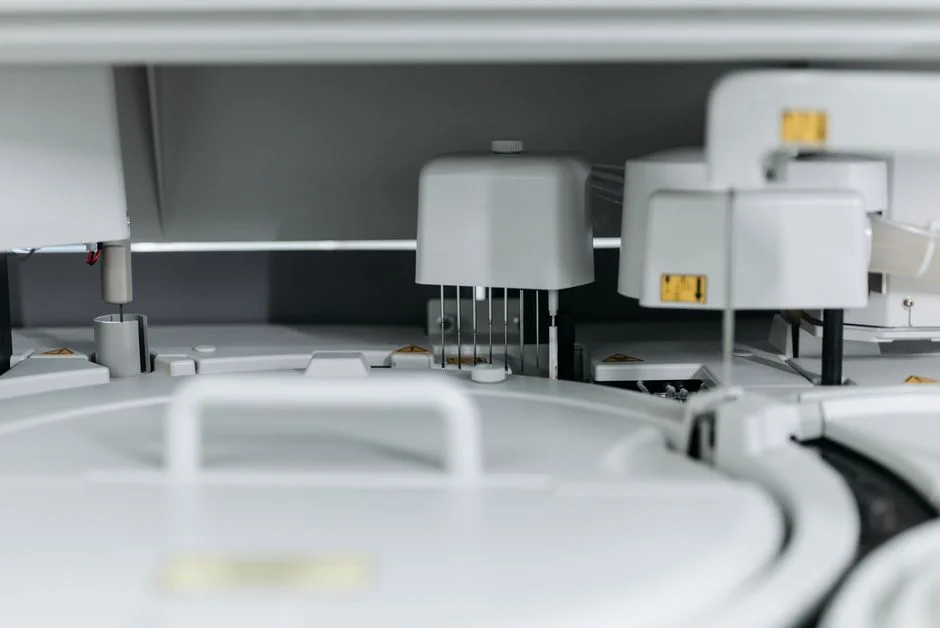
An ETP cannot be sized from freshwater withdrawal or corporate water-use intensity because consumed process water does not become a single, uniform wastewater stream. Request at least one full production cycle of flow, pH, temperature, COD, BOD, TSS, oil and grease, and any site-relevant pollutants or inhibitory constituents. The package should identify sampling points, analytical methods, flow-meter calibration records, and whether the data represent normal production, cleaning, shutdown, or upset conditions.
Separate high-strength process wastewater, equipment and bottle washing, floor washdown, laboratory and quality-control streams, sanitary sewage, cooling and blowdown, stormwater, and once-through cooling or rinsing flows. Their hydraulic and pollutant characteristics differ, and combining them before assessment can conceal both peak hydraulic demand and biological or pretreatment constraints. The buyer should identify batch dumps, production changes, cleaning cycles, and peak-day discharge because average flow alone will not establish available treatment capacity.
Next, reconcile freshwater intake, product water, wastewater generation, internal reuse, authorized discharge, and basin replenishment in a brewery wastewater mass balance. Unexplained losses may indicate unrecorded discharge, leakage, sludge or product carryover, meter error, or reuse outside the authorized path. A water-efficiency ratio is therefore not a substitute for a flow-by-flow balance.
Mexico Business News reported in 2026 that HEINEKEN México had achieved a 1.9 million cubic meter replenishment benefit in the San Juan River Basin linked to Monterrey operations, and that treated water was reused for maintenance, cleaning, and irrigation. These claims identify matters to test, not substitute site records. The buyer needs a physical and documentary trail from reclaimed-water production to each authorized point of use.
- List each wastewater source and its normal and peak contribution.
- Measure flow and pollutant loads for a full operating cycle.
- Reconcile generation, reuse, discharge, losses, and replenishment.
- Map each reuse destination to treatment performance and authorization.
| Stream | Data to establish | Why it changes treatment decisions |
|---|---|---|
| Process and batch wastewater | Flow, COD, BOD, pH, temperature, discharge timing, and batch volume | Defines peak organic loading and equalization requirements |
| Cleaning and washdown | Flow, oil and grease, detergent or caustic characteristics, and cleaning schedule | Tests pretreatment, pH control, and shock loading |
| Sanitary sewage | Flow, COD, BOD, TSS, and discharge route | Confirms whether domestic and industrial streams are segregated |
| Cooling, blowdown, and once-through flows | Flow, temperature, chemical additions, and reuse status | Tests hydraulic capacity, heat effects, and permit coverage |
| Stormwater | Source, drainage area, contamination controls, and discharge route | May require segregation, monitoring, and separate compliance review |
| Reclaimed water | Production flow, quality, destination, losses, and permit condition | Separates technical recovery from legally authorized reuse |
Test Whether the Existing Treatment System Can Protect the Investment
The existing ETP should be tested against measured peak conditions and actual treatment-train constraints, not rated from nameplate capacity. Review process flow diagrams, equipment condition, hydraulic and organic loading, bypass history, upset events, redundancy, standby power, and maintenance records. The technical review should follow the train from solids screening and oil and grease control through equalization, biological treatment, clarification, filtration, disinfection, and sludge handling. A missing or unreliable stage can invalidate compliance even when average effluent results appear acceptable.
Change assumptions must also be tested. A different product mix, cleaning chemical, production volume, or reuse practice can alter pH, toxicity, nutrient loading, or biological treatability. For preliminary process screening, a DAF system for brewery wastewater pretreatment may be considered where oil and solids separation must be confirmed; an integrated MBR wastewater treatment system may be relevant where biological treatment, solids separation, and reuse-quality requirements must be evaluated together. Neither option substitutes for site-specific engineering or permit review.
Corporate performance figures provide context but not site acceptance criteria. Mexico Business News reported in 2026 that Meoqui used 1.7 liters of water per liter of beer in 2024, that HEINEKEN’s seven Mexican breweries averaged 2.3 liters in water-stressed areas, and that the company identified 1.5 liters as its next challenge. These figures are corporate benchmarks. They do not establish the acquired plant’s flow, pollutant load, reuse limit, or effluent compliance.
Require a mass balance showing where reclaimed water is used and validate it against permits. Corporate reporting identifies reuse for maintenance, cleaning, and irrigation, but the supplied research does not disclose site-specific reuse limits. Capacity gaps should therefore be separated into capital expenditure, working-capital, operating-cost, commissioning, and delay categories. That prevents an unresolved treatment deficiency from disappearing inside a general maintenance allowance.
| Test | Evidence to request | Investment conclusion |
|---|---|---|
| Hydraulic capacity | Measured peak flow, batch schedule, equalization record, flow-meter calibration, and bypass history | Identify upstream equalization or flow-control needs |
| Organic and pretreatment loading | COD, BOD, TSS, oil and grease, pH, temperature, and shock-load records | Screen equalization, solids removal, oil and grease control, and biological resilience |
| Effluent reliability | Monitoring results, analytical methods, laboratory QA, upset investigations, and corrective actions | Determine whether compliance is repeatable or isolated results support it |
| Reuse readiness | Reclaimed-water quality, destination controls, recovery operation, and authorization | Separate technical recovery from permitted reuse |
| Operational resilience | Redundancy, standby power, critical spares, maintenance backlog, and upset response | Price reliability work separately from expansion |
| Sludge and residuals | Volume, characterization, handling route, storage, disposal records, and liabilities | Identify operating and remediation exposure |
The brewery acquisition assessment in Vietnam offers a useful acquisition framing, but the acquirer must retain the measured Mexican flow and pollutant data as the basis for any Monterrey equipment decision.
Turn Environmental Findings into Deal Conditions
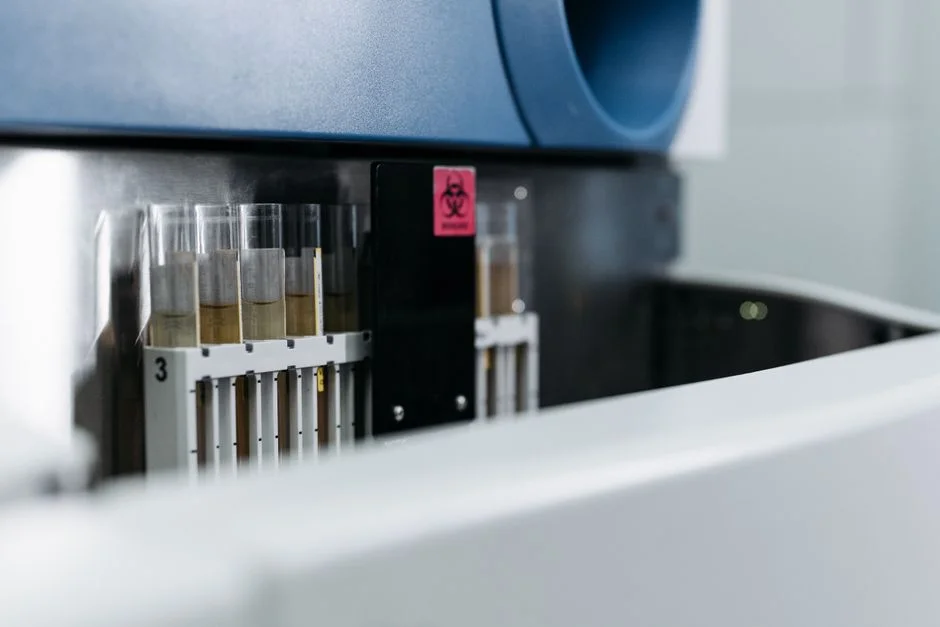
Environmental findings should be converted into specific transaction protections before signing; otherwise uncertainty can migrate into operating cost, closing delay, or post-closing liability. Classify each issue under permit certainty, historical compliance, process capacity, reuse authorization, sludge and remediation liability, or future capital requirements. Then assign the appropriate response: pre-signing condition, pre-closing deliverable, price adjustment, escrow, indemnity, covenant, or walk-away trigger.
Unresolved permit status should not be left to an operational covenant after closing. If documentary ambiguity remains, obtain direct confirmation from the relevant authority or a site-specific legal opinion. A corporate sustainability report is not evidence that a discharge permit is transferable, that historical exceedances are immaterial, or that reclaimed water may be used in a proposed process.
Historical and future risks also need different owners. The agreement should state who bears pre-closing violations, regulator claims, third-party notices, cleanup obligations, technical support, and capital works required to achieve compliance. Remediation and environmental reserve obligations should be tracked separately from ordinary maintenance. Closing funds or escrow should follow identified exposure; covenants should define monitoring, reporting, and access rights after closing.
| Risk | Minimum evidence | Transaction response | Likely treatment-system response |
|---|---|---|---|
| Permit cannot continue after ownership change | Current instrument, transfer provisions, regulator confirmation, and conditions | Pre-closing condition; walk away if lawful operation cannot be assured | No equipment decision until the legal operating basis is clear |
| Historical exceedances, bypasses, or unauthorized reuse | Monitoring files, notices, investigations, corrective-action records, and use records | Indemnity, escrow, price adjustment, or regulatory closure condition | Address untreated deficiencies only after the compliance basis is defined |
| Peak flow or pollutant load exceeds ETP capability | Full-cycle measurements, peak records, loading calculations, upset history, and equipment condition | Separate capital and delay allowance; require a funded plan | Screen equalization, pretreatment, biological treatment, filtration, disinfection, and reuse upgrades |
| Reuse plan lacks authorization or reliable quality | Reuse authorization, quality data, destination controls, and operating records | Exclude unapproved savings; condition the business case on approval and validation | Define recovery and polishing requirements only after the intended use is fixed |
| Sludge, waste, or remediation liability is unclear | Waste inventories, handling agreements, storage records, notices, and regulator correspondence | Specific indemnity or funded reserve with defined ownership | Assess dewatering, storage, transport, and treatment interfaces |
| Future production plan changes loading | Approved production plan, product mix, cleaning regime, and design-basis assumptions | Require design review, contingency, or covenant allocating upgrade responsibility | Reserve capacity or modular treatment for the verified future load |
Do not invent probability or cost estimates when the evidence is absent. Require the seller to provide a quantified scope and support for any proposed capital allowance, then have the buyer’s engineer test it against measured demand. A decision framework for meeting discharge constraints can support the same evidence-led logic: the permit, measured load, selected process, and transaction protection must remain aligned.
Frequently Asked Questions
Do HEINEKEN’s corporate water targets prove that wastewater permits for the Mexican plant are transferable?
No. Corporate water-use, replenishment, and reuse targets do not establish site-specific transferability. Movendi International’s November 2022 report of about 6 million cubic meters annually for the historical Nuevo León permit requires verification against the current concession. Mexico Business News’s 2026 reporting on 1.9 million cubic meters of replenishment and reuse for maintenance, cleaning, and irrigation does not disclose the acquired plant’s discharge authorization or reuse limits. The buyer must obtain the live permits, ownership and transfer provisions, regulator correspondence, and compliance history.
How should the buyer size treatment for the acquired brewery?
Size the treatment plan from measured flow and pollutant loads over a full production cycle, including batch dumps, cleaning peaks, and bypass or upset history. Separate process, washing, sanitary, cooling, blowdown, stormwater, and once-through streams, then test the complete treatment train and reuse destinations. Water consumed per liter of beer is a corporate efficiency measure, not an ETP design basis.
What should be checked when selecting an ETP supplier?
Request site-specific mass balances and demonstrated performance for the actual wastewater character and intended reuse application. Compare fit for brewery pretreatment and biological treatment, supplied-water quality, recovery rate, automation, integration with the existing plant, and support for Mexican permit applications. Pilot or operating performance data should correspond to the relevant stream and operating envelope; equipment brochures alone do not demonstrate compliance.
When should unresolved wastewater issues become closing conditions or price adjustments?
Unresolved permits, historical exceedances, bypasses, unreported reuse, or demonstrably inadequate capacity should receive protection before closing because they can determine whether lawful operation is possible and what capital is required. Use a closing condition where continuity depends on regulator confirmation or permit transfer; use an indemnity, escrow, or price adjustment for quantified historical exposure. Immediate operational continuity should be separated from longer-term upgrades, with engineering support and a defined responsibility for each.