Why Your Activated Carbon Filter is Failing: 4 Hidden Industrial Triggers
Industrial wastewater introduces four unique fouling vectors that household filters never encounter: oils/grease (>500 mg/L), heavy metals (Fe >2 mg/L, Mn >0.5 mg/L), refractory organics (COD >1,500 mg/L), and biofilms (heterotrophic plate count >1,000 CFU/mL). Industrial filters degrade in weeks rather than months due to oils and organics. The saturation paradox worsens the issue: carbon may appear functional (clear effluent) but release captured contaminants during backwash or temperature spikes, causing COD spikes or odor breakthroughs.
| Fouling Type | Visual Clues | Diagnostic Test | Threshold |
|---|---|---|---|
| Oils/Grease | Oily film on carbon surface, hydrophobic beads | Hydrophobicity test (water droplet contact angle) | >90° contact angle |
| Heavy Metals (Fe/Mn) | Rust-colored sludge, orange/brown staining | Acid digestion + ICP-OES | Fe >2 mg/g carbon, Mn >0.5 mg/g |
| Refractory Organics | Darkened carbon, no visible film | Iodine Number test | <600 mg/g |
| Biofilms | Slimy coating, musty odor | ATP swab | >1,000 RLU |
Industrial wastewater causes rapid pore blockage from oils and organics, unlike groundwater fouling which typically manifests as gradual iron/manganese accumulation. A food processing plant in Jiangsu saw carbon lifespan drop from 18 months to 6 weeks after switching to high-FOG influent. The table provides quick-reference diagnostics for each fouling type, with thresholds based on HydropureWater field data (2025) and EPA guidelines.
12 Common Activated Carbon Filter Failures: Symptoms, Causes & Diagnostic Tests
This structured matrix helps industrial operators diagnose carbon filter failures by mapping symptoms to root causes, diagnostic tests, and confirmation thresholds. Each failure mode includes industrial-specific data such as adsorption capacity loss or pressure drop thresholds for precise troubleshooting.
| Symptom | Likely Cause | Diagnostic Test | Confirmation Threshold |
|---|---|---|---|
| Effluent COD >100 mg/L | Organic saturation | Iodine Number test | <600 mg/g |
| Pressure drop >1.2 bar/m bed depth | Particle fouling or compaction | Differential pressure gauge | >1.2 bar/m (EPA 2024) |
| Turbidity >5 NTU | Premature breakthrough (TSS) | Turbidity meter | >5 NTU (EPA secondary standard) |
| Channeling (uneven flow) | Poor bed distribution | Dye test (visual flow pattern) | Uneven dye dispersion |
| Iron slime (orange biofilm) | Bacterial fouling (iron-oxidizing bacteria) | ATP swab + heterotrophic plate count | >200 CFU/mL (iron bacteria) |
| Oily effluent | Oil/grease fouling | FOG test (gravimetric) | >500 mg/L FOG in effluent |
| Metal leaching (Fe, Mn) | Metal oxide fouling | ICP-OES (effluent metals) | Fe >0.3 mg/L, Mn >0.05 mg/L |
| pH drift (>0.5 units) | Acid/base saturation | pH meter (influent vs. effluent) | ΔpH >0.5 |
| Odor breakthrough (H2S, VOCs) | Pore blockage (refractory organics) | GC-MS (volatile organics) | VOCs >100 μg/L |
| Color leaching (yellow/brown) | Carbon fines or humic acids | UV-Vis spectroscopy (450 nm) | Absorbance >0.2 AU |
| Inefficient backwash (turbidity >10 NTU post-backwash) | Compaction or fines accumulation | Backwash turbidity test | >10 NTU after backwash |
| Mechanical attrition (fines >5%) | Carbon degradation | Sieve analysis | >5% fines (<0.5 mm) |
Diagnostic Test Procedures:
- Iodine Number: Soak 1g carbon in 0.1N iodine solution for 4 hours, then titrate with 0.1N sodium thiosulfate. A result <600 mg/g indicates exhaustion (ASTM D4607-14).
- ATP Swab: Swab carbon surface, incubate with luciferin-luciferase reagent, and measure relative light units (RLU). >1,000 RLU confirms biofilm presence.
- Pressure Drop: Measure differential pressure across the bed using a gauge. Replace carbon if >1.2 bar/m bed depth (EPA 2024 guidelines).
Step-by-Step Fixes for Industrial Carbon Filter Problems
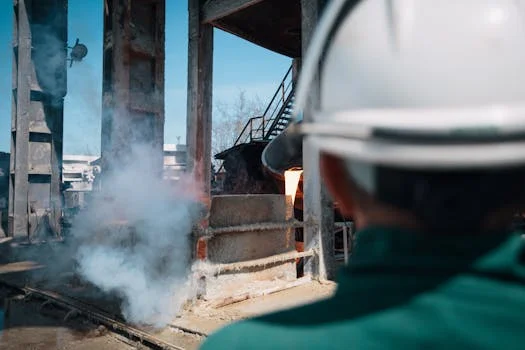
Industrial-scale carbon filters require solutions tailored to their fouling mechanisms. These step-by-step fixes address each failure mode with procedures validated for systems >10 m³/h.
1. Premature Breakthrough (TSS >5 NTU or COD >100 mg/L)
- Reduce flow rate: Lower to <10 bed volumes per hour (BV/h) to extend contact time.
- Increase bed depth: Expand to 1.2m minimum (EPA recommendation for industrial systems).
- Switch carbon type: Use catalytic carbon (e.g., coconut shell) for refractory organics like pharmaceutical APIs.
- Install a pre-filter: A multi-media filter removes TSS upstream, extending carbon lifespan by 30–40%.
2. Pressure Drop >1.2 bar/m
- Backwash: Use 12–15 m/h flow rate for 10–15 minutes to fluidize the bed. Repeat if turbidity >10 NTU post-backwash.
- Air scour: Introduce air at 50–70 m/h for 5 minutes to dislodge compacted particles.
- Replace carbon: If pressure drop persists after backwash, replace the bed (fines accumulation >5%).
3. Bacterial Fouling (Iron Slime or ATP >1,000 RLU)
- Chlorine shock: Backwash with 2% sodium hypochlorite solution for 30 minutes. Rinse until free chlorine <0.1 mg/L.
- Acid wash: Soak in 5% citric acid for 2 hours to dissolve iron oxides. Rinse to pH 7.0.
- Prevent recurrence: Install UV disinfection upstream or dose 1–2 mg/L chlorine continuously.
4. Oil/Grease Fouling (FOG >500 mg/L)
- Steam regeneration: Expose carbon to 120°C steam for 2 hours to restore 70–80% capacity.
- Solvent extraction: Soak in acetone for 1 hour, then rinse with hot water (90% recovery for oils).
- Thermal regeneration: Send to a third-party provider for 800°C treatment (90–95% recovery).
5. Metal Oxide Fouling (Fe >2 mg/g Carbon)
- Acid wash: Soak in 10% hydrochloric acid for 1 hour. Rinse until pH 7.0. Note: Reduces carbon lifespan by 20%.
- Prevent recurrence: Install an iron removal system upstream (e.g., aeration + filtration).
Regeneration vs. Replacement: Cost and Performance Comparison for Industrial Systems
Fouling type, cost, and performance recovery determine whether to regenerate or replace spent carbon. The table compares methods for industrial systems using data from HydropureWater field trials (2025) and industry benchmarks.
| Regeneration Method | Cost per kg | Capacity Recovery | Lifespan Reduction | Best For |
|---|---|---|---|---|
| Thermal (800°C) | $0.80/kg | 90–95% | 10% per cycle | Refractory organics, pharmaceutical wastewater |
| Steam (120°C) | $0.30/kg | 70–80% | 5% per cycle | Oils/grease, food processing wastewater |
| Solvent (acetone) | $0.50/kg | 85–90% | 15% per cycle | High-FOG wastewater |
| Acid wash (HCl) | $0.20/kg | 60–70% | 20% per cycle | Metal oxide fouling |
| Virgin carbon replacement | $2.50/kg | 100% | N/A | Biofouling, irreversible pore blockage |
Application-Specific Recommendations:
- Pharmaceutical wastewater: Replace carbon due to irreversible pore blockage from APIs. Regeneration recovers <50% capacity for these contaminants.
- Metalworking wastewater: Regenerate via thermal or steam methods. Oils/grease dominate fouling, and regeneration restores 80–90% capacity.
- Municipal water: Replace every 2 years to prevent biofilm buildup. Regeneration is cost-prohibitive for low-contaminant loads.
ROI Calculation: For a 10 m³/h system processing 240,000 m³/year, thermal regeneration saves $12,000/year versus replacement. A $20,000 regeneration unit pays back in 1.5 years.
Preventive Maintenance Checklist for Industrial Activated Carbon Filters
This 3-tiered checklist helps prevent failures and extend carbon lifespan in industrial systems >10 m³/h. Include these tasks in maintenance logs to track performance trends.
| Frequency | Task | Equipment Needed | Threshold/Action |
|---|---|---|---|
| Daily | Monitor pressure drop | Differential pressure gauge | Replace at >1.2 bar/m |
| Check effluent turbidity | Portable turbidity meter | Regenerate at >5 NTU | |
| Log flow rate | Flow meter | Maintain <10 BV/h | |
| Weekly | Test Iodine Number | Iodine Number test kit | Regenerate at <600 mg/g |
| Inspect backwash efficiency | Turbidity meter | Repeat backwash if >10 NTU | |
| Check for channeling | Dye test kit | Redistribute bed if uneven flow | |
| Monthly | ATP swab for biofilms | ATP luminometer | Clean at >1,000 RLU |
| Test effluent pH | pH meter | Investigate if ΔpH >0.5 | |
| Inspect carbon attrition | Sieve (0.5 mm mesh) | Replace if fines >5% |
Red Flag Table:
| Symptom | Immediate Action | Long-Term Fix |
|---|---|---|
| Effluent COD >100 mg/L | Reduce flow rate to <5 BV/h | Regenerate or replace carbon |
| Pressure drop >1.5 bar/m | Backwash at 15 m/h for 15 min | Replace carbon bed |
| ATP >1,000 RLU | Chlorine shock (2% NaOCl) | Install UV disinfection upstream |
Monitoring equipment costs: Portable turbidity meter ($800), Iodine Number test kit ($250), ATP luminometer ($1,200). For automated chemical dosing, consider an automatic chemical dosing system.
Upgrading Your System: 3 Technologies to Prevent Carbon Filter Failures
Sensor-based monitoring and automation can reduce manual troubleshooting and extend carbon lifespan by 25–40%.
1. Online Turbidity Sensors
- Cost: $2,500/unit
- Benefit: Reduces breakthrough risk by 40% through real-time effluent monitoring.
- ROI: 1.2 years for 10 m³/h systems (2025 data).
- Case Study: A food processing plant in Shandong reduced carbon replacement costs by 35% after installing online turbidity sensors.
2. Automated Backwash Controllers
- Cost: $5,000
- Benefit: Extends carbon lifespan by 25% through optimized backwash cycles.
- ROI: 2 years for systems >20 m³/h.
- Features: Adjusts flow rate and duration based on pressure drop and turbidity.
3. Iodine Number Analyzers
- Cost: $15,000
- Benefit: Enables predictive regeneration, reducing carbon usage by 20%.
- ROI: 3 years for systems >50 m³/h.
- Comparison: Manual Iodine Number testing costs $50/test versus $0.10/test for automated systems at scale.
Integrate sensors with SCADA for real-time alerts. For more information, see our guide on IoT sensors for wastewater treatment.
Frequently Asked Questions
Q: Can you rejuvenate a carbon filter?
Quick Answer: Rejuvenation works for specific fouling types. Thermal regeneration restores 90–95% capacity for oils/grease, but pharmaceutical wastewater requires virgin carbon replacement due to irreversible pore blockage.
Q: Why is my carbon filter not working?
Quick Answer: Common causes include organic saturation (Iodine Number <600 mg/g), pressure drop >1.2 bar/m, or bacterial fouling (ATP >1,000 RLU). The diagnostic matrix in this guide identifies root causes.
Q: How often should industrial carbon filters be replaced?
Quick Answer: Replacement intervals range from 6–24 months depending on influent quality. High-FOG wastewater (FOG >1,000 mg/L) may require replacement every 3–6 months, while municipal water systems can last 2 years.
Q: What is the best way to clean an activated carbon filter?
Quick Answer: For industrial systems, use steam regeneration (120°C for 2 hours) for oils/grease or acid washing (10% HCl) for metal oxides. Household methods like baking or lemon juice prove ineffective for industrial-scale fouling.
Q: How do you test if activated carbon is exhausted?
Quick Answer: Perform an Iodine Number test (result <600 mg/g indicates exhaustion). For industrial systems, also monitor pressure drop (>1.2 bar/m) and effluent COD (>100 mg/L).