Why Recife’s Sewage Treatment Market Demands Local Expertise
Recife’s industrial and municipal sectors face unique wastewater treatment challenges, driven by stringent local environmental regulations and specific operational demands. Industries like food processing and textiles in the region often generate high-BOD wastewater, with typical influent levels ranging from 1,000 to 3,000 mg/L, significantly exceeding Pernambuco’s discharge limits of BOD < 60 mg/L and COD < 180 mg/L as stipulated by CONAMA 430/2011. with municipal sewage treatment covering only an estimated 65% of Recife’s population, as per SNIS 2023 data, there's a growing need for effective decentralized solutions such as package plants capable of handling flow rates between 1 to 80 m³/h. Compliance pitfalls are also a concern, as Pernambuco’s environmental agency, CPRH, enforces stricter limits for nitrogen and phosphorus than federal standards, particularly in sensitive areas where total nitrogen (TN) must be < 10 mg/L. Recife's urban density and high water table further complicate matters, favoring compact and often underground systems like the WSZ series integrated plants or MBR bioreactors. These regional factors, combined with higher energy costs (approximately R$ 0.80/kWh in Recife compared to R$ 0.65/kWh in São Paulo) and import tariffs of 12–18% on essential chemicals like coagulants and flocculants, can inflate operational expenditure (OpEx) by 20–30% compared to other Brazilian regions, underscoring the necessity of selecting a sewage treatment equipment supplier with deep local market understanding.
Recife’s Sewage Treatment Regulations: What You Must Comply With
Navigating Recife's regulatory landscape is paramount for any industrial or municipal project. While CONAMA 430/2011 sets the federal baseline for wastewater discharge with parameters such as BOD < 60 mg/L, TSS < 50 mg/L, and a pH range of 5–9, it explicitly allows for stricter regional and local mandates. Pernambuco state regulations, specifically CPRH Resolution 001/2018, significantly tighten these limits for sensitive areas, including those within the Capibaribe River basin. These state-level rules impose maximums of TN < 10 mg/L, TP < 1 mg/L, and E. coli < 1,000 MPN/100 mL. Locally, Recife's Law 18.001/2019 mandates pre-treatment for all industrial discharges, such as those from DAF systems or sedimentation units, before they can be connected to the municipal sewer network. Obtaining the necessary permits involves two key authorities: the CPRH for industrial discharge permits and COMPESA, Recife’s water utility, for municipal sewer connections. Failure to comply with these regulations can result in substantial penalties under Federal Law 9,605/1998, with fines ranging from R$ 5,000 to R$ 50 million, and daily accruals for ongoing violations, making a robust compliance strategy a critical component of any wastewater treatment project.
| Parameter | CONAMA 430/2011 (Federal Baseline) | CPRH Resolution 001/2018 (Pernambuco - Sensitive Areas) | Recife Municipal Law 18.001/2019 |
|---|---|---|---|
| BOD (mg/L) | < 60 | < 50 (example, may vary) | N/A (pre-treatment required) |
| COD (mg/L) | < 180 | < 100 (example, may vary) | N/A (pre-treatment required) |
| TSS (mg/L) | < 50 | < 30 (example, may vary) | N/A (pre-treatment required) |
| pH | 5 - 9 | 5 - 9 | N/A (pre-treatment required) |
| Total Nitrogen (TN) (mg/L) | N/A | < 10 | N/A (pre-treatment required) |
| Total Phosphorus (TP) (mg/L) | N/A | < 1 | N/A (pre-treatment required) |
| E. coli (MPN/100 mL) | N/A | < 1,000 | N/A (pre-treatment required) |
| Industrial Discharge | N/A | N/A | Mandatory pre-treatment before connection to municipal sewer |
For a regional comparison of regulatory environments and supplier offerings, consider insights from the Minas Gerais’ sewage treatment equipment market for regional comparison.
Sewage Treatment Equipment for Recife: Engineering Specs and Use Cases
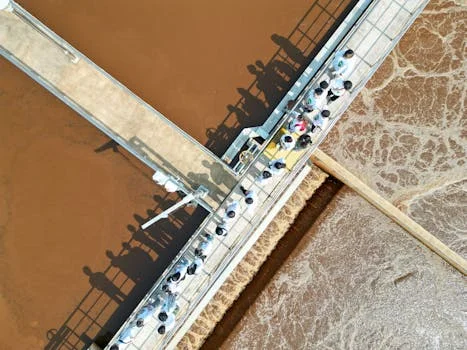
Selecting the appropriate sewage treatment equipment for Recife necessitates a deep understanding of specific industrial and municipal applications. For high-strength organic wastewater generated by food processing facilities such as breweries and slaughterhouses, Dissolved Air Flotation (DAF) systems are highly effective. These systems can achieve 92–97% TSS removal and 85–90% FOG (Fats, Oils, and Grease) removal, operating at flow rates from 4 to 300 m³/h. With typical influent TSS levels of 500–2,000 mg/L, they can consistently produce effluent with <30 mg/L TSS, aligning with EPA 2024 benchmarks. For the textile industry, which often deals with COD levels ranging from 2,000–5,000 mg/L, a combination of anaerobic digesters followed by aerobic bioreactors can reduce COD to below 250 mg/L, with potential for energy recovery of 0.3–0.5 kWh/m³ treated, based on IWA 2023 data. Municipal sewage treatment in densely populated urban areas of Recife benefits greatly from Membrane Bioreactor (MBR) bioreactors, such as the DF series. These systems offer reuse-quality effluent with filtration down to <1 μm and require up to 60% less footprint than conventional activated sludge plants, handling flow rates from 10 to 2,000 m³/day. For decentralized municipal applications or smaller communities, the WSZ series of underground plants provides an automated solution for flow rates of 1 to 80 m³/h, eliminating the need for on-site operators. Efficient sludge management is also critical; plate and frame filter presses, with filtration areas ranging from 1 to 500 m², can reduce sludge volume by 70–80%, leading to significant cost savings of R$ 200–400 per ton of disposed sludge, based on Recife landfill 2025 rates.
| Equipment Type | Primary Application | Key Performance Metrics (Recife Context) | Typical Flow Rates/Capacities | Relevant HydropureWater Product Links |
|---|---|---|---|---|
| DAF Systems | Food Processing (Breweries, Slaughterhouses) | TSS Removal: 92–97% FOG Removal: 85–90% Effluent TSS: <30 mg/L |
4–300 m³/h | DAF systems for high-efficiency TSS and FOG removal in Recife’s food processing and textile industries |
| Anaerobic Digesters + Aerobic Bioreactors | Textile Industry | COD Reduction: 2,000–5,000 mg/L to <250 mg/L Energy Recovery: 0.3–0.5 kWh/m³ |
200–5,000 m³/day | N/A (custom integrated solutions) |
| MBR Bioreactors (DF Series) | Urban Sewage, Water Reuse | Filtration: <1 μm Footprint: 60% smaller than conventional |
10–2,000 m³/day | MBR bioreactors for reuse-quality effluent in Recife’s urban sewage projects |
| Underground Package Plants (WSZ Series) | Decentralized Municipal, Residential, Hotels | Automated Operation Compact Design |
1–80 m³/h | Underground sewage treatment plants for Recife’s residential communities and hotels |
| Plate and Frame Filter Presses | Sludge Dewatering (Industrial & Municipal) | Sludge Volume Reduction: 70–80% Disposal Cost Savings: R$ 200–400/ton |
1–500 m² filtration area | Filter presses to reduce sludge disposal costs in Recife’s industrial and municipal projects |
For a comparative analysis of DAF technology, explore DAF systems vs clarifiers, sedimentation, and dispersed air flotation for Recife projects.
Cost Breakdown: Sewage Treatment Equipment in Recife (2025 Data)
Budgeting for sewage treatment equipment in Recife requires a thorough understanding of capital expenditure (CapEx), operational expenditure (OpEx), and potential return on investment (ROI), factoring in local cost drivers. For industrial systems, CapEx in 2025 is estimated as follows: a 50 m³/h DAF system can range from R$ 800,000 to R$ 1.2 million; a 100 m³/day MBR system typically falls between R$ 1.5 to R$ 2.2 million; and a 200 m³/day anaerobic digester might cost R$ 2 to R$ 3 million. For municipal systems, a 50 m³/h WSZ series underground plant is projected at R$ 600,000 to R$ 900,000, while a 500 m³/day MBR system could cost R$ 4 to R$ 6 million. OpEx is significantly influenced by regional factors. Electricity costs at R$ 0.80/kWh are a major component, alongside chemicals such as coagulants (R$ 15–25/kg) and flocculants (R$ 30–50/kg). Labor costs for operators in Recife typically range from R$ 3,000 to R$ 5,000 per month. Consequently, OpEx benchmarks are: DAF systems at R$ 15–25/m³ treated; MBR systems at R$ 30–50/m³ treated; and anaerobic digesters, which can be energy-neutral or even energy-positive, at R$ 10–20/m³ treated. The ROI for industrial systems is often realized within 3–5 years, primarily through avoided fines for non-compliance and savings from water reuse, which can reduce municipal water bills by up to 30%. Municipal systems, while offering long-term environmental benefits, typically have longer payback periods of 10–15 years, according to World Bank 2023 guidelines.
| System Type | Capacity | Estimated CapEx (R$) | Estimated OpEx (R$/m³) | Typical ROI Period (Years) |
|---|---|---|---|---|
| DAF System | 50 m³/h | 800,000 – 1,200,000 | 15 – 25 | 3 – 5 (Industrial) |
| MBR Bioreactor | 100 m³/day | 1,500,000 – 2,200,000 | 30 – 50 | 3 – 5 (Industrial) / 10 – 15 (Municipal) |
| Anaerobic Digester | 200 m³/day | 2,000,000 – 3,000,000 | 10 – 20 (Energy Neutral) | 3 – 5 (Industrial) |
| WSZ Underground Plant | 50 m³/h | 600,000 – 900,000 | 20 – 35 | 10 – 15 (Municipal) |
| MBR Bioreactor | 500 m³/day | 4,000,000 – 6,000,000 | 30 – 50 | 10 – 15 (Municipal) |
For broader cost perspectives, consult Wastewater treatment plant cost benchmarks for emerging markets.
Top 5 Sewage Treatment Equipment Suppliers in Recife: 2025 Comparison
Selecting the right sewage treatment equipment supplier in Recife involves evaluating a combination of technical expertise, local compliance knowledge, after-sales support, and cost-effectiveness. Here's a comparison of key players active in the Recife market for 2025:
| Supplier | Headquarters/Presence | Strengths | Weaknesses | Key Equipment Focus |
|---|---|---|---|---|
| AquaTech Solutions Brasil | Porto Alegre (Active in Recife) | Custom solutions for food processing, 24/7 support. | Higher CapEx (10–15% premium). | DAF, Anaerobic Digesters, Aerobic Bioreactors. |
| Prisco Ambiental | São Paulo (Active in Recife) | Water reuse expertise, strong compliance with Pernambuco nitrogen limits. | Limited local inventory (lead times: 8–12 weeks). | Effluent treatment, water reuse systems. |
| EcoRecycle Indústria | Recife-based | Deep local compliance knowledge, competitive OpEx (10–20% lower). | Smaller equipment range (1–100 m³/h). | Package plants, DAF, MBR. |
| San Lan Technologies | China (Local Distributor in Recife) | Low CapEx (20–30% cheaper). | Limited after-sales support (response time: 48–72 hours). | Wide range of wastewater treatment equipment. |
| HydropureWater | China (Local Distributor in Recife) | MBR and DAF expertise, 10-year warranty on membrane systems. | Import tariffs (12–18%) can inflate CapEx. | DAF, MBR, Underground Plants, Filter Presses. |
Vendor Selection Framework: How to Choose the Right Supplier for Your Recife Project
To ensure a successful sewage treatment equipment procurement in Recife, follow a structured decision-making process. First, clearly define your project’s requirements, including precise flow rates, influent characteristics, specific discharge limits dictated by Pernambuco state and Recife municipal regulations, and any footprint constraints. Second, shortlist suppliers who can demonstrate a verifiable track record of compliance with local regulations in Recife; request proof of CPRH permit approvals for similar projects. Third, conduct a thorough cost comparison, evaluating both CapEx and OpEx against the 2025 benchmarks provided, such as the R$ 800,000–1.2M range for a 50 m³/h DAF system. Fourth, scrutinize the after-sales support offered, paying close attention to guaranteed response times for technical issues, local spare parts availability, and comprehensive training programs for your operators. For industrial projects, especially those with complex wastewater streams, request pilot tests to validate equipment performance over a typical 30-day period. Be wary of red flags such as suppliers without local inventory, which can lead to lead times exceeding 8 weeks, vague compliance guarantees, or a lack of verifiable references within the Recife metropolitan area.
Frequently Asked Questions
What are the main environmental regulations for wastewater discharge in Recife?
Recife’s wastewater discharge is governed by federal CONAMA 430/2011, Pernambuco state CPRH Resolution 001/2018 (which imposes stricter limits for nitrogen, phosphorus, and pathogens in sensitive areas), and Recife municipal Law 18.001/2019, which mandates pre-treatment for industrial wastewater before connection to the municipal sewer system.
How much does a sewage treatment plant cost in Recife?
The cost varies significantly. For industrial applications, a 50 m³/h DAF system can range from R$ 800,000 to R$ 1.2 million. For municipal use, a 50 m³/h WSZ underground plant might cost R$ 600,000 to R$ 900,000. Operational costs (OpEx) are typically R$ 15–50 per cubic meter treated, depending on the technology used.
Which type of sewage treatment equipment is best for the food processing industry in Recife?
For food processing, Dissolved Air Flotation (DAF) systems are highly recommended due to their effectiveness in removing Fats, Oils, and Grease (FOG) and suspended solids (TSS), achieving removal rates of up to 97%.
What is MBR technology and why is it suitable for Recife?
MBR (Membrane Bioreactor) technology uses membranes for filtration, producing high-quality effluent suitable for reuse. It is ideal for Recife’s urban sewage projects and areas with limited space due to its compact footprint and superior treatment efficiency, delivering effluent with <1 μm filtration.
How can I ensure compliance with Pernambuco’s nitrogen and phosphorus limits?
Suppliers offering advanced biological treatment processes, such as those incorporating nitrification and denitrification stages within MBR systems or specialized aerobic bioreactors, can help meet Pernambuco’s stringent TN (<10 mg/L) and TP (<1 mg/L) limits.