Why Queensland Needs Package Wastewater Treatment Plants
Package wastewater treatment plants for Queensland sites commonly target secondary-quality effluent near BOD ≤ 20 mg/L and TSS ≤ 30 mg/L for irrigation or low-contact reuse. Tighter nutrient limits apply on reef catchments. Prefabricated MBR, ASBR+, and hybrid trains are used where sewer is unavailable or delayed. Custom lead times typically run 12–16 weeks before delivery.
Queensland package plants serve commercial, industrial, and municipal loads that cannot wait for trunk sewer upgrades. In 2025, MBR units are widely specified where reuse quality and a compact footprint matter (about 99% TSS removal and roughly 60% less area than conventional trains). ASBR+ trains remain a lower-cost path for domestic sewage when nutrient removal to about TN ≤ 10 mg/L is the priority. Local suppliers such as MAK Water and True Water offer turnkey packages, but remote civil works still drive programme risk.
The Environmental Protection Act 1994 underpins discharge licensing in Queensland. Corporate non-compliance penalties cited for serious incidents still reach about $1.1 million per offence in project briefings, so design teams treat permit limits as hard constraints rather than aspirational targets. Population growth toward hubs such as the Sunshine Coast and Townsville increases pressure on centralised networks. Modular plants fill that gap when a site sits outside reliable sewer catchments.
Operating conditions are demanding. Remote mining camps in the Bowen Basin and island resorts face occupancy-driven load swings that overwhelm septic tanks and raise groundwater risk. A 2023 Gold Coast resort case replaced a failing septic system with a 50 m³/day MBR package and reported about $280,000 per year saved by cutting tanker pump-outs and reusing high-quality effluent (True Water 2023). Most plants we size for seasonal tourism run at the lower end of nameplate flow for much of the year, then spike for weeks—so equalization and redundant aeration are not optional extras.
Factory assembly lets vendors prove process performance before delivery. On-site install often finishes in days once slabs, power, and rising mains are ready. Integrated SCADA supports remote alarms where a full-time wastewater engineer is not affordable. For buried or footprint-limited sites, an Underground Package Sewage Treatment Plant (WSZ Series) is a common containerised option alongside above-grade MBR skids.
Package Wastewater Treatment Technologies: How They Work and When to Use Them
Membrane Bioreactor (MBR) trains remove about 99% of Total Suspended Solids by physical barrier, with typical pore sizes of 0.03–0.4 microns. Queensland reuse schemes for irrigation often prefer MBR because pathogen and solids barriers are explicit. A standard Queensland-approved MBR package plants for high-efficiency effluent is usually sized at 15–25 LMH membrane flux and 8–12 g/L MLSS. Energy use is higher than conventional activated sludge at about 0.8–1.2 kWh/m³, yet footprint is about 60% smaller on constrained lots.
Activated sludge batch reactors (ASBR and ASBR+) complete aeration and clarification in one tank. They suit domestic sewage where nutrient removal matters more than ultra-low turbidity. Typical ASBR+ design uses hydraulic retention time (HRT) of 12–24 hours and sludge age of 10–30 days, supporting TN ≤ 10 mg/L for sensitive catchments. Gravity settling needs more land than MBR, but mechanical complexity and spare-parts burden are lower.
Food processors and oily manufacturing streams usually need Dissolved Air Flotation before biology. DAF systems for industrial wastewater pre-treatment in Queensland dissolve air under pressure, then release 30–50 micron bubbles that float FOG and solids for skimming. Without that step, grease shocks can collapse aeration and push the site into non-compliant discharge.
Aerobic granular biomass (Nereda®) has been adopted at larger Queensland works such as Sandgate Wastewater Treatment Plant. Granules allow simultaneous treatment phases in one reactor, with reported energy savings of 25–35% versus conventional activated sludge and footprint cuts up to 75%. Containerised Nereda options are appearing for high-flow industrial duties, though most package bids for 2025 still centre on MBR or ASBR+ for sub-1,000 m³/day sites.
| Technology Type | Effluent Quality (BOD/TSS) | Footprint Requirement | Energy Use (kWh/m³) | Best Application |
|---|---|---|---|---|
| MBR | <2 / <1 mg/L | Very Low | 0.8 – 1.2 | Water reuse, resorts, tight sites |
| ASBR+ | <10 / <10 mg/L | Medium | 0.4 – 0.7 | Mining camps, housing estates |
| DAF | N/A (Pre-treatment) | Low | 0.3 – 0.5 | Food processing, oily water |
| Nereda® | <5 / <5 mg/L | Low | 0.3 – 0.5 | Large municipal/industrial |
Queensland Compliance Checklist: EPA Standards, Local Council Requirements, and Discharge Permits
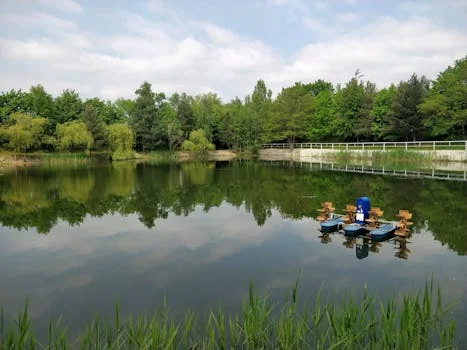
Queensland regulators still set site-specific release limits under the Environmental Protection Act 1994 and Environmentally Relevant Activity ERA 63 for sewage treatment (Environmental Protection Regulation 2019). Project briefs often call irrigation-grade secondary effluent “Class C,” matching BOD ≤ 20 mg/L and TSS ≤ 30 mg/L. According to the Queensland Plumbing and Wastewater Code (2024), medium-exposure irrigation quality aligns with BOD ≤ 20 mg/L and TSS ≤ 30 mg/L. High-exposure reuse steps up to about BOD ≤ 10 mg/L and TSS ≤ 10 mg/L.
For STPs releasing to waters in Great Barrier Reef catchments, a 2024 DESI leading-practice review notes that environmental authorities commonly require annual median concentrations around 5 mg/L total nitrogen and 1 mg/L total phosphorus. Local councils can tighten TP further. Noosa Shire Council and Sunshine Coast Council frequently seek phosphorus near 1 mg/L to limit algal blooms. Industrial projects in Townsville or Gladstone also face heavy-metal and COD conditions under industrial wastewater guidelines referenced in 2024 briefs.
Use this compliance checklist before you freeze CAPEX:
- Verify ERA Status: Determine if your project triggers an Environmentally Relevant Activity (ERA 63 for sewage treatment).
- Effluent End-Use Study: Document whether water will be discharged to a watercourse, used for irrigation, or sent to a third party.
- Baseline Influent Testing: For industrial sites, conduct 7-day composite sampling to identify peak loads and contaminants.
- Council Planning Approval: Submit a site-specific wastewater management plan (SWMP) to the local authority.
- Digital Monitoring Setup: Ensure the system connects to the EPA’s Wastewater Portal for mandatory monthly reporting.
Clinics and regional hospitals need pathogen control and pharmaceutical residual management beyond domestic STP norms. Specifying EPA-compliant medical wastewater treatment for Queensland clinics with UV or ozone disinfection reduces the risk that medical waste streams fail bacteriological limits at the compliance point.
How Much Does a Package Treatment Plant Upgrade Cost?
Package treatment plant upgrade costs in Queensland usually land between replacing worn mechanical items and full process conversion. Capital costs for a new package plant still range from $2,500 to $7,000 per cubic meter of daily capacity, depending on technology and effluent class. MBR equipment typically sits at $4,500–$7,000 per m³/day. Regional sites such as Mount Isa or Cape York often add a 20–30% mobilisation premium for logistics and specialised labour.
Installation commonly adds 20–40% of equipment price. For a 100 m³/day MBR plant near Brisbane or Ipswich, a total project budget near $650,000 remains a realistic 2025 benchmark—about $450,000 for containerised equipment and $200,000 for civil works, electrics, and commissioning. Upgrading an existing ASBR to add membranes or tertiary filtration often costs less than a greenfield MBR, but only if tanks, power, and hydraulics can accept the retrofit without major civil rebuilds.
| System Type | CAPEX (per m³/day) | OPEX (Energy/m³) | Maintenance Frequency | Estimated Lifespan |
|---|---|---|---|---|
| MBR | $4,500 – $7,000 | $0.15 – $0.30 | Quarterly | 15 – 20 Years |
| ASBR | $2,500 – $4,000 | $0.08 – $0.15 | Bi-Annual | 20+ Years |
| DAF | $3,000 – $5,500 | $0.10 – $0.20 | Monthly | 15 – 20 Years |
Membrane replacement on MBR plants typically adds $0.08–$0.15 per treated cubic meter every 5–8 years. Aeration energy at 0.8–1.2 kWh/m³ remains the largest OPEX lever; many Queensland sites offset blowers with solar PV. When comparing package STP installation costs against tanker haulage or sewer headworks charges, run a five-year cash view rather than CAPEX alone.
What Drives Package Sewage Plant Upgrade Costs?
Package sewage plant upgrade costs rise fastest when effluent limits tighten, when FOG or industrial toxins force new pre-treatment, or when power and sludge handling were undersized in the original build. Converting septic or primary-only plants to secondary biological treatment usually needs new aeration, clarification or membranes, and a larger generator set. Adding nutrient removal for reef-adjacent councils can require anoxic zones, chemical dosing, or both.
Civil access is the silent cost driver. Island and mining sites pay for barge or road mobilisation that dwarfs skid price differences between vendors. If the upgrade must stay online, temporary hire tanks or bypass pumping can add weeks of hire cost.
Supplier Selection Framework: How to Choose a Package Plant Provider in Queensland
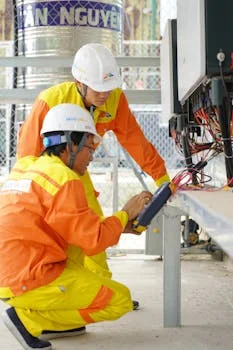
Supplier selection for Queensland package plants should weight local service and verified hot-climate data above brochure claims. Ask for pilot results or references showing MBR flux and biology above 30°C summer liquor temperatures. Vendors without Queensland performance data carry higher summer non-compliance risk.
Local technician coverage prevents long non-compliant discharges after a blower or PLC failure. A Brisbane sales desk with the nearest fitter in Sydney is a poor fit for Cairns or Townsville assets. Prefer suppliers with depots or certified partners in Brisbane, Townsville, and Cairns. For compact residential or commercial plots, confirm whether an Underground Package Sewage Treatment Plant (WSZ Series) or an above-grade MBR better matches access and odour setbacks.
Contract language should tie guarantees to effluent quality and uptime, not only delivery dates. Structural tank warranties commonly run 10–20 years; mechanical packages 2–5 years. MBR bids need a clear pro-rata membrane life warranty. Require factory acceptance tests, spare-parts lists for 24-month operation, and remote SCADA access before practical completion.
Who This Is For and Next Step
This guide suits developers, EPC contractors, and facility managers specifying off-sewer treatment for Queensland resorts, camps, estates, and light industry. Look elsewhere if you only need a domestic septic tank under local plumbing rules with no ERA trigger, or if a guaranteed municipal connection is already funded and timed. Selection checklist before tender: confirm ERA 63 status, lock end-use class, sample peak influent, shortlist vendors with regional service, and compare five-year OPEX including membranes or media.
If you need a sized proposal against BOD/TSS and nutrient limits for a named Queensland site, submit design flows and effluent targets through our request a quote form with your duty brief attached.
Frequently Asked Questions
What is the difference between Class A and Class C effluent in Queensland?
Class C effluent in project briefs usually means secondary quality near BOD ≤ 20 mg/L and TSS ≤ 30 mg/L for lower-contact irrigation. Class A is high-contact reuse, often described as BOD < 5 mg/L with strict pathogen removal for toilet flushing or spray irrigation. Queensland QPW tables also use medium- and high-exposure bands near BOD ≤ 20/TSS ≤ 30 versus BOD ≤ 10/TSS ≤ 10. Match the environmental authority, not marketing labels.
How long does a package wastewater plant take to install in Queensland?
Factory build for custom packages typically takes 12–16 weeks before delivery. On-site mechanical installation often finishes in a few days once civil works, power, and rising mains are ready. Remote mining or island sites add mobilisation time for transport and craneage. Commissioning and proving samples against licence limits usually need additional weeks before steady operation.
When should a Queensland site choose MBR over ASBR+?
Choose MBR when reuse turbidity, pathogen barriers, or footprint dominate—typical MBR effluent is <2 mg/L BOD and <1 mg/L TSS at 0.8–1.2 kWh/m³. Choose ASBR+ when domestic sewage, nutrient targets near TN ≤ 10 mg/L, and lower energy at 0.4–0.7 kWh/m³ matter more than ultra-compact layout. Industrial FOG loads still need DAF upstream of either biology.
Do small package plants trigger ERA 63 in Queensland?
Sewage treatment can trigger Environmentally Relevant Activity ERA 63 under the Environmental Protection Regulation 2019 when capacity and release pathways meet scheduled thresholds. No-release systems may fall outside ERA triggers, but irrigation or watercourse release usually needs an environmental authority. Confirm intensity category with your consultant before ordering equipment, because redesign after purchase is expensive.
What budget should a 100 m³/day MBR package use in south-east Queensland?
A peri-urban 100 m³/day MBR project near Brisbane or Ipswich often budgets about $650,000 total—roughly $450,000 equipment and $200,000 civil, electrical, and commissioning. Equipment-only MBR CAPEX commonly sits at $4,500–$7,000 per m³/day of capacity. Add 20–30% mobilisation for far-north or remote inland sites, and include membrane replacement allowances of $0.08–$0.15 per m³ every 5–8 years.