Omaha’s Industrial Wastewater Challenge: Why Pretreatment is Non-Negotiable
Omaha's industrial wastewater is characterized by high-strength waste from meat processing and food production, with Nebraska DEQ requiring pretreatment to meet strict permit limits (e.g., BOD < 250 mg/L, TSS < 300 mg/L for direct dischargers). The city's $1.2B Combined Sewer Overflow (CSO) program has eliminated three major overflow points (CSOs 102, 118, 119) via dedicated industrial force mains, but facilities must still install on-site pretreatment systems like dissolved air flotation (DAF) or membrane bioreactors (MBR) to comply with local sewer use ordinances and avoid surcharges up to $0.50 per pound of excess BOD. A recent DEQ enforcement action against a large meat processor highlighted the critical need for robust pretreatment, citing violations for high Biochemical Oxygen Demand (BOD) and Total Suspended Solids (TSS) that threatened the capacity of the Missouri River Water Resource Recovery Facility. This facility, like many in the South Omaha Industrial Area, typically generates influent wastewater with BOD concentrations ranging from 1,500-3,000 mg/L, TSS from 800-1,200 mg/L, and Fats, Oils, and Grease (FOG) from 300-500 mg/L, far exceeding standard municipal limits. Failure to address these loads can result in significant financial penalties and operational disruptions.
| Parameter | Typical Influent Range | Nebraska DEQ Permit Limit (Direct Discharge) | Omaha Public Works Surcharge Rate (Excess Load) |
|---|---|---|---|
| BOD (mg/L) | 1,500 - 3,000 | < 250 | $0.50/lb |
| TSS (mg/L) | 800 - 1,200 | < 300 | $0.30/lb |
| FOG (mg/L) | 300 - 500 | < 100 | N/A (Specific surcharges may apply based on total impact) |
Nebraska DEQ Compliance: Permit Limits, Monitoring, and Reporting for Industrial Dischargers
The Nebraska Department of Environmental Quality (DEQ) requires industrial facilities discharging wastewater to obtain a Title 119 permit, typically requiring a 90-120 day application process that includes detailed engineering reports and process flow diagrams. Industrial facilities connected to the Omaha sewer system must adhere to local ordinances and state mandates. Key effluent parameters for discharge into the Omaha sewer include maintaining a pH between 6.0 and 9.0, keeping temperatures below 40°C, and ensuring no visible sheen is present. Compliance necessitates rigorous monitoring protocols, often involving continuous flow meters and weekly composite sampling for BOD and TSS using EPA-approved methods (405.1 for BOD, 160.2 for TSS). Discharge Monitoring Reports (DMRs) must be submitted monthly, due by the 15th of the following month.
The DEQ enforces strict regulations, with common violations observed in Omaha including FOG exceedances, which accounted for approximately 42% of enforcement actions in 2023, followed by pH excursions at 28%.| Parameter | Requirement | Monitoring Frequency | Reporting | Common Violations in Omaha (2023) |
|---|---|---|---|---|
| BOD (mg/L) | < 250 (Direct Discharge) | Weekly Composite | Monthly DMRs (Due 15th) | High BOD Loads |
| TSS (mg/L) | < 300 (Direct Discharge) | Weekly Composite | Monthly DMRs (Due 15th) | High TSS Loads |
| FOG (mg/L) | < 100 (General Guideline) | Weekly/As Needed | Monthly DMRs (Due 15th) | 42% of Enforcement Actions |
| pH | 6.0 - 9.0 | Continuous/Daily Checks | Monthly DMRs (Due 15th) | 28% of Enforcement Actions |
| Temperature (°C) | < 40 | As Needed | Monthly DMRs (Due 15th) | N/A |
| Visible Sheen | None | Daily Observation | Monthly DMRs (Due 15th) | N/A |
Treatment Technology Comparison: DAF vs MBR vs Chemical Pretreatment for Omaha’s High-Strength Wastewater
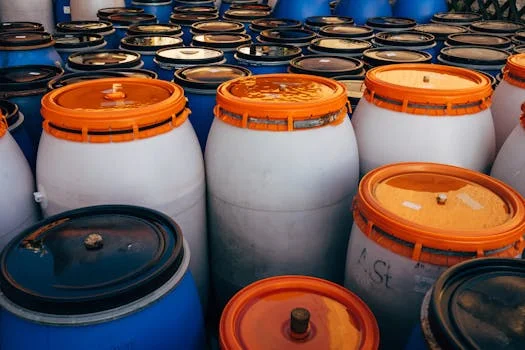
Selecting the appropriate pretreatment technology is crucial for effectively managing Omaha's challenging industrial wastewater. Dissolved Air Flotation (DAF) systems excel at removing suspended solids and FOG, achieving 92-97% TSS removal and 60-75% BOD removal. They are particularly well-suited for the high-FOG streams common in meat processing. Membrane Bioreactor (MBR) systems offer superior effluent quality, with 99% pathogen removal and 95% BOD removal, making them ideal for water reuse applications or facilities requiring very high effluent standards.
| Technology | Typical TSS Removal (%) | Typical BOD Removal (%) | Typical FOG Removal (%) | Footprint | CAPEX (50-200 m³/h) | OPEX ($/m³) | Ideal Application |
|---|---|---|---|---|---|---|---|
| Dissolved Air Flotation (DAF) | 92-97 | 60-75 | 85-95 | Moderate | $150K - $600K | $0.20 - $0.40 | Meat processing, high FOG streams |
| Membrane Bioreactor (MBR) | 98-99.9 | 95-99 | 95-99 | Compact (20-30% smaller) | $1.2M - $3.5M | $0.40 - $0.70 | Water reuse, stringent discharge limits |
| Chemical Pretreatment | 80-90 | 70-85 | 70-85 | Small | $200K - $800K | $0.50 - $1.20 | Small manufacturers, low flow rates |
For detailed specifications on DAF systems suitable for Omaha's meat processing sector, explore our DAF systems for Omaha meat processing facilities. For facilities considering advanced treatment for water reuse, our MBR systems for water reuse in Omaha offer comprehensive solutions. Smaller operations can benefit from the efficiency of our chemical pretreatment for small Omaha manufacturers.
Cost Breakdown: Industrial Wastewater Treatment Systems in Omaha (2025 CAPEX/OPEX Data)
Budgeting for industrial wastewater treatment requires a comprehensive understanding of both capital expenditure (CAPEX) and operational expenditure (OPEX). For systems designed to handle 50-200 m³/h, DAF units typically range from $150,000 to $600,000 in CAPEX. MBR systems represent a higher upfront investment, ranging from $1.2 million to $3.5 million. Chemical pretreatment systems fall in between, with CAPEX between $200,000 and $800,000.
| Cost Component | DAF System | MBR System | Chemical Pretreatment |
|---|---|---|---|
| CAPEX ($) | 150,000 - 600,000 | 1,200,000 - 3,500,000 | 200,000 - 800,000 |
| OPEX - Energy ($/m³) | 0.10 - 0.25 | 0.15 - 0.30 | N/A (Indirect energy use) |
| OPEX - Chemicals ($/m³) | 0.05 - 0.15 | 0.05 - 0.10 | 0.50 - 1.20 |
| OPEX - Labor (FTE) | 0.2 - 0.5 | 0.5 - 1.0 | 0.1 - 0.3 |
| Permitting ($) | 5,000 - 20,000 (Title 119) + 2,000 - 10,000 (Engineering) | ||
| Annual Maintenance ($) | 3,000 - 8,000 (Pump rebuilds) | 15,000 - 40,000 (Membrane replacement) | 2,000 - 5,000 (Chemical pump maintenance) |
Step-by-Step: Selecting the Right Wastewater Treatment System for Your Omaha Facility
Choosing the optimal industrial wastewater treatment system for your Omaha facility requires a systematic approach. Begin by accurately characterizing your wastewater through grab sampling or, preferably, 24-hour composite sampling. Key parameters to analyze include BOD, TSS, FOG, pH, and any specific contaminants relevant to your industry.
Frequently Asked Questions
What are the three types of industrial wastewater treatment?
Industrial wastewater treatment is broadly categorized into three stages: Primary treatment, which involves physical processes like screening and sedimentation to remove larger solids and settleable matter; Secondary treatment, typically biological processes that use microorganisms to break down dissolved organic matter; and Tertiary treatment, which involves advanced processes like filtration, disinfection, and nutrient removal to achieve high-quality effluent for discharge or reuse.
Is wastewater treatment considered industrial?
Yes, wastewater treatment is considered industrial if the wastewater is generated by manufacturing, processing, or commercial activities, distinct from domestic sewage.
What are the penalties for non-compliance in Omaha?
Penalties for non-compliance with Omaha's sewer use ordinances and DEQ regulations can include substantial fines, potentially up to $25,000 per day per violation.
Further Reading
Explore these in-depth articles on related