What Scalability Means for Water and Wastewater Systems
Modular and centralized water systems should be compared as complete delivery architectures, not simply as different plant sizes. A modular treatment plant is assembled from discrete, prefabricated units that can operate independently or as an integrated treatment train (AUC Group). A centralized system collects wastewater through a network and treats it at one integrated facility (Genesis Water Technologies, undated). Scalability has three separate dimensions: hydraulic capacity, treatment capability as contaminants change, and operational resilience through parallel modules and maintenance isolation. Modular treatment equipment can support decentralized wastewater treatment, but it does not by itself create a decentralized collection system. The architectural decision therefore starts with flow, collection, land, treatment, and expansion constraints—not tank volume alone.
Hydraulic scalability means accommodating more flow. Treatment scalability means adding capability for changing contaminant loads or stricter discharge and reuse requirements. Operational scalability means maintaining service during maintenance, component failure, and phased construction. These objectives can conflict: a compact integrated plant may save land, while separated treatment trains may be easier to isolate and expand. For industrial buyers, the relevant question is therefore not “Which architecture is more scalable?” but “Which form of scalability is required, and at what point in the project timeline?”
Decentralized treatment can reduce extensive collection piping and pumping where connection to a central municipal system is not feasible, according to Genesis Water Technologies. That advantage disappears when wastewater must still be conveyed long distances to a shared treatment plant. A central collection network combined with modular treatment units remains a hybrid architecture. It may preserve collection efficiency while retaining the option to add treatment modules later.
Site conditions also affect scale-up. Genesis Water Technologies identifies wastewater type, required treatment level, land availability, local codes, soil, topography, groundwater depth, and proximity to sensitive areas as inputs to technology selection. A plant expansion planned around those conditions is more credible than a nominal capacity claim detached from the site. The [engineering guide to domestic sewage treatment in Mozambique](/blog/12707-domestic-sewage-treatment-in-mozambique-2026-engineering-guide.html) provides a useful example of why local design inputs belong in the architecture decision.
Modular and Centralized System Architectures
A modular system separates the treatment process into functional units that can be fabricated, delivered, installed, and commissioned as a coordinated package. The process flow can comprise pretreatment, biological or physical treatment, separation, polishing or disinfection, and sludge or solids handling. Each stage may be assigned to a discrete unit, subject to the selected process. A centralized system instead depends on collection and conveyance before wastewater reaches a large integrated treatment facility; treated water is then distributed or discharged.
Modular tanks and piping can be pre-constructed before delivery, accelerating startup timelines, according to Genesis Water Technologies. A centralized plant can integrate treatment stages within one footprint. In the concentric-circle arrangement described by AUC Group, a central clarifier is surrounded by successive process stages and common walls, reducing piping and site area. A hybrid architecture separates decisions: collection, pretreatment, utilities, or sludge handling can remain centralized while biological, membrane, polishing, or pretreatment capacity is delivered in modular trains.
Package treatment can also reduce surface clutter where the site is constrained. The underground integrated package treatment plant is specified for 1–80 m³/h and can be installed below grade or configured as a trailer-mounted mobile unit. These are equipment configurations, not proof that every project has the same capacity, footprint, or deployment schedule.
| Element | Modular architecture | Centralized architecture | Hybrid architecture |
|---|---|---|---|
| Collection | Local conveyance or a smaller on-site network | Extensive collection and conveyance network | Central collection feeding modular treatment trains |
| Treatment arrangement | Discrete, function-specific units | Integrated facility with interdependent stages | Shared infrastructure with separable treatment modules |
| Principal growth mechanism | Add or reconfigure modules | Extend basins, reengineer, or construct additional capacity | Expand selected treatment stages without rebuilding the whole network |
| Main site pressure | Module spacing, access, and installation interfaces | Collection length, pumping, and treatment footprint | Compatibility between network and treatment phases |
Scalability and Expansion Comparison
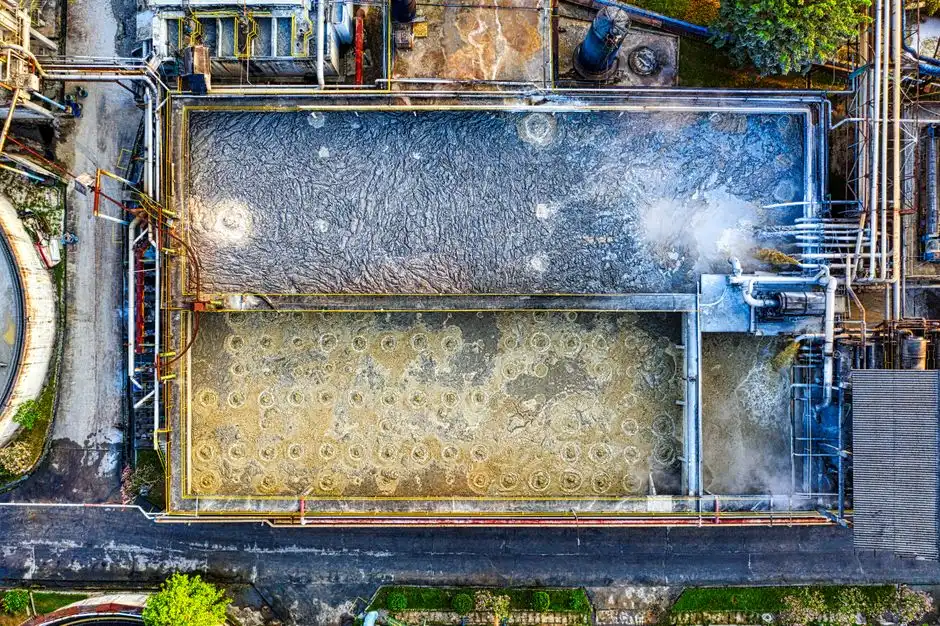
Modular expansion is configured at the equipment level: additional units increase hydraulic capacity, while other modules can introduce advanced treatment as requirements change. AUC Group states that modular plants can be expanded by adding modules and phased as development progresses. Its Fort Bend County example began with one 200,000 GPD unit and later increased treatment capacity to 600,000 GPD as demand rose, directly linking capital deployment to development timing.
Centralized expansion is a civil-and-permitting project rather than an equipment substitution. Seven Seas Water Group reports that adding capacity can require years of permitting, reengineering, and disruption. A centralized design is not inherently unextendable when land, civil interfaces, utilities, and expansion provisions are deliberately reserved. Its weakness appears when the original layout or permit leaves no practical route for additional basins or treatment processes.
Treatment capability is the second expansion test. A modular architecture can add a membrane, filtration, polishing, or disinfection module without changing the function of every existing unit. AUC Group notes that modular systems are easier to reconfigure for advanced treatment, while conventional concentric layouts can limit future additions because the process is integrated around a common-wall structure. The [comparison of MBR versus conventional activated sludge for industrial wastewater](/blog/12709-mbr-vs-conventional-activated-sludge-for-mining-metals-wastewater-in-grove.html) is relevant when changing contaminant characteristics, not merely flow, drive the expansion decision.
Catalog range is not an engineering sizing. The modular MBR wastewater treatment system covers 10–2,000 m³/day, but a buyer must match the selected configuration to actual flow, footprint, treatment targets, and reuse objectives. A modular family can provide several options while still requiring site-specific process design.
| Expansion criterion | Modular | Centralized | Hybrid |
|---|---|---|---|
| Higher wastewater flow | Add treatment modules and supporting capacity | Add or enlarge civil treatment works | Add modules to the shared network |
| More demanding contaminants | Add or replace a treatment function | Integrate additional processes into the plant design | Add advanced trains while retaining shared infrastructure |
| Construction phasing | Install modules as demand develops | Plan major works around existing operations | Phase treatment while keeping collection operational |
| Space constraint | Potentially higher footprint | Potentially compact integrated layout | Depends on allocation between network and treatment |
| Expansion constraint | Physical space, connections, and compatible controls | Land, civil works, permitting, and operational disruption | Interface design between centralized and modular assets |
Cost, Land, and Collection-System Implications
The lowest treatment-equipment price does not determine the lowest lifecycle cost because collection, civil works, utilities, operating responsibility, and future expansion can dominate the comparison. The installed scope should include treatment units, tanks, civil works, pumping, collection piping, electrical service, controls, site preparation, commissioning, and future expansion. A bid that excludes those items is not comparable with a complete installed system.
Decentralized treatment can reduce extensive collection piping and pumping, while centralized systems can become expensive when complex construction and network extensions are required, according to Genesis Water Technologies. That does not establish a universal capital saving. The relevant result depends on distance, terrain, flow, pumping head, local construction conditions, and the number of users connected to the network. Central collection can distribute network cost across several users when those users already share the infrastructure.
Land creates a separate trade-off. AUC Group states that modular package plants generally require more space than concentric-circle plants, while common-wall construction reduces the footprint of the concentric arrangement. AUC Group also identifies centralized layouts as potentially more cost-effective for larger plants, particularly where land is limited, and notes that modular systems support phased budgeting and installation. Neither statement permits a generic cost ranking without site inputs.
Request a site-specific comparison covering collection, treatment, land, utilities, staffing, maintenance, downtime, and expansion. The supplied research provides no comparable capital or operating-cost figures, so a defensible total cost cannot be calculated without quotations and site data. Seven Seas Water Group’s Water-as-a-Service and Lease Plant offerings can shift financing and O&M responsibility, but they are procurement models—not evidence that every modular configuration is cheaper.
| Cost element | Question to resolve before comparing bids |
|---|---|
| Collection and conveyance | Which pipes, pumps, lift stations, and discharge routes are included? |
| Treatment installation | Are tanks, civil works, utilities, controls, commissioning, and site preparation included? |
| Land and footprint | How much area is required at the initial and expansion phases? |
| Operations | Who owns labor, sludge handling, chemicals, energy, maintenance, and monitoring? |
| Expansion | Which future modules, civil works, connections, and price assumptions are covered? |
| Downtime and performance | What process guarantees, redundancy assumptions, spares, and response obligations apply? |
Reliability, Maintenance, and Operating Complexity
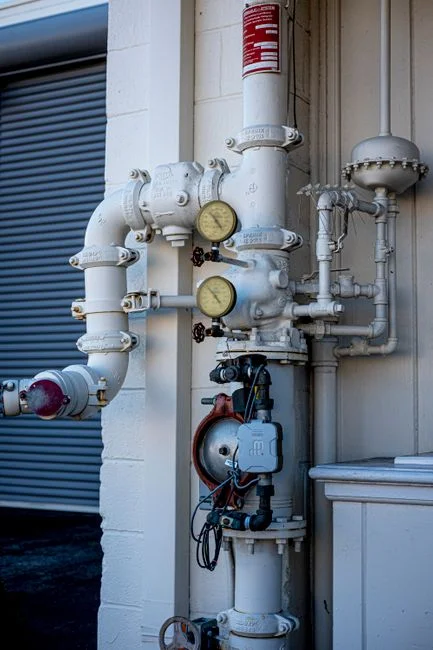
Modular treatment can improve maintainability when units are physically and operationally separable. AUC Group states that troubleshooting and maintenance can be performed on individual modules without shutting down the entire system, and that parallel modules can continue operating if one module fails. That is a design advantage only if the remaining units have enough hydraulic and treatment capacity for the required duty—not simply because more than one tank exists.
Centralized stages are often more interdependent. Failure or maintenance in one unit can affect the overall process, as AUC Group notes for concentric-circle layouts. A centralized control system may simplify monitoring, but it also concentrates the consequences of a common failure. Redundancy should therefore be assessed through parallel flow paths, standby power, critical spares, remote monitoring, control-system architecture, and the ability to isolate equipment while meeting discharge obligations.
Modularity does not remove O&M. Genesis Water Technologies identifies performance monitoring and sludge removal as essential maintenance activities and recommends considering automation, remote monitoring, and predictive maintenance. Chemical-intensive or membrane-based systems also require specialist competence. The local capacity and ownership identified in a 2026 Frontiers in Public Health study of modular adaptive decentralized water systems were associated with successful implementation; the study found that solutions could be short-lived without financial and training support.
Commercial performance claims require qualification. Seven Seas Water Group reports uptime above 98.7% for its concentric and package treatment plants. That is a vendor-reported benchmark, not an industry-wide guarantee or a site-specific prediction. Buyers should ask how uptime is defined, which service boundaries are included, how exclusions are counted, and which reference installations can be verified. A [chemical dosing system for pretreatment duty](/product/8-automatic-chemical-dosing-system.html) illustrates another important design choice: critical dosing capacity may need redundancy even when the main treatment architecture is modular.
Choosing the Right System for Your Industrial Facility
A five-step decision process prevents a premature choice between equipment formats. First, define present and forecast hydraulic flow and contaminant loads, including variability, batch discharges, and peak periods. Second, map collection routes, terrain, utilities, discharge conditions, and the consequences of collection failure. Third, rank land, redundancy, expansion timing, O&M capability, and capital phasing. Fourth, request a lifecycle comparison using one scope and one planning horizon. Fifth, preserve expansion space, connections, permits, and control interfaces in the initial design.
- Define demand and treatment variability. Separate current peak flow from forecast growth and identify contaminants requiring specific process functions.
- Map collection and discharge constraints. Establish whether a shared network already exists and how long the collection route would be.
- Rank non-price requirements. Set priorities for footprint, maintenance isolation, redundancy, operating control, and the date capacity is required.
- Request a common lifecycle comparison. Use the same collection, utilities, staffing, maintenance, downtime, and expansion scope for every proposal.
- Protect future capacity. Reserve space and document the physical, control, and permitting interfaces needed for later phases.
Modular or hybrid treatment is generally more practical when flow is variable, development is phased, the site is remote, collection distance is substantial, or treatment requirements may become more stringent. A hybrid architecture can be the deliberate answer when collection, pretreatment, utilities, or solids handling should be shared but biological, membrane, or polishing capacity must expand independently.
Centralized treatment becomes more defensible when flow is stable, adequate land and utilities are available, a collection network already serves multiple users, and the long-term process is conventional and well defined. A large custom plant is not automatically less scalable than modular equipment; the outcome depends on whether the initial civil design, land reservation, and permit can accommodate future needs.
Suppliers should document capacity, process guarantees, redundancy assumptions, utility demand, controls, staffing, commissioning, and expansion assumptions. Ask how additional trains will connect, how modules will be isolated during maintenance, and which civil works are required for each phase. If advanced treatment and a compact footprint are priorities, review the modular MBR wastewater treatment system. For below-grade deployment, mobility, or limited surface clutter, review the underground integrated package treatment plant. A packaged sewage treatment plant for phased housing development illustrates how package plants can align deployment with development growth.
| Site condition | Preferred starting architecture | Required check |
|---|---|---|
| Uncertain or phased growth | Modular or hybrid | Expansion sequence, module connections, and phased capital |
| Remote site or long collection route | Modular, hybrid, or decentralized | Pumping, access, services, and remote monitoring |
| Stable flow with established shared network | Centralized or hybrid | Long-term land, civil works, and permit feasibility |
| Changing contaminants or stricter reuse criteria | Modular treatment within a hybrid system | Ability to add membrane, filtration, or polishing functions |
| Severe land constraint | Centralized where process and scale justify it | Compact layout versus modular space requirements |
Frequently Asked Questions
Do modular systems cost less than centralized systems?
Not necessarily. The defensible comparison is the full installed and lifecycle scope, including collection infrastructure, civil works, land, utilities, staffing, maintenance, downtime, financing, and expansion. Ask each supplier to price the same scope and identify exclusions. A modular treatment quote can still require substantial collection spending, while a centralized quote can be favorable where a shared network and stable demand already exist.
How should a modular wastewater plant be sized?
Do not size from nominal catalog capacity alone. Separate current peak flow, forecast growth, batch variability, contaminant treatment requirements, duty during maintenance, and future expansion modules. The selected train must have enough effective capacity for the required operating case and maintain treatment quality when one parallel unit is isolated. Request process calculations and capacity documentation tied to the proposed flow and effluent objectives.
When is a hybrid architecture the best choice?
A hybrid architecture is appropriate when collection, pretreatment, utilities, or sludge handling should be shared, but biological, membrane, or polishing capacity needs to expand independently. It also suits phased industrial development where a central collection network is credible but treatment demand remains uncertain. Test the interfaces: future modules must connect hydraulically, electrically, operationally, and legally without rebuilding the shared network.
What should a supplier provide about lead time?
Request separate dates for design, factory fabrication, manufacturing release, shipping, site preparation, civil works, installation, permitting, commissioning, and first discharge. These are different schedule risks and should not be represented by one nominal delivery date. Also ask which activities are the supplier’s responsibility, what customer approvals are required, and how the schedule changes when a future phase is added.
Which architecture presents the lower compliance risk?
There is no universal answer because compliance risk depends on the permit, discharge variability, monitoring requirements, and the ability to maintain treatment during failures or maintenance. Modular systems can improve isolation and parallel capacity, while centralized systems may simplify coordinated process control. Compare permit variability, advanced-treatment additions, maintenance isolation, monitoring, redundancy, and operator competence. The effluent treatment plant process and sizing guide provides a site-specific framework for evaluating those inputs.